A Difficult Birth
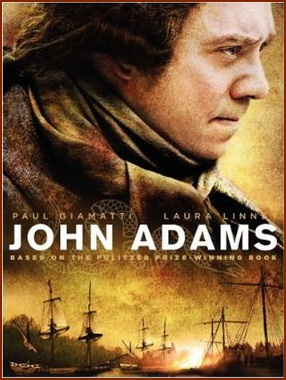
I watched HBO’s excellent mini-series “John Adams”, about the famed patriot and second President of the United States. As I posted waaaaay back in December of ’07, John Adams is my favorite Founding Father, and I think HBO did him justice, flaws and all. Beyond a fairly accurate portrayal of Adams himself (although I do think HBO downplayed the staunch religious beliefs shared by John and his cousin, Samuel Adams), the mini-series gave a very accurate portrayal of the nation’s gritty past.
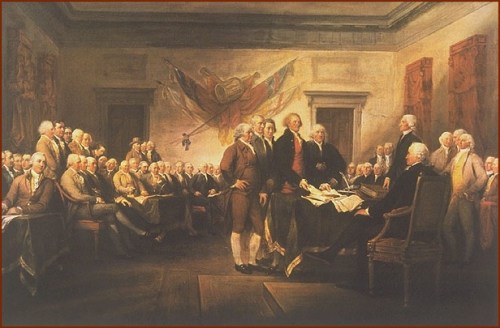
There’s this great mythology around the birth of this nation. We have this image, inspired by John Trumbull’s famous painting, of nattily-attired statesmen, gathered in a great hall, proudly proclaiming our independence for all the world to hear. Unfortunately, that image is not at all accurate. I won’t go into all the factual details here, sites like Americanrevolution.org describe them well enough. I do want to go into what our vaunted image, and even a nitpicking of the facts, does not convey, and that is how risky and dangerous, and messy and complicated, the birth of this nation really was.
This was such a dangerous endeavor that the members of the Continental Congress were rarely, if ever, all present at the same time. They would appear in shifts, as it were, with individual representatives of a colony present but almost never a full quorum of a delegation. Some of the notables, like the Adams cousins and William Ellery of Rhode Island, had open warrants for their arrest by the British colonial government long before the 2nd Continental Congress convened, and would certainly have been hanged if they were caught travelling to Philadelphia. Almost the entire New York delegation would be missing at times, most of those delegates lost home or property, and the wife of one (Francis Lewis) was captured and held prisoner by the Brits for many months during the Revolutionary War. This type of personal danger is almost never conveyed in American mythology.
There were also health and transportation problems. Yellow fever was not uncommon in Philadelphia in those years, and travel was risky. British blockades and privateers made sea travel dangerous, forcing travel over land. It took weeks if not months to ride the roads to Philadelphia, and in some circles families would weep from grief if loved ones had to travel, it was so dangerous. Remember this was the early days of America, cities were small and far apart, and there were great tracts of land void of civilization and comfort. It wasn’t the highly developed contryside that marked Europe in the 18th century, this was something far wilder. Getting all these great men to Philadelphia to draft the Declaration, create and fund a Continental Army, and plead for help from France and Spain was not an easy affair.
After the Revolution, things were still sloppy and complicated. There’s a sordid mess surrounding the crafting of the Constitution itself. Yes, it’s a beloved document and has served us well, but in reality, it was a contentious and difficult document to craft. The nation first had to go through the sloppy failure of the Articles of Confederation, a configuration so weak it nearly allowed the 13 states to break apart or, even worse, rejoin Great Britain. It was not easy to keep the Union together, and in the end, the only way to guarantee continued independence as well as undivided strength was by guaranteeing the continued enslavement of an entire race of man for decades thereafter.
People shouldn’t forget that our founding fathers enabled that greatest of travesties, but in a way, these men were forced to do so in order to avoid becoming servants again, through dissolution of the Union and potential reconquering by Britain. I’m sure that last sentence can be debated: what if our founders banned slavery in 1787? Would we have been split into two, or perhaps more, nations? And would that have been a bad thing? It’s an interesting debate, but the fact still stands: slavery stood for 89 years after the Declaration of Independence was first read to an assemblage in Philadelphia. All men created equal? Hardly, it would appear.
In my opinion, it’s vitally important for all Americans to understand that we are a flawed nation. We had a difficult birth and a flawed childhood and, to this very day, we struggle and wrestle and fight with our greater ideals and our conscience. We’ve fought unjust wars, we mistreated our own citizenry, we’ve “prospered” ourselves into great poverty, and we’ve poisoned our waters and air and land. But we’ve also had successes: we freed Europe from the ravages of war, our scientists have stopped polio and invented transistors, we’ve created unique and beloved forms of art and music, and we’ve been an example to the world in terms of freedom and liberty. Best of all, we’ve managed to survive and thrive in spite of our great mistakes and failures.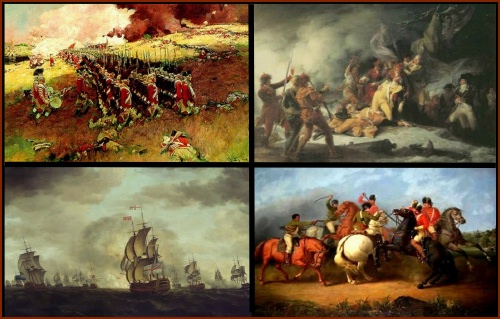
Success and failure, failure and success. Hmmm, sounds like we’re human. And part and parcel of being human is being flawed. It can be said that the greatness of a person can be judged by how well that person responds to his or her own failure. We all make mistakes, and we all have to learn from them and overcome them. This is true for people and true for nations. Those who think they themselves, or the United States of America itself, are incapable of making mistakes and deserve continuous adulation are not only inaccurate but incredibly arrogant.
It has always been my view that arrogance is the worst human characteristic. Arrogance, that belief that you can do no wrong and can make no mistake, is that characteristic that prevents you from ever learning anything. And the inability to learn guarantees an inability to succeed and thrive. It’s a flaw that guarantees stagnation and eventual irrelevance. Individuals should strive to never be arrogant in anything, even those things in which you are an expert. Nations should also strive to never be arrogant, even in areas in which that nation has succeeded in the past.
If I could ask all Americans to do anything for this country, I would ask them to be honest with our country’s flaws and failures, and strive to continuously improve the health, welfare, and integrity of this nation and all of its citizens. Only through understanding of our flaws can we ever improve our lot in life.
I hope everyone had a happy, fun-filled Independence Day weekend, and I wish nothing more than a just and prosperous future for the United States of America on this, the 233rd anniversary of it’s birth.
===============================================
I know I haven’t been posting regularly as of late. There have been a few real-life issues keeping my muse at bay, or perhaps in full retreat. Regular postings of my National Park trips will resume shortly, I promise.

 I love the place, absolutely love it, loved it from the beginning. I was there during the opening, 8-hour concert on Labor Day weekend in 1995, where I saw everyone from Chuck Berry to Johnny Cash to Dr. John to Aretha Franklin to Iggy Pop. That was a fantastic experience. The next day I saw James Brown sauntering through the crowd, surrounded by some of the biggest, scariest bodyguards imaginable, on his way into the Rock Hall. I’ve been back several times since, and love it more and more every time I go. For me, it goes beyond being a fan of rock music. My love of rock & roll dovetails nicely into my love of American history.
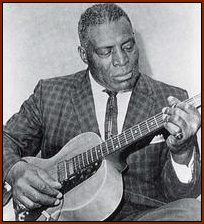
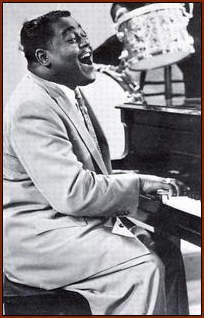 Rock & roll is uniquely American because of it’s “origin story”. Rock’s primary grandfather was The Blues. Political correctness aside, The Blues was the black man’s music. It’s basically a lament about hard times and suffering set to a quick-paced but rough tempo. The Blues was fostered in a segregated South and derives directly from music sung by plantation slaves. This is Part I of why Rock is uniquely American, it’s the only positive thing to ever come out of our slaveholding past. Without the caustic cauldron of atrocity known as antebellum slavery, and the emotional agony of Jim Crow, the genetic material of The Blues would not have been created. No Blues, no Rock.
 Then there’s Jazz. Jazz, in my view, represents the independent American mentality applied to music. People wanted to play what they wanted to play, and wanted to hear what they wanted to hear. It’s improv, blending, mixing things up, and doing what you want. It’s throwing away musical convention, just like we threw away monarchial convention. We tossed out the King and made our own government, then we tossed out musical conformity and made our own Jazz. It’s the Declaration of Indepence set to music.
 Rock has then been changed and modified and altered by so much more since then: the injustice of the Vietnam War draft, the poverty of inner cities, the rebellion of angsty white suburbanite teens, plus America’s penchant to abuse mind-altering substances …. All of these things are, again, uniquely attributable to the U.S. and the unique mix (or train wreck, if you prefer) of our culture.


 America In Context