Today, I weep for our country, the place of my birth, my home.
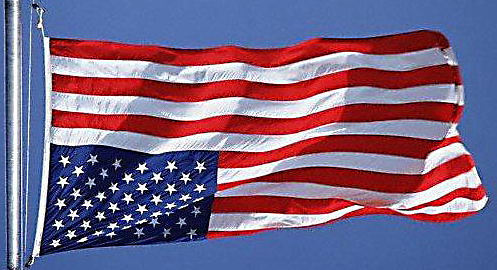
Today, I weep for our country, the place of my birth, my home.
Posted in Uncategorized | Tagged election, Trump | Leave a Comment »
It’s That Time Again
Ah yes, fall. Pumpkins. Halloween. Leaf peeping. And what else?
It’s Rock & Roll Hall of Fame nomination season!
This year, they’re looking at 15 possibilities. They’ve put them up for a vote on their website. Well, your votes don’t actually count, but it’s fun anyway. You can vote here if you like.
Here are my own picks for entry into the class of 2016.
The Cars
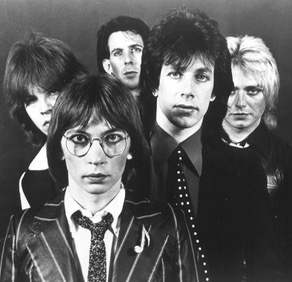
The Cars (rockhall.com)
The Cars are the last of the important 80’s acts to be nominated for the Hall. Unlike other Rock Hall acts that happened to exist in the 80’s (like REM and U2), The Cars embraced and epitomized the style of rock & roll during that decade. That decade was perhaps the most over-the-top decade in music, with advancements in synthesizers and stylized production, loud and obnoxious fashions, and (most especially) the heyday of music videos with the creation of MTV, and The Cars dominated all those facets.
Unlike most of the stereotypical 80’s acts, The Cars were extremely prolific. During that decade, they produced. The last, Door to Door, was pretty weak, but the rest were strong, resulting in hits such as “Bye Bye Love”, “Candy-O”, “Magic”, and, of course, “Good Times Roll.” The Cars were no “one hit wonders”, they took that 80’s sound and made a solid career from it.
They also set a truly high bar for music video production. Like it or not, music videos are as much part of rock-and-roll as Elvis’ swinging hips, and few acts were more important to that facet of rock music than The Cars. Their videos were legendary and led to an awful lot of copycats.
Every decade deserves its representative in the Rock & Roll Hall of Fame, and there’s no better group to represent the 80’s than The Cars.
Cheap Trick

Cheap Trick (rockhall.com)
So this pick is controversial, but fuck it. I’m picking Cheap Trick for one and only one reason: At Budakon. This is one of the most influential rock albums of all time. It’s definitely a Top 20 just the game-changing nature of that one piece of vinyl. Cheap Trick may not have been the most talented band of that era, and they certainly did not create arena rock, but they absolutely perfected it and turned it into a genre all by itself. The story of At Budakon is amazing (check out The History Rat for more), and it set Cheap Trick on the road to success.
Normally, I’d say artists should only go into the Hall if they have a body of work to support it. But At Budakon had such a monstrous impact on rock & roll, Cheap Trick deserves to be in the Hall because of it.
Deep Purple
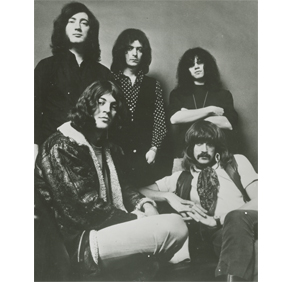
Deep Purple (rockhall.com)
Probably the biggest travesty of Rock Hall nominations to date: Deep Purple has not yet been inducted. How can you not include Deep Purple in an institution called the Rock & Roll Hall of Fame? Good lord, bands who came after them, who owe them everything, are in the Hall before they are. Metallica, Van Halen, AC/DC, all owe a lot of their sound to Deep Purple. Personally, I would have put them in before Black Sabbath (they just couldn’t beat Ozzy Osbourne’s personal publicist).
Janet Jackson

Janet Jackson (rockhall.com)
I have to admit something terrible. When I see a female nominee, I find myself thinking “is this deserved, or is it a token nomination?” There is a tremendous, cultural effort out there to make sure women get recognized for their achievements, and that’s all terrific, but sometimes it seems like a woman has been nominated just because they couldn’t find another woman who fit that category.
When it comes to Janet, that idea is absolute bullshit. Janet is beautiful, super talented, a great singer, and constantly knocked it out of the park no matter what genre she attempted. She definitely “rocked it” far more than her “royal” brother ever did. In terms of sheer talent, she easily dominates over her contemporaries, even 2008 Inductee Madonna. Janet Jackson absolutely deserves to be in the Rock & Roll Hall of Fame.
N.W.A.

N.W.A. (rockhall.com)
For those of you who say “rap ain’t rock”, get over yourselves.
Rock & roll is rock & roll because of one, key element: rebellion. Rock is full of rebellion, from James Brown’s stage antics to Jimmi Hendrix’ guitar style to Bob Marley’s protest songs all the way through to Nirvana and beyond. It’s rebelling against authority, and conservatism, and oppression, and whatever. It’s what rock is! And it’s what rap is! So rap = rock, it’s that simple.
There’s no better symbol for rebellion as N.W.A., quite literally the voice of an entire generation of the disenfranchised. They hit the scene with a bang, and deserve to be put in the Hall because of it.
The Rest
Unlike prior years, where I had trouble limiting my choices to five, this was pretty easy. The other bands just don’t pass muster for induction into the Hall (in my opinion).
Chic
Ugh, no more disco. I accepted the Bee Gees because they defined the genre, and you can’t deny Saturday Night Fever was a monster. But think about “rock = rebellion”: how does disco speak to rebellion? Bleagh, it was weak, and trite, and pointless. No more disco in the Hall, please.
Chicago
I always found Chicago to be more pretentious than interesting. Steely Dan (inducted 2001) was also pretentious, but at least their music was interesting.
The J.B.’s
The J.B.’s — initially James Brown’s backing band — are simply in the wrong category. Great artists, fantastic sound, they just belong in the waaaay underused Sidemen category. I’d love to see the Rock Hall revitalize that category and start putting folks like the J.B.’s in it, with all the honorifics they deserve.
Chaka Khan
Chaka Khan feels like a cynical pick. I’m sure someone sat in the corporate offices and thought “we need another woman in there”. I don’t have anything particular against Chaka Khan, she’s just not a rock artist. Of course, there are plenty of inducted artists who aren’t “rock artists”, but that doesn’t mean we should put more in there.
Los Lobos
Los Lobos is a fine band, but I’m not convinced that they’ve been that influential. They had a couple hits, they did bring in some Latin sounds into contemporary rock, but I don’t see too many modern bands paying tribute to “that Los Lobos sound”.
Nine Inch Nails
I friggin’ love Nine Inch Nails, the founders of Industrial Rock. These were guys who wrote hard, played hard, performed hard, and rocked hard. Nine Inch Nails was creative and unique and made a sound that was truly their own. They may not be as well-remembered as Nirvana or Pearl Jam, but they absolutely belong in the strata of great 90’s bands, and deserve to be in the Hall. But not quite yet. Deep Purple should be in first.
The Smiths
I never knew The Smiths, I never listened to The Smiths, I don’t know anything about The Smiths. It’s odd: I came of age in the 80’s, lived through the decade, and thought I heard it all, but I never heard of them. I’m dead serious. People like to talk about how “influential” they are, but, well, I guess I have to take their word for it. But that doesn’t mean I have to pick them.
The Spinners
This is another act that I have absolutely nothing against. I guess I don’t see that they added anything that any of the other inducted R&B vocal groups (The Temptations, The Miracles, The Impressions, so many more) already added. I think inductees should stand out in the field, and not simply be a member of a field that is great.
Yes
First, I am a big Yes fan. I love their music, and listen to it all the time. But … I don’t think they fit in the Hall. They have some very talented musicians, to be sure, but I think there’s a far better representative of “progressive rock” out there. More on that in a bit.
Steve Miller
OK, here it comes. Here comes my #1 bitch about rock & roll in general. You’ve heard me gripe about disco, and about pretentiousness, and about pop. But nothing, and I mean nothing, has been more damaging, more contradictory to the true spirit of Rock & Roll than the two words I’m about to type.
Corporate Rock.
Corporate rock almost killed the genre. When we talk about 90’s grunge, we talk about rebellion. And what was 90’s grunge rebelling against (I mean, besides boy bands)? Corporate rock. The same, bland crap that all “classic rock” stations played, over and over again, ad nauseum. Horrid, wretched, uninteresting. Songwriting by committee, assembled in some stuffy boardroom. That’s what corporate rock is.
Who are these horrid purveyors of corporate rock? A list of the bland and uninteresting: Bad Company. Bachman-Turner Overdrive. Foreigner. Post-Gabriel Genesis. Bob Seger.
And Steve Miller.
I listened to Steve Miller when he was big. Some of his stuff (like “The Joker”), is pretty cool. But overall? Where’s the rebellion? Where’s the edge? Where’s the creativity? I’m sorry, but I just can’t do it, I can’t click that checkmark next to his name. I’d rather pick all the disco in the world …
Who’s Missing?
I think the nominating committee has still missed two Hall-worthy possibilities. I’d love to see these guys nominated in coming years.
J. Geils Band
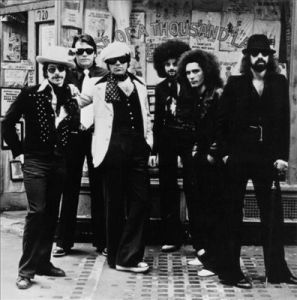
The J. Geils Band (AllMusic.com)
I love the J. Geils Band. J. Geils returned rock to it’s garage-band roots. A great live act, honest and raw, they were brilliant. Their intense live shows didn’t necessarily translate to the studio, but they still had solid songs like “Give It To Me”, “Detroit Breakdown”, and “Whammer Jammer”, I’d love to see them in the Hall. They would blow the roof off the Waldorf-Astoria during the induction ceremony.
King Crimson
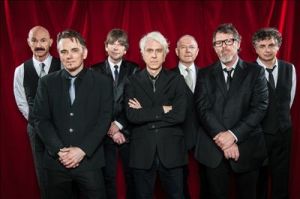
King Crimson (AllMusic.com)
Earlier, I gave Yes a hard time. This is why: King Crimson is, by far, the better band. In terms of sheer musical talent, there has never been a better group of individuals assembled. They are the best of progressive rock, and their “tendrils” (members of the band throughout the years) impacted musical acts all across music. Pink Floyd, Yes, Alice Cooper, REM, Nine Inch Nails, Emerson Lake & Palmer, Genesis, Frank Zappa, Talking Heads, David Bowie: all these acts were influenced by past members of King Crimson. King Crimson is the Kevin Bacon of rock & roll: you’d be hard-pressed to find any act that’s more than a few links away from King Crimson. I’d love to see them get their due in the Hall.
And Finally …
If the Rock & Roll Hall of Fame induction committee doesn’t put Rick Rubin into the Hall as a non-performer this year, it’ll be a travesty. This guy saved music, and I don’t mean that lightly. He created Def Jam and brought hip-hop to the mainstream. He put Public Enemy on the charts. He launched the Beastie Boys’ career. He introduced Run-DMC to Aerosmith.He produced The Cult’s Electric. He produced the Red Hot Chili Pepper’s monstrous Blood Sugar Sex Magik. He worked with inductees Tom Petty, Donovan, Mick Jagger, and more. He produced Jay Z’s “99 Problems”.
He produced Johnny Cash’s American Recordings, one of the greatest albums ever, for chrissakes!
Here’s an article Forbes Magazine did on Rick a couple of years ago. If anyone deserves to be in the Rock & Roll Hall of Fame, it’s Rick Rubin. That’s the online poll I’d love to see: how many rock artists would agree with putting Rick Rubin into the Rock & Roll Hall of Fame as a non-performer? He’s the Ahmet Ertegun of our age.
————–
What do you think? Do you like my picks, or am I full of crap? Who would you like to see in the Hall?
Posted in Uncategorized | Tagged Cheap Trick, Deep Purple, J. Geils, Janet Jackson, King Crimson, music, N.W.A, Rick Rubin, Rock & Roll Hall of Fame, The Cars | Leave a Comment »
Book Review
There was only one topic I wanted to discuss in a blog post on Jimmy Carter, and that was how a Presidency could fail. It is as important, if not more so, to study failure as it is to study success. I scoured Amazon & Google for books on the Carter presidency, hoping to find a treatise on how it went so wrong.
Unfortunately, I found myself knee-deep in the right-wing hate machine. Boy, how conservatives use the failings of Jimmy Carter’s presidency as as a way to prop up their own agendas. Book after book after book is set up to just drag the 39th president through vitriol-laden mud, leaping to grandiose conclusions about “character” and “socialism”. Here’s a man, a guy who truly cares about people, whose character is almost above reproach (especially compared to most politicians), treated so harshly by such an abundance of writers, all to “prove” how right-wing ideals are just so great for this country …
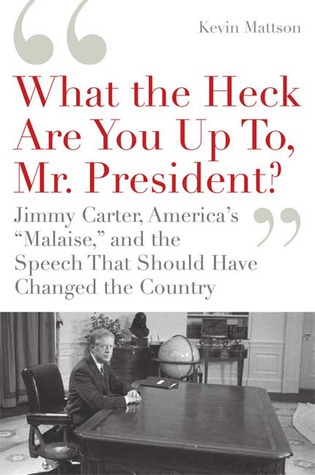
Anyway, before I get too high on my political soapbox, I eventually came across “What The Heck Are You Up To, Mr. President?” by Kevin Mattson. His book isn’t an analysis of the entire Carter presidency, but it is an insightful piece on the infamous “malaise speech” of 1979. Through interviews and research, he assembles not just a narrative on the crafting of the speech, but a collage of the various bad decisions leading up to it. It’s not hateful, or condescending, or serving some personal agenda. It is a fair analysis, a decent read, and, in my opinion, helpful for anyone studying not just the Carter presidency, but leadership in general.
Unbiased, analytical approaches to contemporary political events are rare. They do exist, though. You just have to dig a little deeper to find them.
——————–
Posted in Books & Music | Tagged books, history, Jimmy Carter, Kevin Mattson | Leave a Comment »
Failures in Leadership
When it comes to posting about Jimmy Carter — Nobel Peace Prize winner, home builder, human rights advocate, international statesman — I could have gone in many directions. In light of his recent cancer diagnoses, I could have focused on his positive, post-1980 accomplishments, and may have gotten a lot of positive comments and referrals. Instead, I feel compelled to talk about his greatest failure: his leadership during his tenure as the 39th President of the United States.
Before I go on, I have to say it’s really unfair for me to criticize others for poor leadership. I have practically no leadership abilities at all. I’ve proven time and time again that this is a skill or talent that I simply do not possess, and almost every attempt I’ve made to take leadership of anything has been a fairly abysmal failure. However, I think I can recognize good leadership when I see it. I’ve known a lot of good, and even great, leaders personally, and through careful observation of their methods, I think I have a fair bead on what makes a good leader. I’ve also known a lot of horrible leaders, and am fairly certain I know what poor leaders lack.
Any post criticizing Jimmy Carter would also be unfair if it did not include a disclaimer statement about “level of difficulty”. Carter was elected President in 1976, a period of great internal strife in the U.S. President Nixon resigned in disgrace in 1973. America’s most divisive and most embarrassing confrontation — the Vietnam War — ended in 1975 with the Fall of Saigon. The Cold War’s nuclear arms race was well into its fearful Mutually Assured Destruction phase. Inflation was at a troubling 12%, and the nation was in a depressing funk barely masked by the revelries celebrating our nation’s 200th birthday. Carter was entering into a losing proposition, it would take immense skill to turn the ship of state around.

Yeah, times were GREAT!
Unfortunately, Jimmy Carter, during his tenure as President, was a pretty poor leader.
Of course, that’s not particularly insightful. Folks have been saying this for 35 years, Jimmy Carter has taken quite a bashing from all sides since 1980. If he hadn’t been so successful in his post-Presidential career, he’d be nothing but an entry on a list between Martin Van Buren and Calvin Coolidge: barely remembered unless you went to Carter High School or your commute took you over the Carter Bridge. I’m glad he went on to do great things after his presidency, he’s probably one of the most ethical men to ever hold the office, and he deserves better than a minor footnote in a history textbook. So how did an otherwise good man fail to be an effective leader?
In my opinion, one event, more than any other, illustrates exactly why Carter was such a bad leader as President. That event was his infamous Malaise Speech, delivered to the nation via broadcast television on July 15, 1979. This was a speech that, although initially receiving a favorable reception by the American people, would go down in infamy as the worst speech ever given to the nation by a seated President. This was a speech that would become so reviled, it not only resulted in the loss of the White House to the Republicans in 1980, it most certainly caused the death of American progressive politics.
But wait, something here doesn’t quite compute, does it? How could a simple speech ruin a Presidency and kill a political movement? Speeches are nothing, really, just air exiting through a larynx, magnified by microphones and amplifiers. Most people, even then, rarely listen to political speeches, and of those who do, few even remember anything about them. Throughout American history — over 400 years if you include the colonial period — only half a dozen or so political speeches (“The only thing we have to fear is fear itself”, etc.) have entered into the national consciousness. It’s certain that dozens upon dozens of Presidential speeches quite literally sucked, full of triteness and pandering and even lunacy. Did any of them derail a presidency?
No, and this speech, itself, did not derail Carter’s. What killed his presidency, and what marked Jimmy Carter as a terrible leader during that phase, was he felt that the nation actually needed a speech to solve its problems. That was the fundamental mistake, the fundamental error, the fundamental misunderstanding of leadership that Carter had during that period. What he did was deliver a speech as the solution, rather than delivering a speech to communicate the solution.
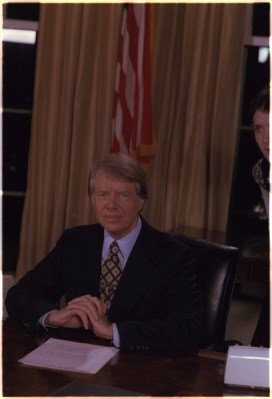
Not a great idea.
So many people in positions of authority try this tactic. These folks think that they can inspire people by words. They’ve heard the lore of those half-dozen cool American speeches, or have seen Patton, Braveheart, Henry V, or even Independence Day, and think “ooh, that’s what I need to inspire my troops, a good speech!” Well, no, nothing can be farther from the truth.
My first encounter with a real leader was my Boy Scout scoutmaster. He was a quiet, soft-spoken guy. I can’t remember his speaking voice, honestly. But all the kids loved him because he did stuff. We always had stuff to do, every meeting was full of activities, and our camping trips were chock-full of things to do. His job moved him to second shift, and we got a new scoutmaster. That one was a chatty guy, and the absolute worst scoutmaster. Activities dropped, camping trips dropped, and I dropped Scouts entirely.
Later, I worked at an apple orchard. The owner was not necessarily soft spoken, but he was a great guy. He motivated us to work hard, not through his words, but because he was a hard working guy. If you were employed by him, you would be ashamed to be a slacker because he worked so hard.
I would see other good leaders who displayed good leadership because they loved what they did, or they took the time to teach those under them, or they took bold moves, or they were simply good at their job. They were leaders because they did stuff, not because they talked about stuff. It’s not even about caring for your people — there is no doubt that Jimmy Carter cared about the American people — it’s about recognizing that doing is a prerequisite to leading.
If Carter had focused more on getting things done as President, he could have made all the crappy speeches in the world and no one would have cared. But he felt the people needed a speech, and history has proven that was a bad choice. Fortunately, Mr. Carter would go on to do plenty of good things in his post-Presidential career, and now he is well respected by many. But for one, brief time, when it was needed the most, he had the wrong idea of what true leadership actually is.

Well, maybe I stand corrected.
==============
I didn’t bring my camera when I visited the Jimmy Carter National Historic Site. All photos used in this post are public domain and hosted on Wikipedia Commons.
Jimmy Carter National Historic Site
Character Above All Essay on Jimmy Carter
Posted in Georgia | Tagged history, Jimmy Carter, leadership, travel | Leave a Comment »


 America In Context