Feeds:
Posts
Comments

Archive for the ‘history’ Category

Grit, Savvy, and Determination

Maggie Walker was quite the character. 

In 1878, teenaged Maggie joined the Independent Order of St. Luke in Baltimore, a benevolent organization that tended to the sick and aged, and promoted humanitarian causes. By 1899, she was leading the organization to increased membership and financial solvency, with chapters spreading across the country, all while maintaining its core mission.

In 1903, she founded the St Luke Penny Savings Bank. The goal was to provide an institution for saving and lending for use by the underclass, served so little by traditional banks. She later served as chairman of the board for the Consolidated Bank and Trust Company, when Penny Savings merged with two other Richmond-area banks.

What’s most remarkable about Maggie Walker’s ambition and success wasn’t that she was a women in the business world in a Southern state at the dawn of the 20th Century. It’s that she was a Black woman in the business world in a Southern state at the dawn of the 20th Century. This is the Jim Crow era, and even if it was during a lull in Ku Klux Klan activity, it was still not a great time and place to be a Black man in the business world, much less a Black woman.
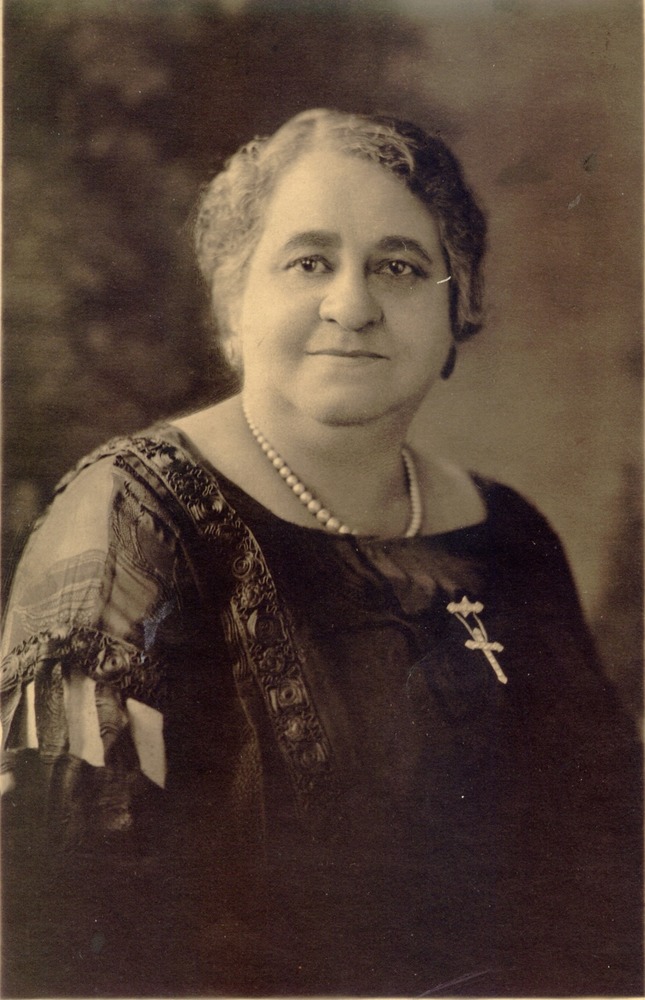
Maggie L Walker

Maggie Walker succeeded in the way most successful African-American businesspeople did in that era: she provided services to her own. The St Luke Penny Savings Bank served the Black community in Richmond, providing a safe place for savings, fair transactions, and financing for a variety of businesses endeavors. If the greater business community wouldn’t give them a fair shake, they would make their own fair shake. The Richmond African-American business community thrived due to their collective grit, savvy & determination.

This happened all across the country: New York City, Washington, Oakland, Tulsa, even Birmingham, Alabama. Richmond was known as “The Harlem of the South”, and the Jackson Ward area, which includes Maggie L. Walker’s home (protected by the National Park Service) and other landmarks (like the Hippodrome Theater). It’s a cool place to visit.
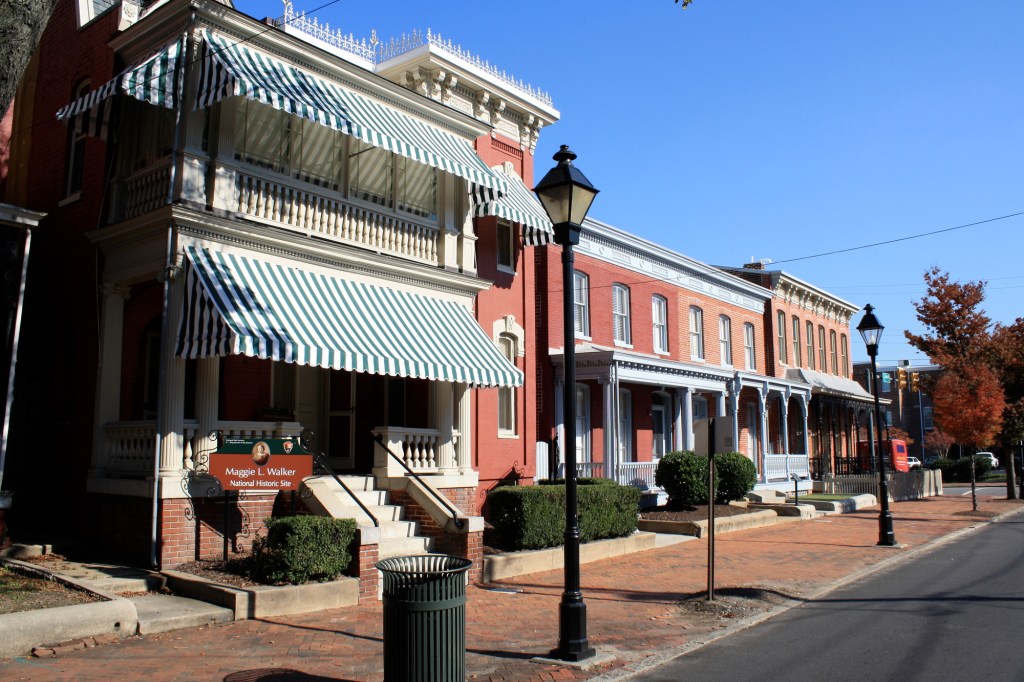
MLW National Historic Site

Tales of the Forgotten

I recently read A Black Women’s History of the United States by Daina Ramey Berry and Kali Nicole Gross. It recounts the struggle of Black women from the earliest days of colonialism. Isabel de Olvera came to the Americas so early, in fact, she was actually a free person. In 1600, she petitioned local officials in Mexico for affirmation of her rights. She was suspicious, and rightly so, that she would be subject to violence or captivity whilst on an expedition to New Spain. She demanded an affidavit proclaiming her status as a free person. The remaining 400 or so years has been a continuation of those demands, clearly with mixed results.

A Black Women’s History covers this entire era, from 1594, when a person described only as a “mulatto woman” made her way to present-day Kansas as part of the Francisco Leyva de Bonilla expedition (where they were all likely killed by the local Kitikiti’sh people) to Shirley Chisholm’s run for President in 1972. I shouldn’t have to say the history of Black women has been fraught with sadness, but it’s also full of grit, savvy, determination, and especially courage.

The worst part of it all, though, is the history of Black women is also full of forgetfulness, or, more accurately, inconsideration. Frankly, nobody cared, and nobody documented. Sure, figures like Rosa Parks and Harriet Tubman get their due, but beyond that, how many famous African-American women can you name (outside of entertainment figures like Oprah Winfrey or Billy Holiday)? Fortunately, A Black Women’s History is here to introduce us to many.

This is not just a collection of stories, however. The authors also describe the chain of oppression formed from the links of womanhood. Imagine a world where your own personal freedom defined the freedom of your children, where your own progeny could not have their escape because you were guaranteed to not have yours. Yet that’s what the colonial — and later national — policy of partus sequitur ventrem (‘that which is born follows the womb’) meant. Imagine being a mother and learning you’re pregnant under such a system.

If you have a fondness for American history, I suggest you add A Black Women’s History to your reading list. Otherwise, you’re missing a part of the story.

[I visited Maggie L Walker NHS before I had a digital camera. Pictures here are courtesy of the National Park Service.]

Links:

Maggie L. Walker National Historic Site

9 Historic Black Neighborhoods That Celebrate Black Excellence

The Story of the Chitlin’ Circuit’s Great Performers
A Black Women’s History of the United States (Amazon)

Read Full Post »

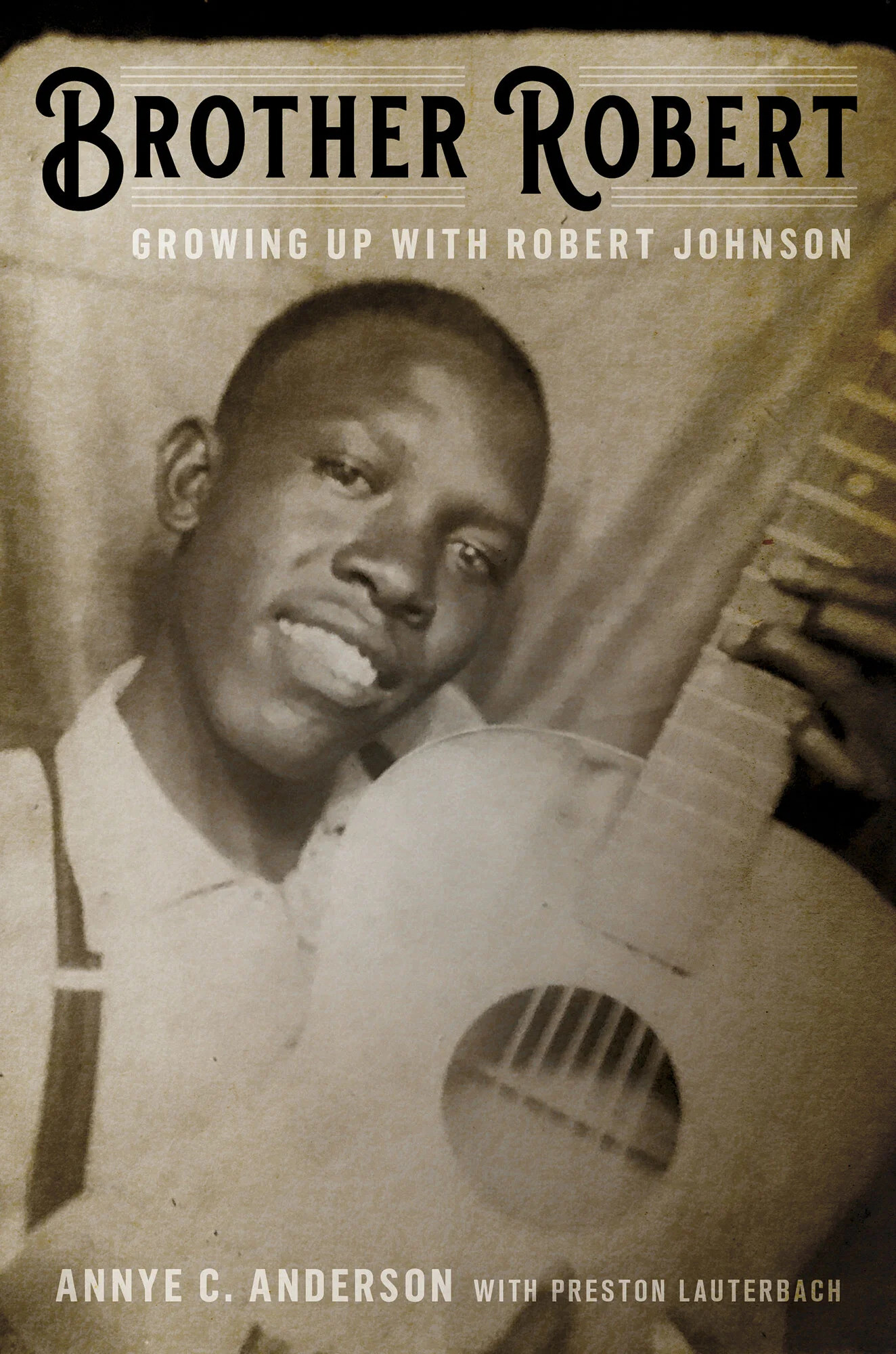
Who would’ve thought Robert Johnson’s step-sister, a person who personally knew the famed blues guitarist, would still be alive? Who would’ve thought that person — his step-sister, 94-year-old Annye Anderson — would today reside in Amherst, Massachusetts? And who would’ve known that she would still have the faculties, and ability, to tell intriguing stories of perhaps the most important American musician in history?

Robert Johnson, who died in 1938, is still quite an enigma. He’s a larger-than-life figure who, legend says, sold his soul to the devil in exchange for writing the best blues songs in history. Johnson was a vagabond, a hobo, a showman, a visionary, and (according to some) the most important guitarist to ever exist. Johnson single-handedly re-invented the blues, and provided the musical DNA that evolved into rock & roll, inspiring acts from the Stones to Led Zeppelin to Cream, Fleetwood Mac, Bob Dylan, and more. The devil met him at the crossroads, and together they changed the world.

To Mrs. Anderson, well, he was Brother Robert.

Brother Robert cuts right through all the mythical nonsense, and tells as much of the true story of Robert Johnson as one will ever read. She knew him, knew his roots, knew what he liked (Jimmy Rogers yodeling, for one), and what kind of man he was. Although she never knew how he died, or where he’s buried (beyond the various rumors), she does know how shady lawyers and the general music industry tried to screw her family out of any royalties from his work, about how fraudulent “descendants” tried to sneak their way into the legends (and the profits), and the pain all these dealings caused other members of her family.

None of that stuff, however, makes this book special. The heart of this book is Mrs. Anderson’s recollections of life in Jim Crow, Depression-era, Memphis, Tennessee. She tells stories of a hardscrabble life, where everyone worked every possible job imaginable to make some money to feed their families. She tells stories of moving in the dead-dark of night, the only way for a black man to survive when accused of pestering a white woman. She tells stories of juke joints and sewing circles and church socials and life of a long-dead era. This is a first-hand account of life lived well in a very dark time, and the way it both brought her family together and tore it apart.

Brother Robert is an engaging read, and highly recommended.

Read Full Post »

Family Time

I’m a solo traveler, especially on my national park trips. I’m a spectacular hermit; but also my friends and family have other hobbies and interests, and simply don’t share my enthusiasm for American history and the natural world. It’s OK, though. I find solitude enables greater opportunities for observation, reflection & understanding.

When I went to visit JFK’s birthplace, however, I switched things up, and made a conscious decision to share the experience. I took my mom.

It wasn’t just because I thought she’d enjoy the trip, it was also because I wanted to hear what it was like to live during the vaunted “Camelot” era. JFK was  the first  modern-day celebrity president, and I wanted to know what that was like. John and Jackie’s superiority in handling themselves on television changed everything about campaigning, getting elected, and serving in the highest office in the land. Suddenly, it became less about stump speeches, shaking hands, working the political machinery, and back-room deals. It became more about media savvy.

The tales of Camelot have entered into American legend. JFK’s photogenics destroyed Richard Nixon in the presidential debates. He then became the second youngest person to ever take office. Jacqueline Kennedy was charming and pleasant, with impeccable fashion sense. As a couple, the Kennedys were hip and new, and gave the promise of a bright future. 

5375F7E8-155D-451F-67966F3A9B6BE810HiResProxy

Funnily enough, my mom didn’t have too many stories about the Kennedy era. Neither her nor my father were political types, rarely turning on the news and never talking about it at the dinner table. The only thing she talked about was the shame of the assassination, and how it saddened the whole nation. She talked a lot about the funeral, and how Jackie held up with such grace through it all. 

Then she told me about how she met JFK. 

When she was in high school, she worked on the school paper. A young John Kennedy, then Congressman John Kennedy, was running for the Senate, and touring the state, trying to drum up votes. He came to Western Massachusetts, quite likely just once (the western part of the state rarely gets much attention from Boston). So the high school paper decided to go meet him for some photo ops. 

My mom went with three other girls from her class. The photographer asked the other three to step out of frame because, as my mother said, “they weren’t pretty enough”. [Note: her intonation suggested the photographer was a bit of a perv.] She then had her picture taken, which was published in the paper later that week.

Being a typical high school girl, she was unhappy with how her hair looked, so she never kept a clean copy of the photo. Fortunately, the local paper still had the photo in their archives, and she was able to get a decent copy. 

Mom and JFK

It’s been many years since we went to JFK’s boyhood home in Brookline. She enjoyed the trip, and had fun reminiscing. Today, she can’t get around quite like she used to, her days of travel are long over. She’s seen quite a bit in her years: the Great Depression, World War II, the Civil Rights Movement, Watergate, 9/11, a global pandemic, and now an insurrection. She’ll be 87 in a few weeks, still doesn’t like talking about politiecs and, woefully, is not happy with how her hair looks.

Read Full Post »

The Symptoms

Recent events have, not surprisingly, stirred up discussions of amending the U.S. Constitution. The presidential elections of 2016 and 2020 have folks crying out for a Voting Rights Amendment, eliminating gerrymandering, abolishing the Electoral College, and guaranteeing free & fair elections. The events since the last election, leading up to the insurrection on January 6, have led to demands to strengthen checks and balances; clearer definitions of treason, sedition, and impeachment; and improvements in the mechanisms to remove a President who is either incapable, unwilling, or opposed to fulfilling the duties of the highest office in the land. Then there are the age-old battles over the 2nd Amendment; the definitions of speech; the role of religion; and the legality of the Senate filibuster, to name but a few.

I suggest to you that these are symptoms, symptoms of a greater flaw in the Constitution itself, a flaw traced back to the very forming of the Union and the penning of the document itself. The Constitution is too difficult to change, and that is its downfall.

The Root Cause

Amending the Constitution is extremely difficult. Article V requires two thirds of both Houses, or two thirds of the legislatures of the States, to agree to simply propose amendments. Then three fourths of the States must agree to enact anything. This has led to the Constitution being changed only 27 times, and only 15 times in the last 200 years. That’s far too few for such a long-lived Republic. In contrast, the Connecticut Constitution (written in 1818) has been amended 31 times; the Ohio Constitution was effectively rewritten completely in 1912; and the Colorado Constitution has been amended an astounding 152 times. The French have rewritten theirs outright multiple times, the last in 1958, and it has been altered 24 times since then. And as far as the UK goes, well, I don’t have enough time to navigate that maze of constant evolution. The U.S. federal government is clearly an outlier when it comes to revision.

I will admit, there are some benefits to having laws that are difficult to edit. Stability and consistency are important to a civil society. Many countries have capricious laws, with whichever tyrant assuming power rewriting everything to punish the “other side”. There is great comfort in having a solid system of laws that the people can understand and navigate. However, I challenge that it is a far greater risk to have an unchanging, unyielding system of laws, especially in a democratic society.

An Immutable Government

There are several reasons why I suggest this, the most obvious being the practical one. Situations change in 200 years. There’s no way that even the wisest man can predict the effects of a written paragraph two hundred years into the future. Concepts once of high import can become irrelevant. Unforeseen issues can crop up. Even the meanings of words and the application of grammar can change in 200 years. There was no way they could predict the affect of the Internet on free speech or the press. There was no way they could understand that muskets would evolve into assault rifles. It was doubtful they even foresaw that Europe would no longer be controlled by monarchs, or a United Nations would be possible, and in no way were they prescient enough to foresee a world facing the threat of nuclear annihilation.

Then there’s the problem of the courts. Having an inflexible Constitution gives the courts far too much power. The courts rely on one thing above all other, and that one thing is precedent. Every interpretation, every ruling, unless countered through an appellate process, becomes a precedent. This is especially true of the Supreme Court. The Supreme Court is the adjudicator of how this ancient document applies to modern situations, and those judgements become unyielding precedents. And frankly, some of these rulings (Citizens United v. Federal Election Commission, for one) are terrible. Terrible precedents not only linger, they linger for a long time. Consider the worst ruling in the history of the Court: Plessy v Ferguson. That magnificent “precedent” stayed the law of the land … for 60 years! That’s three generations of opportunity lost for millions of African-Americans, all because of the inherent racism of the courts in 1896. But precedent it was, and precedent is God. The people never had a say otherwise. The largest counter, the greatest check-and-balance, to the Supreme Court is the ability to amend the Constitution. Yet that is a nearly impossible task. (Side note: Plessy was never explicitly overruled, it just got squeezed into oblivion by various civil rights rulings in the 50’s & 60’s.)

The Philosophy of Democracy

Finally, there are philosophical problems surrounding an unyielding Constitution. The first seven words of the document state “we the people of the United States”, yet that is no longer true, is it? It is “the long-deceased people of the United States”, who wrote the thing, for their people, in their time. It’s not for us, in our time. We have no ownership, no responsibility for it. It’s a relic of days long past, not a document of the present. It’s almost taken religious significance at this point, something to be held in absolute reverence. This makes us adherents to it, followers of its mandates, instead of us being its master and keeping the fate of our country in our hands.

In 1787, George Bryan, former governor of Pennsylvania, wrote an editorial in the Philadelphia Independent Gazetteer. He spoke, at length, about the immutability of the Constitution. “This appears to me to be only a cunning way of saying that no alteration shall ever be made; so that whether it is a good constitution or a bad constitution, it will remain forever amended. […] The consequence will be that, when the constitution is once established, it never can be altered or amended without some violent convulsion or civil war.” Of course, that is just what happened: it took a civil war for the passing of the first three, and the most significant, amendments since the first 20 years of the nation’s founding.

Bryan continued “If the principles of liberty are not firmly fixed and established in the present constitution, in vain may we hope for retrieving them hereafter.” Here’s an example of a liberty that is not fixed and established: the right to privacy. It’s not in the Constitution, only vaguely implied by stitching together other clauses. It should have been delineated in the Bill of Rights. But nobody thought it would be necessary. And now we have serious privacy problems in this Internet age. We’ll never get that particular liberty.

Bryan also foresaw the problem of entrenched power, a problem we certainly have today, with our lifetime Supreme Court appointments and members of Congress able to serve, unchallenged, for decades. “People once possessed of power are always loth to part with it; and we shall never find two thirds of a Congress voting or proposing any thing which shall derogate from their own authority and importance.” The Congress will never agree to term limits, or a balanced budget amendment, or anything else to reduce their power.

So this is where we sit. A document in a shrine, revered and immutable. An entrenched two-party system. A disengaged electorate, unable to set its own direction. An insurrection in the very halls of Congress. If the 3/5ths Compromise was the Constitution’s original sin, the stringent requirements to amend the highest laws of the land is its original flaw.

Read Full Post »

Older Posts »