Feeds:
Posts
Comments

Archive for the ‘Virginia’ Category

Grit, Savvy, and Determination

Maggie Walker was quite the character. 

In 1878, teenaged Maggie joined the Independent Order of St. Luke in Baltimore, a benevolent organization that tended to the sick and aged, and promoted humanitarian causes. By 1899, she was leading the organization to increased membership and financial solvency, with chapters spreading across the country, all while maintaining its core mission.

In 1903, she founded the St Luke Penny Savings Bank. The goal was to provide an institution for saving and lending for use by the underclass, served so little by traditional banks. She later served as chairman of the board for the Consolidated Bank and Trust Company, when Penny Savings merged with two other Richmond-area banks.

What’s most remarkable about Maggie Walker’s ambition and success wasn’t that she was a women in the business world in a Southern state at the dawn of the 20th Century. It’s that she was a Black woman in the business world in a Southern state at the dawn of the 20th Century. This is the Jim Crow era, and even if it was during a lull in Ku Klux Klan activity, it was still not a great time and place to be a Black man in the business world, much less a Black woman.
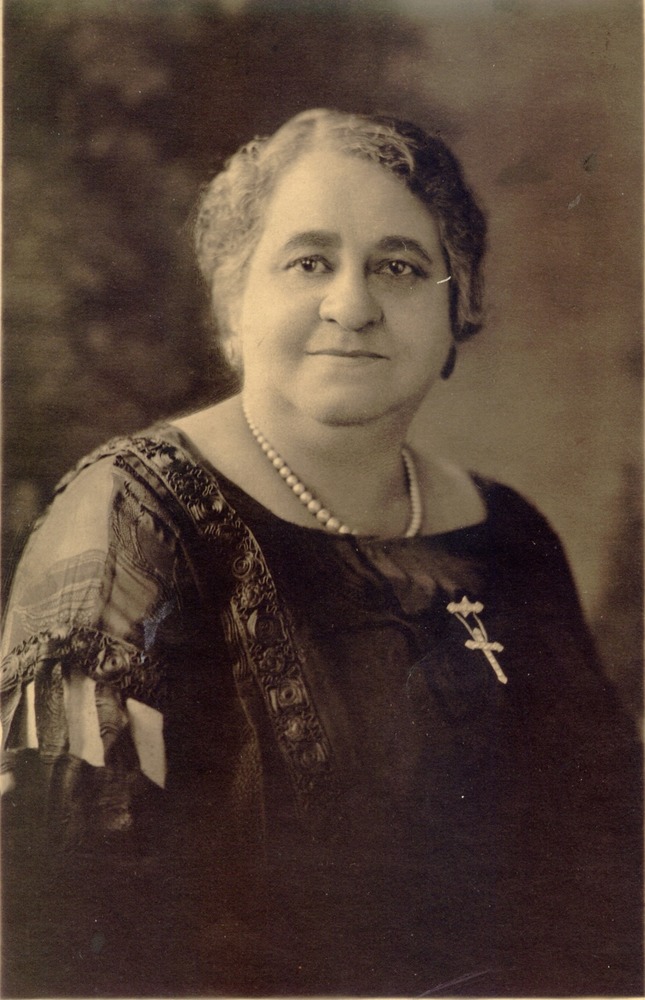
Maggie L Walker

Maggie Walker succeeded in the way most successful African-American businesspeople did in that era: she provided services to her own. The St Luke Penny Savings Bank served the Black community in Richmond, providing a safe place for savings, fair transactions, and financing for a variety of businesses endeavors. If the greater business community wouldn’t give them a fair shake, they would make their own fair shake. The Richmond African-American business community thrived due to their collective grit, savvy & determination.

This happened all across the country: New York City, Washington, Oakland, Tulsa, even Birmingham, Alabama. Richmond was known as “The Harlem of the South”, and the Jackson Ward area, which includes Maggie L. Walker’s home (protected by the National Park Service) and other landmarks (like the Hippodrome Theater). It’s a cool place to visit.
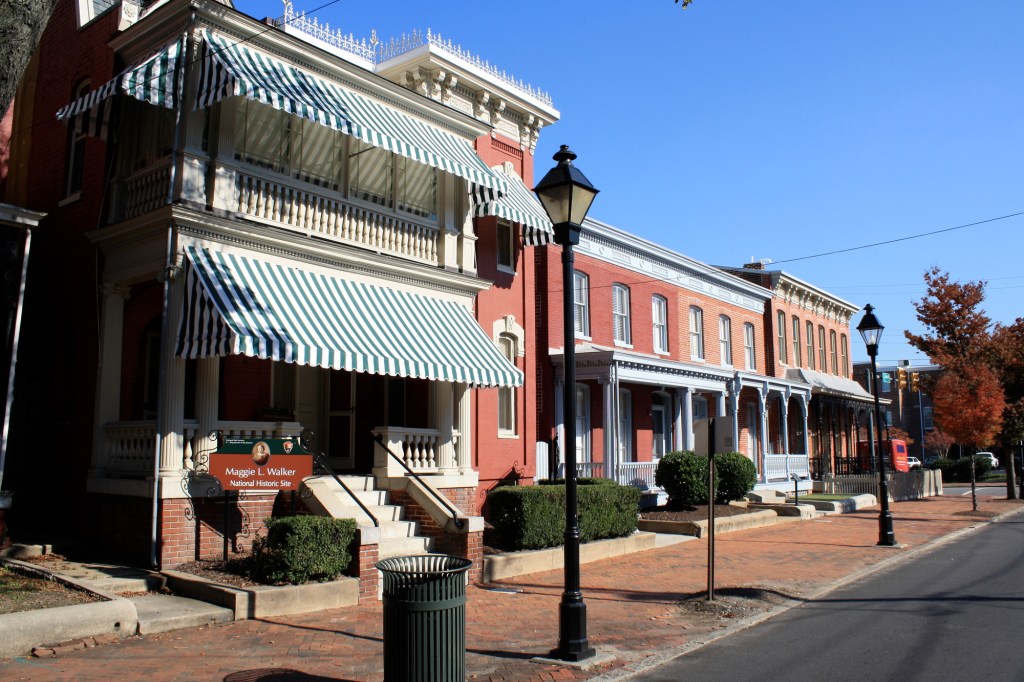
MLW National Historic Site

Tales of the Forgotten

I recently read A Black Women’s History of the United States by Daina Ramey Berry and Kali Nicole Gross. It recounts the struggle of Black women from the earliest days of colonialism. Isabel de Olvera came to the Americas so early, in fact, she was actually a free person. In 1600, she petitioned local officials in Mexico for affirmation of her rights. She was suspicious, and rightly so, that she would be subject to violence or captivity whilst on an expedition to New Spain. She demanded an affidavit proclaiming her status as a free person. The remaining 400 or so years has been a continuation of those demands, clearly with mixed results.

A Black Women’s History covers this entire era, from 1594, when a person described only as a “mulatto woman” made her way to present-day Kansas as part of the Francisco Leyva de Bonilla expedition (where they were all likely killed by the local Kitikiti’sh people) to Shirley Chisholm’s run for President in 1972. I shouldn’t have to say the history of Black women has been fraught with sadness, but it’s also full of grit, savvy, determination, and especially courage.

The worst part of it all, though, is the history of Black women is also full of forgetfulness, or, more accurately, inconsideration. Frankly, nobody cared, and nobody documented. Sure, figures like Rosa Parks and Harriet Tubman get their due, but beyond that, how many famous African-American women can you name (outside of entertainment figures like Oprah Winfrey or Billy Holiday)? Fortunately, A Black Women’s History is here to introduce us to many.

This is not just a collection of stories, however. The authors also describe the chain of oppression formed from the links of womanhood. Imagine a world where your own personal freedom defined the freedom of your children, where your own progeny could not have their escape because you were guaranteed to not have yours. Yet that’s what the colonial — and later national — policy of partus sequitur ventrem (‘that which is born follows the womb’) meant. Imagine being a mother and learning you’re pregnant under such a system.

If you have a fondness for American history, I suggest you add A Black Women’s History to your reading list. Otherwise, you’re missing a part of the story.

[I visited Maggie L Walker NHS before I had a digital camera. Pictures here are courtesy of the National Park Service.]

Links:

Maggie L. Walker National Historic Site

9 Historic Black Neighborhoods That Celebrate Black Excellence

The Story of the Chitlin’ Circuit’s Great Performers

A Black Women’s History of the United States (Amazon)

Read Full Post »

9/11, Patriotism, and the Spirit of America

The events of Sept. 11, 2001, were horrible. I don’t know about the rest of you, but 9/11 threw me into a state of grief I had never encountered before. Honestly, at one point that very afternoon, I stepped out of the building, sat at a nearby picnic table, put my head in my hands, and cried. Tears of pure grief. I had never felt real grief before. Yeah, I had lost family members, including my grandfather, a man I deeply admired. But those were expected deaths, deaths resulting from a life long lived. 9/11 was a complete shock, a true tragedy, and different from anything I had ever seen before.

Firefighter & Flag

The terrorists attacks upon the World Trade Center and the Pentagon, and the foiled Flight 93 attack, killed 3000 people. It was the greatest loss of life in a single day on American soil due to conflict since Antietam. But I was not in grief solely because of the horrible loss of life, or of the families torn apart, or of the resulting economic turmoil. I was in grief because I felt I was witnessing the beginning of the end. Nations and civilizations can fall because of great tragedies. Would 9/11 be the catalyst for the collapse of the Great American Experiment? This is what I felt I was witnessing: the defeat and collapse of the country I loved.

For the first time in my lifetime, America had been directly attacked. Not one of our outposts, not some ship in a foreign port, but one of our own cities. And not just one of our cities, but our greatest city. And not just attacked, but brutally and savagely with devastating effect. Just what the hell was happening? Have our decades of choices since WWII been so misguided that a huge segment of the world – namely 900 million Muslims – wants to destroy us? How did we go so wrong? Would our decadent and irresponsible society recover? Could our incompetent leadership handle this tragedy properly and put us back on the right path? This was my state of mind in the aftermath of 9/11: doubt, discouragement, grief.

Washington QuoteI had already made my plans to visit park sites in Virginia and North Carolina in the fall of ’01 when 9/11 happened. Of course, I had to go through with my trip. Even though my faith in the country was shattered, hiding in the basement was clearly not the answer. I had dear friends flying to Hawaii for their honeymoon, I couldn’t be a coward and stay home. So, grief-stricken and all, I packed up and headed south.
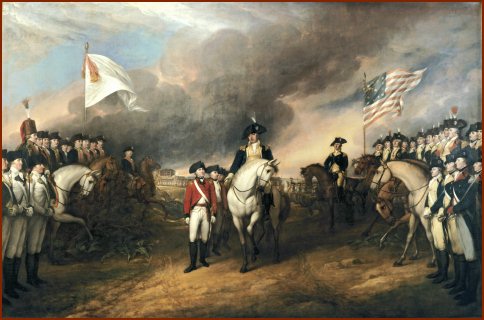
Colonial National Historical Park was one of my first stops on that swing through the South. It’s the home of the famous Yorktown Battlefield, where the Revolutionary War was settled in 1781. I was twitchy during the entire drive from Connecticut. By then the planes were flying again, and I found myself startled every time I heard a jet engine. Was it crashing into a building?? I found myself alarmed whenever the radio cut out. Did terrorists take out a radio tower (many New York-area radio stations went off the air during the WTC attacks)?? The worst moment was when I saw a group of Muslims sitting & talking in a pavilion near the Colonial visitor’s center. They made me nervous & suspicious, clearly a prejudicial reaction of which I am not proud.

Surrender of Lord Cornwallis

Now normally, I revel in the history of our national park sites. I’ll go through all the displays, do as many trails as I can, investigate the terrain and surroundings, try to internalize the significance of the events at hand. At Yorktown, I clearly went through the motions, lost in a fog of my post-9/11 funk. It was a beautiful fall day, the peak of autumn colors, bright blue skies, but I was just wandering around, avoiding the public, just roaming the grounds. But I did manage to notice a few people in a field, clearly interested in something in the skies up ahead.

There, above a field, near the very site where Cornwallis surrendered to Washington, giving Americans their freedom, circled two bald eagles.

There’s a lot to be said about symbolism. Psychologists, archaeologists, writers, artists, Madison Avenue marketing experts and politicians study and leverage the power of symbols on a daily basis. Symbols can sway opinions, change moods and can even affect the course of a nation. Powerful symbols can affect the most intelligent, pragmatic folks, and even impact the cynical and the jaded (although they are loathe to admit it). Never underestimate the power of a well-placed and well-timed symbol.

Bald EagleBald eagles were not common in Virginia. Their numbers are improving (in fact there’s been a great resurgence of the species) but they were still fairly rare in the southern Eastern Seaboard. Yet there they were, just circling around above the field, clear as day in the bright, blue sky.

I don’t know if it was the symbolism of the bald eagle circling a site of such great historical significance, or if the coolness of seeing such beautiful birds in an area where they are rare, or if it was just something different to snap me out of my funk, but whatever it was, I felt better after that point. Later I realized that we managed to keep this country together for more than 200 years, through some really tough times, and although 9/11 was terrible, it really didn’t crush the country. We’d recover.

In the years since 9/11, we’ve had a tough time of it. We had some bad governance, went down some really dark paths, but I’m convinced (perhaps especially in light of the recent election) that we’ll get out of this. I still have faith in the Great American Experiment, even though we’ve been sidetracked by events external and internal. The great, extinct nations of the past died because of stagnation, but here we have a chance to change our direction every election cycle. The eagles of Yorktown mirror that belief: once on the brink of extinction, the great birds have rebounded because we changed our direction. Our decisions to ban DDT and provide bald eagle habitat saved the species. If we can do that, we can also make the choice to change our direction and save the country. That gives me great optimism.

Not to say I’m not still jaded and cynical, I guess I’m just optimistically jaded and cynical. 😛

Banner

[I didn’t own a digital camera when I visited Colonial NHP in 2001. All pictures are, I believe, in the public domain.]
Links:

Colonial National Historical Park

A Collection of Post-9/11 Essays (not all of which are endorsed by AiC)

Recovery of the Bald Eagle

Google map to Colonial NHP

Read Full Post »

One Problem, Many Solutions, Few Successes

If there is one difficult part of American history & society, it is that transition from slavery to freedom in the post-Civil War period (which, in actuality, is still going on today). I’m not talking about the actual sequence of events from the Emancipation Proclamation to Kanye West’s recent Grammy speech, I’m talking about the larger social, political, and even philosophical problem: how does an entire population, almost 4 million strong, make the transition from slavery to freedom, without crushing the economic and social status of the formerly enslaving nation? Oof, that’s a toughie, a heady question with so many facets, from the technical to the ethical to the theological.

I can say this with absolute certainty: it’s a question that America failed to answer satisfactorily. Yes, I said it: America failed one of the greatest challenges a nation ever faced.

Vegetable Garden — © 2008 America In Context

It’s obvious that America failed in this regard: Jim Crow, the Klan, Plessy v. Ferguson, police dogs in Birmingham, the assassination of Martin Luther King Jr., the Watts riots, the continued concentration of poor blacks in America’s inner cities. These are not good results. The only part we really got right was freeing them in the first place (although even that was almost a hundred years too late — surely the Great Teacher in the Sky took points off for lateness on that one).

Sure, things have gotten better for African-Americans since 1865. But is it really better because America made it better, or is it better in spite of America’s efforts? As time has gone on, we have become more integrated. Black culture and music has woven itself into our society, creating art forms (like the Blues, rap music, urban wall art, and others) that could only incubate in a cauldron of pain, suffering, and intolerance that post-slavery America provided. But I don’t call that a “success”, we’ve simply accepted the failure and tried to move on with our lives.

Sheep In Pen — © 2008 America In ContextOh, to be able to take a time machine back to the late 19th Century and advise our leaders — both white and black — on how to do it right. Wouldn’t that be wonderful? It would be like telling the diners in Pompeii to leave the city; telling the Middle Age clerics to let the cats kill the plague-infested rats; warning post WWI Germany to leave Adolph in Austria. We could go back and fix everything, and none of those traumas I mentioned earlier would happen!

Unfortunately, even today, 145 years after Lincoln’s Emancipation Proclamation, we still have no idea how we could have done it any better. So we would hop out of our little time machine, look President Andrew Johnson and the U.S. Congress square in the eye, and go: “duhhhhh……”

The problem back then (with certain similarities today) is how to take an entire population, uneducated and entirely dependent upon a ruling class, and transform it into an independent, productive, successful body, without correspondingly bringing ruin upon that ruling class. Do you give them their own territory so they can develop their own society? Do you work to integrate them into your own society, so your success is their success and vice versa? Or do you simply transform from slavery to something almost as bad, keeping them a chronic underclass forever?

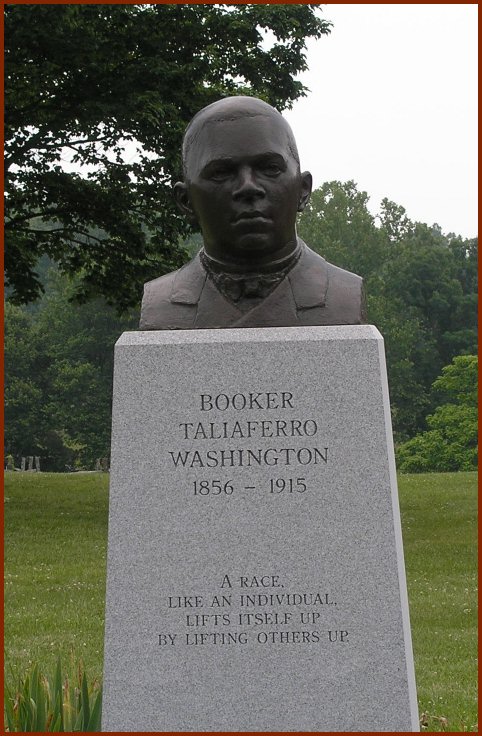
In the post-Civil War days, many African-American leaders came forward with their own ideas. Booker T. Washington was one such leader.

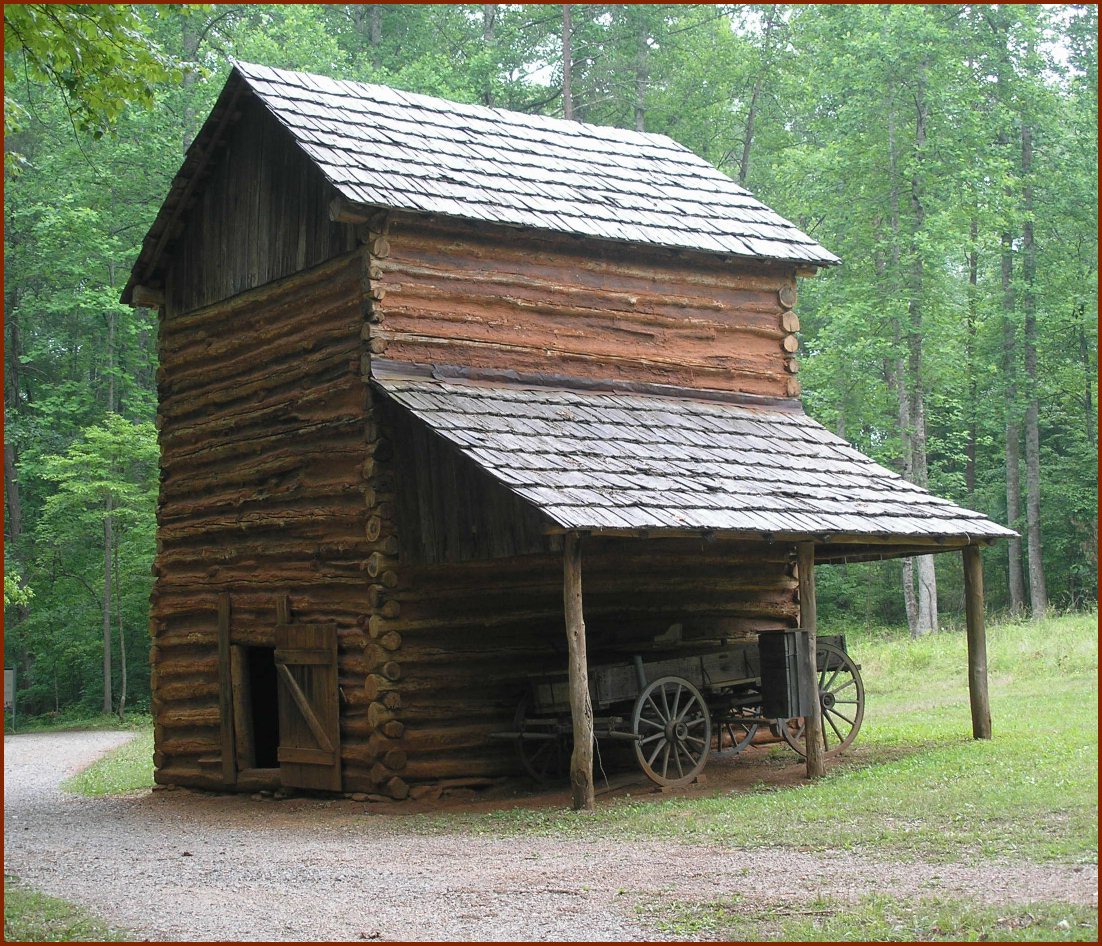
Tobacco Shed — © 2008 America In ContextWashington was a man after my own heart. He strongly believed in teaching freed slaves and their children about the real world: science, technology, engineering, agriculture. I’m a big fan of science and engineering and their real-world applications. In my view, as was Washington’s, if you can teach a person a real trade, you can set that person up for life. If you’re skilled, it doesn’t matter who you are, it matters what you do. Yes, it’s a pie-in-the-sky ideal, for you always have that personal element in everything, but your odds are much better if you have something real and tangible to offer society. And if society doesn’t want it, at least you can use those skills and have some semblence of autonomy. That was Booker T. Washington’s modus operandi: teaching blacks how to do. It was also the genesis of Washington’s great achievement: the Tuskeegee University (also part of the National Park Service, a topic for a later post).

The reality of the times would sadly tarnish Booker T.’s reputation. In order to create such a university, Washington needed funding. Funding he received … from wealthy white elitists, some of whom were former slaveholders themselves. Labelled an “accommodationist”, Washington was far too mum on the subject of segragation for many other African-American leaders. He would eventually speak out more and more against segregation, but for many of his contemporaries, it was too little, too late.

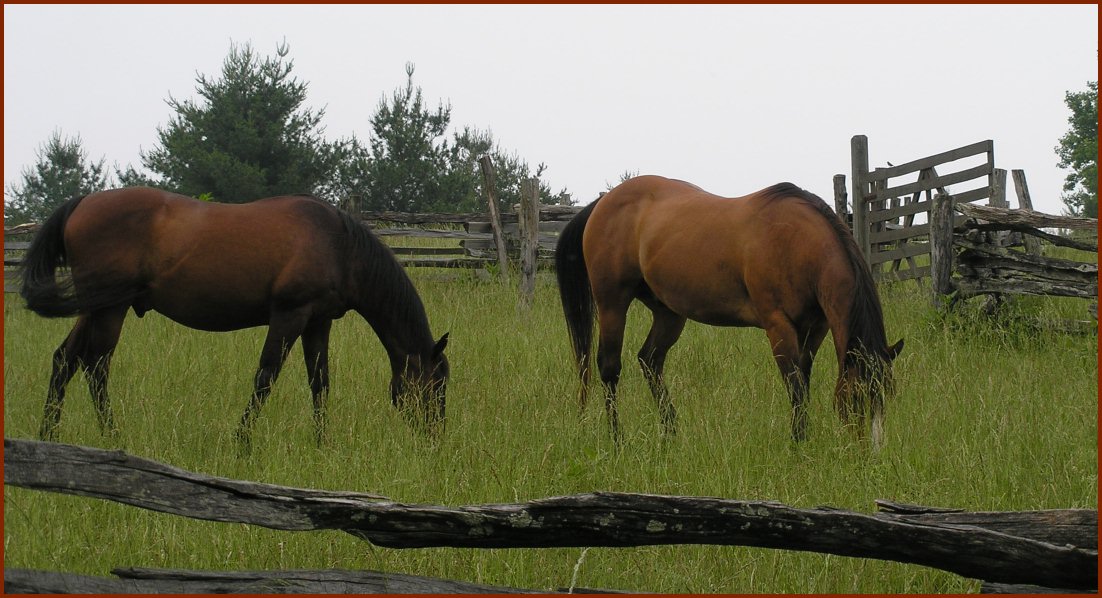
Munch Munch Munch — © 2008 America In Context

As I stated earlier, I’m not very good with African-American history. But I do know that no one in that era, including black leaders like Booker T. Washington, had all the answers for the freed slaves and their descendents. Those (black and white) who had the best of intentions did the best they could, based on their knowledge of humanity and the condition of the times. Their efforts may or may not have been successful, they may or may not have been right, but it has to be acknowledged that the simultaneous release of millions of men, women, and children from bondage created a problem vaster than mankind’s ability to solve. These people did the best they could, and at least they acted, and didn’t wait the required couple hundred years for the problem to solve itself.

Booker T. Washington National Monument restores the boyhood home of a man who did what he thought was right. It has been restored to resemble what it might have looked like during that time. The place itself is unremarkable, but the place in context with the most difficult part of American history truly makes one think.

Booker T. Washington Memorial — © 2008 America In Context

[All photos on this post are my originals. See my other Booker T. Washington National Monument photos here.]

Freed Fowl — © 2008 America In ContextLinks:

Booker T. Washington National Monument

The Negro Problem (essays from Booker T. Washington & others)

Google map to the monument

Some damned fool let the chickens out!

Read Full Post »

Beep! Beep! Honk! Honk! — Curse of the Drive-By Tourists

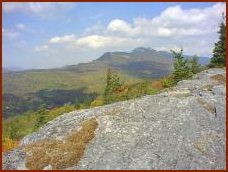
It’s an odd sort of thing: a National Park that’s really just a stretch of road. But that’s what the Blue Ridge Parkway is: a stretch of road. It’s a terrific stretch of road, however. It runs between Shenandoah National Park in Virginia, and Great Smoky Mountains National Park in North Carolina, and contains some of the nicest scenery east of the Mississippi. There are great swaths of sparsely developed land on both sides of the road, and plenty of small towns and great diners and other out-of-the-way places up and down the Parkway.

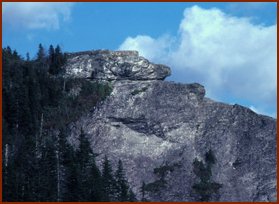
Courtesy of National Park Service

The big problem with the Parkway is the phenomenon of the drive-by nature tourist. Growing up in Western Massachusetts means growing up loathing one particular type of tourist: the leaf-peeper, that sightseer who comes up once a year, clogging our roads, looking at the world through their side window. It’s even worse when they won’t even get out of their cars to have lunch & help the local economy: they just turn around and go back to Rhode Island or Boston or wherever they come from. Eventually, it’s safe for the locals to get back on the roads, but by then, fall’s over and the roads to the mall get overloaded with Christmas shoppers….

Ah well, at least it’s only once a year. On the Blue Ridge Parkway, however, you get these types all year round. But unlike the roadways of Western Mass., the Parkway isn’t a real travellers road, it is just for the tourists. They’re not clogging up roads that working folk have to travel, so that’s fine. But I still get peeved by these drive-by tourists, even on roads built for them.

Courtesy of National Park ServiceMy big beef is this: nature is meant to be experienced, up close. It cannot be appreciated from the air-conditioned comfort of your Lexus SUV. You need to get out, put feet to ground (or paddle to water, or snowshoe to snow, or mountain-bike tire to trail, or whatever your modus operandi may be). That’s how you see the glory of nature. Get off your butts, and climb that ridgeline. Not only will you get some exercise, but then the views and vistas will be truly earned! And earning the reward makes the reward so much more satisfying.
Beyond that, in my opinion, roadside tourism leads to a misunderstanding of nature. It leads to a belief that nature is this broad, sturdy, indestructible everything, and that’s just not true. It also leads to this belief that nature is this serene, safe place, devoid of danger, and that’s not true, either. Nature can harm and can be harmed, it is strong yet delicate, it is diverse yet encompassing. Nature is so much more than just treetops and mountains visible from a roadside turn-off. It is trees and moss and roots and rocks and newts and squirrels and flowers and worms and all those other things not visible from behind a windshield.

So next time your driving along some scenic road, pull over, get off your butts, and walk the woods!

Courtesy of National Park ServiceI’ll talk about Shenandoah & the Smokeys later on, but here are a few non-National Park System sights I visited along the Blue Ridge Parkway:
  • Eastern Virginia has a lot of cave attractions, most are west of the Parkway. I visited Luray Caverns in New Market, Virginia. It was OK, rather touristy, but has some nice formations.
  • Charlottesville, Virginia is a great small town. It’s both the home of Thomas Jefferson and Dave Matthews. You can visit the former’s home (Monticello). I don’t think the latter would appreciate an uninvited visitor, however. 😉
  • Montpelier, the home of our 4th President, and the man creditted with writing much of the Constitution, James Madison, is in nearby Orange, Virginia.
  • The Natural Bridge is further south in, oddly enough, Natural Bridge, Virginia. It is said George Washington himself carved his initials into the stone, they’re clearly visible from the walkway.
  • The National D-Day Memorial is just off the Parkway in Bedford, Virginia. I didn’t care for it, however. Far too grandiose in my mind. I’ll comment on this in later posts, but I like simple memorials & monuments, not something that belongs on a Franklin Mint collectible. I did take a few unspectacular pics when I was there in spring of ’07.
  • Roanoke, Virginia has a surprisingly hip downtown area with some good restaurants & interesting shops. No brewpubs, though. 😦
  • Asheville, North Carolina is another nice little town. The famed manse, the Biltmore Estates, are nearby. I hear they’re a “must see”, which is, of course, why I didn’t visit them. 😛

Courtesy of National Park Service[Sadly, I didn’t own a camera when I toured the Blue Ridge Parkway. All pictures on this post courtesy of the National Park Service]

Links:

Blue Ridge Parkway

Luray Caverns

Monticello

Montpelier

Natural Bridge

National D-Day Memorial

Google map to the Blue Ridge Parkway

Read Full Post »

Older Posts »