[Please note: this post contains strong language and extreme soapboxing. It’s also off-topic from the main theme of this blog: insights from my travels through the National Parks. Apologies to my subscribers, but I feel the need to do this.]
A Repulsive Story
The other day I heard a repulsive story. I don’t know if it’s true or an urban legend, but here it goes:
“A friend of a friend was going on vacation somewhere in the middle east. He thought it’d be funny if he put a packet of bacon in his luggage. But when they checked his luggage at the airport they found it and wouldn’t let him take it. Can you believe that shit?”
Um, WTF?? That is the stupidest thing I ever heard. Why in the world would you intentionally do something so patently offensive when traveling to a country on vacation? You would actually taunt the citizens of a country where you don’t speak the language, where you are (obviously) oblivious to their customs & culture, and where you’re (therefore) at the mercy of their generosity and goodwill? That’s like being invited to a friend’s house for dinner, walking in the front door, whipping it out and pissing on their couch. Then asking “haha, just kidding. Whatcha cooking?”
Toss on top of that the reality: that part of the world is in an immensely transformative state, one where we may not come out on top. The Crossroads of the World is at the Crossroads of History, the choices we make now can end well or can end very, very poorly. Imagine the 1979 Iranian Revolution and hostage crisis x10 if you want to understand the magnitude. Read a newspaper and understand the situation. They you’ll (hopefully) understand that pulling that kind of stunt is just Ignorant (capital “I”).
Actually, in my opinion the TSA did the wrong thing. They should have happily put the bacon back in the luggage, let the dude board the plane, then make a special phone call to security at the destination airport. That asshole could then re-assess his life choices while they’re stapling electrodes to his testicles in a dank room far, far from civilization. Then the State Department can quietly put his passport documents into the shredder. Another asshole lost to the dustbin of history.
Now if this was just one of those “I heard it from a guy who knew the guy” stories, it would have ended right there. A footnote on snopes.com. But in this case, it was the storyteller who irked me. This person thought it was ridiculous for the TSA to confiscate it, that it would be funny, and after all, they just come over here to blow things up anyway.
OK, so now double WTF.
It really troubles me that people think like this. I mean, it really troubles me that AMERICANS think like this. Shouldn’t we be enlightened, at least a little bit? We think we have are the best at everything. Do we even show a little bit of insight, or thoughtfulness, or consideration, or understanding? No, we’re a bunch of arrogant, paranoid, thuggish fuckwits children.
So let’s just let this pass. There are bigots all over the place. I don’t have the strength of will to challenge them all, and my demeanor in these situations would make things far, far worse. I simply wasn’t interested in making a big stink about it. I just jotted it down in my mental notebook and turned the page.
Well, for a few days anyway.
Part Two
My mother is 78 years old and lives alone. I regularly take her out to do different things, like the movies (she loves sci-fi 🙂 ), or museums, or nature walks, or carnivals, or whatever. This past weekend, I took her on the Lady Bea, a small tour boat on the Connecticut River. It’s just an excursion, something to do, away from the TV. We’re sitting there, waiting for the boat, soaking up the sun, and a large van pulls up. About a dozen or so young women step off, most wearing hijabs. Muslims, obviously.
Now I am a human being. I have my foibles and fears. My initial, internal reaction was not positive. But I got over it without saying a word about it. I figured they were a club or something, perhaps a “women’s auxiliary” (to use an ignorant American euphemism) to a local mosque. There are Muslims living their lives in this country just fine, and they have every right to socialize wherever and whenever they want. And because the rest of us are a bunch of arrogant, paranoid, thuggish fuckwits children, it makes perfect sense they’d want to hang out with people “just like them”. It’s probably far safer and far more comfortable to do that, instead of hanging out with the rest of us who will undoubtedly try to sneak bacon into their ginger tea or something “because it’s funny”.
When we boarded the boat, it became obvious that they were tourists and not immigrants. I overheard one of their American guides explain the situation: they were students from Baghdad University, and just flew in to attend a one-month program at Smith College. Now I was intrigued, and perhaps a bit more optimistic. When an opportunity presented itself, I started to chat with their sponsor. These women were all in the country to study biological sciences in a special exchange program. It seems their country is actually trying to encourage their women to travel and learn at universities around the world.
Now this has to sink in, I think folks have to get this: an Arabic country, an Islamic country, a culture and a religion not known for kindness towards women, is actually encouraging its women to go overseas and become educated. This is outstanding! And to top it all off, they want to come here to do it. Let’s face it: as a whole, and contrary to popular belief, we did not do good things over there. Sure, we toppled their dictator, but the ensuing carnage and instability ruined their country (and I fear we have yet to see the inevitably horrific long-term consequences). Perhaps it’s not as gloomy as I think it is, perhaps there’s some hope …
Oh wait. We’re a country full of assholes who think it’s HYSTERICAL to insult, degrade, and demean those different from us, those we don’t understand, those we don’t like, or those who might share the same God as a suicide bomber or the same last name as an airplane hijacker. I suddenly felt bad for those women. I hoped they’d stay with their group and not wander on their own because we’re a society that will taunt and torment them or perhaps commit our own acts of violence & terrorism against them because “they just come over here to bomb us anyway”. I wish them well, I hope they have a good stay, and I hope they go back to Iraq and do good work.
I also hope I live long enough to see a time where the ones who are ostracized in this country are the arrogant, paranoid, thuggish fuckwits.
[Thanks for your patience. Back on topic starting next post.]


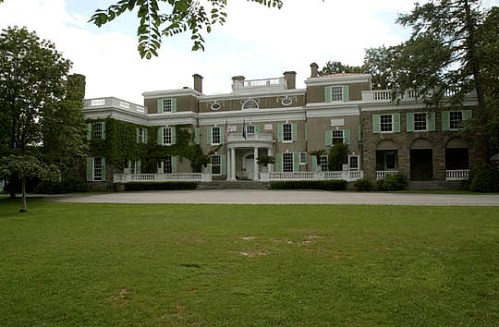
 I find this utterly fascinating. Sure, pundits & partisans would complain about the economics of the New Deal and the court packing scandal, but FDR had to be dead 60 years before the common man started questioning his Presidency and leadership. That’s almost three generations! I can’t think of anyone short of George Washington and perhaps Thomas Jefferson who escaped such criticism for so long. The people of FDR’s time had to basically die before public opinion turned against him. Today, we decry the previous loser the day after Election Day.
 Here’s my own take on why Roosevelt inspired such devotion: he had the “perfect storm” of confidence, communication, competence, and empathy. His family, especially his mother, Sara, gave him a good education and instilled in him a measure of self-confidence absolutely required of a good leader. FDR was a great communicator. His speeches are the stuff of legend and they were delivered, not as oratory, but as conversation, meaning they were genuine. Was FDR competent? Sure, you could say his policies weren’t necessarily wise, but he got them done. People respect people who get things done, action is rewarded far greater than thought or bearing. And FDR did accomplish an awful lot in his 12 years as President.


 America In Context
Tolerance
July 2, 2012 by Barky
[Please note: this post contains strong language and extreme soapboxing. It’s also off-topic from the main theme of this blog: insights from my travels through the National Parks. Apologies to my subscribers, but I feel the need to do this.]
A Repulsive Story
The other day I heard a repulsive story. I don’t know if it’s true or an urban legend, but here it goes:
“A friend of a friend was going on vacation somewhere in the middle east. He thought it’d be funny if he put a packet of bacon in his luggage. But when they checked his luggage at the airport they found it and wouldn’t let him take it. Can you believe that shit?”
Um, WTF?? That is the stupidest thing I ever heard. Why in the world would you intentionally do something so patently offensive when traveling to a country on vacation? You would actually taunt the citizens of a country where you don’t speak the language, where you are (obviously) oblivious to their customs & culture, and where you’re (therefore) at the mercy of their generosity and goodwill? That’s like being invited to a friend’s house for dinner, walking in the front door, whipping it out and pissing on their couch. Then asking “haha, just kidding. Whatcha cooking?”
Toss on top of that the reality: that part of the world is in an immensely transformative state, one where we may not come out on top. The Crossroads of the World is at the Crossroads of History, the choices we make now can end well or can end very, very poorly. Imagine the 1979 Iranian Revolution and hostage crisis x10 if you want to understand the magnitude. Read a newspaper and understand the situation. They you’ll (hopefully) understand that pulling that kind of stunt is just Ignorant (capital “I”).
Actually, in my opinion the TSA did the wrong thing. They should have happily put the bacon back in the luggage, let the dude board the plane, then make a special phone call to security at the destination airport. That asshole could then re-assess his life choices while they’re stapling electrodes to his testicles in a dank room far, far from civilization. Then the State Department can quietly put his passport documents into the shredder. Another asshole lost to the dustbin of history.
Now if this was just one of those “I heard it from a guy who knew the guy” stories, it would have ended right there. A footnote on snopes.com. But in this case, it was the storyteller who irked me. This person thought it was ridiculous for the TSA to confiscate it, that it would be funny, and after all, they just come over here to blow things up anyway.
OK, so now double WTF.
It really troubles me that people think like this. I mean, it really troubles me that AMERICANS think like this. Shouldn’t we be enlightened, at least a little bit? We think we have are the best at everything. Do we even show a little bit of insight, or thoughtfulness, or consideration, or understanding? No, we’re a bunch of arrogant, paranoid, thuggish
fuckwitschildren.So let’s just let this pass. There are bigots all over the place. I don’t have the strength of will to challenge them all, and my demeanor in these situations would make things far, far worse. I simply wasn’t interested in making a big stink about it. I just jotted it down in my mental notebook and turned the page.
Well, for a few days anyway.
Part Two
My mother is 78 years old and lives alone. I regularly take her out to do different things, like the movies (she loves sci-fi 🙂 ), or museums, or nature walks, or carnivals, or whatever. This past weekend, I took her on the Lady Bea, a small tour boat on the Connecticut River. It’s just an excursion, something to do, away from the TV. We’re sitting there, waiting for the boat, soaking up the sun, and a large van pulls up. About a dozen or so young women step off, most wearing hijabs. Muslims, obviously.
Now I am a human being. I have my foibles and fears. My initial, internal reaction was not positive. But I got over it without saying a word about it. I figured they were a club or something, perhaps a “women’s auxiliary” (to use an ignorant American euphemism) to a local mosque. There are Muslims living their lives in this country just fine, and they have every right to socialize wherever and whenever they want. And because the rest of us are a bunch of arrogant, paranoid, thuggish
fuckwitschildren, it makes perfect sense they’d want to hang out with people “just like them”. It’s probably far safer and far more comfortable to do that, instead of hanging out with the rest of us who will undoubtedly try to sneak bacon into their ginger tea or something “because it’s funny”.When we boarded the boat, it became obvious that they were tourists and not immigrants. I overheard one of their American guides explain the situation: they were students from Baghdad University, and just flew in to attend a one-month program at Smith College. Now I was intrigued, and perhaps a bit more optimistic. When an opportunity presented itself, I started to chat with their sponsor. These women were all in the country to study biological sciences in a special exchange program. It seems their country is actually trying to encourage their women to travel and learn at universities around the world.
Now this has to sink in, I think folks have to get this: an Arabic country, an Islamic country, a culture and a religion not known for kindness towards women, is actually encouraging its women to go overseas and become educated. This is outstanding! And to top it all off, they want to come here to do it. Let’s face it: as a whole, and contrary to popular belief, we did not do good things over there. Sure, we toppled their dictator, but the ensuing carnage and instability ruined their country (and I fear we have yet to see the inevitably horrific long-term consequences). Perhaps it’s not as gloomy as I think it is, perhaps there’s some hope …
Oh wait. We’re a country full of assholes who think it’s HYSTERICAL to insult, degrade, and demean those different from us, those we don’t understand, those we don’t like, or those who might share the same God as a suicide bomber or the same last name as an airplane hijacker. I suddenly felt bad for those women. I hoped they’d stay with their group and not wander on their own because we’re a society that will taunt and torment them or perhaps commit our own acts of violence & terrorism against them because “they just come over here to bomb us anyway”. I wish them well, I hope they have a good stay, and I hope they go back to Iraq and do good work.
I also hope I live long enough to see a time where the ones who are ostracized in this country are the arrogant, paranoid, thuggish fuckwits.
[Thanks for your patience. Back on topic starting next post.]
Posted in Uncategorized | Tagged bigotry, commentary, intolerance, Iraq, Islam, Middle East, racism, tolerance | Leave a Comment »