Feeds:
Posts
Comments

Egret -- Public domain photo courtesy of Kennedy Space CenterSea Turtles, Sure, They’re Cool, but This is NASA!!!!

The National Park Service is all about protecting the nation’s wildlife and natural wonders. On the Atlantic coast of Florida, they control the beautiful Canaveral National Seashore, refuge to sea turtles, manatees, and various wading birds.

Yeah, whatever. Nearby is the Kennedy Space Center!! W00t w00t!!!

America has two points of ultimate coolness. One is our music (yep, we created blues & jazz & rock & hip-hop, uh-huh, uh-huh, take that, Europe, with your Beethoven & accordions & flugelhorns!!). The other is our space program.

Say what you will about NASA. Maybe they’re a team of brilliant, talented scientists who explore our tiny little corner of the universe, or maybe they’re a big financial suckhole draining our coffers & gobbling up taxes. Either way, it doesn’t matter, for their shit is cool!  KSC has a lots of coolness to see: old Saturn V rockets, various landers, and all sorts of videos & stuff. Simply being there in the shadow of Launch Pads 39A & B, where they launch the Shuttle at somewhat regular intervals, is awesome in and of itself.

I lived in south Florida for a couple of years, and saw several shuttle launches. Never made it to the actual visitor viewing at KSC itself (if they even still do such a thing in a post-9/11 world), but saw it from the pier at Cocoa Beach (cocktail in hand), and also saw a night launch from the backyard of a friend in Stuart (also cocktail in hand, imagine that). Both have great features: seeing it from the beach gives you the full view of the plumes, seeing it at night awes you as the horizon fills with the orange glow of burning hydrogen. Seeing a shuttle launch ranks as a “must do for all Americans” in my book, but act fast, the shuttle isn’t gonna be around forever.

Pad 39A -- Public domain photo courtesy of Kennedy Space Center

The neatest display at the Kennedy Space Center is a setup of the original consoles used for mission control during the original Apollo missions. It’s rows and rows of old CRTs, vacuum-tube computer banks, craptastic speakers and clunky microphones. My color printer has more silicon brains than the lot of it, but, amazingly, it got people not only into space but all the way to the moon and back! Ya look at those lame pieces of shite, and you just marvel at the feats those guys were able to pull off.

Today, people worldwide are using high-powered cellphones to surf LOLCats!. Boy, are we pathetic, or what??

NASA’s still doing lots of stuff. They’re doing a lot of global warming research, have a lot of satellites in play, have launched various probes that are still transmitting data back to Earth, and are working on a lot of other projects. Sure, things like a manned Mars mission don’t seem possible, or practical, or useful, but I like the notion of an agency devoted to nothing more than pure research into the cosmos, the stuff of which we all are made (if you believe in such things).

Anyway, my vote is go Nasa!

Shuttle Endeavour Liftoff -- Public domain photo courtesy of Kennedy Space Center

[Sadly, I didn’t own a digital camera when I visited Cape Canaveral, nor for all those shuttle launches.  All pics are public domain courtesy of the Kennedy Space Center].

Links:

Canaveral National Seashore

Visiting Kennedy Space Center

KSC Media Gallery

Do We Really Need NASA?

Google map to Cape Canaveral

Getta Move On!

So many of the National Park Service’s historic sites are static. Event X happened at Location Y so we put up a visitor’s center! Come on down!

Not so the National Trails. The trails are sites-in-motion, and collectively record the most significant event in American history: the great east-west migration.  The nation has never been static, we’re marked more by moving around than we are by staying put.  From the first time the settlers crossed the Appalachians to Lewis & Clark to Manifest Destiny to underage girls sneaking away to Hollywood, we’re a nation on the move. This is true today: according to the U.S. Census Bureau, almost 10% of the population moves from one state to another every five years. I wonder how many people live in a state other than their birth state? Quite a lot, I’d wager.

Blogging about these trails is gonna be tough. They aren’t single, compartmentalized sites, they’re a chain of locations connected by a common purpose. In the case of the California Trail, it’s a collection of sites important to the Gold Rush of the mid-to-late 1800’s. In the fall of 2007, during my trip to Yosemite, I took a little trip down (er, actually, up) the California Trail.

Sutter’s Fort — © 2008 America In ContextI started in Sacramento. What a cool little city! I had never been before, and I was really impressed with the downtown. It’s nice, clean, easily walkable, with a lot of great hotels, shops, restaurants, and (of course), brewpubs (I stopped in the Rubicon, a fine establishment 🙂 ). Went to Sutter’s Fort, an official stop on the California Trail. It’s a rebuild: all new construction meant to look like the old construction (hence the entrance fee). It’s nice enough, but it is fake. Good enough for the kiddies, I suppose, one young lad was having a grand old time playing cowboy amongst the barrels & things.

I then headed up Highway 50 to Lake Tahoe which was, and I’ve gotta be honest here, a real dump. Yeah, it was off-season, but still, I can’t see the appeal. I’m sure the lake is great for boating, and of course the skiing is renowned, but the town itself is a lame tourist trap. To see even worse, cross the border into Nevada for the casinos. “Craptastic” is a good word to describe these joints, all of which have a highly dubious clientele. Not gangster-dubious, but punk-kid dubious. Late teens & early twenty-somethings with attitudes bigger than the balls to back them up. “I’m a big time Texas Hold ‘Em player, look how cool I am!” Yeah, coolness — don’t stay up too late, I’m sure you have the morning McMuffin shift. I know some really good Hold ‘Em players, and all of them are nice guys with no attitudes and real jobs that punk-rats like you would drool over. I’m sure there’ll be a government bail-out program for jerkwads like you who blow all your minimum wage cash at tables way above your skill level. Anyway, I digress …

Sierra View — © 2008 America In ContextThe absolute best part of this little spur on the California Trail are these Northern Sierra mountain roads! I rented a Nissan Altima (well, that’s the car they gave me), and it was a blast taking it up and down those roads! Thanks to the time zones, I found myself awake at 5 AM on a Sunday morning. After breakfast, I hit the roads about 6 AM, right before dawn was breaking. Had the roads all to myself, what a ball!! Just like a car commercial, definitely a better time than breathing in Tahoe second-hand smoke.

At the bottom of Rte. 207 lies the Minden/Gardnerville area of Nevada. What a beautiful little valley! Small towns, great scenery, seemingly nice folks. A lot of bikers touring around, taking in the views. A great, quiet place, probably a great place to raise a family, and a place where I could see myself retiring (except I love New England so damn much). In the nearby town of Genoa sits Mormon Station State Park, another stop on the California Trail.  I got there too early (again, damned time zones), but it’s clearly another reconstructed site, and I just didn’t have the interest. So I hopped back into the rented Altima and took to the road again.

Quiet Hamlet — © 2008 America In Context

This time, the road was the famed Highway 395 that runs parallel to the back side of the Sierra Nevada mountains. Another great stretch of road with some great vistas. I would have made great time, but I found myself stopping for pictures far too often. Eventually, the road would lead to my real destination: Yosemite National Park.

But that’ll have to wait for another post. And with that, I’ve just pissed off Ellie again (you know who you are 😉 )!

Cloud Wrap — © 2008 America In Context

[Pics on this post are mine. Sadly, due to poor photo management, I lost many others, those that are left (mostly of Sutter’s Fort), are here.]

Links:

California National Historic Trail

Sutter’s Fort State Park

Mormon Station State Park

Highway 395 Road Trip

Rubicon Brewing Company

Several weeks ago, in my Badlands post, I briefly mentioned the Wounded Knee massacre site on the Pine Ridge Indian Reservation. I thought my recommendation this time around should go back to that.

I applaud anyone who wants to read more on Native American history. Over the decades since I was a kid, we’ve collectively become more sensitive to their plight. They are no longer depicted as the “savage enemy” in popular culture, but IMO we still don’t understand the full depth & breadth of the trauma these people went through.

For those wishing to embark on an independent study of the Native American, I can recommend no better starting point than Dee Brown’s classic “Bury My Heart at Wounded Knee”, the first widely read work of its kind: a history of Indians by an Indian.

Bury My Heart at Wounded Knee

I have to be totally honest here: Brown isn’t the best writer in the world. His prose isn’t graceful or eloquent, but it is written from the heart, and in a storytelling style that suits the voice of the Native American people. Unlike Europeans, tribal ancestors spoke (or even sang) their histories, passing tales & lessons down in a great, verbal tradition. Brown relates these sad tales of Indian oppression in a similar, conversational style that honors this tradition. Reading “Bury My Heart” is like listening to tales of old, spoken by wise, yet dispirited, elders to wide-eyed youth.

Pick it up & give it a read.

Spanish Influence? Who’da Thunk It!

East Coasters, even those who don’t study history, know of Britain’s role in American history, for it’s glaringly obvious. We also have an idea of France’s role in the Revolution, the settling of New Orleans, and the Lousiana Purchase. We also know a lot about European immigrants, and, of course, the impressment of Africans in the days of the colonies.

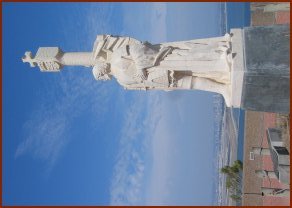
Statue of Juan Rodriguez Cabrillo courtesy of WikipediaWe never think about Spain. Well, maybe Floridians do, but the rest of us are clueless.
Californians, on the other hand, know full well about Spain’s role. Their whole countryside is full of it, from  the El Dorado National Forest down to the Cabrillo National Monument near San Diego. Spain had a huge role in the exploration and settling of the west coast of the continent, and, when you consider Mexico, Spain had a role in American history from the missions of San Antonio all the way to the the founding of San Francisco.

Cabrillo was the first west coast NPS site I visited, and the first one to plant the idea of Spanish influence in America in me. I happened to be in San Diego for a conference, and took the opportunity to stop by Cabrillo. It’s located on the Point Loma peninsula just past the naval reservation. The site honors Juan Rodriguez Cabrillo, a 16th century Spanish explorer who led one of the first expeditions up the western coast of North America. Sadly, he died during his explorations, but his trip did lead to further trips by other explorers, eventually leading to the settlement of the coastline by conquistadors and clergy (for good or for evil, you decide — my own opinions on the matter will get their due in a later post).

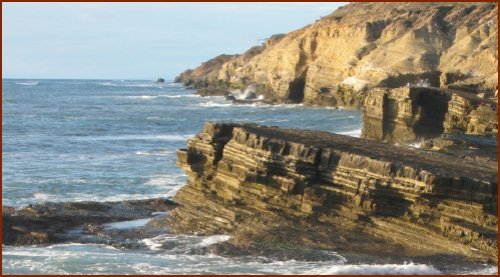
Cabrillo is a small site. There’s a small museum at the visitor’s center; the Old Point Loma Lighthouse; remnants of World War II coastal defenses; and a statue of Juan Rodriguez Cabrillo. The highlight of the site, by far, are the excellent views of the Pacific Ocean, the bay, and San Diego itself. I hear you can see whales migrating past the monument in January, and I know you can watch the seals have a conversation with a foghorn (you’ve gotta be there to know what I’m talking about).

On a side note, I have to give props to San Diego. I was only there for about a week, most of the time in conferences, but I liked what I saw. The historic district has some great restaurants, and the San Diego Zoo is an absolute must see. I don’t particularly like zoos, they’re usually like “animal abuse on display”, most disturbing. But the SDZ does a good job. The animals look healthy & happy, and the staff truly seems to care about them. Forget the pandas, the line’s too long. Check out the rain forest aviary & the wild cats. 8)

Keep your eye out for conventions in San Diego, and convince your boss you absolutely have to attend one. 🙂

Cabrillo Tidal Pool courtesy of Wikipedia

[Sorry, I didn’t own a digital camera when I visited Cabrillo. Photos shamelessly glommed from Wikipedia. However, here’s a great blog entry on Cabrillo with some fantastic photos. Sites like this make me want to work on my photography skills all the harder.]

Links:

Cabrillo National Monument

San Diego Zoo

Rock Bottom Brewery (I normally don’t care for chain brewpubs, but Rock Bottom has really good beer & food. The San Diego Rock Bottom is the first one I ever went to, hence the link here).

Google map to Cabrillo