Feeds:
Posts
Comments

Posts Tagged ‘history’

A Difficult Birth

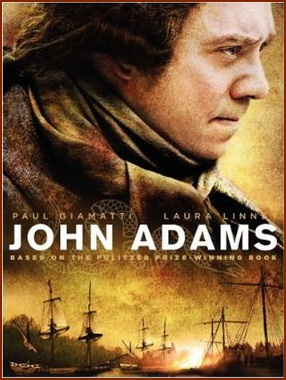
I watched HBO’s excellent mini-series “John Adams”, about the famed patriot and second President of the United States. As I posted waaaaay back in December of ’07, John Adams is my favorite Founding Father, and I think HBO did him justice, flaws and all. Beyond a fairly accurate portrayal of Adams himself (although I do think HBO downplayed the staunch religious beliefs shared by John and his cousin, Samuel Adams), the mini-series gave a very accurate portrayal of the nation’s gritty past.

John Adams

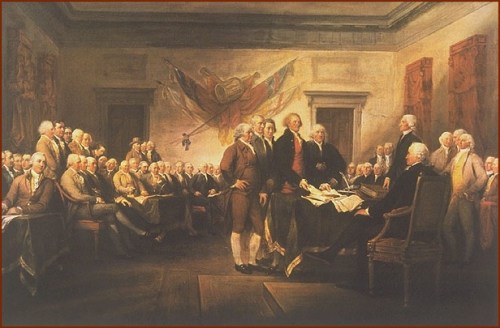
There’s this great mythology around the birth of this nation. We have this image, inspired by John Trumbull’s famous painting, of nattily-attired statesmen, gathered in a great hall, proudly proclaiming our independence for all the world to hear. Unfortunately, that image is not at all accurate. I won’t go into all the factual details here, sites like Americanrevolution.org describe them well enough. I do want to go into what our vaunted image, and even a nitpicking of the facts, does not convey, and that is how risky and dangerous, and messy and complicated, the birth of this nation really was.

This was such a dangerous endeavor that the members of the Continental Congress were rarely, if ever, all present at the same time. They would appear in shifts, as it were, with individual representatives of a colony present but almost never a full quorum of a delegation. Some of the notables, like the Adams cousins and William Ellery of Rhode Island, had open warrants for their arrest by the British colonial government long before the 2nd Continental Congress convened, and would certainly have been hanged if they were caught travelling to Philadelphia. Almost the entire New York delegation would be missing at times, most of those delegates lost home or property, and the wife of one (Francis Lewis) was captured and held prisoner by the Brits for many months during the Revolutionary War. This type of personal danger is almost never conveyed in American mythology.

John Trumbull Painting

There were also health and transportation problems. Yellow fever was not uncommon in Philadelphia in those years, and travel was risky. British blockades and privateers made sea travel dangerous, forcing travel over land. It took weeks if not months to ride the roads to Philadelphia, and in some circles families would weep from grief if loved ones had to travel, it was so dangerous. Remember this was the early days of America, cities were small and far apart, and there were great tracts of land void of civilization and comfort. It wasn’t the highly developed contryside that marked Europe in the 18th century, this was something far wilder. Getting all these great men to Philadelphia to draft the Declaration, create and fund a Continental Army, and plead for help from France and Spain was not an easy affair.

After the Revolution, things were still sloppy and complicated. There’s a sordid mess surrounding the crafting of the Constitution itself. Yes, it’s a beloved document and has served us well, but in reality, it was a contentious and difficult document to craft. The nation first had to go through the sloppy failure of the Articles of Confederation, a configuration so weak it nearly allowed the 13 states to break apart or, even worse, rejoin Great Britain. It was not easy to keep the Union together, and in the end, the only way to guarantee continued independence as well as undivided strength was by guaranteeing the continued enslavement of an entire race of man for decades thereafter.Constitution

People shouldn’t forget that our founding fathers enabled that greatest of travesties, but in a way, these men were forced to do so in order to avoid becoming servants again, through dissolution of the Union and potential reconquering by Britain.  I’m sure that last sentence can be debated: what if our founders banned slavery in 1787? Would we have been split into two, or perhaps more, nations? And would that have been a bad thing? It’s an interesting debate, but the fact still stands: slavery stood for 89 years after the Declaration of Independence  was first read to an assemblage in Philadelphia. All men created equal? Hardly, it would appear.

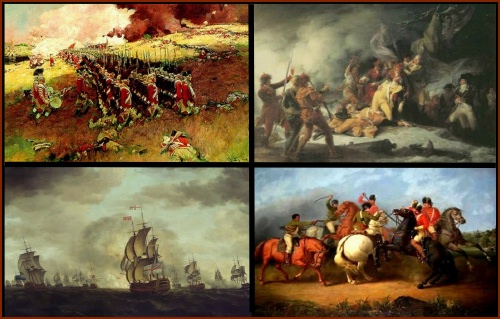
In my opinion, it’s vitally important for all Americans to understand that we are a flawed nation. We had a difficult birth and a flawed childhood and, to this very day, we struggle and wrestle and fight with our greater ideals and our conscience. We’ve fought unjust wars, we mistreated our own citizenry, we’ve “prospered” ourselves into great poverty, and we’ve poisoned our waters and air and land. But we’ve also had successes: we freed Europe from the ravages of war, our scientists have stopped polio and invented transistors, we’ve created unique and beloved forms of art and music, and we’ve been an example to the world in terms of freedom and liberty. Best of all, we’ve managed to survive and thrive in spite of our great mistakes and failures.Revolutionary War Collage

Success and failure, failure and success. Hmmm, sounds like we’re human. And part and parcel of being human is being flawed. It can be said that the greatness of a person can be judged by how well that person responds to his or her own failure. We all make mistakes, and we all have to learn from them and overcome them. This is true for people and true for nations. Those who think they themselves, or the United States of America itself, are incapable of making mistakes and deserve continuous adulation are not only inaccurate but incredibly arrogant.

It has always been my view that arrogance is the worst human characteristic. Arrogance, that belief that you can do no wrong and can make no mistake, is that characteristic that prevents you from ever learning anything. And the inability to learn guarantees an inability to succeed and thrive. It’s a flaw that guarantees stagnation and eventual irrelevance. Individuals should strive to never be arrogant in anything, even those things in which you are an expert. Nations should also strive to never be arrogant, even in areas in which that nation has succeeded in the past.

If I could ask all Americans to do anything for this country, I would ask them to be honest with our country’s flaws and failures, and strive to continuously improve the health, welfare, and integrity of this nation and all of its citizens. Only through understanding of our flaws can we ever improve our lot in life.Long May She Wave

I hope everyone had a happy, fun-filled Independence Day weekend, and I wish nothing more than a just and prosperous future for the United States of America on this, the 233rd anniversary of it’s birth.

===============================================

I know I haven’t been posting regularly as of late. There have been a few real-life issues keeping my muse at bay, or perhaps in full retreat. Regular postings of my National Park trips will resume shortly, I promise.


Read Full Post »

I just came back from my spring National Parks trip. With all the economic uncertainty, plus my need to pay off credit card debt (like the rest of America), I kept it small. Drove through upstate New York, then Ohio, across West Virginia, then home via Maryland. Hit eight more, albeit small, sites on the list, bringing the total to 185.  Still not quite halfway there.

During this trip, I also visited my two all-time favorite museums: the amazing National Museum of the U.S. Air Force in Dayton, Ohio (about which I’ll post at a later time) ; and the Rock & Roll Hall of Fame and Museum in Cleveland, Ohio.

Rock Hall

The poor Rock Hall doesn’t get a lot of respect. Some think it’s self-serving to a lot of rich, arrogant, rock egos. Others think it’s unfathomable that you could put the energy and rebelliousness of rock music into something as stuffy as a museum. Still others can’t get over the fact that non-rockers like the Bee Gees or Madonna have been inducted, while their favorite act (KISS or Journey or Emerson, Lake and Palmer or whoever) still aren’t in there.

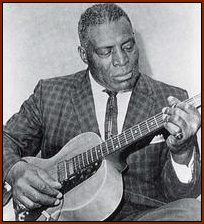
Howlin WolfI love the place, absolutely love it, loved it from the beginning. I was there during the opening, 8-hour concert on Labor Day weekend in 1995, where I saw everyone from Chuck Berry to Johnny Cash to Dr. John to Aretha Franklin to Iggy Pop. That was a fantastic experience. The next day I saw James Brown sauntering through the crowd, surrounded by some of the biggest, scariest bodyguards imaginable, on his way into the Rock Hall. I’ve been back several times since, and love it more and more every time I go. For me, it goes beyond being a fan of rock music. My love of rock & roll dovetails nicely into my love of American history.

Most countries or cultures are defined by their art. For the Greeks, it’s architecture and epic tales. The Italians have religious iconography and works by Michaelangelo and Leonardo da Vinci. The French have Impressionism, the Germans and Slavs people have composers such as Beethoven, Tchaikovzky and Mozart. Africa, China, Japan, Polynesia, even the Native American tribes have unique art tied directly to their culture and their history. America has its own unique art form, developed straight from our culture and history: Rock & Roll.

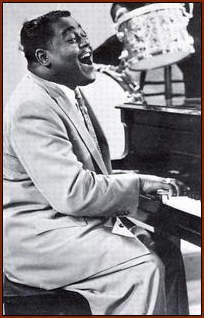
Fats DominoRock & roll is uniquely American because of it’s “origin story”. Rock’s primary grandfather was The Blues. Political correctness aside, The Blues was the black man’s music. It’s basically a lament about hard times and suffering set to a quick-paced but rough tempo. The Blues was fostered in a segregated South and derives directly from music sung by plantation slaves. This is Part I of why Rock is uniquely American, it’s the only positive thing to ever come out of our slaveholding past. Without the caustic cauldron of atrocity known as antebellum slavery, and the emotional agony of Jim Crow, the genetic material of The Blues would not have been created. No Blues, no Rock.

Another grandparent of Rock & Roll was Folk music (and its close cousins called Country and Bluegrass). All three of these forms sprouted out of the barrenness of the Depression. Yes, the Depression affected lots of countries, not just the USA, but there was something special about America’s experience that led to the birth of these three forms of music. Maybe it was the rural nature of Depression-era America, maybe it was the unique experience of the Dust Bowl, maybe it was the influence of our unique take on the religious revival. Whatever it was, folk, country & bluegrass evolved as uniquely American styles.

Allman Brothers BandThen there’s Jazz. Jazz, in my view, represents the independent American mentality applied to music. People wanted to play what they wanted to play, and wanted to hear what they wanted to hear. It’s improv, blending, mixing things up, and doing what you want. It’s throwing away musical convention, just like we threw away monarchial convention. We tossed out the King and made our own government, then we tossed out musical conformity and made our own Jazz. It’s the Declaration of Indepence set to music.

All of rock’s “early influences” were masters of these forms of music: Robert Johnson, Leadbelly, Woody Guthrie, Hank Williams, Bill Monroe, Louis Jordan, Elmore James. But it took something else, something more. It took the lightning strike known as Capitalism to give Rock & Roll life. It took people like Alan Freed and Ahmet Erteghun and Jerry Wexler to realize that money could be made, people who had the savvy to prop up firebrands like Elvis Presley and Jerry Lee Lewis and make all this roughshod music palatable to the young masses and their disposable income. Only in America could art be turned into something so immensely popular, and therefore immensely profitable.

George ClintonRock has then been changed and modified and altered by so much more since then: the injustice of the Vietnam War draft, the poverty of inner cities, the rebellion of angsty white suburbanite teens, plus America’s penchant to abuse mind-altering substances …. All of these things are, again, uniquely attributable to the U.S. and the unique mix (or train wreck, if you prefer) of our culture.

Now I know some (er, most?) will shout back “but what about the Beatles or the Stones or Led Zepplin, asswipe? These are Brits who revolutionized rock!”. Well, yes, that’s true. But all of these bands will tell you themselves that they got into rock because of Muddy Waters, or Bo Diddly, or Buddy Holly. Besides, just as the U.S. is a nation of immigrants, so too is rock a music of immigrants. Artists from all over the world have morphed and shaped rock to suit their needs, and have influenced other artists in return. It’s a great melting pot of music styles and cultures.

I highly recommend going to the Rock Hall. It does a great job showing the continuing evolution of a great, rebellious art form, a form of music whose greatest contribution is giving convention the big middle finger.

[Only the picture of the Rock Hall is mine. The others are from allmusic.com, a great web site for music research. Copyrights apply in some cases, this is a not-for-profit blog so I think it’s OK here. I’m sure lawyers will call if it ain’t :-P.]

=========================

Links:

Rock & Roll Hall of Fame and Museum

allmusic.com

Looking for college credits?

Google map to RRHOFM

Read Full Post »

America’s Queen Mum

I have a really weak system for selecting blog topics. When I started America In Context, I didn’t have a plan. I just started alphabetically, a pretty lame way of doing it if I do say so myself. It’s actually not that bad of a system, surprisingly I don’t repeat myself too often. One day it’s a natural preservation post, then something historical, then something cultural. Things stay fairly well mixed up. I suspect it’ll break down soon when I get to all the “Fort Something-or-Other” sites, but for now, it’s fine.

Actually, in the case of this week’s post, it’s better than fine. It seems fitting that my post on Dwight Eisenhower, Supreme Allied Commander in Europe during World War II, be immediately followed by a post on Eleanor Roosevelt, who could, perhaps, be called Supreme Commander of the U.S. Home Front. Having these posts bookend Memorial Day is fitting as well.

Eleanor Roosevelt with FalaI titled this post “America’s Queen Mum” for a reason. Eleanor Roosevelt, like Britain’s Queen Elizabeth (the current Queen Elizabeth’s mother, who passed away in 2002) was a beloved figure during terribly troubled times. Throughout the Depression and then the War, both women were strong role models for their beleaguered citizenry. These ladies did what leaders are supposed to do: walk amongst the people. With regular public addresses, newspaper articles, and visits to various cities and towns, they were inspirations to the people when they needed it most. Cowards sit in their undisclosed locations or corner offices or posh resorts when the shit hits the fan. Leaders stand in front and take the full spray. OK, I think that’s the most repulsive sentence I think I ever typed, but it makes the point….

Personally, I think the concept of “first lady” is anachronistic and inappropriate for a democratic nation. They are nothing more than the wife of a president, yet they are treated as cultural icons or, even worse, like royalty. I find all the current fawning over Michele Obama to be ludicrous. “Ooh look, she doesn’t have flabby arms!” Big damned deal. To this day, people still adore Jackie O. for no reason other than her fashion sense. The First Lady institution is not much more than a baseless cult of personality. First Ladies also have a penchant to support their pet causes, sitting in weak public service announcements nestled between the latest Ron Popeil Crap-O-Matic infomercial and some MTV “I Wanna Be a Teenage Hooker” reality show on late-night television. I’m so glad a First Lady sponsors literacy while her husband guts the public school system and his party disparages educated people as “liberal intelligentsia”.

Eleanor Roosevelt & Pete Seeger with WWII Troops

When it comes to Eleanor Roosevelt, however, I change my view. She was truly a great lady. Not only did she speak to the people during hard times as I noted earlier, but she was also directly involved in many great causes, from civil rights for African-Americans to equality for women to the spread of democracy across post-WWII Europe to the formation of the United Nations. She was also a shrewd political operator, directly sponsoring campaigns of those who supported her progressive agenda. Regardless of whether or not you support progressive causes, you have to admire her determination and activism in the causes she supported. She was no mere figurehead but an actual mover and a shaker and an inspiration for millions.

She has her own spot in the National Park Service for a good reason. Of all the First Ladies in our history, she truly stands out as an individual, separate from her husband, for her impact on the country (and the world).

Val-Kill Cottage

[Once again, I didn’t own a digital camera when I visited Eleanor Roosevelt’s NPS site. Pics are public domain, taken from Wikipedia or the National Park Service.]

========================================

Links:
Eleanor Roosevelt National Historic Site

Wikipedia’s Eleanor Roosevelt Media Gallery

Eleanor Roosevelt Center at Val-Kill

Google map to ER NHS

Read Full Post »

For Your Consideration: The Greatest American

Some time ago, on a long-forgotten internet message board, someone posed a question: who was the greatest American in history?

Of course, the internet being the internet, the argument soon disolved into a flame war (I’m sure someone mentioned “abortion” somewhere and it just devolved from there). Somewhere in the fray, however, I made a case for Dwight D. Eisenhower as the Greatest American. Now you can’t answer a question without understanding a question so, as I did on that tiny little  message board, I’ll start off explaining my interpretation of that particular question.

Ike Earrings

Most folks, upon hearing that question, will instinctively think only in terms of America itself, as in “which American did the most for America”. A logical answer here would be Abraham Lincoln, a man who not only kept the Union from dissolving, but also had the guts and fortitude to fight the greatest evil America has ever wrought: the continuation of slavery nearly 9 decades into its existence. Slavery was an unholy abomination that should have been extinguished when Thomas Jefferson put the last period on the Declaration of Independence, but it was allowed to exist through the sheer audacity (and utter cowardice) of founders and legislators and presidents alike. No President stood up to slavery until Lincoln, and his actions saved our country. We were not only saved literally (by stopping secession), but also morally. We had no moral fiber as a nation until slavery was abolished. It is as simple as that.

Ike and 101st AirborneThe only problem I have with proclaiming Lincoln as the “greatest American” is his actions really only saved the country. When I hear “greatest American”, I think globally: which American did the most for the world? Now that is an entirely different question. Sure, some could extrapolate “well, America is the greatest country, and Lincoln saved America, so Lincoln is the greatest”. That not only shows a grotesque level of hubris, it’s not really accurate. America wasn’t a world player for nearly a century after Lincoln’s time. We were an isolationist nation. We were protected on two fronts by mighty oceans, and only had two neighbors. No threats = no conflict = no interest in the world. Plus we were a nation of immigrants, collectively giving Europe the big middle finger as we went on our way, making our own prosperity (and driving the native population into their graves, but that’s the subject for yet another post). Saying Lincoln was a great world figure is simply disingenuous.

So, if we honestly answer “which American did the most good for the world”, well, you can come up with a lot of answers. Many (and perhaps rightly) say medical pioneers like Jonas Salk or inventors like Thomas Edison or scientists like Robert Oppenheimer deserve the title.  I appreciate these picks, but I have to ask: is science purely an American endeavor? Isn’t science simply the discovery and application of facts, principles and theorems? What makes it uniquely American? Doesn’t science transcend nationality? Jonas Salk could just have easily have been German, or Spanish, or Japanese. I’m not at all denigrating the work of these individuals in making my pick, I’m actually elevating them beyond simply being Americans.  Well, I suppose Edison was truly American: he was an incredibly shrewd businessman and power broker who set out to destroy his competitors, but, again, that’s a subject for another post …

5 StarsThis leads me to my own approach to the “Greatest American” question. First, did the individual have a postive, global impact; and second, did the individual act with the best of our core American principles (life, liberty, pursuit of happiness, etc.)? I say Ike deserves serious consideration as the Greatest American under that context, and I say it for one big reason: World War II.

World War II was the greatest conflagration the world has ever known. Never before, and thankfully never since, has the globe ever been covered in carnage and evil as horrid as during the period between 1939 and 1945. I don’t even know if people can comprehend that evil. I’m fairly convinced Americans can’t, we simply haven’t experienced war firsthand on our own soil since 1865. Let me tell you, it was nasty-horrid. And the Nazis, the Nazis were the worst. They epitomize evil to this very day. Every tyrant since 1945 is judged against Hitler, every evil movement has been compared to Nazism. These people were cold, heartless butchers; utterly disinterested in freedom and liberty; technocrats and bullies of the worst kind; the filthiest type of genetic bigots and medical torturers this world has ever seen. America saw this evil and (after much prodding by FDR) finally decided to confront it. But we brought more than men and equipment to Europe, we brought a secret weapon. We brought Ike.

Montgomery Eisenhower Zhukov de Tassigny

I don’t know if I’ll make many friends with this paragraph, and I don’t mean any disrespect to any man or woman who ever served in our Armed Forces, but an army isn’t worth a damn unless it has good, strong leadership. Throughout history, there are lots of stories of brave armies led to their defeat and slaughter by lousy generals; and plenty of other stories of underpowered armies led to victory by great generals. Anyone who’s read about our Civil War knows stories like these, and they occur in European history as well. Victory and defeat don’t rest on the shoulders of the soldier, they reside in the brains of the generals.

Ike was one of the better ones. I don’t think he’s rated as the greatest American general ever (I think that title tends to fall on Lee or Patton or even George Washington), but there can be no doubt he had the greatest challenge of any of them. He had to face a highly skilled, highly entrenched opponent, who had (in some cases) superior weaponry and better planning (at least in the early parts of the war). Not only that, he had to rescue no less than an entire continent from the greatest scourge mankind has ever seen. This was an enemy unlike any faced by Americans in our entire history. This was an enemy who actually sat down, in offices, using businesslike precision, and plotted the extermination of, by some counts, 11 million people! [See link below for more on this]. This was much, much more than simple warfare. The stakes were much higher.

Man of the Year

I’m hoping that, by now, you see why I’m nominating Dwight D. Eisenhower, Supreme Allied Commander Europe, as the Greatest American. Yeah, he didn’t beat the Nazis all by himself (no one achieves anything by themselves). Yeah, he made a lot of blunders and mistakes and some (like the continued delay of the invasion of Europe) probably led to further deaths in the Soviet Union.  I still think his achievement earns him the title of Greatest American. He was a fine president, the 50’s were a good time in this country. He sponsored the interstate highway system, connecting us in a way we never were connected before. He started the battle against Communism (although he didn’t act to combat McCarthyism). He tried to integrate our racially divided nation (with admittedly limited success). He even tried to warn us about the growing power of the military-industrial complex, you don’t hear too many politicians doing that these days.

Most impressive, in my view at least, he was a humble man. His retirement home, now the Eisenhower National Historic Site near Gettysburg, Pennsylvania, is probably the humblest house ever inhabited by any former President. Hell, it’s not much different than the farmhouse next door to my own boyhood home. Personally, I think humility is one of the best characteristics a human being can ever have. Arrogance is for assholes, humility is for great people. Personally, I think Eisenhower was more of the latter and less of the former.

Eisenhower Home

[I normally don’t ask for direct feedback on a post, but I’d love to hear your thoughts on the “Greatest American” question. Also, I didn’t have a camera when I visited Ike’s house, all pictures on this post are public domain photos taken from the NPS or Wikipedia or other sources.]

===========================================

Links:
Eisenhower National Historic Site

PowerKills, R. J. Rummel’s works on democide

Atlantic Monthly’s Top 100 Americans and a contrary list

Google map to Ike NHS

Read Full Post »

« Newer Posts - Older Posts »