Feeds:
Posts
Comments

Posts Tagged ‘history’

Synergy & History

I love Boston, I really do. Yeah, being from Massachusetts, I’m heavily biased. But Boston is a place that really speaks to me. If I had to live in a city, Boston would be my first choice. I just love the feel of the place.

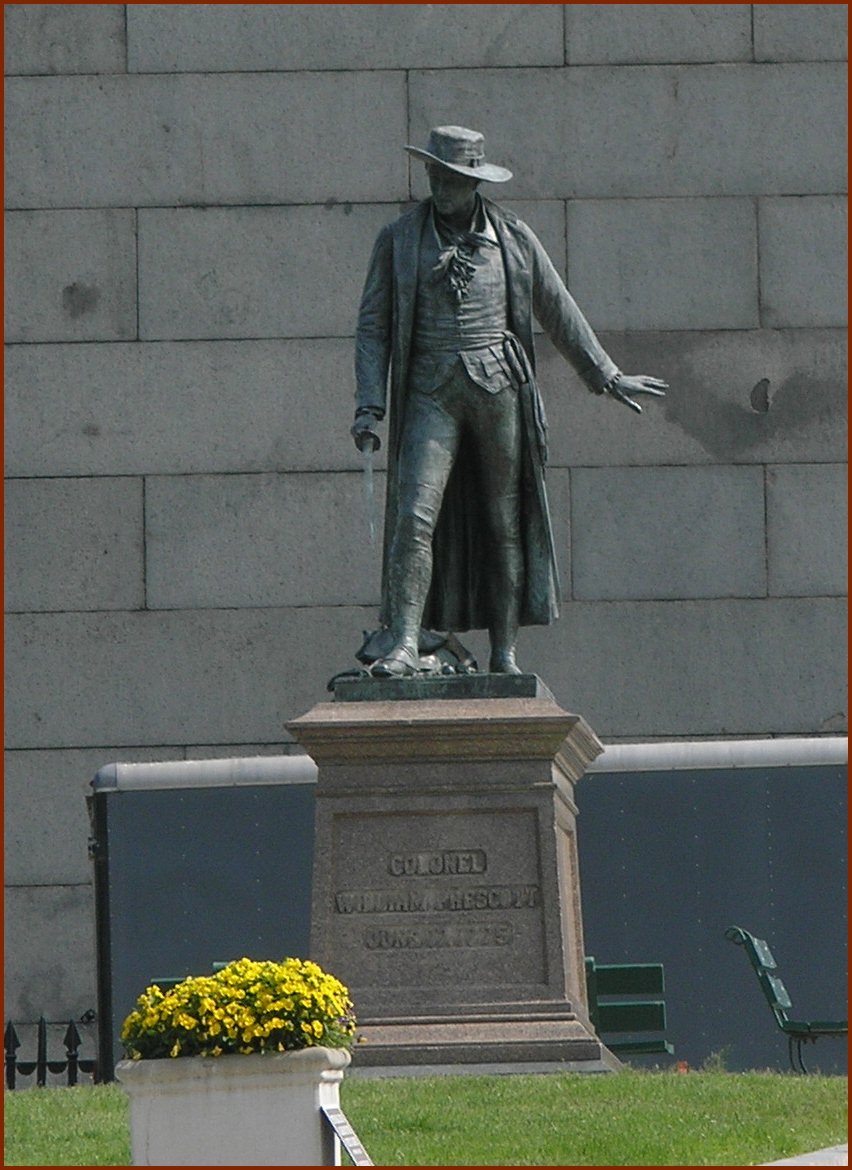
Col. Prescott — © 2008 America In ContextOne of the things I find endearing about Boston is the clear and present link between the city and American history. It is one of the oldest cities in America (founded in 1630), and was obviously the center of many pivotal events in the American Revolution, including the Boston Massacre, the Boston Tea Party, Paul Revere’s Ride, and the battle of Bunker Hill (really more about Breeds Hill than Bunker, but hey, what’s in a name). Boston also housed some of the greatest patriotic oratory of the age, great speakers such as James Otis, cousins Samuel and John Adams, and John Hancock wove their verbal tapestries from the smallest pub to the halls of the State House. These voices would find resonance with others, North and South, that would eventually become a symphony of vision that led to American Independence.

But I think most of you know all that. So let me talk about the other clear and present link between Boston and history. This is a city that not only understands, but completely embraces, it’s historical importance. Actually, Bostonians revel in their history. They absolutely love it, and it shows nearly everywhere you turn, even in those parts not on the famed Freedom Trail. The surrounding towns, in fact nearly every city and town in Massachusetts, embraces this history. I’d love to see real survey data, but I’d wager historical literacy in Massachusetts is higher than in any other state of the Union. It’s because history is in the blood of the Bay Stater. I know it’s in mine.

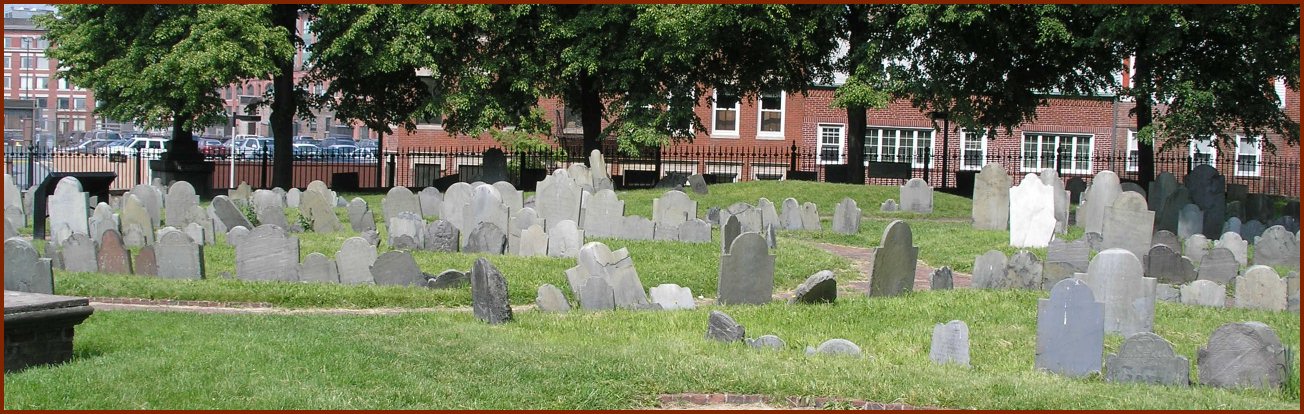
Burial Ground — © 2008 America In Context

I’ve been in a lot of cities in this country during my travels. Most old cities don’t really embrace their history. They have token historic districts, small spots in the city with a few important landmarks and strict building codes. Usually they’re smack in the middle of business “dead zones” (where you can’t even find a good spot for lunch), or surrounded by inner city slums (where you’re afraid to park your car). Best case they’re well-maintained, but only to keep property values high. The goal of these cynical districts isn’t to provide educational opportunities or spark interest in history, but to keep smarmy, uptight residents happily self-righteous, and to keep undesirables out. I suppose its beter than paving historical buildings over, a fate which has befallen many over time.

Constitution — © 2008 America In ContextThe problem is most people simply don’t understand the significance of history, nor do they appreciate the incredible chain of events that led to, well, everything. History is that chain of events that, when taken in context, explains why we are where we are at this exact moment in time. Something happened, then something happened, then something else happened, and you end up having some craptastic pasta dish at Applebee’s with people you don’t like. Everything happens for a reason, it happens because a certain sequence of events led to it happening. It’s not fate, it’s historical inertia. Understand that, and you can understand what comes next. It’s why I love the subject so much.

But most people don’t. Most people hate it, because a slew of lousy teachers did a terrible job teaching it. Those who don’t hate it outright see it only as a way to add smugness into their lives. How many antique collectors even understand what it is they own? They just hoard all that junk because it makes them look smart or it goes with their decor. Same with most cities and their historic districts. How many such communities even understand what they have? Very few, I’ll wager, although I’m sure they know exactly what it does for property tax collections.

Boston is an imperfect place. It’s muder to get around, and it’s expensive to park. But it is one of those rarity of American cities: it is a place that fully understands and embraces its place in history, and its citizens are all the better for it.

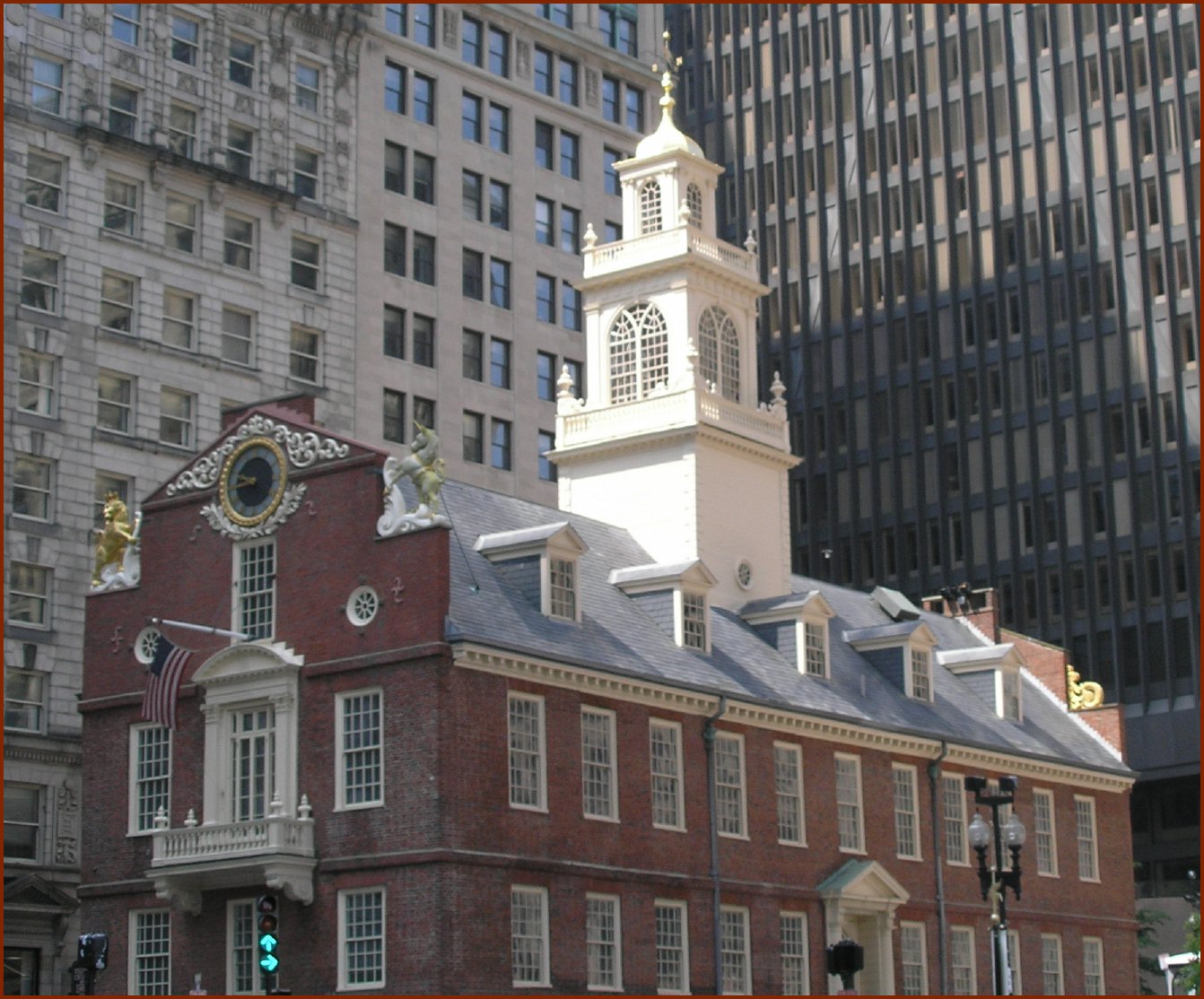
Old State House — © 2008 America In Context

[All pictures on this post are mine. I have surprisingly few pictures of Boston, I’ve been there so many times, pictures seem moot. However, you’re welcome to see all that I have here].

Links:

Boston Hational Historical Park

National Trust for Historic Preservation

Google Map to Boston NHP

Read Full Post »

One Problem, Many Solutions, Few Successes

If there is one difficult part of American history & society, it is that transition from slavery to freedom in the post-Civil War period (which, in actuality, is still going on today). I’m not talking about the actual sequence of events from the Emancipation Proclamation to Kanye West’s recent Grammy speech, I’m talking about the larger social, political, and even philosophical problem: how does an entire population, almost 4 million strong, make the transition from slavery to freedom, without crushing the economic and social status of the formerly enslaving nation? Oof, that’s a toughie, a heady question with so many facets, from the technical to the ethical to the theological.

I can say this with absolute certainty: it’s a question that America failed to answer satisfactorily. Yes, I said it: America failed one of the greatest challenges a nation ever faced.

Vegetable Garden — © 2008 America In Context

It’s obvious that America failed in this regard: Jim Crow, the Klan, Plessy v. Ferguson, police dogs in Birmingham, the assassination of Martin Luther King Jr., the Watts riots, the continued concentration of poor blacks in America’s inner cities. These are not good results. The only part we really got right was freeing them in the first place (although even that was almost a hundred years too late — surely the Great Teacher in the Sky took points off for lateness on that one).

Sure, things have gotten better for African-Americans since 1865. But is it really better because America made it better, or is it better in spite of America’s efforts? As time has gone on, we have become more integrated. Black culture and music has woven itself into our society, creating art forms (like the Blues, rap music, urban wall art, and others) that could only incubate in a cauldron of pain, suffering, and intolerance that post-slavery America provided. But I don’t call that a “success”, we’ve simply accepted the failure and tried to move on with our lives.

Sheep In Pen — © 2008 America In ContextOh, to be able to take a time machine back to the late 19th Century and advise our leaders — both white and black — on how to do it right. Wouldn’t that be wonderful? It would be like telling the diners in Pompeii to leave the city; telling the Middle Age clerics to let the cats kill the plague-infested rats; warning post WWI Germany to leave Adolph in Austria. We could go back and fix everything, and none of those traumas I mentioned earlier would happen!

Unfortunately, even today, 145 years after Lincoln’s Emancipation Proclamation, we still have no idea how we could have done it any better. So we would hop out of our little time machine, look President Andrew Johnson and the U.S. Congress square in the eye, and go: “duhhhhh……”

The problem back then (with certain similarities today) is how to take an entire population, uneducated and entirely dependent upon a ruling class, and transform it into an independent, productive, successful body, without correspondingly bringing ruin upon that ruling class. Do you give them their own territory so they can develop their own society? Do you work to integrate them into your own society, so your success is their success and vice versa? Or do you simply transform from slavery to something almost as bad, keeping them a chronic underclass forever?

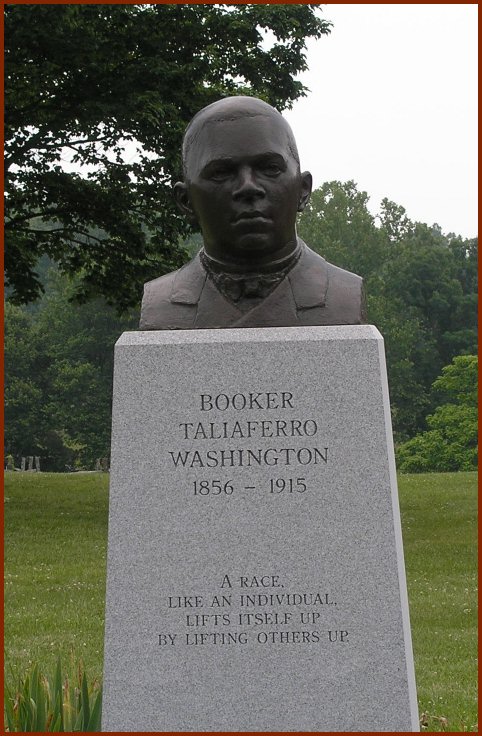
In the post-Civil War days, many African-American leaders came forward with their own ideas. Booker T. Washington was one such leader.
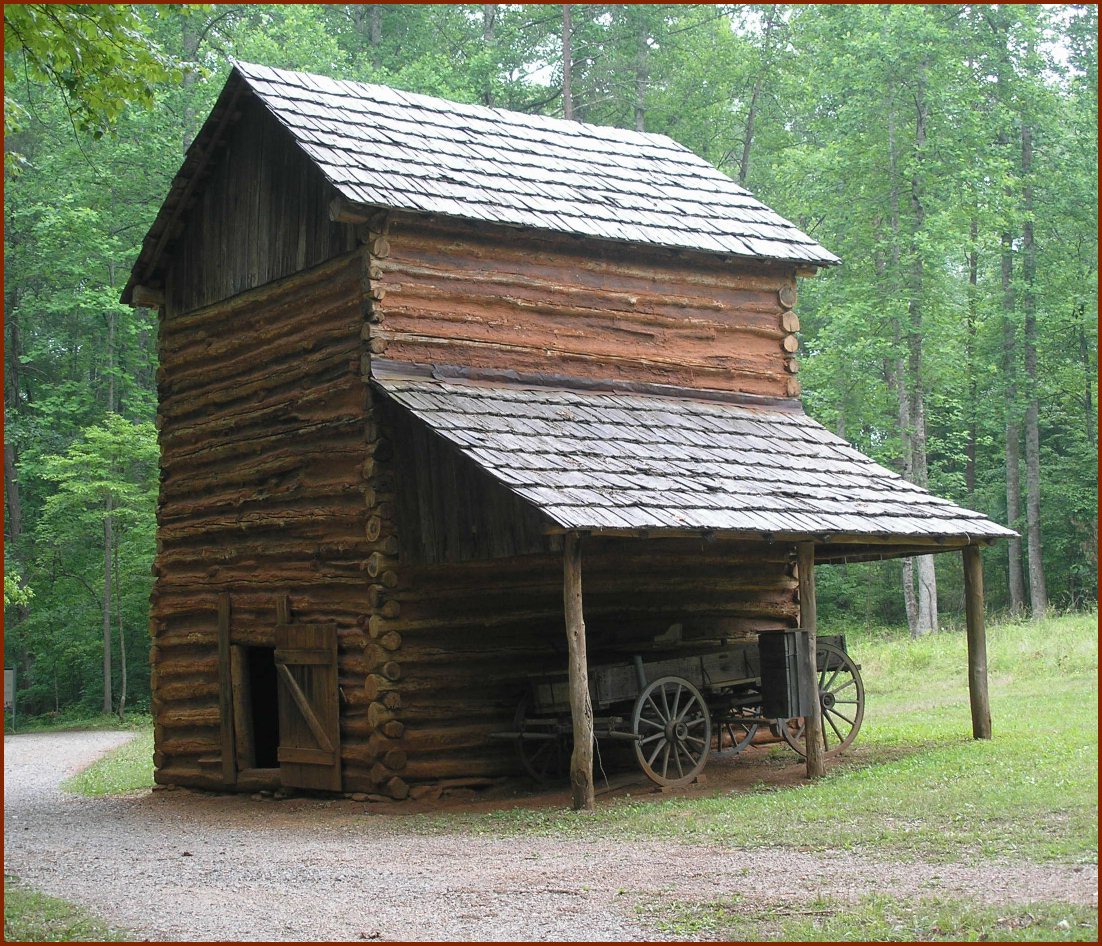
Tobacco Shed — © 2008 America In ContextWashington was a man after my own heart. He strongly believed in teaching freed slaves and their children about the real world: science, technology, engineering, agriculture. I’m a big fan of science and engineering and their real-world applications. In my view, as was Washington’s, if you can teach a person a real trade, you can set that person up for life. If you’re skilled, it doesn’t matter who you are, it matters what you do. Yes, it’s a pie-in-the-sky ideal, for you always have that personal element in everything, but your odds are much better if you have something real and tangible to offer society. And if society doesn’t want it, at least you can use those skills and have some semblence of autonomy. That was Booker T. Washington’s modus operandi: teaching blacks how to do. It was also the genesis of Washington’s great achievement: the Tuskeegee University (also part of the National Park Service, a topic for a later post).

The reality of the times would sadly tarnish Booker T.’s reputation. In order to create such a university, Washington needed funding. Funding he received … from wealthy white elitists, some of whom were former slaveholders themselves. Labelled an “accommodationist”, Washington was far too mum on the subject of segragation for many other African-American leaders. He would eventually speak out more and more against segregation, but for many of his contemporaries, it was too little, too late.
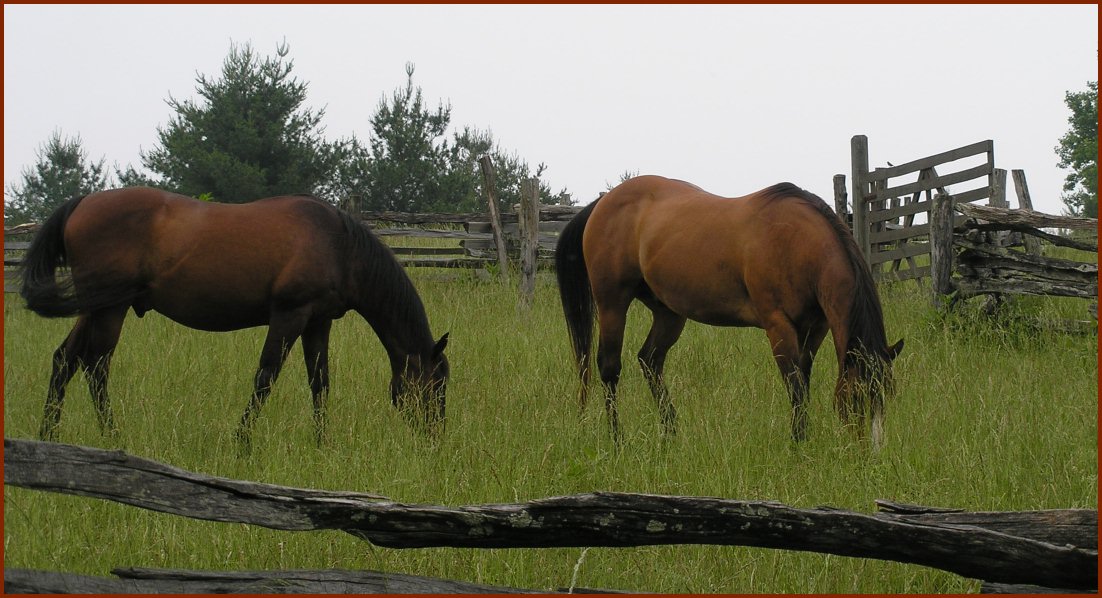
Munch Munch Munch — © 2008 America In Context

As I stated earlier, I’m not very good with African-American history. But I do know that no one in that era, including black leaders like Booker T. Washington, had all the answers for the freed slaves and their descendents. Those (black and white) who had the best of intentions did the best they could, based on their knowledge of humanity and the condition of the times. Their efforts may or may not have been successful, they may or may not have been right, but it has to be acknowledged that the simultaneous release of millions of men, women, and children from bondage created a problem vaster than mankind’s ability to solve. These people did the best they could, and at least they acted, and didn’t wait the required couple hundred years for the problem to solve itself.

Booker T. Washington National Monument restores the boyhood home of a man who did what he thought was right. It has been restored to resemble what it might have looked like during that time. The place itself is unremarkable, but the place in context with the most difficult part of American history truly makes one think.

Booker T. Washington Memorial — © 2008 America In Context

[All photos on this post are my originals. See my other Booker T. Washington National Monument photos here.]

Freed Fowl — © 2008 America In ContextLinks:

Booker T. Washington National Monument

The Negro Problem (essays from Booker T. Washington & others)

Google map to the monument

Some damned fool let the chickens out!

Read Full Post »
As I mentioned in my last post, I talked a lot about the Civil War lately. Five out of the last 6 posts referenced the Civil War! Well, of course the War Between the States would factor prominently in a blog about the National Park System: so much of our history depends on that war in some form or another. You can’t really put America in context without an understanding of that conflict, it’s vital in any study of American history (it’s not just for Civil War geeks, that’s for sure 😉 ). That’s why so many sites in the NPS revolve around the Civil War, and that’s all for the best.

In the 7th post of this cycle, I thought I’d post about another of my favorite books: Jay Winik’s April 1865.

The Month that Saved America

Winik was brilliant in his choice of topic. All of those key events at the end of the Civil War occurred in April of 1865: the end of the siege of Petersburg, the evacuation of Richmond, Lee’s surrender at Appomattox, the assassination of Abraham Lincoln, his succession by the incapable Andrew Johnson, the chase and capture of John Wilkes Booth, the defeat of Confederate cavalry Gen. Nathan Bedford Forrest, the surrender of Confederate Gen. Joseph Johnston to stern-hearted William Tecumseh Sherman in South Carolina, and the subsequent surrender of other Confederate commands throughout the South. Shortly thereafter, in the first weeks of May, the Civil War would be over entirely, Confederate Pres. Jefferson Davis would be captured, and a reformed nation would begin to rise from the ashes.

 Winik not only describes these events in an exciting, narrative style; he also gives plenty of backstory and context to make the entire work incredibly interesting. I found this book nearly impossible to put down (causing many problems trying to get to work on time). I think April 1865 is a great book, even for those who simply want a good read and aren’t particularly enthusiastic about American history.

[It was also made into a History Channel documentary for those of you not quite enthusiastic about reading 🙂 ]

Read Full Post »

The Paths of the Dead

Hoo boy, I’ve been writing a lot about the Civil War lately, haven’t I? That last post, about Appomattox, kinda drained me, and now I feel I’m gonna short-shrift Confederate Gen. Robert E. Lee. I just don’t have the energy in me. Let me just say I like the guy, and he deserves a memorial, and it should absolutely be his old home in Arlington, Virginia.

Arlington House — public domain photo courtesy of the National Park Service

Instead of writing more about the Civil War, let me talk about the grounds where the house sits, the famed Arlington National Cemetery. The cemetery itself is not part of the National Park Service, it’s managed by the U.S. Army. But it’s still open to the public, and if I had to assemble a list of the Top 10 Historical Sites in the U.S. to Visit, it would definitely be there. Arlington holds more history than any site other than the Capital and the White House. It’s a collection of the history of every armed conflict the United States has ever entered, it’s a string of tales that only dead men can tell.

Everything is represented at Arlington:

The Revolutionary War: Arlington House itself was built by George Washington’s adopted son, George Washington Parke Custiss, as a living memorial to the Founding Father’s memory. It passed down to Custiss’ daughter, who married Robert E. Lee, and therefore the house became Lee’s home. There are also eleven Revolutionary War veterans buried in Arlington, re-interred almost a century after they died.
Aerial View — public domain photo courtesty of Arlington National CemeteryWar of 1812: there’s a special Tomb of the Unknowns at Arlington that houses fourteen men from that foolish conflict.
Mexican War: Many soldiers who fought in the later Civil War also fought in the Mexican War, and are buried in Arlington, including Phil Kearney, who lost his arm in the first, and lost his life in the second.
The Civil War: Not only was Lee’s house taken from him shortly after secession, but his lands were turned into the vast Arlington National Cemetery soon thereafter. Thousands of Civil War dead are buried at Arlington, from drummer boys to generals, including Abner Doubleday, the supposed inventor of baseball.
Indian Wars: Many Civil War veterans would go on to fight against the Native Americans in the West. George Crook was one, a man torn by those conflicts. He fought the Indians and chased after Geronimo, but also tried to defend and protect them from an unscrupulous government and hostile ranchers. It must have been hard to keep one’s integrity in those days…
Exploration: Polar explorers Adm. Byrd, Robert Peary, and Adolphys Greely are buried at Arlington.
Spanish-American War: the mast of the U.S.S. Maine (“Remember the Maine”) sits in Arlington, as well as a memorial to Teddy Roosevelt’s Rough Riders.
World War I: Of course, thousands of soldiers from the War to End All Wars are buried at Arlington, as well as the last General of the Armies, Gen. John Pershing. It is worth noting, however, that the heroes of WWI never gained the celebrity status of those of WWII, in life or in death. I find that sad, but it’s simply a sign of the times in which the wars were fought. WWI was before mass-produced radios, WWII was after. It’s that simple.
World War II: If you want WWII celebrity heroes, Arlington has them. Gen. Omar Bradley; Claire Chenault, commander of the Flying Tigers; British Field Marshall Sir John Dill; founder of the CIA predecessor, the OSS, Wild Bill Donovan; Admiral Bull Halsey; “Pappy” Boyington; and some of the Marines in the famed Iwo Jima photograph: all are buried at Arlington.
The Civil Rights Movement: 3800 slaves are buried, unnamed, in Section 27. Medgar Evers is buried in the cemetery proper, as well as the first black four-star general, Gen. “Chappie” James. Supreme Court Justice Thurgood Marshall, champion of the Civil Rights movement, is also buried at Arlington.
The Cold War: Francis Gary Powers, famed pilot of a U-2 spyplane, downed by a Soviet missile in 1960. Ironically, he survived that, but was killed in a crash in California while filming wildfires. Admiral Rickover, the founder of the nuclear navy, is also buried there.
Challenger Monument — public domain photo courtesy of Arlington National CemeteryVietnam and Korea: Of course, thousands of soldiers, sailors, airmen, and marines who fought in Vietnam and Korea, including many Medal of Honor winners, are buried there. It is worth noting, however, that, thanks to DNA, there are no Unknown Soldiers from Vietnam buried in Arlington, nor will there ever be future Unknowns. That should bring some small comfort to mothers of soldiers everywhere.
The Space Program: Arlington Cemetery houses the graves of the three astronauts who lost their lives on Apollo I; and of two who lost their lives on the space shuttle Challenger.
War On Terror: a plaque erected in honor of the Beirut Marines sits in Arlington, as well as a memorial to those who died in the ill-fated Iranian Hostage rescue attempt in 1979. Soldiers from the first Gulf War are buried there, as well as victims from the Pentagon 9/11 attacks. A plaque stands in memory of the Lockerbie crash, and, of course, soldiers are still being buried, killed in the current conflicts in Afghanistan and Iraq.

Over 300,000 people are buried there. It’s quite a lot to take in, actually. All of them served this nation during times of war: soldiers, sailors, chaplains, nurses, buglers, generals, admirals. Congressmen, Senators, Supreme Court Justices and, of course, Presidents. Arlington holds the grave and eternal flame of John F. Kennedy, a man whose idealism extended beyond his own life, a man still admired over four decades since his death.

But the most popular spot in all of Arlington is the Tomb of the Unknown Soldier itself. I happened to be in Arlington for Veteran’s Day during President Clinton’s term, and heard him speak at the Tomb of the Unknowns. To be totally frank, I can’t remember anything the man said. I was overcome by the eerie silence during the wreathlaying ceremony, and the sights I had seen earlier that day.

Speeches by political windbags come and go, seemingly on a daily basis. But the memories of the men and women who served and died in this nation’s many conflicts remain forever. Arlington is meant to remind us of the sacrifice of those brave souls. To hell with the political windbags …

Tomb of the Unknowns — public domain photo courtesy of Arlington National Cemetery


I didn’t own a digital camera when I visited Arlington. All pictures are public domain photos from Wikiepedia, or Arlington National Cemetery’s website, or the National Park Service.

Links:

Arlington House National Memorial

Arlington National Cemetery Official Website

Google map to Arlington National Cemetery

Read Full Post »

« Newer Posts - Older Posts »