Feeds:
Posts
Comments

Posts Tagged ‘Massachusetts’

Moving Forward

It’s oddly gratifying to see a National Park Service site in an old mill town. The Rust Belt — that swath from Wisconsin to New England — was the backbone of the Old Economy. Once full of manufacturing and industrial innovation, fueling the greatest economic expansion of the last millennium, much of that area is now a forgotten shell of its former prosperity. Poverty, decay, and rust (in both the literal and metaphorical sense) plagues so many of these cities. We’ve forgotten about them, having long-since moved to well-groomed suburbs, freshly carved from farmland or forests, with clean water and clean air and clean dirt lining clean playgrounds. But these old cities still exist, and millions still call them home, pollutants or no. Lowell is no exception.

Lowell National Historical Park preserves Suffolk Mills, part of New England’s great textile operations. Dominating the industry since before the Revolutionary War, textile mills built up dozens of Massachusetts cities, only to abandon them when the Great Depression hit. These mills provided millions of jobs over the intervening 150 years, for young women looking to improve their dowries, to Portuguese immigrants looking to start a new life. The work could be dangerous in the time before OSHA, but industrial work transformed the U.S. into a post-agricultural society and created the middle class.

As an old-technology geek, I loved the machinery. Large, whirring wheels, tying belt to spindle. Great, thrumming rows of looms, weaving cloth for use in everything from colonial army topcoats to the uniforms of the Black Sox. Unlike metalworking machines, the sound of the wood and cotton is quite comforting, and would make an awesome ASMR recording for insomniacs. If you’re ever north of Boston, take some time and visit Lowell NHP, it’s pretty cool. Then visit some local artists at http://www.artsleagueoflowell.org/. It’s where I picked up Clyde here.

Side note: downtown Lowell is divided by numerous canals. I visited in the dead of winter (in the time when winters were actually cold). I could only imagine the fun kids must have had ice skating all throughout the town, the canals certainly seemed to form the perfect ice. Was sad I didn’t bring my own skates (although local law enforcement probably wouldn’t be too impressed).

Book Report

In preparation for this blog post, I read a book that certainly tickled my fascination with machines and innovation. The Most Powerful Idea in the World, by historian William Rosen, takes you through all the ins and outs of the greatest leap forward mankind ever took. Rosen weaves (lol) a wide tapestry of broke English monarchs, pretentious Italian aristocrats, clever child’s toys, dangerous steam explosions, and the most clever lawyer in history to explain how mankind changed from a collection of hard-toiling farmers and hammer-swinging blacksmiths to a car-addicted society of immense leisure. This is a great book, a great retelling of how it all happened. I think it should be required reading for freshmen engineering students.

—————-

Links

Lowell National Historical Park
Slater the Traitor and the rise of New England textiles

Western Avenue

www.william-rosen.net

The obituary of William Rosen

Read Full Post »

Community College English 101

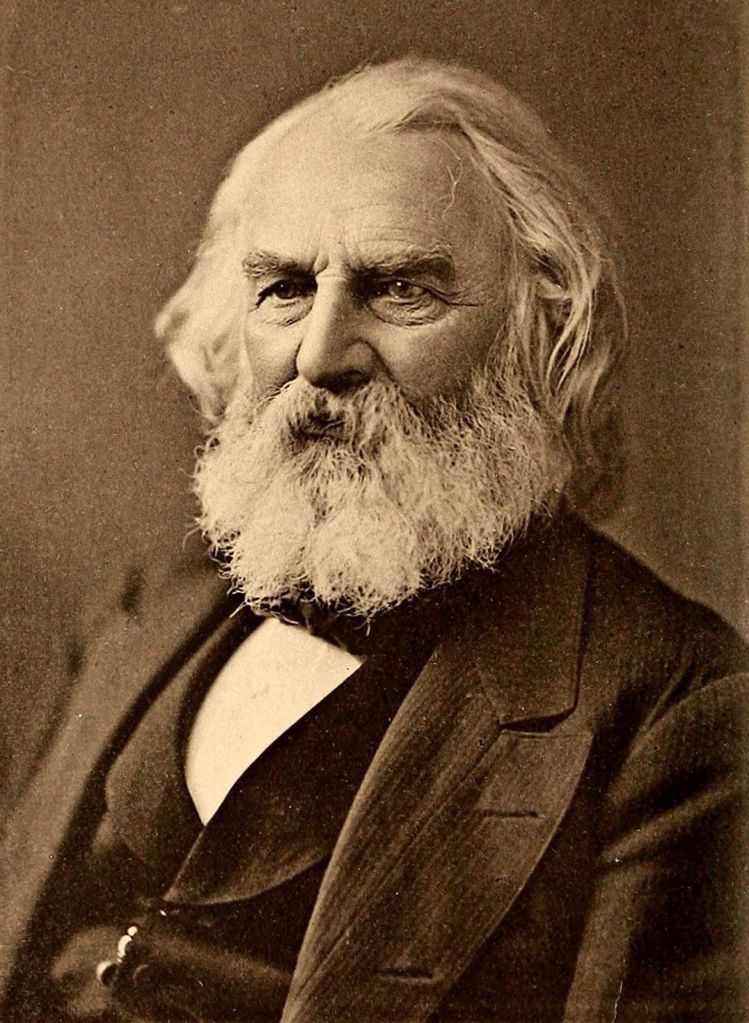
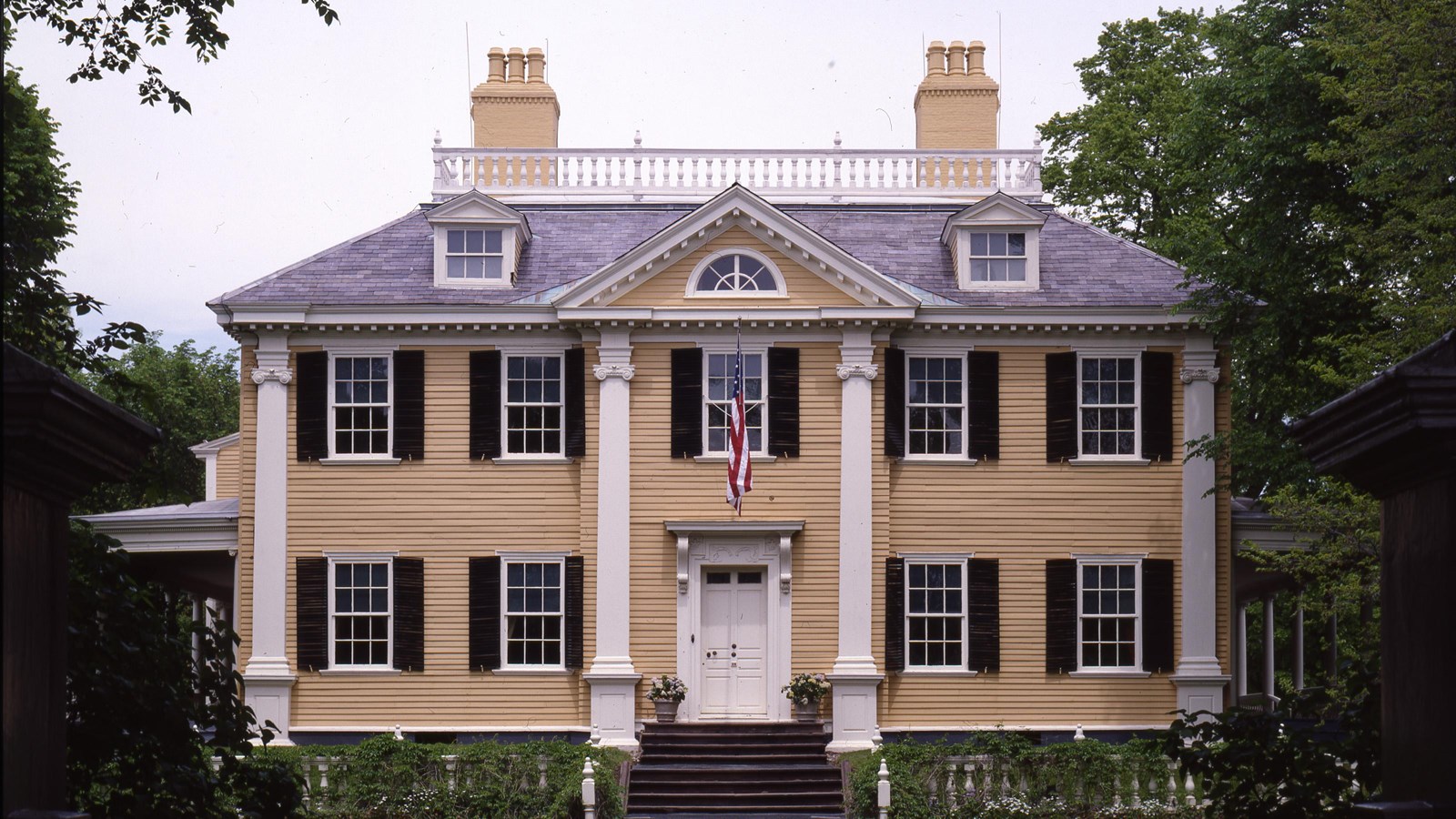
The Longfellow House in Cambridge is a beautiful, historic house. Built in 1759 in the Georgian style, it was originally occupied by Jamaican plantation owner John Vassall. A staunch loyalist, Vassall saw the writing on the wall and fled to England, just in time for George Washington to use it as headquarters during the early years of the Revolution. After the war, the house was purchased by Washington’s apothecary general, Andrew Craigie. His financial acumen was less than stellar, forcing his widow Elizabeth to take in boarders in 1819, including the soon-to-be-renowned poet Henry Wadsworth Longfellow. Later, Longfellow received the home as a wedding gift, and it stayed in the family or their trust until the entire building, its furnishings, and the grounds were donated to the National Park Service.

National Park Service photo

That’s all nice, but when I hear “Longfellow House”, I am reminded of my goofy college days.

My family was never particularly well-off. I was a sharp student, but we didn’t have the means to send me to college. So I took what I earned from part-time jobs and went to community college.

Springfield Tech was a good school with a solid electronics program. I already knew Ohm’s Law, Coulomb’s Law, and a variety of formulas and principles, so I had a bit of a head start. I loved those classes, the labs, mathematics, even physics (although it was taught by a professor I’m certain died three years prior).

Then came the dreaded mandatories. First day of first semester, when I had barely any understanding of what to expect, began English 101. I have long forgotten the name of the professor, but I’ll never forget his entrance. Tweed jacket and vest. Dignified salt & pepper beard. And a beret. Yes, a goddamned beret.

I don’t remember all of Professor Beret’s lessons, the one that sticks in my mind is our foray into Robert Frost. I’m talking about that old standby, which most kids learn in high school, “Stopping by Woods on a Snowy Evening”. The discussion came down to the old, self-wankery standby: “what does this poem mean to you?”

Me, being a bit overeager to discuss such heady topics in the presence of adults, instead of with a class full of hormonal teenagers, piped up with “well, a guy is evaluating his life choices. Shall he return to the life he knows, in comfort, or should he take another path, to see if he can become something special.”

“Um, no,” said Prof. Beret. “It’s about suicide.”

What? Well, apparently, if you decide to take that lesser-traveled path, you want to die by freezing to death …

Holy leaping Christ, what the fuck?

Anyway, that lesson tarnished me on poetry forever. I realized that not only do I not easily pick up on symbolism, but people who put poetry up on philosophical pedestals are fucking crazy.

Brittanica.com

In preparation for this essay, I read many poems from Longfellow: The Complete Poetical Works. Most of his works are direct homages to nature and the art of living. There’s not a lot of deep symbolism, just well-structured odes, definitely tame by today’s standards. There’s no doubt he was big for his time, but now it’s all quaint recollections of seeing a shooting star and such.

I’ll leave you with one of my favorites:

The Burial of the Minnisink

On sunny slope and beechen swell,
The shadowed light of evening fell;
And, where the maple’s leaf was brown,
With soft and silent lapse came down,
The glory, that the wood receives,
At sunset, in its golden leaves. 

Far upward in the mellow light
Rose the blue hills.  One cloud of white,
Around a far uplifted cone,
In the warm blush of evening shone;
An image of the silver lakes,
By which the Indian’s soul awakes. 

But soon a funeral hymn was heard
Where the soft breath of evening stirred
The tall, gray forest; and a band
Of stern in heart, and strong in hand,
Came winding down beside the wave,
To lay the red chief in his grave. 

They sang, that by his native bowers
He stood, in the last moon of flowers,
And thirty snows had not yet shed
Their glory on the warrior’s head;
But, as the summer fruit decays,
So died he in those naked days. 

A dark cloak of the roebuck’s skin
Covered the warrior, and within
Its heavy folds the weapons, made
For the hard toils of war, were laid;
The cuirass, woven of plaited reeds,
And the broad belt of shells and beads. 

Before, a dark-haired virgin train
Chanted the death dirge of the slain;
Behind, the long procession came
Of hoary men and chiefs of fame,
With heavy hearts, and eyes of grief,
Leading the war-horse of their chief. 

Stripped of his proud and martial dress,
Uncurbed, unreined, and riderless,
With darting eye, and nostril spread,
And heavy and impatient tread,
He came; and oft that eye so proud
Asked for his rider in the crowd. 

They buried the dark chief; they freed
Beside the grave his battle steed;
And swift an arrow cleaved its way
To his stern heart!  One piercing neigh
Arose, and, on the dead man’s plain,
The rider grasps his steed again. 

=======================

Despite my difficulties with a certain English 101 professor, I did get a great education at that school.

Links:

Longfellow House National Historic Site

George Washington’s Revolutionary War Itinerary

Searchable database of Longfellow poems

Map to the Longfellow house

Read Full Post »

Family Time

I’m a solo traveler, especially on my national park trips. I’m a spectacular hermit; but also my friends and family have other hobbies and interests, and simply don’t share my enthusiasm for American history and the natural world. It’s OK, though. I find solitude enables greater opportunities for observation, reflection & understanding.

When I went to visit JFK’s birthplace, however, I switched things up, and made a conscious decision to share the experience. I took my mom.

It wasn’t just because I thought she’d enjoy the trip, it was also because I wanted to hear what it was like to live during the vaunted “Camelot” era. JFK was  the first  modern-day celebrity president, and I wanted to know what that was like. John and Jackie’s superiority in handling themselves on television changed everything about campaigning, getting elected, and serving in the highest office in the land. Suddenly, it became less about stump speeches, shaking hands, working the political machinery, and back-room deals. It became more about media savvy.

The tales of Camelot have entered into American legend. JFK’s photogenics destroyed Richard Nixon in the presidential debates. He then became the second youngest person to ever take office. Jacqueline Kennedy was charming and pleasant, with impeccable fashion sense. As a couple, the Kennedys were hip and new, and gave the promise of a bright future. 

5375F7E8-155D-451F-67966F3A9B6BE810HiResProxy

Funnily enough, my mom didn’t have too many stories about the Kennedy era. Neither her nor my father were political types, rarely turning on the news and never talking about it at the dinner table. The only thing she talked about was the shame of the assassination, and how it saddened the whole nation. She talked a lot about the funeral, and how Jackie held up with such grace through it all. 

Then she told me about how she met JFK. 

When she was in high school, she worked on the school paper. A young John Kennedy, then Congressman John Kennedy, was running for the Senate, and touring the state, trying to drum up votes. He came to Western Massachusetts, quite likely just once (the western part of the state rarely gets much attention from Boston). So the high school paper decided to go meet him for some photo ops. 

My mom went with three other girls from her class. The photographer asked the other three to step out of frame because, as my mother said, “they weren’t pretty enough”. [Note: her intonation suggested the photographer was a bit of a perv.] She then had her picture taken, which was published in the paper later that week.

Being a typical high school girl, she was unhappy with how her hair looked, so she never kept a clean copy of the photo. Fortunately, the local paper still had the photo in their archives, and she was able to get a decent copy. 

Mom and JFK

It’s been many years since we went to JFK’s boyhood home in Brookline. She enjoyed the trip, and had fun reminiscing. Today, she can’t get around quite like she used to, her days of travel are long over. She’s seen quite a bit in her years: the Great Depression, World War II, the Civil Rights Movement, Watergate, 9/11, a global pandemic, and now an insurrection. She’ll be 87 in a few weeks, still doesn’t like talking about politiecs and, woefully, is not happy with how her hair looks.

Read Full Post »

The Site That Isn’t

Some NPS historic sites are magnificent. Some seem mundane but teach very important lessons. Others try but miss the mark. Then there are sites that simply aren’t there at all. The Boston African American National Historic Site fits that last category.

Basically, the site consists of the Black Heritage Trail, an extension of Boston’s famed Freedom Trail. It marks residences, offices, organizations and schools important to the Abolitionist Movement. This is important stuff, indeed. As I’ve said over and over again in this blog so far, black history is American history, and it’s impossible to understand the latter without including the former. Unfortunately, the Black Heritage Trail is simply not the place to do it.

About the only thing the Black Heritage Trail shows is gentrification, that process by which rich, white folks renovate a urban, lower class neighborhood. It’s a very controversial term, the subject of great emotion. Is gentrification good because it cleans up neighborhoods and increases property values? Or is it bad because it displaces poor residents who cannot afford to find better housing? At this time, I’m unprepared to argue one way or another.

What I am prepared to argue is the effect gentrification has had on the Black Heritage Trail. Basically, this trail is valueless. I’m not saying that these sites used to house people, businesses, and organizations vital to the abolitionist movement. I am saying that these sites no longer have that relevancy. They’re all private (white) residences, or other buildings that no longer have anything to do with black history, all in a beautiful, peaceful, serene neighborhood, that, although visually historic & preserved, no longer has any of the character of the times the trail is trying to portray. As such, I call the Boston African American National Historic Site a sham.

The only building that is open to the public, and still relevant, is the last stop on the trail, the African Meeting House. It contains a small museum without much of a permanent collection, but it does host some fascinating rotating displays. When I was there, they had a collection of movie posters from independent black cinema from the 40’s to the 70’s. I love old movie posters, and these were amazing. Unfortunately, photography wasn’t permitted, so no pictures 😦 .

I might get some harsh criticism for this bad review of Boston African American NHS. I think the NPS is correct in trying to capture Boston’s importance in abolition, but with the Black Heritage Trail, it fails.

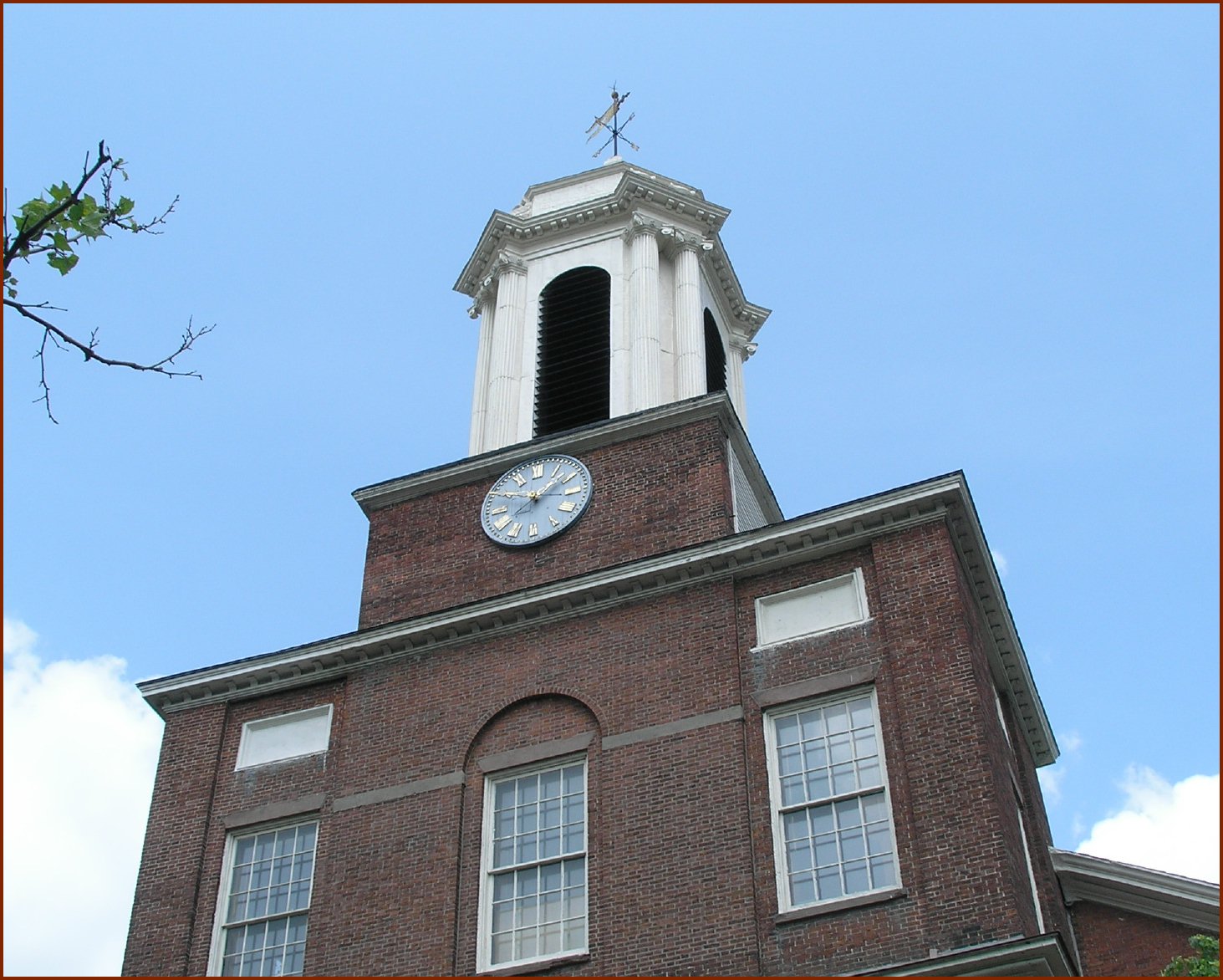
African Meeting House — © 2008 America In Context

[I am trying to make a point by only having one pic on this post….]

Links:

Boston African American National Historic Site

POV’s Essays on Gentrification

The Neighbors Project

Google Map to BAA NHS

Read Full Post »

Older Posts »