Autumn in Denali
Autumn is the best time to visit Alaska and especially Denali. Of course, being far north, Alaskan autumn starts in the last week of August, so plan accordingly. But it’s a great time to see the Last Frontier.
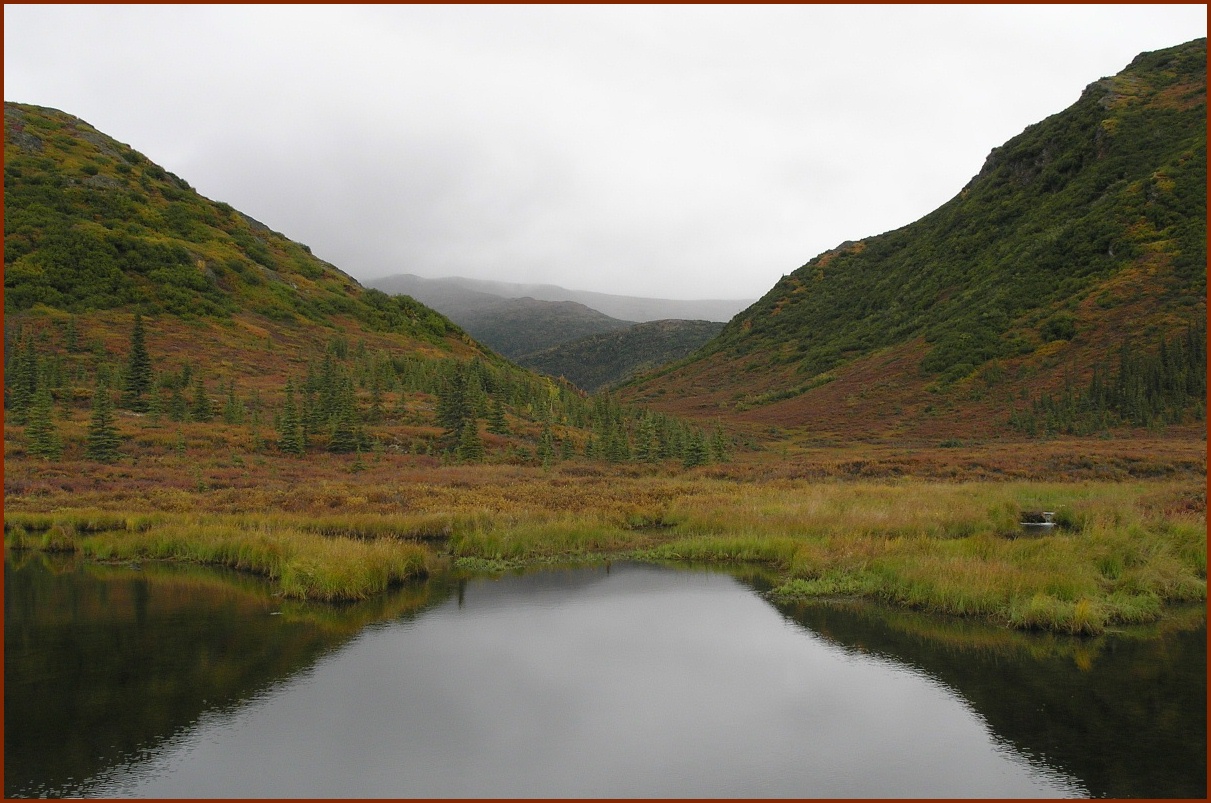
The first thing about Alaskan autumn is it does get chilly, so dress accordingly. And that’s awesome for tourists. See, I’m a firm believer that our National Park sites should be experienced. This means getting off your dead ass and getting into the park. Hike a trail, paddle a river, climb a mountain, dive into the ocean. Do something, anything, whatever is appropriate to the park, but also do it out there, in the wild.* And in the Alaska parks, where it’s winter 7 or 8 months out of the year, the least you can do is experience it in the colder weather. How can you possibly experience Alaska without layers of clothing and a bit of a chill? Summer travel is for wussies. You can get better deals at the end of the season anyway :-P.
* Note: when I say “go into the wild”, I don’t mean drop all your worldly possessions and live in the wilderness. All I’m saying is get away from the visitor center and out of your car and walk a trail. The wonder of these places can’t be seen from a roadside overlook. And safety first: travel in a group, carry the right equipment, don’t overextend your abilities, etc., etc., etc.
—-
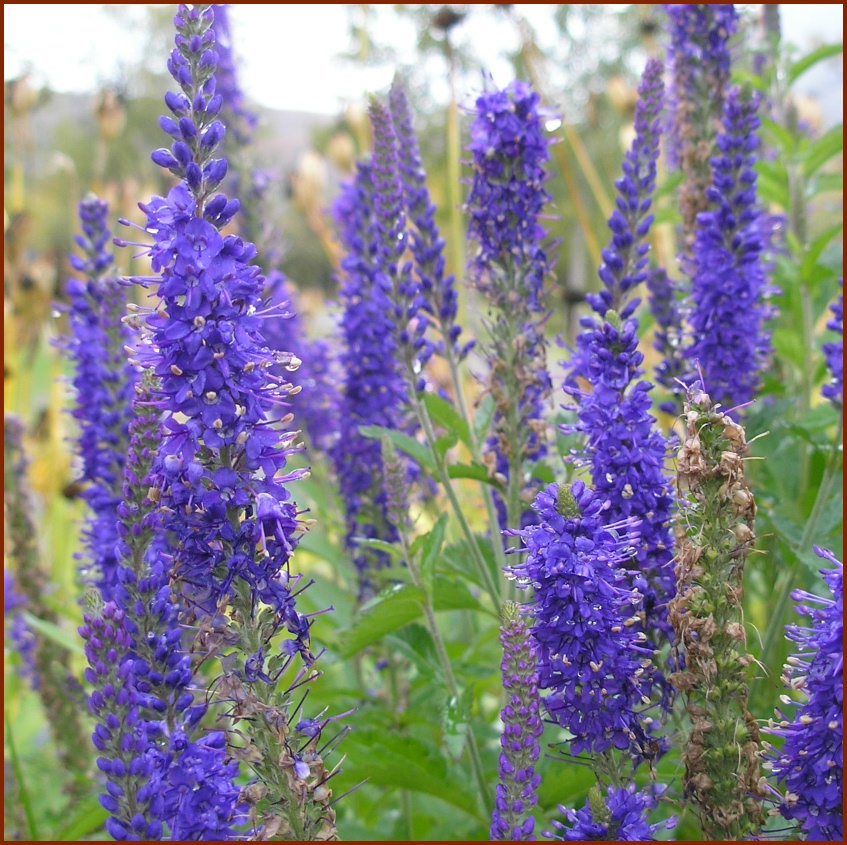 If you haven’t been to Alaska’s interior before, let me give you a primer. In Denali, there aren’t as many pine forests as you might think. The nature of the tundra doesn’t lend itself to big trees. But there is fall color out there. There are great swaths of birch and other low trees & shrubs, which do turn gold and red. The real autumn glory rests right on the ground, a low carpet of moss, grasses and other tundra-loving plants native only to this particular latitude and altitude. This is where the beauty of the Alaskan autumn comes from: a cavalcade of color coating all the hills, vales, and even some of the glaciers, a carpet you can walk on and, if you’re wearing the proper waterproof gear, sit on for lunch. This is the foliage of interior Alaska: a kaleidoscopic carpet covering the scenery, and if you walk out in Denali, you’re towering above it all.
Speaking of scenery, well, I shouldn’t have to tell you Alaskan scenery is fantastic. It’s world famous, so unless you’re spending all your days playing Second Life, you should have heard about it. But there’s special coolness in the Alaskan scenery in autumn. Winter comes so quickly to Alaska, you can see the changing season in just a few days. When I arrived at Denali, the lower mountains were bare, but by the time I left, only three days later, these same mountaintops were frosted with snow. It was great, an evident change of seasons. The other thing in play was the sun, moon and stars. The long days of summer are over in late August, there’s more of a balance between day and night, which means, yes, you can see an aurora borealis and thousands of stars in a sky devoid of light pollution during the regular tourist season. True, auroras are rarer that time of the year, but it’s still possible. One occurred when I was there, it was a nice touch.

But, by far, the coolest thing about autumn in Alaska is the wildlife. Again, the fauna of Alaska is world-famous, and fall brings it out in droves, and in great glory. I saw lots of bears out on foraging runs, doing last-minute feedings in preparation for long hibernation. I saw ptarmigans turning from summer brown to winter snow-white. I saw packs of wolves stalking caribou, not for hunting (yet), but on training runs with the younger members of the pack. I saw more moose than you can shake a stick at (which would be a bad idea, by the way). I saw one of the most beautiful animals in North America, a northern fox with a gorgeous winter coat. The neatest thing I experienced, though, was a close encounter with caribou.
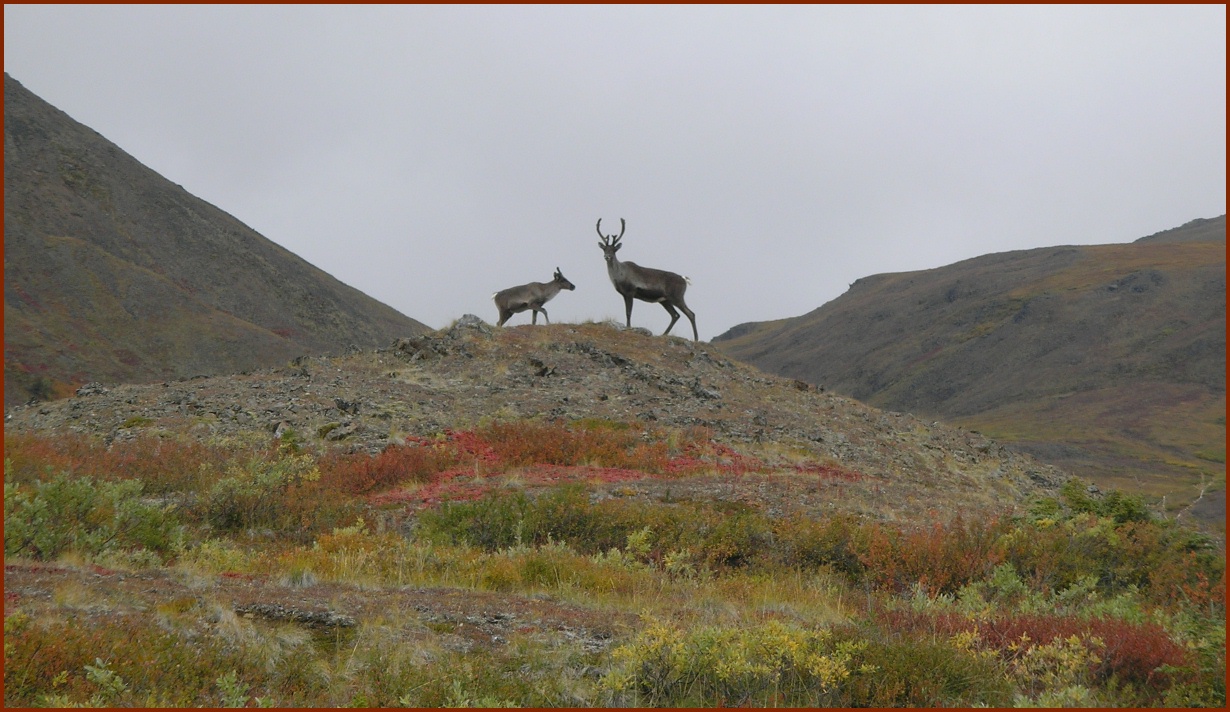
I took a heli-hiking tour of the tundra region in Denali State Park (you can’t heli-hike in the national park). Basically, they take you up into the higher regions of the area via helicopter, drop you off with a guide and you trek down the mountain for a few miles and radio in for a pickup. It’s incredible! The wide-open spaces, far away from civilization, just you, your companions, and miles and miles of colorful, mountainous, utterly incredible scenery. Our guide was a strapping young guy who clearly loved his job (how can you not, I wonder?). He was pointing out all the various features and critters: the wild blueberries, the turning fireweed, the Dall’s sheep on the mountainside, the moose in the birch thicket, and, of course, the caribou. We caught sight of a big bull out in the distance. Binoculars in hand, I watched the beautiful beast. He was accompanied by a couple of females, one older and one younger, all nibbling their way across the fields.
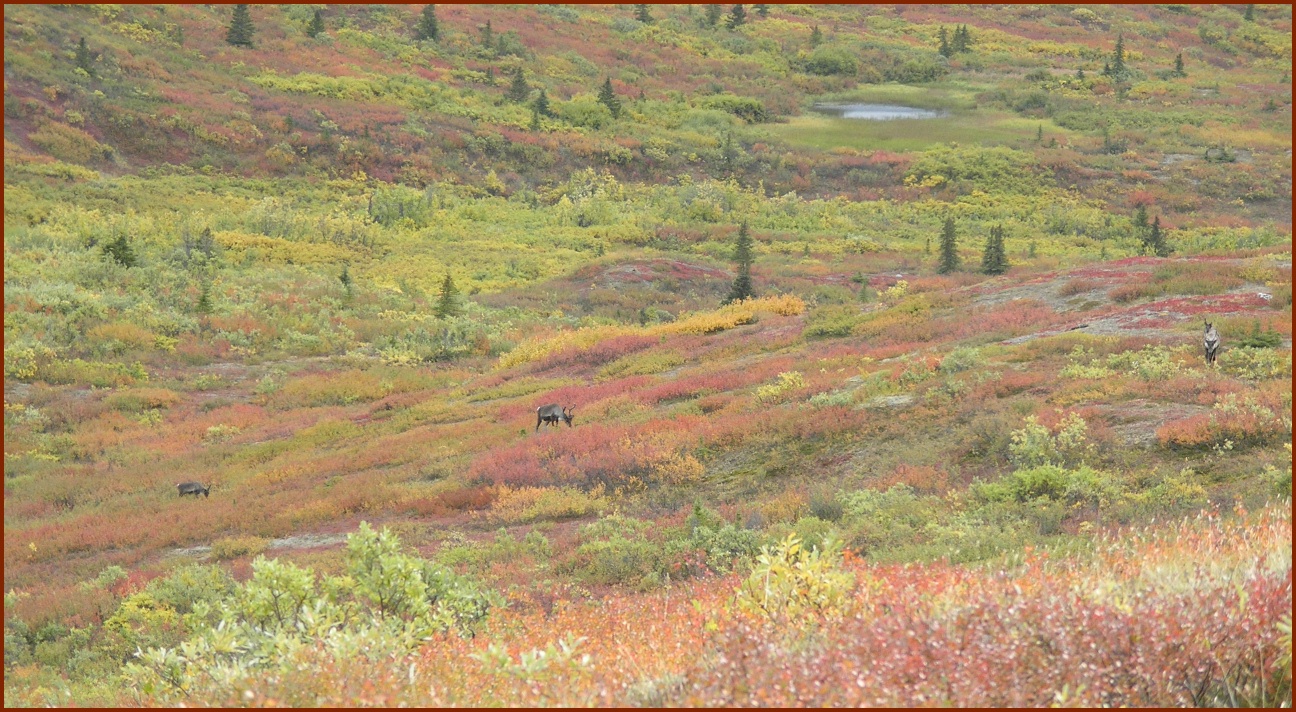
Suddenly, and without warning, our guide put his hands up in the air and started prancing about like a wide receiver after making that big touchdown catch. None of us could figure out what he was doing – then he started to explain. “See,” he told us, “once spring comes, the great herds of caribou break up and go out on their own. The females stick together in small groups, protecting their young from predators. The males go out on their own, wandering and feeding across great regions of the tundra and taiga over the entire summer. When autumn comes, however, the caribou slowly regroup. They have this big socialization process, basically they prance around like this, and then race each other and, if accepted, the small groups join up. So,” he continued, “are you ready to run with the caribou?”
My brain barely had time to register: “um, what?” The next thing I know, he yells out “run now!” and takes off across the hillside. We all run along as best we can, up and down hill and vale, and over to our right, running along in parallel, is that same big bull and his two friends! It was awesome! Here I was, a tenderfoot product of New England suburbia, running along with the caribou across the Alaskan tundra! It didn’t last long (I run like a bag of wet cement), but it was great. It was the most fun I’ve had on any of my park trips, and an experience I won’t forget until the end of my days.**
** Note: what I did would actually be illegal in the national parks. Don’t mess with the animals in the National Parks, even the herbivores. They are not only dangerous when provoked, but contact with humans can screw up their lifestyle. I was in a state park when I did this, which I suppose doesn’t make it any less unethical, but at least I didn’t break the law.
I had an absolute ball at Denali. I recommend that everyone take a trip there once in their life. Make sure you take that heli-hiking trip!
[All pics on this post are mine and copyrighted thusly. Please don’t reuse without my permission. All of my other Denali pics are here. But go to Alaska and take yer own damn pictures, ya rascals!]

===================================
Links:
Alaska Wildlife Conservation (includes tips on safe viewing)
 Cuyahoga is a park that preserves a small valley cut in the Appalachian Plateau. The Cuyahoga itself is a meandering river, most notable for a series of canals used as transport in the late 18th to early 19th century (before railroads took over). It’s nice that preservationists lobbied to protect this patch of river. I believe that we should strive to protect all natural areas (not just those with spectacular flora, fauna, or geology) wherever possible.
 But does government money spent on natural preservation count as “pork”? Many believe so. I don’t. See, I believe that natural preservation is the gift that keeps on giving. Natural lands help clean the air and water, and provide habitat for wildlife and plants. They also act as carbon sinks, something the world needs a lot more of right now. Parks also provide venues for recreation and a chance for urbanites and suburbanites to experience nature (something heavily needed in the manufacturing-laden cities of the Old Northwest Territories).
 Some, especially those who want to profit off land development, think these “benefits” are a crock of tree-hugging bullshit. It’s just getting in the way of progress and economic development. But think about it: do we really need to carve up more of our fields & woodlands? Do we really need to divert more rivers or fill in more swamps in the name of “economic development”? Take a look around: everywhere you travel, you see abandoned properties, empty factories, vacant strip malls. Do we really need to pave over nature to build more crap, when we have thousands, if not millions, of already-paved land just sitting there, doing nothing? Couldn’t we, shouldn’t we, redevelop these existing stains on the landscape for economic development? Do we really need to make new stains? That’s what I think is bullshit.

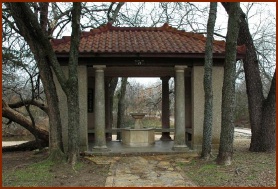 It does have some funky natural springs. There’s something exotic in the geology of the area that causes half a dozen or so natural springs of differing qualities. Some are infused with sulfur (hence the name of the nearby town of Sulphur) and are therefore highly poisonous. Others have similarly nasty high levels of arsenic, or high levels of copper, or are perfectly safe mineral springs. For amateur geologists in the audience, the place is pretty interesting for these features. The Chickasaw Nation Native Americans saw the value of these springs soon after they were relocated from Alabama & Mississippi, and preserved it for decades before deeding it to the National Park Service.
 In my opinion, one of the big problems with this country is its evolution from the United States of America to the United States of Generica. From sea to shining sea, almost without fail, you’ll see the same strip malls, the same chain restaurants, the same big box retailers. Even regional slangs & accents are starting to disappear, thanks to mass media. It’s nice in one way, you can travel across this whole country without getting into serious cultural trouble. But it has also made the country less interesting, blander, more vanilla.


 America In Context