Who Cares National Park
Poor Cuyahoga: the Park of No Love. The great national parks (Yellowstone, Yosemite, Grand Canyon, Olympic, Acadia, all the others) have huge amounts of visitors and worldwide acclaim. They have spectacular geologies or magnificent trees or rare wildlife. Everyone knows their names, knows what they are about. But no one cares about a little strip of land on a forgotten river nestled between two Rust Belt cities, a little strip of land known as Cuyahoga Valley National Park.
 Cuyahoga is a park that preserves a small valley cut in the Appalachian Plateau. The Cuyahoga itself is a meandering river, most notable for a series of canals used as transport in the late 18th to early 19th century (before railroads took over). It’s nice that preservationists lobbied to protect this patch of river. I believe that we should strive to protect all natural areas (not just those with spectacular flora, fauna, or geology) wherever possible.
The problem lies with putting this spot in the National Park System. If you listen to “park-o-philes”, like those on National Parks Traveler, Cuyahoga NP is the result of pork-barrel spending that most Americans heavily despise. I don’t know how to react to that. Usually pork projects only benefit those who win the contracts to build them. Sometimes these projects end up having no value to the community whatsoever, being proverbial white elephants until some future pork barrel project tears them down or repurposes them in an endless cycle of valueless taxpayer expenditures.
 But does government money spent on natural preservation count as “pork”? Many believe so. I don’t. See, I believe that natural preservation is the gift that keeps on giving. Natural lands help clean the air and water, and provide habitat for wildlife and plants. They also act as carbon sinks, something the world needs a lot more of right now. Parks also provide venues for recreation and a chance for urbanites and suburbanites to experience nature (something heavily needed in the manufacturing-laden cities of the Old Northwest Territories).
 Some, especially those who want to profit off land development, think these “benefits” are a crock of tree-hugging bullshit. It’s just getting in the way of progress and economic development. But think about it: do we really need to carve up more of our fields & woodlands? Do we really need to divert more rivers or fill in more swamps in the name of “economic development”? Take a look around: everywhere you travel, you see abandoned properties, empty factories, vacant strip malls. Do we really need to pave over nature to build more crap, when we have thousands, if not millions, of already-paved land just sitting there, doing nothing? Couldn’t we, shouldn’t we, redevelop these existing stains on the landscape for economic development? Do we really need to make new stains? That’s what I think is bullshit.
Yeah, turning Cuyahoga into a National Park probably wasn’t the best use of taxpayer money, but at least there’s a stretch of green in the middle of Rust Belt America. I think it’s needed.
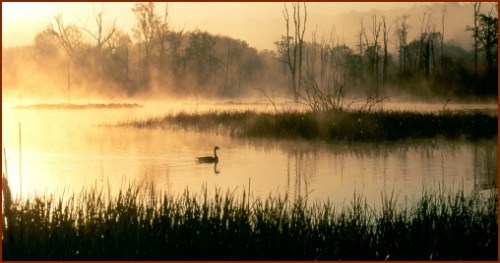
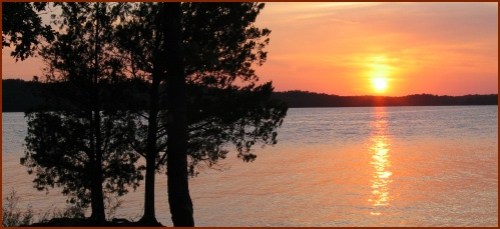
[I didn’t own a digital camera when I visited Cuyahoga Valley. Pics are courtesy of the National Park Service. Actually, they have some pretty nice photos on their Cuyahoga website.]
[UPDATE: I visited Cuyahoga again since my original post. I now have some pics, located here.]
=====================================================
Links:
Benefits of Open Space Preservation: Land Trust Alliance
Citizens Against Government Waste 2008 Report (Dept. of Interior)

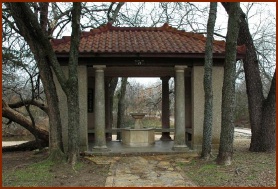 It does have some funky natural springs. There’s something exotic in the geology of the area that causes half a dozen or so natural springs of differing qualities. Some are infused with sulfur (hence the name of the nearby town of Sulphur) and are therefore highly poisonous. Others have similarly nasty high levels of arsenic, or high levels of copper, or are perfectly safe mineral springs. For amateur geologists in the audience, the place is pretty interesting for these features. The Chickasaw Nation Native Americans saw the value of these springs soon after they were relocated from Alabama & Mississippi, and preserved it for decades before deeding it to the National Park Service.
 In my opinion, one of the big problems with this country is its evolution from the United States of America to the United States of Generica. From sea to shining sea, almost without fail, you’ll see the same strip malls, the same chain restaurants, the same big box retailers. Even regional slangs & accents are starting to disappear, thanks to mass media. It’s nice in one way, you can travel across this whole country without getting into serious cultural trouble. But it has also made the country less interesting, blander, more vanilla.