Spanish Influence? Who’da Thunk It!
East Coasters, even those who don’t study history, know of Britain’s role in American history, for it’s glaringly obvious. We also have an idea of France’s role in the Revolution, the settling of New Orleans, and the Lousiana Purchase. We also know a lot about European immigrants, and, of course, the impressment of Africans in the days of the colonies.
 We never think about Spain. Well, maybe Floridians do, but the rest of us are clueless.
Californians, on the other hand, know full well about Spain’s role. Their whole countryside is full of it, from the El Dorado National Forest down to the Cabrillo National Monument near San Diego. Spain had a huge role in the exploration and settling of the west coast of the continent, and, when you consider Mexico, Spain had a role in American history from the missions of San Antonio all the way to the the founding of San Francisco.
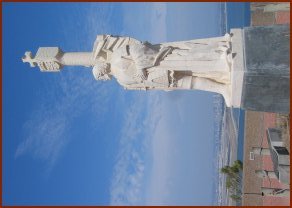
Cabrillo was the first west coast NPS site I visited, and the first one to plant the idea of Spanish influence in America in me. I happened to be in San Diego for a conference, and took the opportunity to stop by Cabrillo. It’s located on the Point Loma peninsula just past the naval reservation. The site honors Juan Rodriguez Cabrillo, a 16th century Spanish explorer who led one of the first expeditions up the western coast of North America. Sadly, he died during his explorations, but his trip did lead to further trips by other explorers, eventually leading to the settlement of the coastline by conquistadors and clergy (for good or for evil, you decide — my own opinions on the matter will get their due in a later post).
Cabrillo is a small site. There’s a small museum at the visitor’s center; the Old Point Loma Lighthouse; remnants of World War II coastal defenses; and a statue of Juan Rodriguez Cabrillo. The highlight of the site, by far, are the excellent views of the Pacific Ocean, the bay, and San Diego itself. I hear you can see whales migrating past the monument in January, and I know you can watch the seals have a conversation with a foghorn (you’ve gotta be there to know what I’m talking about).
On a side note, I have to give props to San Diego. I was only there for about a week, most of the time in conferences, but I liked what I saw. The historic district has some great restaurants, and the San Diego Zoo is an absolute must see. I don’t particularly like zoos, they’re usually like “animal abuse on display”, most disturbing. But the SDZ does a good job. The animals look healthy & happy, and the staff truly seems to care about them. Forget the pandas, the line’s too long. Check out the rain forest aviary & the wild cats. 8)
Keep your eye out for conventions in San Diego, and convince your boss you absolutely have to attend one. 🙂
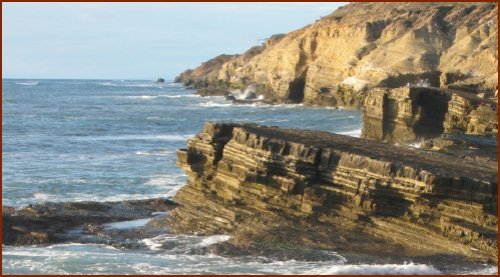
[Sorry, I didn’t own a digital camera when I visited Cabrillo. Photos shamelessly glommed from Wikipedia. However, here’s a great blog entry on Cabrillo with some fantastic photos. Sites like this make me want to work on my photography skills all the harder.]
Links:
Rock Bottom Brewery (I normally don’t care for chain brewpubs, but Rock Bottom has really good beer & food. The San Diego Rock Bottom is the first one I ever went to, hence the link here).



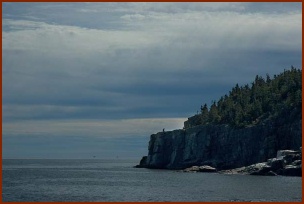 Up until that point, I always vacationed with friends in Old Orchard Beach, Maine, a beach town that’s only a notch or two above the typical, slimy, cigarette butt-infested beach town. This time, I needed to be away from friends, away from family, away from her. I needed a vacation, yes, but needed to go alone. Reaching into my Boy Scout past, I decided to go back to nature. Get into the woods, away from people, clear my head. I chose Acadia. I had to buy new hiking boots and a backpack (my prior sporting activity – bar hopping – didn’t require much in the way of special equipment). I loaded up the car and headed north.
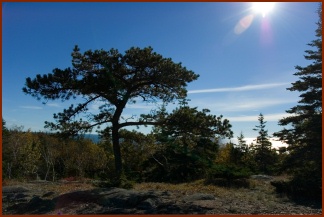
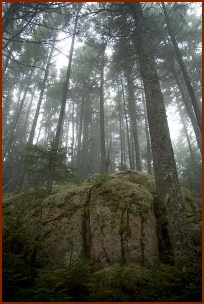 It was a damp day. Not raining, just a low fog rolling in from the Atlantic. Yet the park was positively alive, and far more fascinating, than the woods of my old stomping ground. These weren’t the tall, sturdy pines of the Berkshire hills, these were gnarled, windswept scrub pine, small trees scraping out a meager existence, anchored to the crevices of the glacier-carved rock, eking out whatever existence the sparse soil and stormy seafront could afford them. The deer and other animals were easily spotted in the woods, making their way through the fog, unafraid of the lone, soggy hiker. But the amazing thing was the lichen and moss. Yes, I said lichen and moss: I was absolutely enthralled by the simplest of life forms. There’s something in the sea air around Acadia that gives them the most amazing green color, in the dim light afforded by the fog, it seemed to cast an eerie glow over the entire area.


 America In Context