Florida, As It Used to Be
I don’t think there are many places in America where people have had a greater impact on the overall environment than in the state of Florida. The Everglades, that swampy “river of grass” that once extended from Lake Okeechobee to the Florida Bay, has been interrupted by highways and sugar plantations. The big lake itself has been modified and contained by numerous dikes and canals. Shorelines have been overdeveloped, beaches have been artificially expanded, natural waterways have been dredged and deepened, invasive plant species run rampant all over, and great tracts of open land has been clear-cut, raised, and built upon. I won’t even go into the paved monstrosity known as Greater Orlando ….
 Not to be forgotten are the changes to Florida’s gulf coast. When Hernando De Soto explored Florida in the mid-1500’s, the gulf coast was lined with subtropical estuaries, tangled masses of native plants rarely seen any more. Palmettos, saltmarsh pines, and mangroves formed a natural wall dividing narrow beaches from the interior. Manatees plied the waters and great flocks of migratory birds filled the skies. In the time before European exploration, I suspect Florida was an immense botanical and biological wonderland, filled with thousands of species of plants and hundreds of species of animals, the Amazon Basin of North America. It must have been wonderful.
After the colonization of America, the peninsula of Florida was ignored by all settlers, Spanish, French, English, or whomever, for the longest time. It was deemed wholly inhospitable, and, to an extent, I’ll agree. I stated earlier it must have been wonderful, but not for humans. For settlers, it must have been ghastly. All that slow-moving water plus all that humidity plus all that biological diversity meant insects and disease. To make matters worse, the best arable land is in the interior, away from the cooling ocean breezes and ease of nautical transportation. So, if you wanted to actually eek out a living in the Sunshine State back then, you needed to tolerate an awful lot of misery and hardship. So the peninsula was mostly ignored by most settlers for a couple hundred years
Then, along the way, something changed. Something drastically changed.
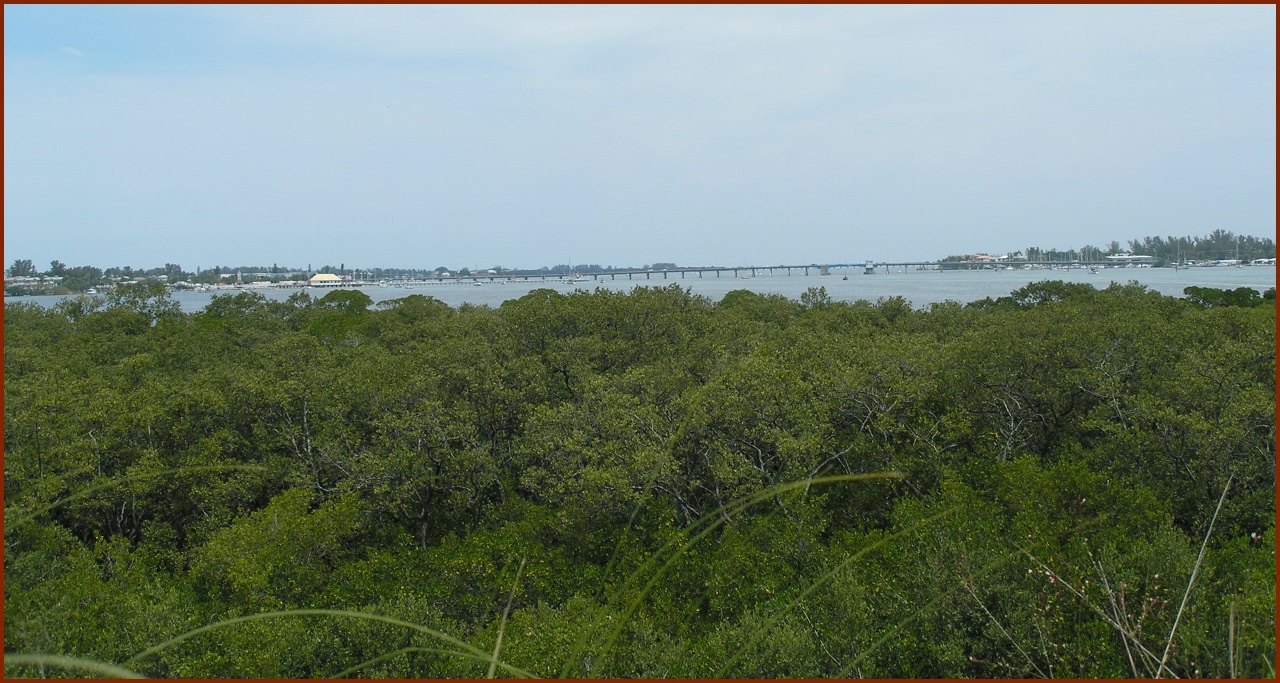
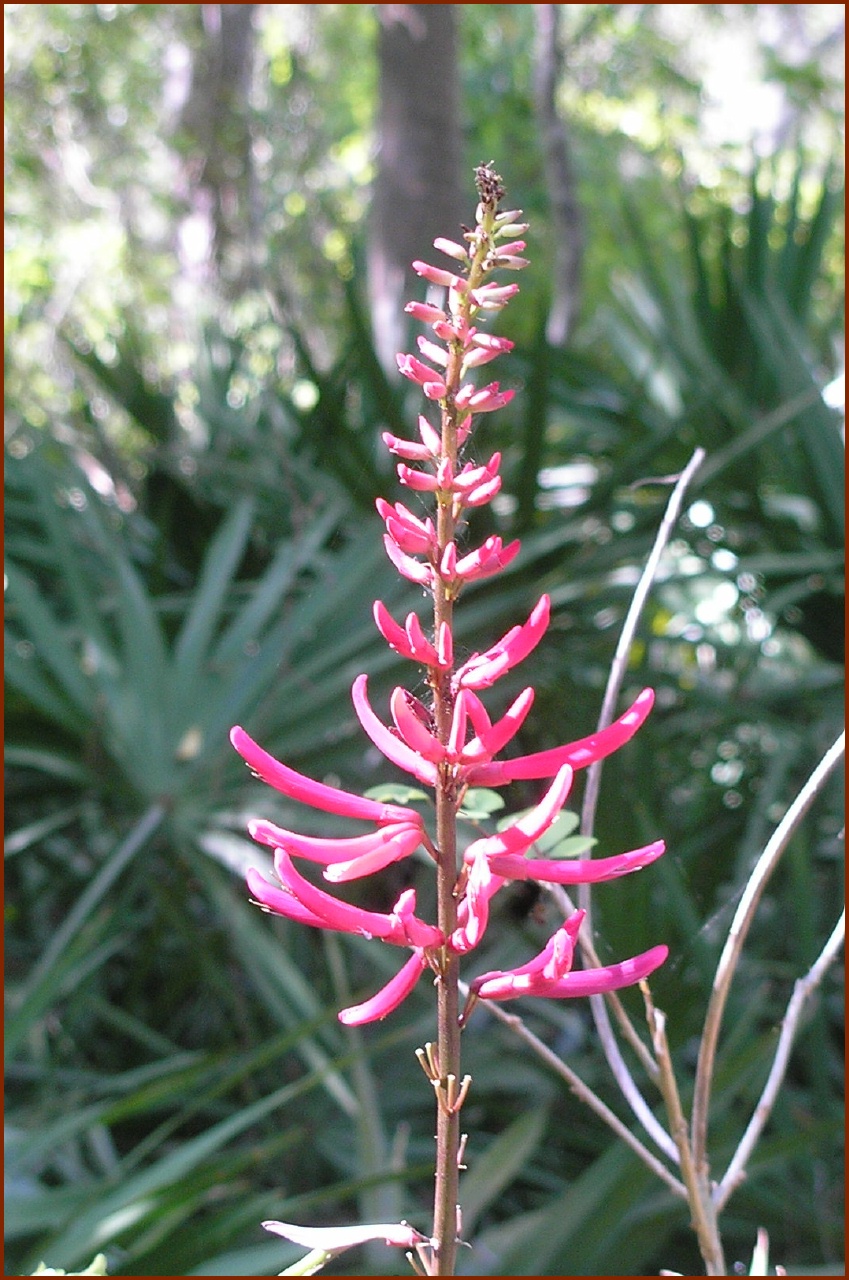
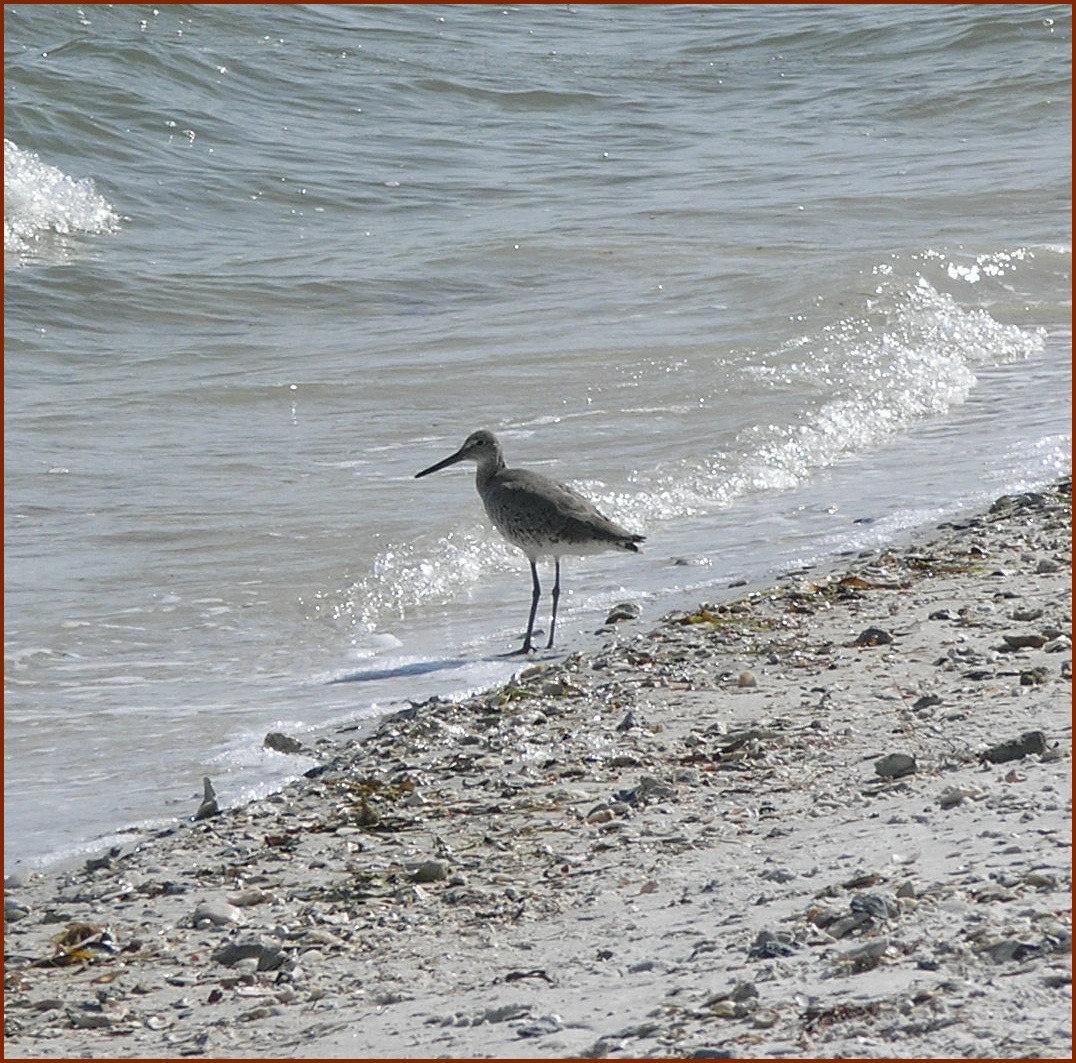
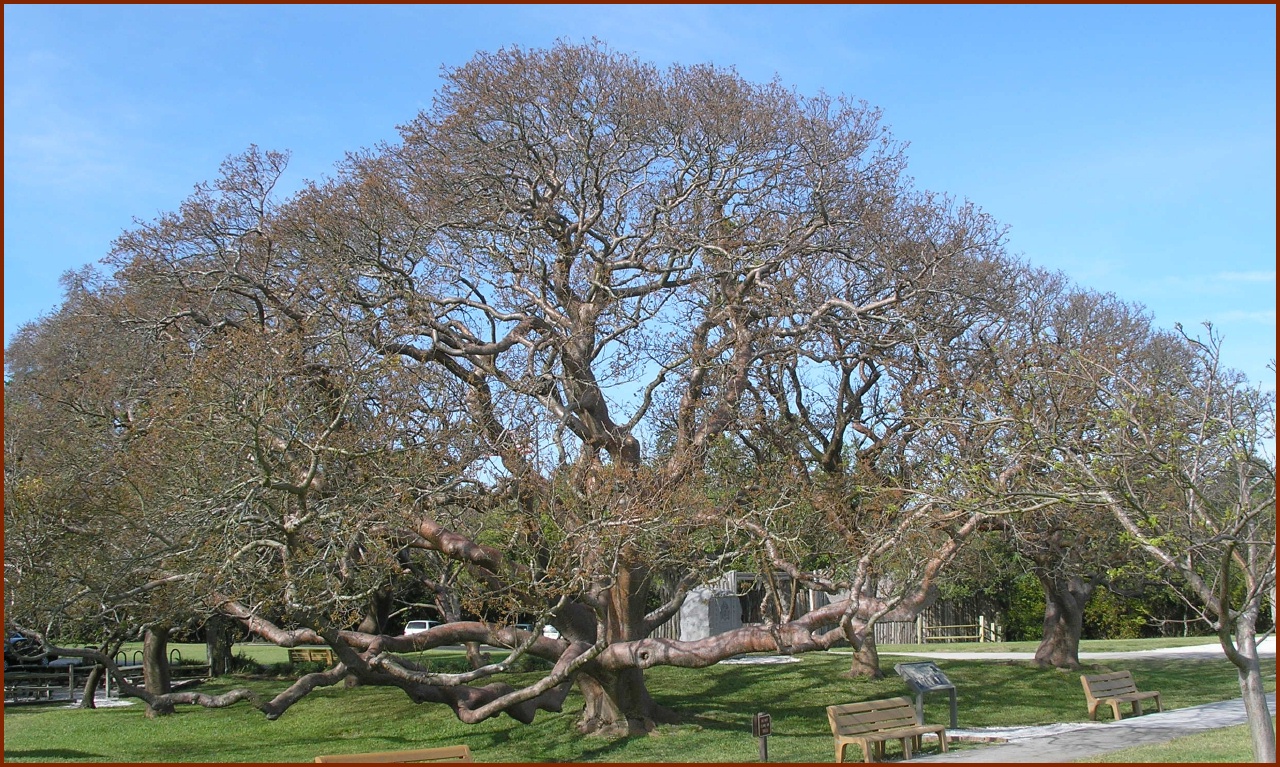
De Soto National Memorial, situated in Tampa Bay at the mouth of the Manatee River, is a tiny little spot of Old Florida. The shoreline area is chock full of mangroves and other species of trees, shrubs & plants. Spanish moss clings to live oaks, gumbo trees surround the visitor’s center, and birds nibble on wax myrtle berries. Even the beaches are different, they are rocky and covered in shells, not artificially enhanced with truckloads of fine sand like most Florida beaches. It’s a postage-stamp facsimile of old Florida; a 26-acre oasis in the middle of an overpopulated, overdeveloped, overpaved land; a reminder of how the coastline used to look in the days before Henry Flagler and other 19th century industrialists developed the dual coasts of Florida’s peninsula.
 That’s the sad thing about Florida. I lived in south Florida for a couple of years, and many things bothered me about that state. First is the overdevelopment. The flatness of the land has made development so easy. There are almost no natural boundaries to demarc things like in other parts of the country. Most of the rest of the eastern United States is interrupted with big rivers or mountains, these obstacles prevent most back-to-back development. Not Florida, there folks can build and build and build some more, uninterrupted. From a plane on approach to a southern Florida airport, you can see miles and miles of square grids divided by overwide roadways, each square packed solid with home after home after home. Whenever I fly over the state, I look below and just shake my head at the inanity of it all. The Lorax would weep.
All of this development has led to other problems, like a dropping water table. When I went to De Soto, the Manatee River was basically a dry river bed, something normally seen in west Texas, not Florida. Yes, there was a drought in the state at the time, but overpopulation stresses the water table in such a way as to make droughts more damaging to the environment. I suspect in ages past, before permanent settlement, Florida still had droughts, but the rivers still flowed with water. Now, a few months without rain and everything is dry. That’s one price of progress.
 The sad thing is this, in my opinion (and this is based solely on my own personal observations), Floridians care less about the environment than any state population with the exception of Texas. They just don’t seem to care. They water their lawns constantly, even when hurricanes approach they don’t shut off their sprinklers. They plant grasses and non-native plants that either require lots of fertilization to thrive, or spread out and choke the marshes. They shamelessly drive big honkin’ SUVs everywhere. I swear there are more four-wheel-drive vehicles per capita in warm, flat Florida than in snowy, hilly Massachusetts (and don’t say “it’s for towing boats”, I doubt 1 in 10 are used for that). I know one Floridian who practically burst into tears when high gas prices meant he might have to downsize from his big Ford Expedition. And I’ve never seen a region so disinterested in saving electricity: you’ll see regional baseball fields brightly lit all hours of the night. The whole place is so brightly lit you don’t even need headlights. I’m surprised you can see any stars.
I’m sure I’m going to get slapped for this, but in a way, it’s good that the real estate market has crashed. Finally, after decades of pleading from environmentalists, the crush of development in Florida has ground to a halt, not through ethical concerns over what we are doing, but because it’s no longer profitable. It’s a shame that people have lost their livelihoods in this economic crisis, but the path we are going, the continued over-building of America’s best places is simply not sustainable.
[I don’t want to disparage the folks of Florida with this post. I do want to state that I did meet a lot of great people when I lived in Florida, and made some really good friends. I just think Floridians could take a little more care, that’s all. Pics on this post are mine and copyrighted thusly. See my other photos of De Soto National Memorial here.]
===========================================
Links:
 Cuyahoga is a park that preserves a small valley cut in the Appalachian Plateau. The Cuyahoga itself is a meandering river, most notable for a series of canals used as transport in the late 18th to early 19th century (before railroads took over). It’s nice that preservationists lobbied to protect this patch of river. I believe that we should strive to protect all natural areas (not just those with spectacular flora, fauna, or geology) wherever possible.
 But does government money spent on natural preservation count as “pork”? Many believe so. I don’t. See, I believe that natural preservation is the gift that keeps on giving. Natural lands help clean the air and water, and provide habitat for wildlife and plants. They also act as carbon sinks, something the world needs a lot more of right now. Parks also provide venues for recreation and a chance for urbanites and suburbanites to experience nature (something heavily needed in the manufacturing-laden cities of the Old Northwest Territories).
 Some, especially those who want to profit off land development, think these “benefits” are a crock of tree-hugging bullshit. It’s just getting in the way of progress and economic development. But think about it: do we really need to carve up more of our fields & woodlands? Do we really need to divert more rivers or fill in more swamps in the name of “economic development”? Take a look around: everywhere you travel, you see abandoned properties, empty factories, vacant strip malls. Do we really need to pave over nature to build more crap, when we have thousands, if not millions, of already-paved land just sitting there, doing nothing? Couldn’t we, shouldn’t we, redevelop these existing stains on the landscape for economic development? Do we really need to make new stains? That’s what I think is bullshit.




 America In Context