Feeds:
Posts
Comments

Posts Tagged ‘travel’

The Site That Isn’t

Some NPS historic sites are magnificent. Some seem mundane but teach very important lessons. Others try but miss the mark. Then there are sites that simply aren’t there at all. The Boston African American National Historic Site fits that last category.

Basically, the site consists of the Black Heritage Trail, an extension of Boston’s famed Freedom Trail. It marks residences, offices, organizations and schools important to the Abolitionist Movement. This is important stuff, indeed. As I’ve said over and over again in this blog so far, black history is American history, and it’s impossible to understand the latter without including the former. Unfortunately, the Black Heritage Trail is simply not the place to do it.

About the only thing the Black Heritage Trail shows is gentrification, that process by which rich, white folks renovate a urban, lower class neighborhood. It’s a very controversial term, the subject of great emotion. Is gentrification good because it cleans up neighborhoods and increases property values? Or is it bad because it displaces poor residents who cannot afford to find better housing? At this time, I’m unprepared to argue one way or another.

What I am prepared to argue is the effect gentrification has had on the Black Heritage Trail. Basically, this trail is valueless. I’m not saying that these sites used to house people, businesses, and organizations vital to the abolitionist movement. I am saying that these sites no longer have that relevancy. They’re all private (white) residences, or other buildings that no longer have anything to do with black history, all in a beautiful, peaceful, serene neighborhood, that, although visually historic & preserved, no longer has any of the character of the times the trail is trying to portray. As such, I call the Boston African American National Historic Site a sham.

The only building that is open to the public, and still relevant, is the last stop on the trail, the African Meeting House. It contains a small museum without much of a permanent collection, but it does host some fascinating rotating displays. When I was there, they had a collection of movie posters from independent black cinema from the 40’s to the 70’s. I love old movie posters, and these were amazing. Unfortunately, photography wasn’t permitted, so no pictures 😦 .

I might get some harsh criticism for this bad review of Boston African American NHS. I think the NPS is correct in trying to capture Boston’s importance in abolition, but with the Black Heritage Trail, it fails.

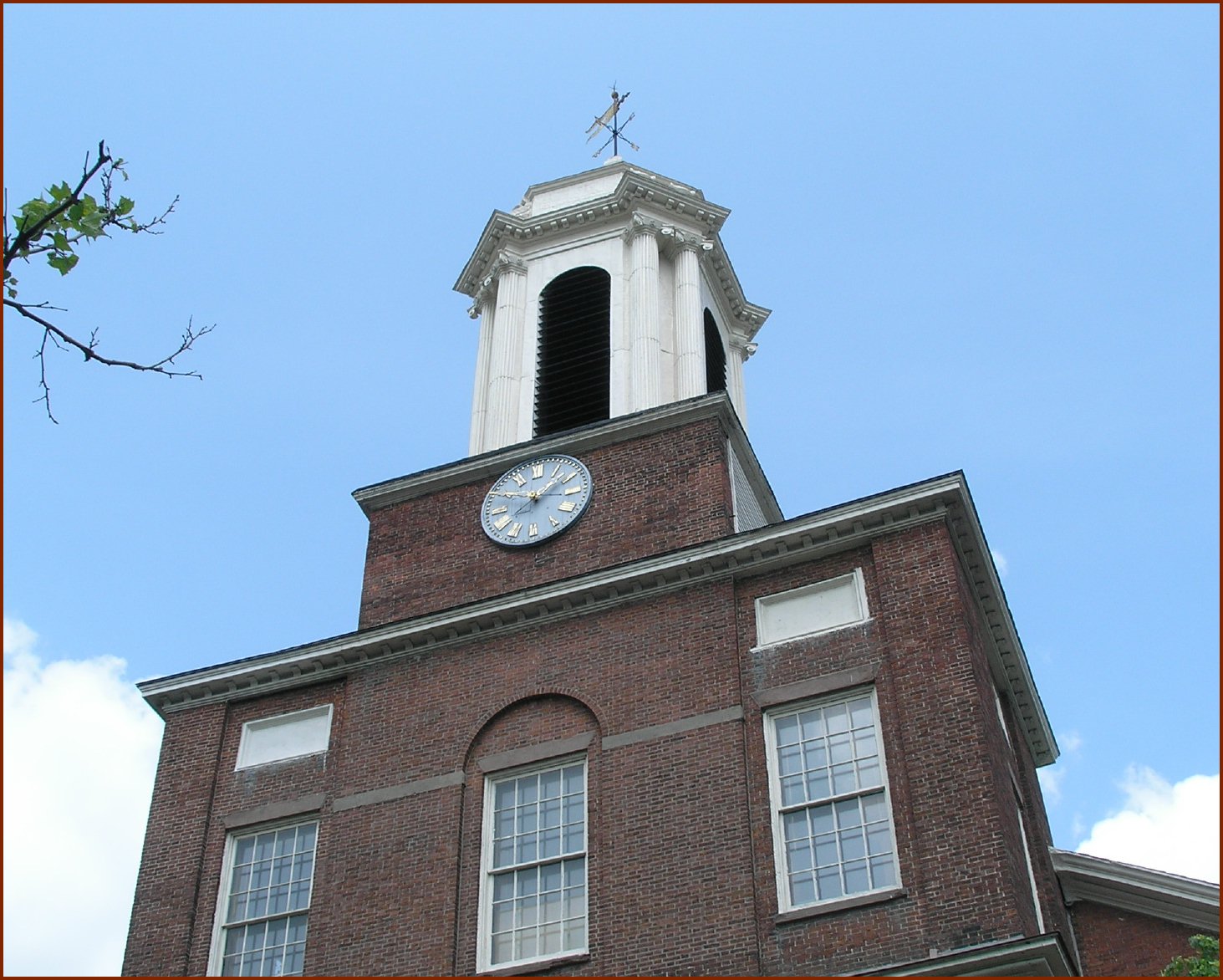
African Meeting House — © 2008 America In Context

[I am trying to make a point by only having one pic on this post….]

Links:

Boston African American National Historic Site

POV’s Essays on Gentrification

The Neighbors Project

Google Map to BAA NHS

Read Full Post »

Synergy & History

I love Boston, I really do. Yeah, being from Massachusetts, I’m heavily biased. But Boston is a place that really speaks to me. If I had to live in a city, Boston would be my first choice. I just love the feel of the place.

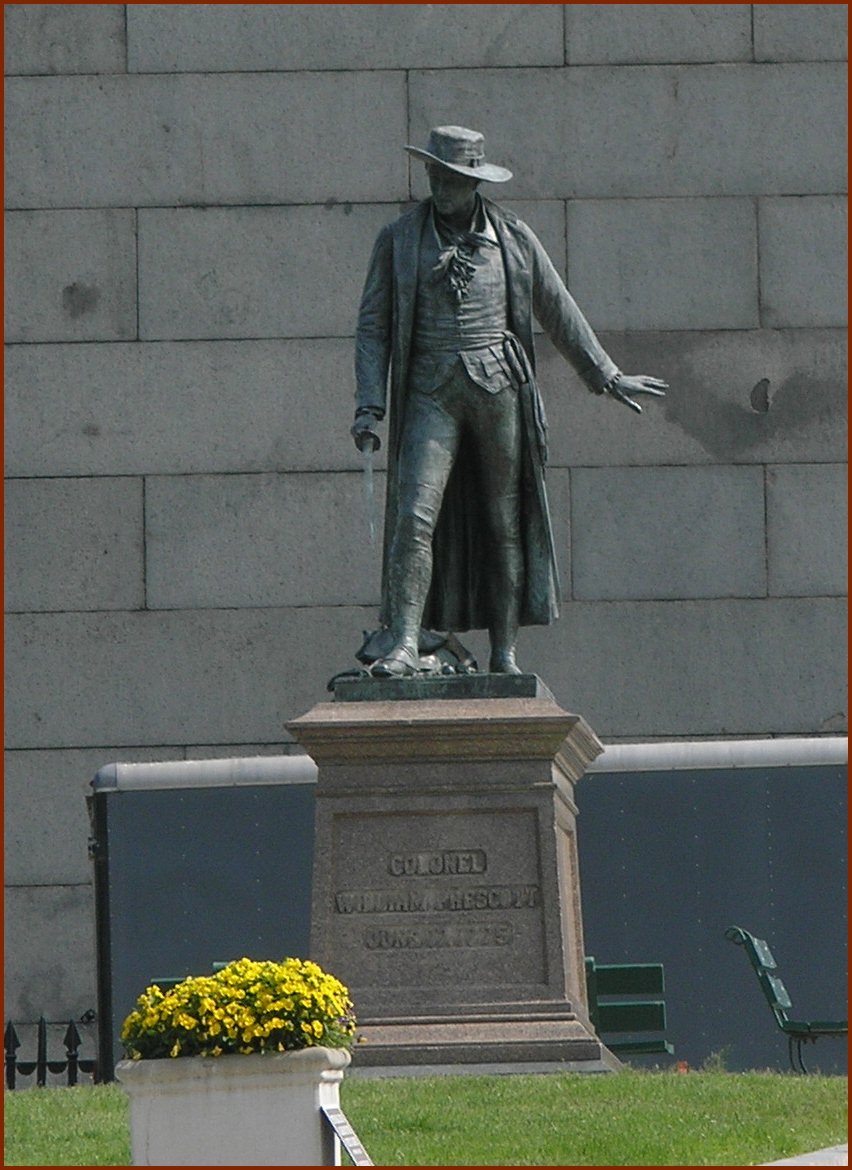
Col. Prescott — © 2008 America In ContextOne of the things I find endearing about Boston is the clear and present link between the city and American history. It is one of the oldest cities in America (founded in 1630), and was obviously the center of many pivotal events in the American Revolution, including the Boston Massacre, the Boston Tea Party, Paul Revere’s Ride, and the battle of Bunker Hill (really more about Breeds Hill than Bunker, but hey, what’s in a name). Boston also housed some of the greatest patriotic oratory of the age, great speakers such as James Otis, cousins Samuel and John Adams, and John Hancock wove their verbal tapestries from the smallest pub to the halls of the State House. These voices would find resonance with others, North and South, that would eventually become a symphony of vision that led to American Independence.

But I think most of you know all that. So let me talk about the other clear and present link between Boston and history. This is a city that not only understands, but completely embraces, it’s historical importance. Actually, Bostonians revel in their history. They absolutely love it, and it shows nearly everywhere you turn, even in those parts not on the famed Freedom Trail. The surrounding towns, in fact nearly every city and town in Massachusetts, embraces this history. I’d love to see real survey data, but I’d wager historical literacy in Massachusetts is higher than in any other state of the Union. It’s because history is in the blood of the Bay Stater. I know it’s in mine.

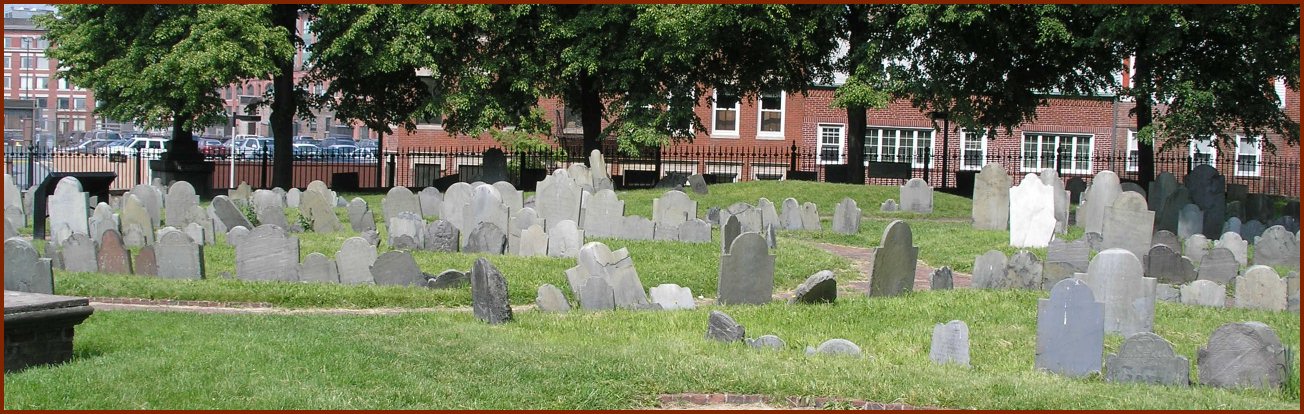
Burial Ground — © 2008 America In Context

I’ve been in a lot of cities in this country during my travels. Most old cities don’t really embrace their history. They have token historic districts, small spots in the city with a few important landmarks and strict building codes. Usually they’re smack in the middle of business “dead zones” (where you can’t even find a good spot for lunch), or surrounded by inner city slums (where you’re afraid to park your car). Best case they’re well-maintained, but only to keep property values high. The goal of these cynical districts isn’t to provide educational opportunities or spark interest in history, but to keep smarmy, uptight residents happily self-righteous, and to keep undesirables out. I suppose its beter than paving historical buildings over, a fate which has befallen many over time.

Constitution — © 2008 America In ContextThe problem is most people simply don’t understand the significance of history, nor do they appreciate the incredible chain of events that led to, well, everything. History is that chain of events that, when taken in context, explains why we are where we are at this exact moment in time. Something happened, then something happened, then something else happened, and you end up having some craptastic pasta dish at Applebee’s with people you don’t like. Everything happens for a reason, it happens because a certain sequence of events led to it happening. It’s not fate, it’s historical inertia. Understand that, and you can understand what comes next. It’s why I love the subject so much.

But most people don’t. Most people hate it, because a slew of lousy teachers did a terrible job teaching it. Those who don’t hate it outright see it only as a way to add smugness into their lives. How many antique collectors even understand what it is they own? They just hoard all that junk because it makes them look smart or it goes with their decor. Same with most cities and their historic districts. How many such communities even understand what they have? Very few, I’ll wager, although I’m sure they know exactly what it does for property tax collections.

Boston is an imperfect place. It’s muder to get around, and it’s expensive to park. But it is one of those rarity of American cities: it is a place that fully understands and embraces its place in history, and its citizens are all the better for it.

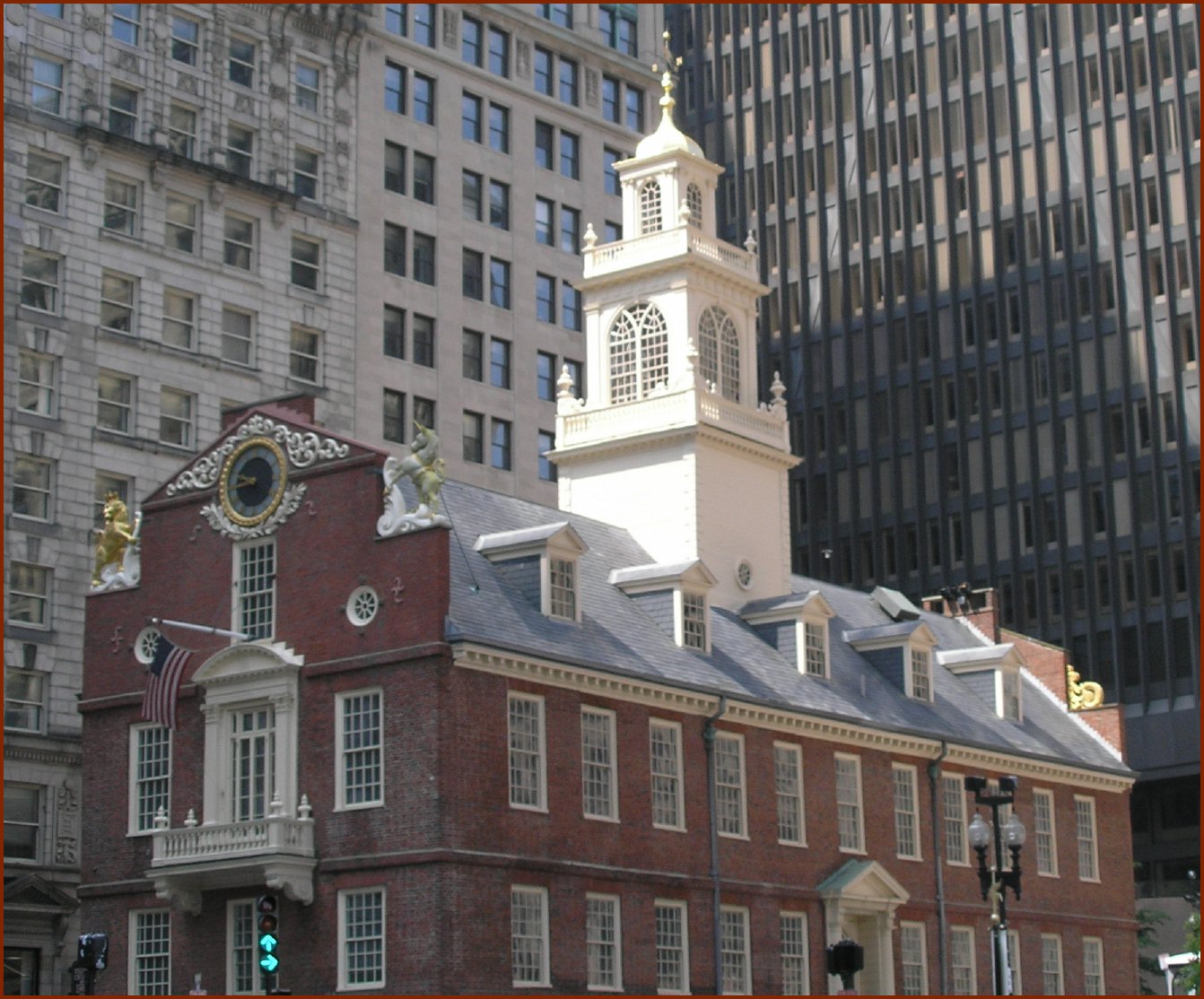
Old State House — © 2008 America In Context

[All pictures on this post are mine. I have surprisingly few pictures of Boston, I’ve been there so many times, pictures seem moot. However, you’re welcome to see all that I have here].

Links:

Boston Hational Historical Park

National Trust for Historic Preservation

Google Map to Boston NHP

Read Full Post »

One Problem, Many Solutions, Few Successes

If there is one difficult part of American history & society, it is that transition from slavery to freedom in the post-Civil War period (which, in actuality, is still going on today). I’m not talking about the actual sequence of events from the Emancipation Proclamation to Kanye West’s recent Grammy speech, I’m talking about the larger social, political, and even philosophical problem: how does an entire population, almost 4 million strong, make the transition from slavery to freedom, without crushing the economic and social status of the formerly enslaving nation? Oof, that’s a toughie, a heady question with so many facets, from the technical to the ethical to the theological.

I can say this with absolute certainty: it’s a question that America failed to answer satisfactorily. Yes, I said it: America failed one of the greatest challenges a nation ever faced.

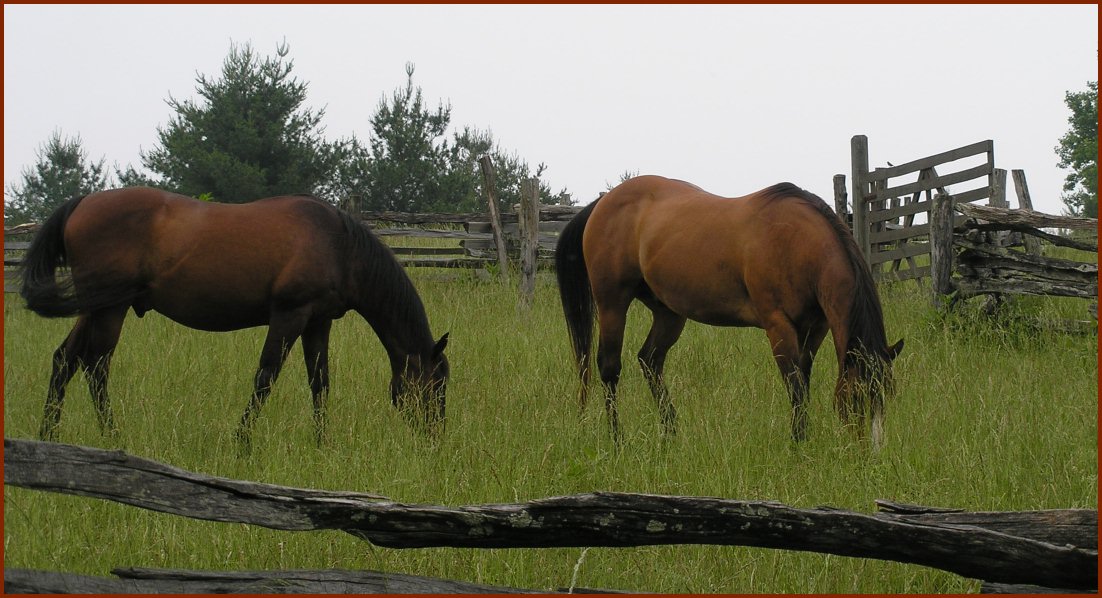
Vegetable Garden — © 2008 America In Context

It’s obvious that America failed in this regard: Jim Crow, the Klan, Plessy v. Ferguson, police dogs in Birmingham, the assassination of Martin Luther King Jr., the Watts riots, the continued concentration of poor blacks in America’s inner cities. These are not good results. The only part we really got right was freeing them in the first place (although even that was almost a hundred years too late — surely the Great Teacher in the Sky took points off for lateness on that one).

Sure, things have gotten better for African-Americans since 1865. But is it really better because America made it better, or is it better in spite of America’s efforts? As time has gone on, we have become more integrated. Black culture and music has woven itself into our society, creating art forms (like the Blues, rap music, urban wall art, and others) that could only incubate in a cauldron of pain, suffering, and intolerance that post-slavery America provided. But I don’t call that a “success”, we’ve simply accepted the failure and tried to move on with our lives.

Sheep In Pen — © 2008 America In ContextOh, to be able to take a time machine back to the late 19th Century and advise our leaders — both white and black — on how to do it right. Wouldn’t that be wonderful? It would be like telling the diners in Pompeii to leave the city; telling the Middle Age clerics to let the cats kill the plague-infested rats; warning post WWI Germany to leave Adolph in Austria. We could go back and fix everything, and none of those traumas I mentioned earlier would happen!

Unfortunately, even today, 145 years after Lincoln’s Emancipation Proclamation, we still have no idea how we could have done it any better. So we would hop out of our little time machine, look President Andrew Johnson and the U.S. Congress square in the eye, and go: “duhhhhh……”

The problem back then (with certain similarities today) is how to take an entire population, uneducated and entirely dependent upon a ruling class, and transform it into an independent, productive, successful body, without correspondingly bringing ruin upon that ruling class. Do you give them their own territory so they can develop their own society? Do you work to integrate them into your own society, so your success is their success and vice versa? Or do you simply transform from slavery to something almost as bad, keeping them a chronic underclass forever?

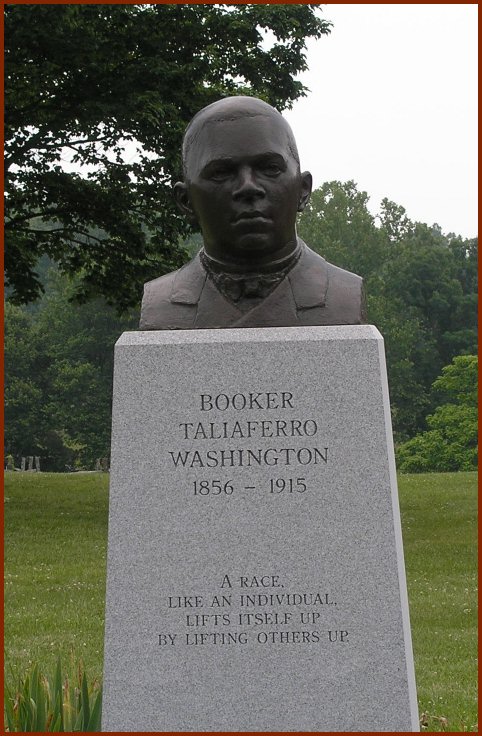
In the post-Civil War days, many African-American leaders came forward with their own ideas. Booker T. Washington was one such leader.
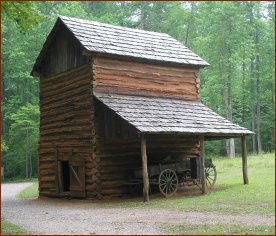
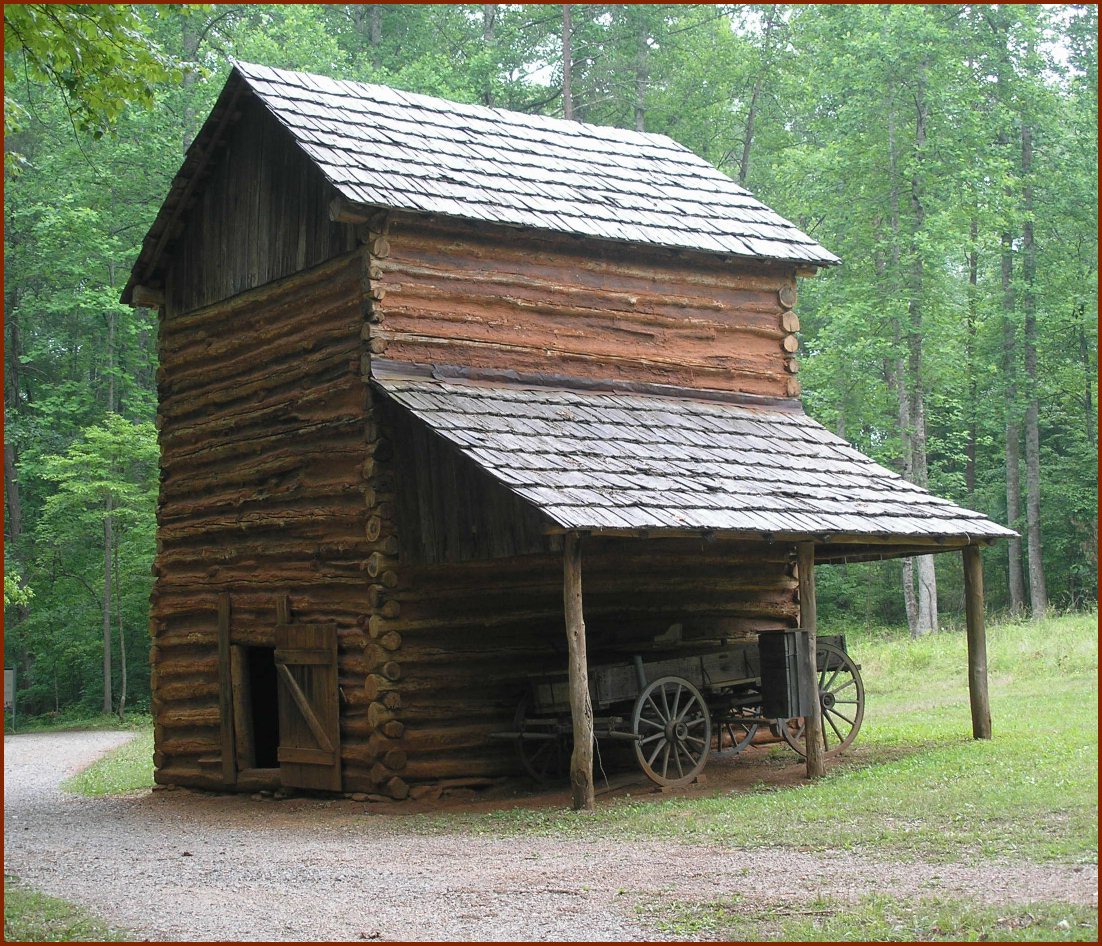
Tobacco Shed — © 2008 America In ContextWashington was a man after my own heart. He strongly believed in teaching freed slaves and their children about the real world: science, technology, engineering, agriculture. I’m a big fan of science and engineering and their real-world applications. In my view, as was Washington’s, if you can teach a person a real trade, you can set that person up for life. If you’re skilled, it doesn’t matter who you are, it matters what you do. Yes, it’s a pie-in-the-sky ideal, for you always have that personal element in everything, but your odds are much better if you have something real and tangible to offer society. And if society doesn’t want it, at least you can use those skills and have some semblence of autonomy. That was Booker T. Washington’s modus operandi: teaching blacks how to do. It was also the genesis of Washington’s great achievement: the Tuskeegee University (also part of the National Park Service, a topic for a later post).

The reality of the times would sadly tarnish Booker T.’s reputation. In order to create such a university, Washington needed funding. Funding he received … from wealthy white elitists, some of whom were former slaveholders themselves. Labelled an “accommodationist”, Washington was far too mum on the subject of segragation for many other African-American leaders. He would eventually speak out more and more against segregation, but for many of his contemporaries, it was too little, too late.

Munch Munch Munch — © 2008 America In Context

As I stated earlier, I’m not very good with African-American history. But I do know that no one in that era, including black leaders like Booker T. Washington, had all the answers for the freed slaves and their descendents. Those (black and white) who had the best of intentions did the best they could, based on their knowledge of humanity and the condition of the times. Their efforts may or may not have been successful, they may or may not have been right, but it has to be acknowledged that the simultaneous release of millions of men, women, and children from bondage created a problem vaster than mankind’s ability to solve. These people did the best they could, and at least they acted, and didn’t wait the required couple hundred years for the problem to solve itself.

Booker T. Washington National Monument restores the boyhood home of a man who did what he thought was right. It has been restored to resemble what it might have looked like during that time. The place itself is unremarkable, but the place in context with the most difficult part of American history truly makes one think.

Booker T. Washington Memorial — © 2008 America In Context

[All photos on this post are my originals. See my other Booker T. Washington National Monument photos here.]

Freed Fowl — © 2008 America In ContextLinks:

Booker T. Washington National Monument

The Negro Problem (essays from Booker T. Washington & others)

Google map to the monument

Some damned fool let the chickens out!

Read Full Post »
Beep! Beep! Honk! Honk! — Curse of the Drive-By Tourists

It’s an odd sort of thing: a National Park that’s really just a stretch of road. But that’s what the Blue Ridge Parkway is: a stretch of road. It’s a terrific stretch of road, however. It runs between Shenandoah National Park in Virginia, and Great Smoky Mountains National Park in North Carolina, and contains some of the nicest scenery east of the Mississippi. There are great swaths of sparsely developed land on both sides of the road, and plenty of small towns and great diners and other out-of-the-way places up and down the Parkway.

Courtesy of National Park Service

The big problem with the Parkway is the phenomenon of the drive-by nature tourist. Growing up in Western Massachusetts means growing up loathing one particular type of tourist: the leaf-peeper, that sightseer who comes up once a year, clogging our roads, looking at the world through their side window. It’s even worse when they won’t even get out of their cars to have lunch & help the local economy: they just turn around and go back to Rhode Island or Boston or wherever they come from. Eventually, it’s safe for the locals to get back on the roads, but by then, fall’s over and the roads to the mall get overloaded with Christmas shoppers….

Ah well, at least it’s only once a year. On the Blue Ridge Parkway, however, you get these types all year round. But unlike the roadways of Western Mass., the Parkway isn’t a real travellers road, it is just for the tourists. They’re not clogging up roads that working folk have to travel, so that’s fine. But I still get peeved by these drive-by tourists, even on roads built for them.

Courtesy of National Park ServiceMy big beef is this: nature is meant to be experienced, up close. It cannot be appreciated from the air-conditioned comfort of your Lexus SUV. You need to get out, put feet to ground (or paddle to water, or snowshoe to snow, or mountain-bike tire to trail, or whatever your modus operandi may be). That’s how you see the glory of nature. Get off your butts, and climb that ridgeline. Not only will you get some exercise, but then the views and vistas will be truly earned! And earning the reward makes the reward so much more satisfying.

Beyond that, in my opinion, roadside tourism leads to a misunderstanding of nature. It leads to a belief that nature is this broad, sturdy, indestructible everything, and that’s just not true. It also leads to this belief that nature is this serene, safe place, devoid of danger, and that’s not true, either. Nature can harm and can be harmed, it is strong yet delicate, it is diverse yet encompassing. Nature is so much more than just treetops and mountains visible from a roadside turn-off. It is trees and moss and roots and rocks and newts and squirrels and flowers and worms and all those other things not visible from behind a windshield.

So next time your driving along some scenic road, pull over, get off your butts, and walk the woods!

Courtesy of National Park ServiceI’ll talk about Shenandoah & the Smokeys later on, but here are a few non-National Park System sights I visited along the Blue Ridge Parkway:

  • Eastern Virginia has a lot of cave attractions, most are west of the Parkway. I visited Luray Caverns in New Market, Virginia. It was OK, rather touristy, but has some nice formations.
  • Charlottesville, Virginia is a great small town. It’s both the home of Thomas Jefferson and Dave Matthews. You can visit the former’s home (Monticello). I don’t think the latter would appreciate an uninvited visitor, however. 😉
  • Montpelier, the home of our 4th President, and the man creditted with writing much of the Constitution, James Madison, is in nearby Orange, Virginia.
  • The Natural Bridge is further south in, oddly enough, Natural Bridge, Virginia. It is said George Washington himself carved his initials into the stone, they’re clearly visible from the walkway.
  • The National D-Day Memorial is just off the Parkway in Bedford, Virginia. I didn’t care for it, however. Far too grandiose in my mind. I’ll comment on this in later posts, but I like simple memorials & monuments, not something that belongs on a Franklin Mint collectible. I did take a few unspectacular pics when I was there in spring of ’07.
  • Roanoke, Virginia has a surprisingly hip downtown area with some good restaurants & interesting shops. No brewpubs, though. 😦
  • Asheville, North Carolina is another nice little town. The famed manse, the Biltmore Estates, are nearby. I hear they’re a “must see”, which is, of course, why I didn’t visit them. 😛

Courtesy of National Park Service[Sadly, I didn’t own a camera when I toured the Blue Ridge Parkway. All pictures on this post courtesy of the National Park Service]

Links:

Blue Ridge Parkway

Luray Caverns

Monticello

Montpelier

Natural Bridge

National D-Day Memorial

Google map to the Blue Ridge Parkway

Read Full Post »

« Newer Posts - Older Posts »