Feeds:
Posts
Comments

Posts Tagged ‘travel’

World War 0.1

I hate ignorance. I especially hate it in myself.

It’s one thing to not have all the facts, or to misinterpret the ones you have, or to not grasp the subtlety of a particularly complex situation. But to miss something important in its entirety, that’s ignorance. And to miss something important in your own chosen endeavor, that’s just negligence!

I went to Fort Necessity completely unaware of it’s significance. It was just a spot on a National Park Service map. I thought it had something to do with the Revolution or something. I was so undeniably, completely wrong, so utterly ignorant, it’s shameful. Fort Necessity, as it turns out, is probably the singular site in all the NPS that has truly global significance. This is a site that marks a minor event in American history, but a huge event in world history.

The events unfolded in this manner:

In the time before the American Revolution, England and France vied for the continent. England, of course, had the 13 original colonies along the Atlantic Ocean. France had her own territory, in the north along the Saint Lawrence Seaway and lakes Erie and Ontario, and a spot of land at the foot of the great Mississippi River known as Louisiana. England wanted to move into the interior, and France wanted to use the Ohio and Mississippi Rivers to connect Quebec and New Orleans. For years, the two great powers, with centuries of enmity between them, would dance around each other in the New World.

In 1753, the governor of Virginia heard the French built forts on the south shores of the two big lakes, on land England thought was hers. The governor sent a small squad, led by a young lieutenant, George Washington, to warn the French of their trespass. Washington found himself rudely rebuffed by the French.

In 1754, newly promoted Lt. Col. Washington led a small regiment to help defend a small English fort near the Ohio River, only to find the French had taken over and built their own. Washington’s regiment made camp, and the young colonel thought to engage local Seneca chief Half-King and convince the French to depart. It was meant to be a parlay, backed by a subtle threat of superior numbers and a home-field advantage.

To this day, it is unsure who fired the first shot. It is often debated, but in reality, it doesn’t matter. What matters is a shot was fired. A skirmish erupted, and the young colonel was victorious. Thirteen Frenchmen lay dead, 21 were captured and led back to Williamsburg.

Here is where the tales diverge. In America, we are told that Washington, realizing a counterattack was imminent, led his regiment back into the wild and built a small palisade called Fort Necessity. Unable to solidify alliances with the local Seneca and other Indian tribes, Washington’s 300+ men fought and were defeated by 700 French and Indian troops. Washington had no choice but to surrender and take his men back to Virginia. It would be Washington’s only surrender of his entire career. The French and Indian War, as Americans would come to know it, would be fought, and the French would be pushed out of North America.

In Europe, however, a totally different story is told. There, that ill-fated shot would be used as propaganda by both France and England to ratchet up tensions between the two European powers. The resultant battle between relatively small forces in North America would ignite a massive conflict on the European continent known as the Seven Years War. It was truly the first actual World War, involving many countries across Europe. On the one side, England and her allies (Prussia, Portugal, and some German states) would fight Austria, Sweden, Saxony and France. Russia, in typical fashion, would switch sides in the middle of the thing. Even the Dutch were involved when one of their own colonies was attacked in modern-day India.

This is the tale that Americans aren’t told. Hell, we’re barely taught anything about the French & Indian War! But the Seven Years War cost almost one and a half million lives. It redrew the map, not only in Europe and North America but even in Africa, the Carribbean, and the Indian subcontinent. It severely weakened France, factored in their decision to assist America in their battle for independence, and set the stage for the French Revolution. It ended the Holy Roman Empire entirely, and rose Great Britain to the role of the dominant maritime and colonial power in the world. They would rule large tracts of land from the southern tip of Africa through the Middle East to India, Australia, and Canada for two hundred years until a later World War would undo the effects of this first one or, as I call it, World War 0.1.

Fort Necessity taught me a lot about this period of world history, more than high school or college taught me. Americans aren’t taught this at all, except those who study third-year world history. It’s forgotten, lost, or simply uninteresting. I wonder if it’s ignorance or arrogance. Our own involvement in the Seven Years War was small, and when it did happen, we weren’t really America at that point, so in our eyes, it didn’t even matter. But there are events that happen outside of our cloistered continent that are important, even without us. We need to pay heed, observe and learn of those things outside of our borders (both borders of space and of time).

We are not the center of the universe. We are not even the center of the world. We cannot afford to pay attention to only those things that revolve around us.
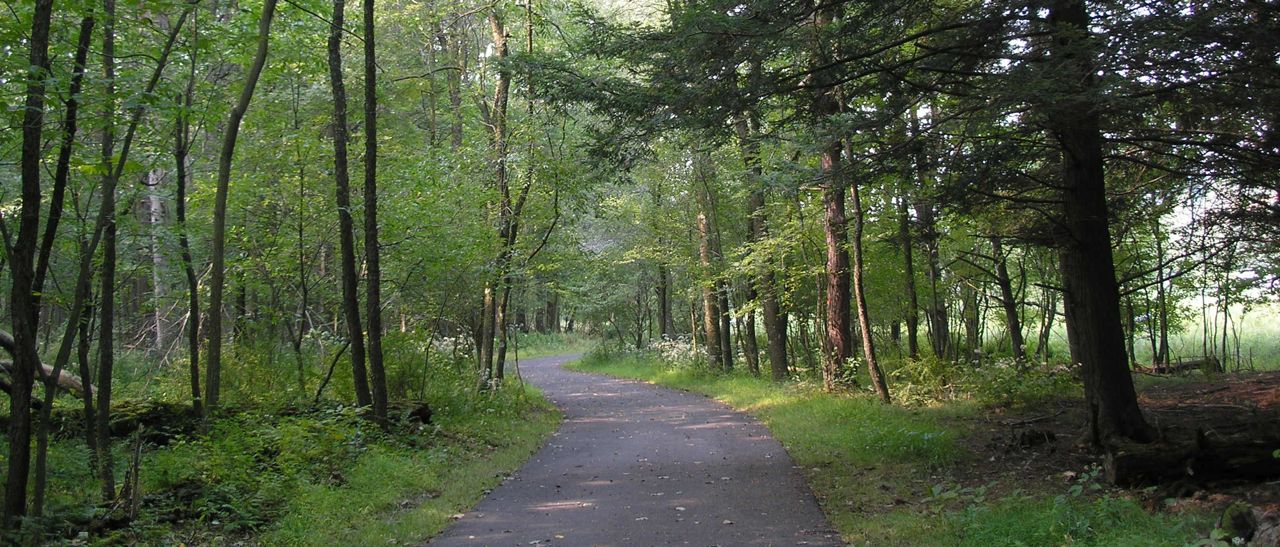
[Pics on this post are mine and thusly copyrighted. More are here.]

===============================================

Links:

Fort Necessity National Battlefield

Seven Years War on Military History Online <– such an interesting site I added it to the blogroll
The British Empire Online

Google map to Fort Necessity

Read Full Post »

Feel the Love

I went to Baltimore on business in 1992, early in my National Park quest. That was in that tremendously warm-and-fluffy, “the world is SAVED!!!” time in the years after the fall of the Berlin Wall. It was such a great time for this country: the end of Soviet communism, the liberation of eastern Europe, the first time since WWII that America had actually won! We had just kicked Saddam Hussein out of Kuwait in a great victory. Our economy was in good shape, we were the biggest dogs in the neighborhood, and finally, after all those decades, the fear of nuclear annihilation was gone.

It felt everything was going our way. It was great! Now, of course, our country is well, kind of a mess (when crabbyolbastard and I are out for a couple of beers nowadays, the words “it’s all a bag of ass!” cross our lips quite often). But back then, it was a great time to visit America’s Shrine.

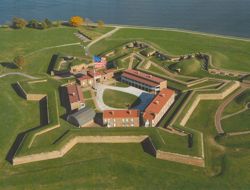
Fort McHenry was the spot of inspiration that enabled Francis Scott Key to pen the poem that would become the Star Spangled Banner, our national anthem. Fort McHenry is the only spot in the NPS called a “shrine”, and rightly so. And I have to say, if you’re as “into” this country as I was at that particular time, then McHenry is the place to go. I was downright gooey with patriotic love (um, ewwww!) when I was there. It was terrific. It’s a beautiful spot, right on the bay, great views, stiff ocean breeze, big Stars & Stripes fluttering from a big mast, absolutely marvelous! I need to stop by again next time I drive down I-95.

I want to give a little shout-out to Baltimore. I don’t know what downtown Baltimore is like today, but I was there at what seemed like a great time for the city. Camden Yards was just finished, there were all these great restaurants and pubs (and, even better, brewpubs!) around the harbor. I don’t have any specific memories of my short time there, but the general ones I have are fond. I’d love to hear from Baltimoreans (Baltimorites??) today. What’s the city like? How’s the downtown and the harbor doing? And just how is good, old Fort McHenry?

[I didn’t own a digital camera when I visited Fort McHenry. Heck, digital cameras weren’t even invented yet! Pics are public domain stuff scraped from the National Park Service website.]

======================================

Links

Fort McHenry National Monument and Historic Shrine

The Fall of Communism in Eastern Europe

Baltimore’s Inner Harbor Neighborhood

Google map to Fort McHenry

Read Full Post »

Peace, Quiet and Thought

I’ve said this before, but I love visiting the Great Plains. There’s something about the vast open spaces, the capacity to see for miles and miles, that frees my mind from the cluttered inanity of the world. Having a broad field of vision in the physical world leads to having a broad field of vision in the metaphysical world. OK, fine, that last sentence was a bit over the top. I’m just fishing for fancy ways of saying “open spaces make me feel better”.

New England, much as I love it, tends to be a bit claustrophobic. The hills, mountains and forests restricts field of vision; the constant clamor of a high population density clutters the mind with noise. There ends up being so much noise, so much distraction, it’s hard to stay focused on a task, think through life’s bigger challenges, or simply sit and listen and appreciate a moment in time. Clarity and depth of thought requires personal space and lots of it; the lack of such space clutters the mind like the spare room of a chronic hoarder.

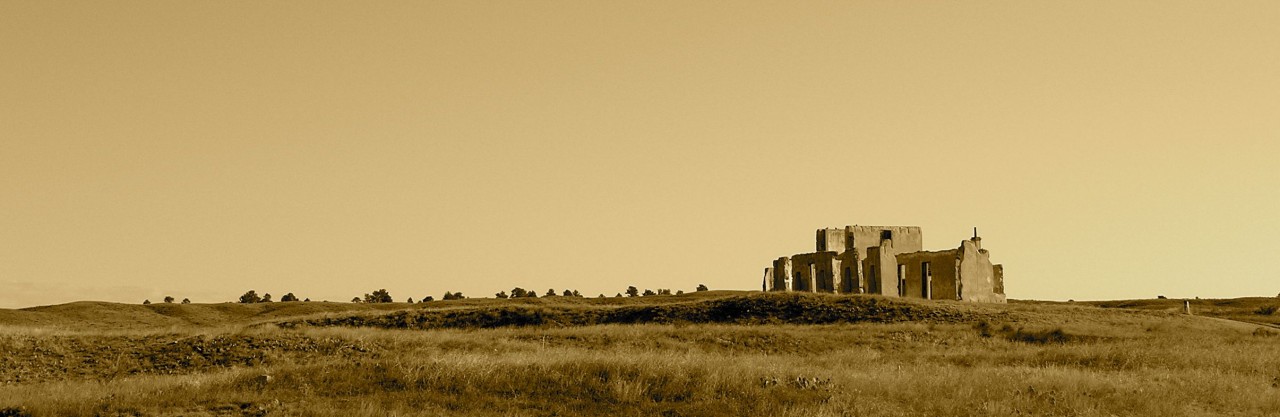
Eastern Wyoming (where Fort Laramie sits) is vast, open, and sparsely populated. It’s so easy to find peace and quiet, to be alone with one’s thoughts. This lends itself to observation, contemplation, and (yes, I’ll say it) spiritual reflection. Even the chronic prevailing winds of the western plains assist. A good, stiff wind in your face cleanses the soul like a sand-blaster cleans painted brick. Wide open spaces and weather: these are a few of my favorite things.

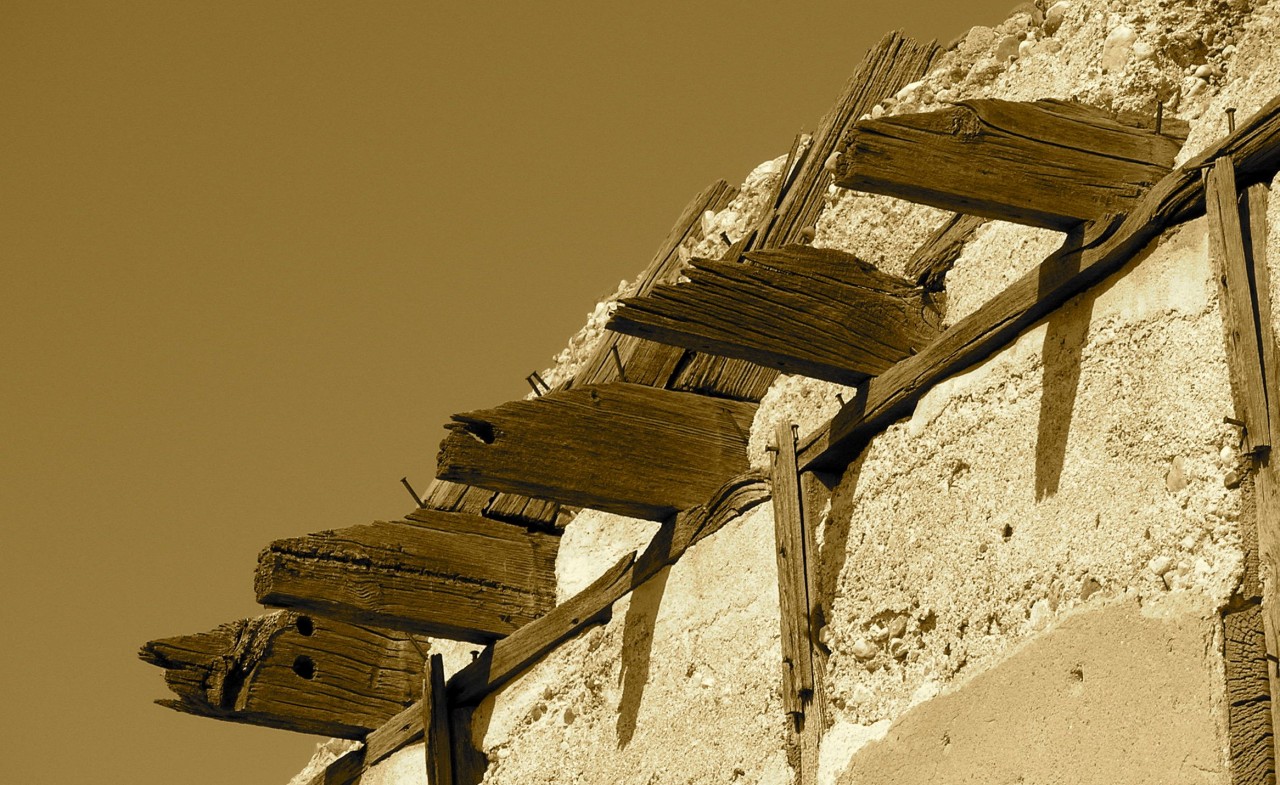
Add in historic Fort Laramie, with its crumbling brick facades, you find yourself reflecting on the past. Like most historic sites west of the Mississippi, Fort Laramie is part and parcel of Native American history, in this case the history of Indian suppression. A visit there makes one specifically reflect on that part of America’s past.

I feel like I could type forever, spewing forth my thoughts about the tragic conflict between the tribes of the Americas and the white settlers. I’d make a blog post so massive and unreadable it’d go down in the annals of bad web content forever. Instead, let me just give a short list of some observations I made at Fort Laramie and similar sites across the country:

  • Did you ever notice that great swaths of the Plains cleared of Indians by the U.S. Army are still pretty empty?
  • Did you notice that people are actually moving out of rural areas in the midwest? Depopulation of the plains has been going on for some time now.
  • Did you know that much of the land taken from tribes was given to cattle ranching? Did you notice that overconsumption of beef is now deemed a health hazard, and current factory-style, corn-fed beef production is considered bad for the environment?
  • Did you notice that family farms, another beneficiary of U.S. Indian relocation policies, are dying out and being replaced by corporate farming concerns that no one seems to like?
  • Have you noticed that California, the “promised land” for wagon trains and railroads, is, well, kind of a mess right now?

It’s been well over a hundred years since the government’s longstanding programs effectively nullified the Indians as a resistance movement and nearly eradicated tribal culture completely. But now, after all this time, I think the question needs to be asked: was it really worth the price?

Playing “what if” games is rarely productive. Nothing can undo what was done, and Monday-morning quarterbacking has as much value as Monopoly money. But maybe, hopefully, we can take the lessons we learned and teach them to others who sit along a similar precipice we sat upon in our expansionist phase. You don’t need to extinguish a competing culture or civilization to succeed and grow. In fact, it’s quite likely it leads to an opposite result.

[The pictures on this blog entry are mine and copyrighted thusly. More are here.]

============================================================

Links:

Fort Laramie National Historic Site

Change of Heartland: The Great Plains

Holy Cow: The Wide Impact of Eating Red Meat

Google map to Fort Laramie

Just for the heck of it, I added a picture of a bunny….

Read Full Post »

Is It Time?

How long does it take for an event to move from the present into history?

I’ve listened to a lot of talks by a lot of historians. It never fails, someone will inevitably ask “how will history look back on the the events of today?” And historians almost always give the same reply: “well, we won’t know until enough time has past. Future historians will have to judge.” Yadda yadda yadda.

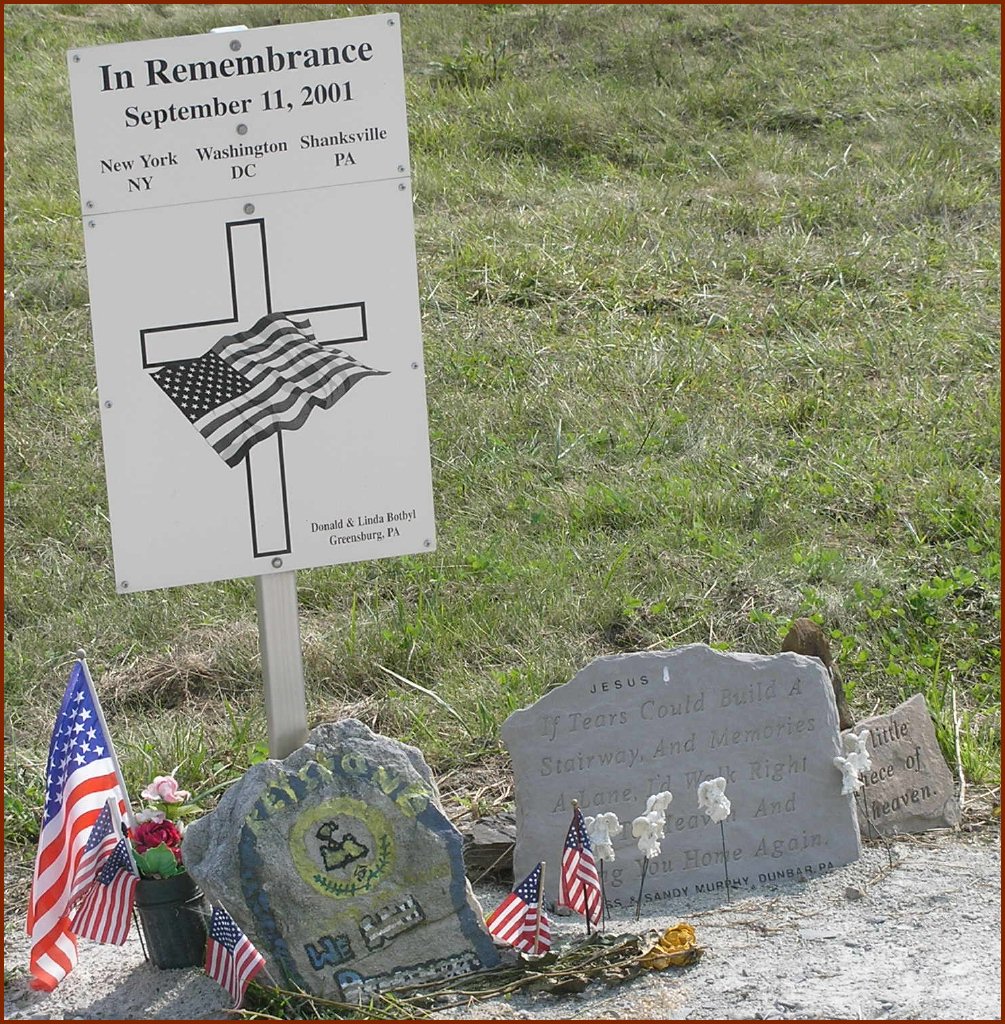
In Remembrance © 2009 America In ContextI’m wondering: has enough time passed to honestly and objectively look back on 9/11? There hasn’t been another terrorist attack on U.S. soil, but al Qaeda still makes is presence felt elsewhere.  The administration of President George W. “9/11” Bush is over, but the resulting wars in Afghanistan and Iraq are still going on. And bin Laden is still out there, somewhere. We don’t know if he’s dying of cancer or plotting the next attack. So I’m not quite sure enough time has past to put 9/11 in its proper context, it seems like we are still living it today. If we are still living it, has it past into history? Hmmm….

Because I’m not sure it has past into history, I’m also not quite sure we can properly memorialize it. Time has to pass before one can honestly reflect on an event. There’s too much emotion otherwise, and you end up acting completely on impulse and make bad judgements that you then have to live with. So has enough time passed to build memorials, things that will stand for generations and generations? Will such a memorial teach the right lesson to those who weren’t here in 2001?

Jacket and Stuff © 2009 America In ContextThe Vietnam Veteran’s Memorial was built in 1982, seven years after the fall of Saigon. Here we are, eight years after 9/11, so maybe it is time after all. The only difference, of course, is the Vietnam War actually ended. The conflict itself was closed, the troops were brought home. The scars and carnage remained, but at least the nation had those seven years to reflect, and think, and figure out how those lost lives should be remembered. We now have one of the most moving memorials ever created on the west end of the National Mall.  I want the same thing for 9/11, a symbol that evokes the right emotion and conveys the right message to those who might visit it 20, 50, or 100 years later. I don’t want some rushed hunk of granite garbage that evokes a response of “WTF?”

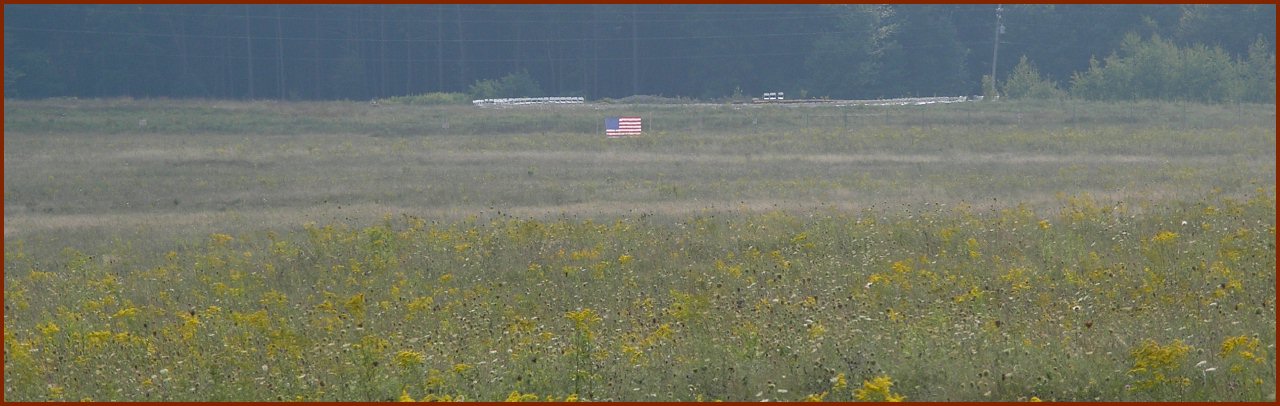
Regardless of the answer to this heavy question, I do like the design for the memorial to Flight 93. I’ve reviewed it, and I’ve visited the site, and I have to give my own, “mouse that roared” thumbs-up to the proposed memorial in Shanksville, PA. I think it’s subdued enough, thoughtful enough, and emotive enough to qualify as a true, honorable monument to those 40 folks who gave their lives in a senseless, pointless act of violence. I especially like the groves of trees and the low, graceful lines of the design. It fits in with the landscape and the dignity we’d all like to see.

I don’t ask this often, but I hope you’ll take the time to visit the Flight 93 Memorial Project and make a  contribution to the creation of this monument. After wrestling with the issue during the crafting of this post, I think its time has come.

Sacred Ground © 2009 America In Context

[Pics are mine and appropriately copyrighted. More are here.]

=============================================================

Links:

Flight 93 National Memorial

Flight 93 Memorial Project

Google map to the Flight 93 memorial

Read Full Post »

« Newer Posts - Older Posts »