Feeds:
Posts
Comments

Posts Tagged ‘travel’

G, A, F, (octave lower) F, C? B flat, C, A flat, (octave lower) A flat, E flat!!

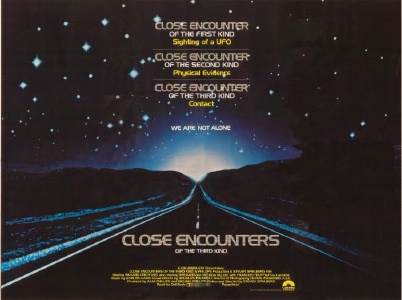
In 1977, I was twelve years old, smack-dab right in the middle of the target audience for a blockbuster movie. A movie about two people whose mundane lives are interrupted by visitations from extraterrestrial beings and the government conspiracy to cover it up. Close Encounters of the Third Kind was a huge experience for me back then. Mega-huge!!! I was all over those ads with the bright light at the end of the deserted highway. “Close encounters of the first kind: visual sighting. Close encounters of the second kind: physical evidence. Close encounters of the third kind: CONTACT!”.

Close Encounters Poster © 1977 Columbia Pictures

Oof, cue the chills down the spine! The posters, the collectible cards, all that sweet, sweet geeky goodness. Ambrosia! It’s almost as if Steven Spielberg woke up one morning and said “Hmmm, I think I’ll write a movie that’ll appeal to that scrawny kid with the Coke-bottle glasses from Western Massachusetts.”  I was all over that film like stink on roadkill. A couple of years later, we were one of the first houses in town to get cable TV, and my dad bought all the pay channels. I watched Close Encounters 18 times in one month, and was damned proud of myself for it!

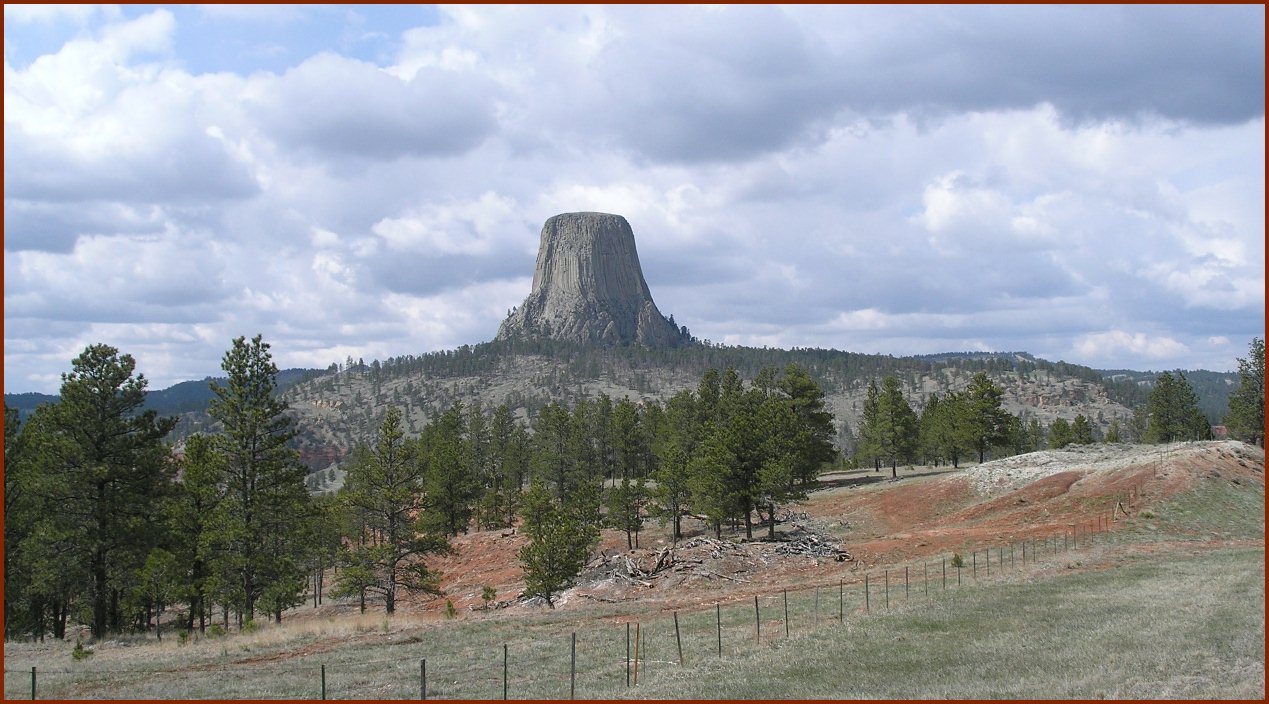
You can be damned sure that visiting Devils Tower (no apostrophe, contrary to popular belief) was high on my list of must-see sites in the National Park Service. And when I rounded that corner of State Highway 14 and saw that great monolith sticking out of the low eastern Wyoming hills, I was as giddy as a 12-year-old boy in a movie line the night of the big premier (after months of soaking in shameless & targetted Hollywood promotion). I’m actually glad I was alone, I could just revel in the giddiness without apologizing to anyone. Yes, ladies and gentlemen, it was a pure geek fantasy come to life, and I was enjoying every rapturous moment of it!!

Tower and Clouds © 2009 America In Context

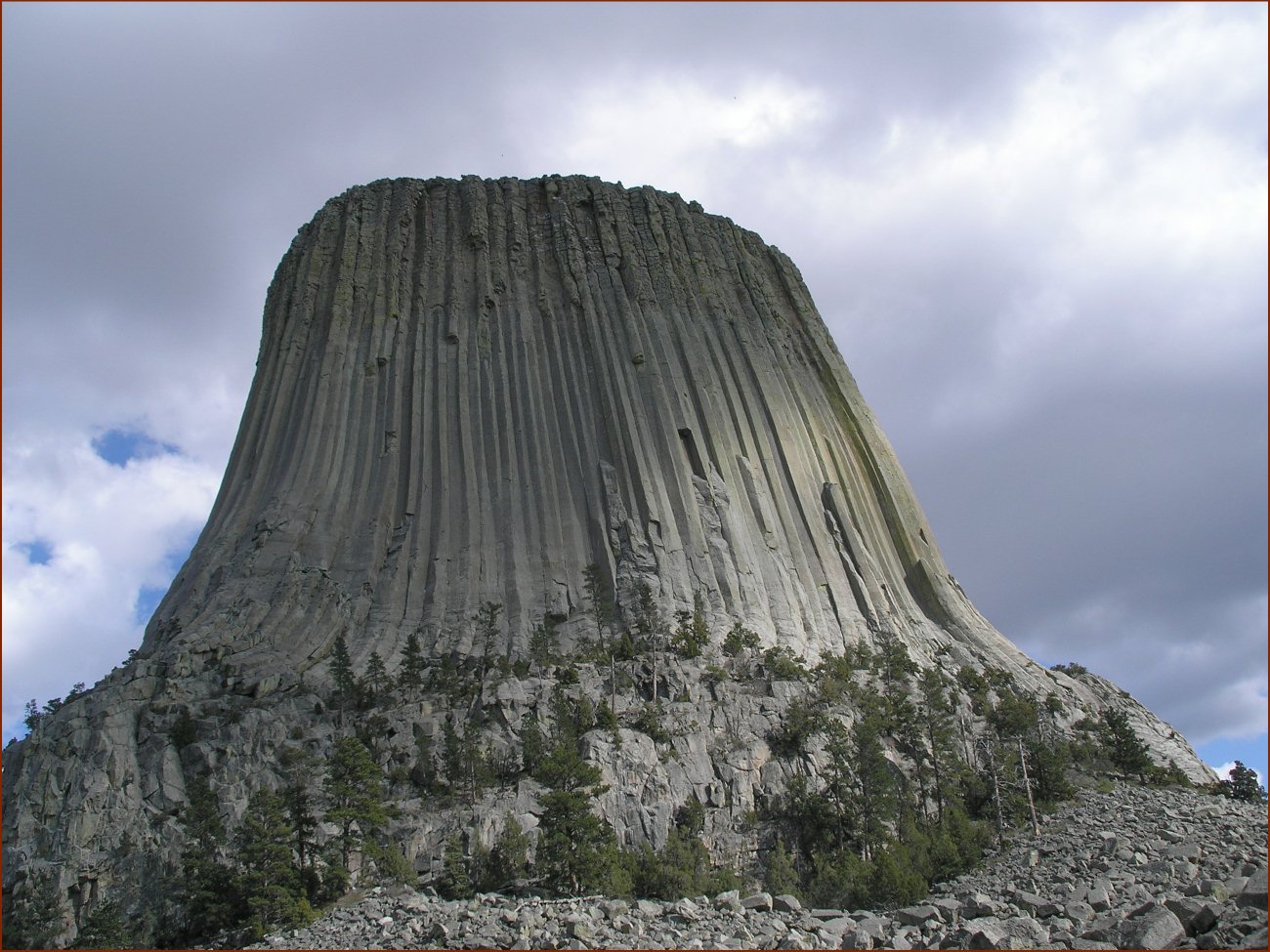
Devils Tower is truly a wonder to behold, even if you’re not into movies. It’s an enourmous volcanic extrusion that not only towers above the surrounding countryside but seems so alien to that landscape. It looks like it doesn’t belong, it’s like those Sesame Street clips: “one of these things is not like the other ones…” It’s almost as if those extraterrestrials placed it here millions of years ago as a signpost: “Gateway to the Stars — Free Anal Probes to the First 10,000 customers.”

A Shadow Passes © 2009 America In ContextIt’s easy to see how mankind has marvelled at it since the Bering Land Bridge first allowed humans to cross into North America. It’s held special significance to Native Americans for hundreds of years. The Cheyenne, the Arapaho, the Lakota Sioux, the Eastern Shoshone, and many other plains tribes revered the spot, and gave it names such as “Bear’s Lodge”, “Tree Rock”, and “Mythic Owl Mountain”. To this day, their descendants return to Bear Lodge for ceremonies and to tie prayer offerings to the trees.

Later, when European settlers and their descendents crisscrossed the west looking for furs, or gold, or a path to the Pacific, they gave it the dramatic name “Devils Tower”, and eventually the greatest environmental president, Teddy Roosevelt, signed the law protecting it as America’s first National Monument. How could you not?? To this day, I have yet to see a natural wonder of such singular, unique stature in the United States.

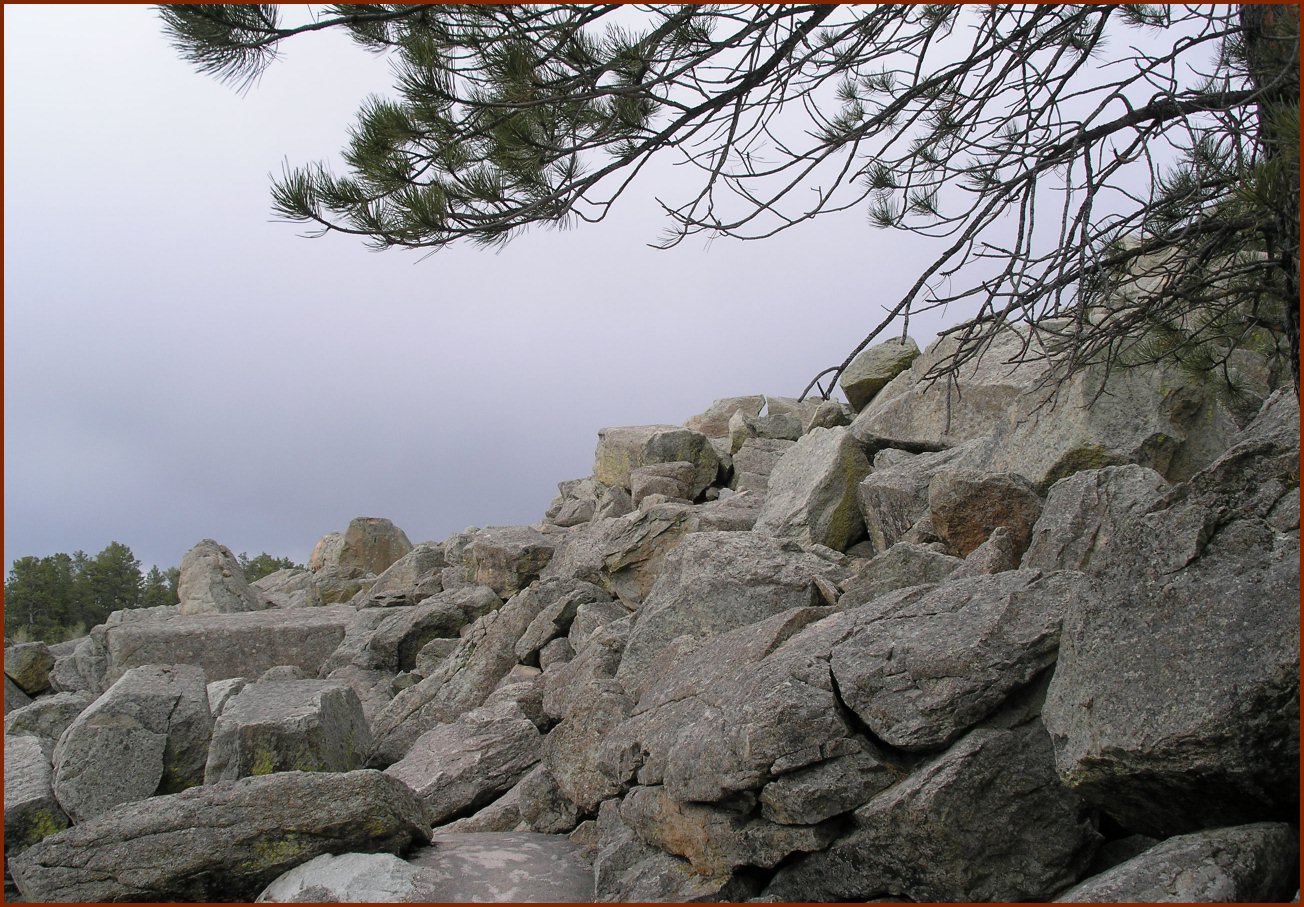
rock-scrambleNowadays, people think of Devils Tower and think of Spielberg’s film, and I guess that’s OK too. A nation’s culture is defined by its arts, and in America’s case, our arts is really defined by our films. So I’m cool with the fact that this great wonder of nature has been immortalized by a blockbuster movie and not by the simple fact that it’s so fascinating.

Of course, some people can’t separate film from reality: when I came back to tell folks of my visit, a lot of people asked “did you see any aliens when you were there?” Um, well, no, that was a movie. But I did dream up a sequel to Close Encounters called Close Encounters: The Return, wherein the extraterrestrials come back to Earth and return Richard Dreyfuss. “Please, take him back. His liberal politics and sappy, pedantic movies are ruining our culture!”

I don’t see that appealing to any 12-year-old kids.

Departure © 2009 America In Context

[All photos, except the Close Encouters poster, are mine and thusly copyrighted. Please do not use without my permission. More of my Devils Tower pics are here.]

=======================================================

Links:

Devils Tower National Monument

Close Encounters of the Third Kind on IMDB

Lakota Archives: Bear Mountain

Google map to Devils Tower

Read Full Post »

A Spot of Preservation, Please

Devil’s Postpile is a tiny little National Park System spot, especially when compared to nearby juggernauts like Yosemite, Sequoia, Kings Canyon, and Death Valley National Parks. It only covers about 800 acres, even Valley Forge NHS is bigger than that. It’s just there to save a singular geologic feature: a volcanic extrusion cooled in hexagonal basalt columns. Yeah, not too exciting, but hey, it’s not something you see every day. It’s just a tiny little spot of interest, preserved.

Postpile © 2009America In Context

Which sort of brings up a point. How big of a deal is it for someone to look at something and say “hey, that’s pretty neat, we should save that.” Well, apparently, it’s a pretty big deal. Postpile took a bit of effort to save. Long hidden in the high-altitude mazework of the eastern Sierra Nevada, people didn’t even know it existed until the late 1800s. Of course, it wasn’t too long until water interests showed up wanting to blow these extruded columns straight to hell to build their dams. As usual, the happy ending here was a group of concerned citizens & environmental groups raising awareness leading to the salvation of this unique pile of rocks.

San Joaquin River © 2009 America In ContextYeah, I know, here we go again. Those naïve environmental whackos, sacrificing the public good and economic growth for worthless blind cave fish or piles of grey rocks. Why should we preserve all these unimportant things when people can’t put food on the table or get a drop to drink? Fair questions, I suppose. Fair questions, that is, until you realize that so many times this destruction is either for naught, or is ill-placed, or the fruits of that destruction is itself wasted, or, even worse, it’s realized after the fact that all this destruction has doomed us all.

Looking specifically at the economic collapse we find ourselves in, which seemingly marks the end of our nation’s economic prosperity, I have to ask myself: was it really worth destroying portions of our nation’s environment for “economic expansion”, when our own greed-driven stupidity has halted that very economic expansion and set us all down the road to ruin? Our wealth has evaporated, our jobs have moved overseas, our education and health care systems have collapsed, and all we have to show for it is a scarred landscape. There are parts of Texas that are forever ruined thanks to sloppy oil drilling. There are parts of West Virginia forever despoiled thanks to mountaintop removal mining. Long Island Sound will likely never recover from the damage caused first by New England mill towns and later from over-fertilized suburban lawns.

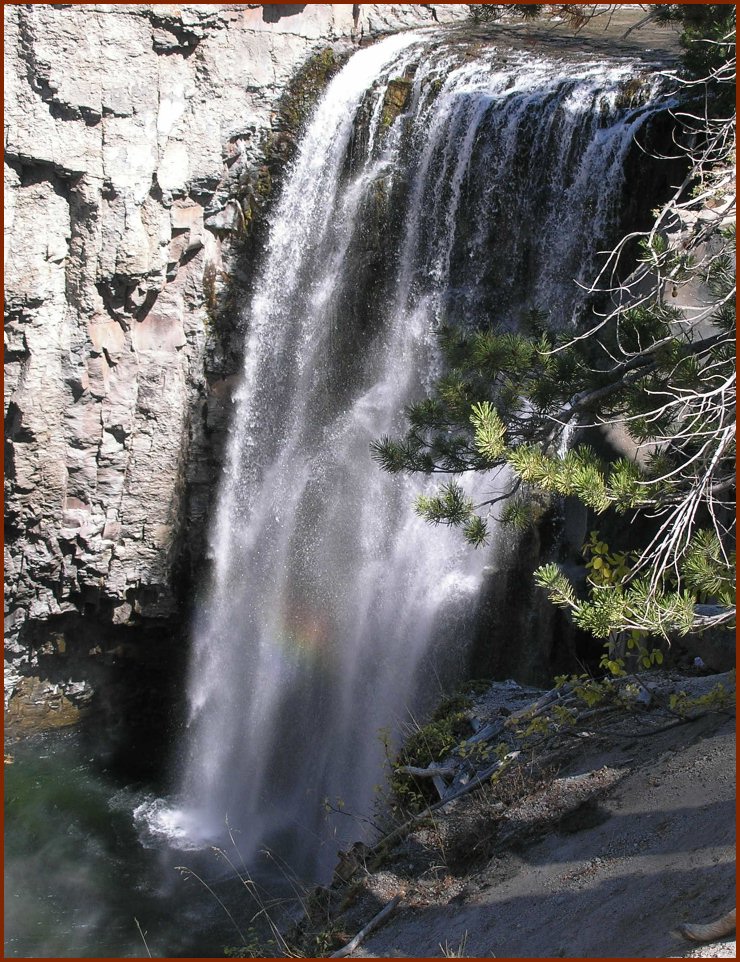
Rainbow Falls © 2009 America In ContextI know there’s a delicate balance between environmental preservation and economic expansion. I know NIMBY-ism prevents good projects, like robust electrical grids, light rail, and hydroelectric & geothermal power (two truly renewable energy sources), from getting completed. And there have been some very helpful projects like Hoover Dam and the TVA that have been done and resulted in vast improvements in the quality of life for millions. But what bothers me is the environmental damage we have wrought for absolutely no reason other than building over-large, unsustainable houses no one can afford to live, and mega-mall shopping complexes where no one can afford to shop. We’ve ruined our landscape and have nothing to show for it but a nation in economic collapse.

I’m just suggesting that anytime zoning boards or developers or the Dept. of the Interior or Congress considers destroying a chunk of our natural world for some special project, they need to seriously consider “is it worth it over the long term,” or is it simply some get-rich-quick scheme for some special interest group that won’t provide a lick of true economic growth for the nation. I suspect that as long as these groups can be easily bought off or deluded, we’ll never make those intelligent decisions.

Fallen Columns © 2009 America In Context

At least we have places like Devil’s Postpile and other national, state, and municipal parklands. Well, for now that is, until some shyster convinces us that paving them over will lead to “economic prosperity”.

[Pics on this post are mine and copyrighted thusly. See my other Postpile pics here.]

================================================================================

Eagle © 2009 America In ContextLinks:

Devil’s Postpile National Monument

Environmental Valuation Blog

CIA World Factbook: Environment (yeah, I know it’s not directly related to the content of this blog post, but I stumbled across it and found it neat)

Google map to Devil’s Postpile

Read Full Post »

Autumn in Denali

Autumn is the best time to visit Alaska and especially Denali. Of course, being far north, Alaskan autumn starts in the last week of August, so plan accordingly. But it’s a great time to see the Last Frontier.

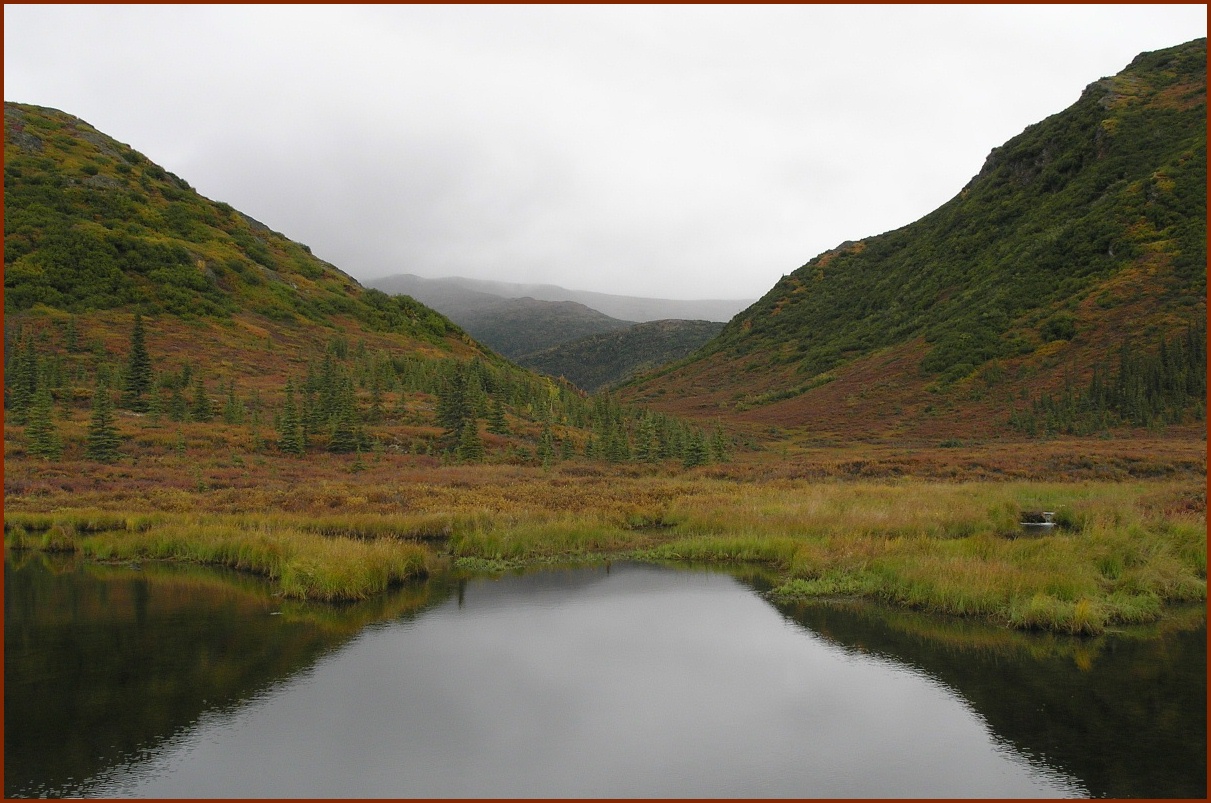
Valley and Pond © 2009 America in Context

The first thing about Alaskan autumn is it does get chilly, so dress accordingly. And that’s awesome for tourists. See, I’m a firm believer that our National Park sites should be experienced. This means getting off your dead ass and getting into the park. Hike a trail, paddle a river, climb a mountain, dive into the ocean. Do something, anything, whatever is appropriate to the park, but also do it out there, in the wild.* And in the Alaska parks, where it’s winter 7 or 8 months out of the year, the least you can do is experience it in the colder weather. How can you possibly experience Alaska without layers of clothing and a bit of a chill? Summer travel is for wussies. You can get better deals at the end of the season anyway :-P.

* Note: when I say “go into the wild”, I don’t mean drop all your worldly possessions and live in the wilderness. All I’m saying is get away from the visitor center and out of your car and walk a trail. The wonder of these places can’t be seen from a roadside overlook. And safety first: travel in a group, carry the right equipment, don’t overextend your abilities, etc., etc., etc.

—-

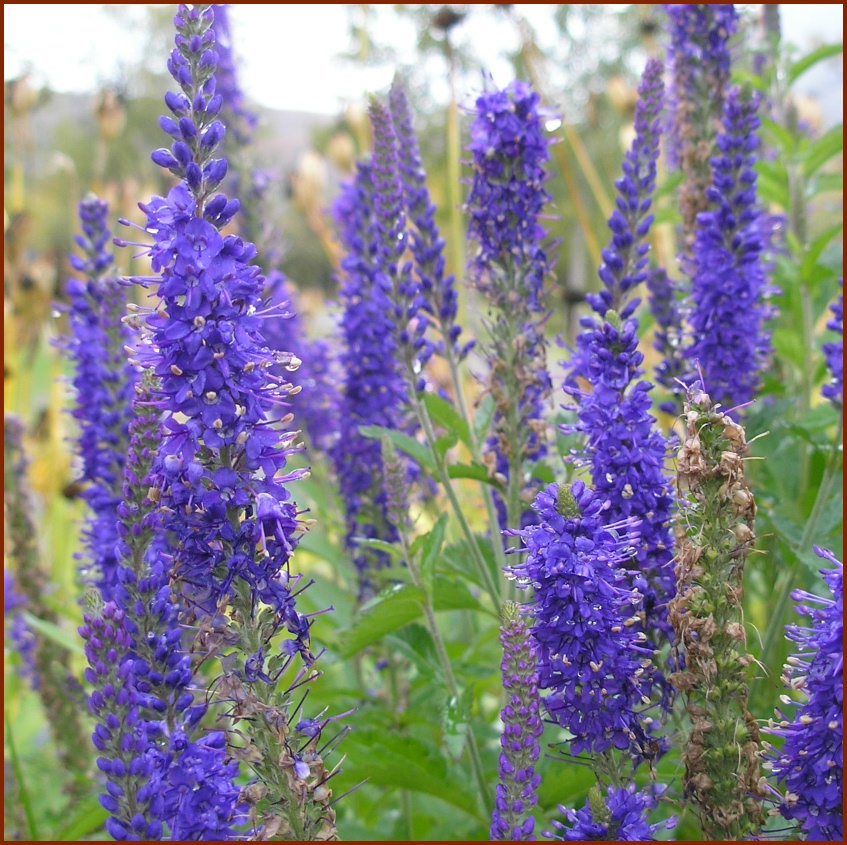
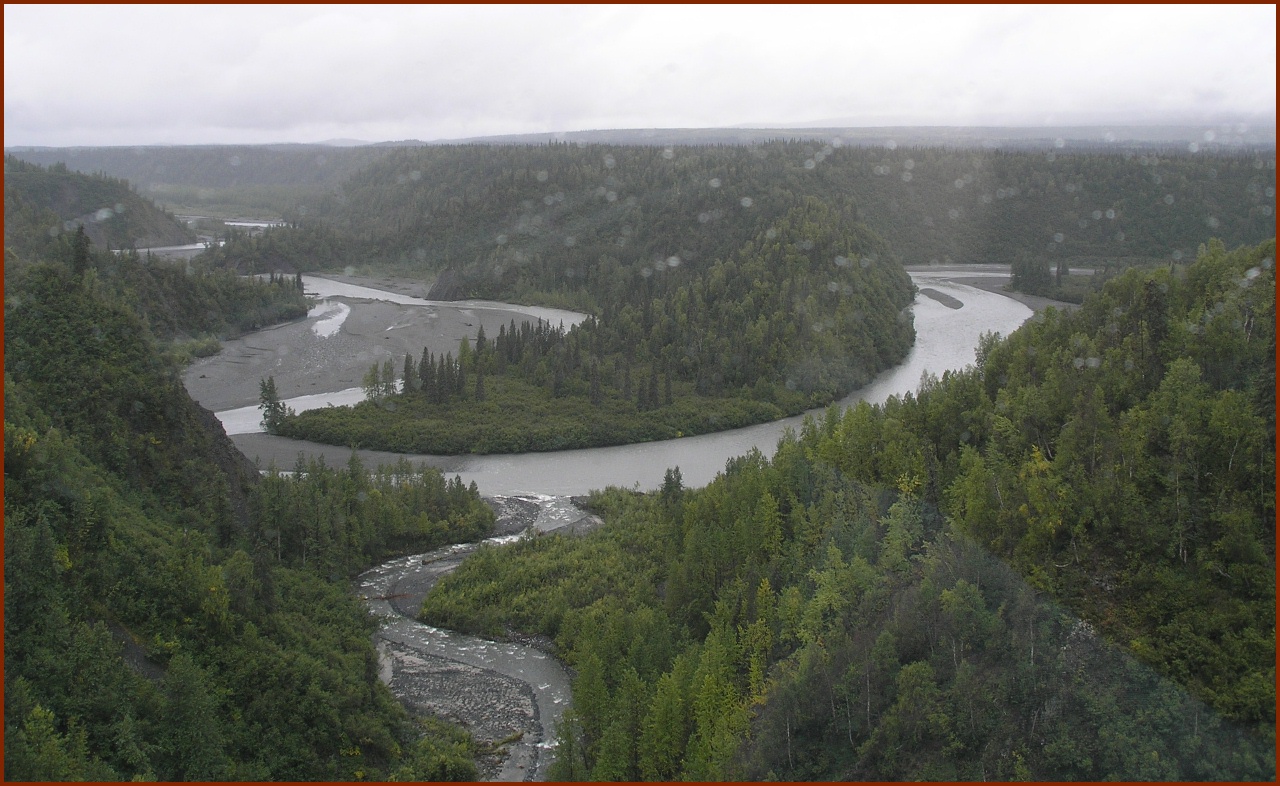
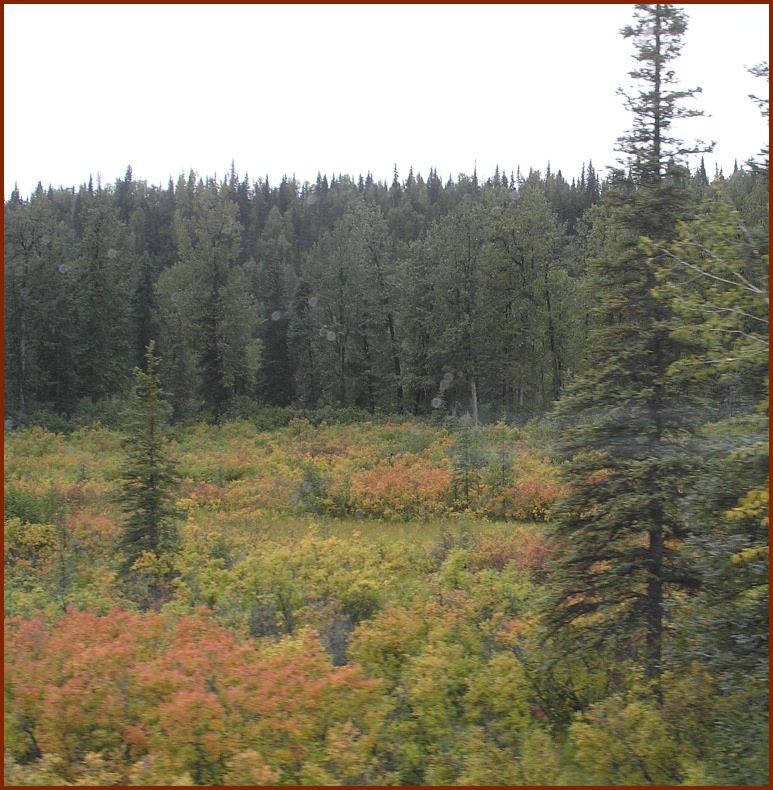
Purple © 2009 America in ContextIf you haven’t been to Alaska’s interior before, let me give you a primer. In Denali, there aren’t as many pine forests as you might think. The nature of the tundra doesn’t lend itself to big trees. But there is fall color out there. There are great swaths of birch and other low trees & shrubs, which do turn gold and red. The real autumn glory rests right on the ground, a low carpet of moss, grasses and other tundra-loving plants native only to this particular latitude and altitude. This is where the beauty of the Alaskan autumn comes from: a cavalcade of color coating all the hills, vales, and even some of the glaciers, a carpet you can walk on and, if you’re wearing the proper waterproof gear, sit on for lunch. This is the foliage of interior Alaska: a kaleidoscopic carpet covering the scenery, and if you walk out in Denali, you’re towering above it all.

Speaking of scenery, well, I shouldn’t have to tell you Alaskan scenery is fantastic. It’s world famous, so unless you’re spending all your days playing Second Life, you should have heard about it. But there’s special coolness in the Alaskan scenery in autumn. Winter comes so quickly to Alaska, you can see the changing season in just a few days. When I arrived at Denali, the lower mountains were bare, but by the time I left, only three days later, these same mountaintops were frosted with snow. It was great, an evident change of seasons. The other thing in play was the sun, moon and stars. The long days of summer are over in late August, there’s more of a balance between day and night, which means, yes, you can see an aurora borealis and thousands of stars in a sky devoid of light pollution during the regular tourist season. True, auroras are rarer that time of the year, but it’s still possible. One occurred when I was there, it was a nice touch.

Pine and Brush © 2009 America in Context

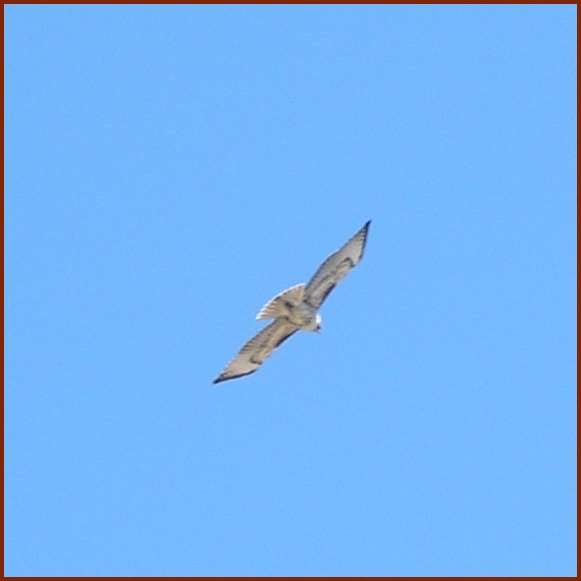
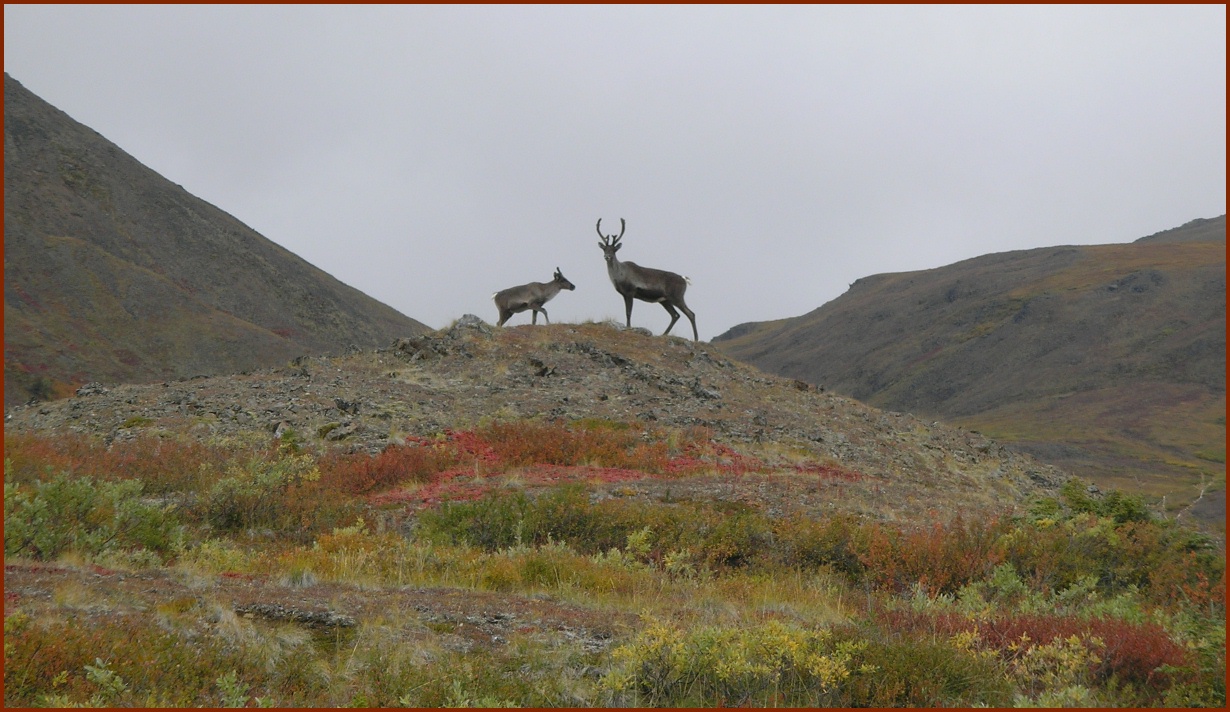
But, by far, the coolest thing about autumn in Alaska is the wildlife. Again, the fauna of Alaska is world-famous, and fall brings it out in droves, and in great glory. I saw lots of bears out on foraging runs, doing last-minute feedings in preparation for long hibernation. I saw ptarmigans turning from summer brown to winter snow-white. I saw packs of wolves stalking caribou, not for hunting (yet), but on training runs with the younger members of the pack. I saw more moose than you can shake a stick at (which would be a bad idea, by the way). I saw one of the most beautiful animals in North America, a northern fox with a gorgeous winter coat. The neatest thing I experienced, though, was a close encounter with caribou.

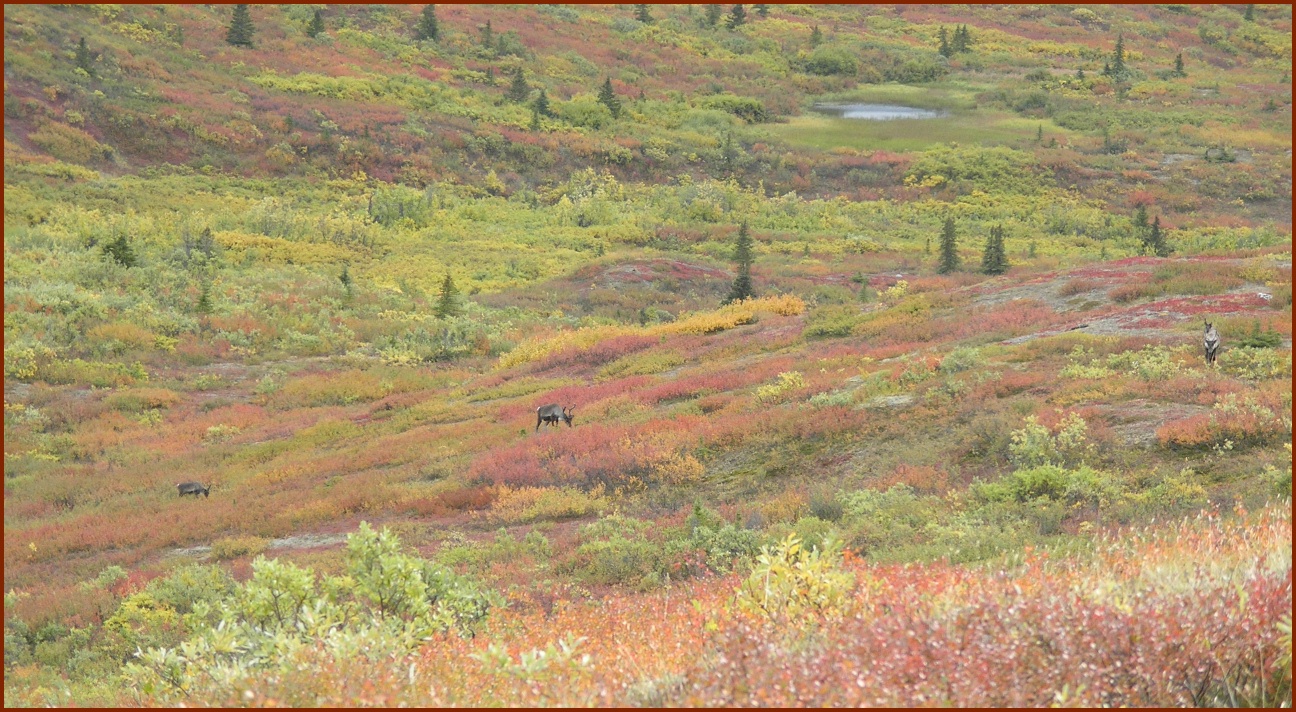
I took a heli-hiking tour of the tundra region in Denali State Park (you can’t heli-hike in the national park). Basically, they take you up into the higher regions of the area via helicopter, drop you off with a guide and you trek down the mountain for a few miles and radio in for a pickup. It’s incredible! The wide-open spaces, far away from civilization, just you, your companions, and miles and miles of colorful, mountainous, utterly incredible scenery. Our guide was a strapping young guy who clearly loved his job (how can you not, I wonder?). He was pointing out all the various features and critters: the wild blueberries, the turning fireweed, the Dall’s sheep on the mountainside, the moose in the birch thicket, and, of course, the caribou. We caught sight of a big bull out in the distance. Binoculars in hand, I watched the beautiful beast. He was accompanied by a couple of females, one older and one younger, all nibbling their way across the fields.

Caribou on Tundra © 2009 America in Context

Suddenly, and without warning, our guide put his hands up in the air and started prancing about like a wide receiver after making that big touchdown catch. None of us could figure out what he was doing – then he started to explain. “See,” he told us, “once spring comes, the great herds of caribou break up and go out on their own. The females stick together in small groups, protecting their young from predators. The males go out on their own, wandering and feeding across great regions of the tundra and taiga over the entire summer. When autumn comes, however, the caribou slowly regroup. They have this big socialization process, basically they prance around like this, and then race each other and, if accepted, the small groups join up. So,” he continued, “are you ready to run with the caribou?”

My brain barely had time to register: “um, what?” The next thing I know, he yells out “run now!” and takes off across the hillside. We all run along as best we can, up and down hill and vale, and over to our right, running along in parallel, is that same big bull and his two friends! It was awesome! Here I was, a tenderfoot product of New England suburbia, running along with the caribou across the Alaskan tundra! It didn’t last long (I run like a bag of wet cement), but it was great. It was the most fun I’ve had on any of my park trips, and an experience I won’t forget until the end of my days.**

** Note: what I did would actually be illegal in the national parks. Don’t mess with the animals in the National Parks, even the herbivores. They are not only dangerous when provoked, but contact with humans can screw up their lifestyle. I was in a state park when I did this, which I suppose doesn’t make it any less unethical, but at least I didn’t break the law.

Buddies for Life, Eh?  © 2009 America in Context

I had an absolute ball at Denali. I recommend that everyone take a trip there once in their life. Make sure you take that heli-hiking trip!

[All pics on this post are mine and copyrighted thusly. Please don’t reuse without my permission. All of my other Denali pics are here. But go to Alaska and take yer own damn pictures, ya rascals!]

Spot of Blue © 2009 America in Context

===================================

Links:

Denali National Park

Michigan’s Tech Aurora Page

Alaska Wildlife Conservation (includes tips on safe viewing)

Encyclopedia of Earth’s article on the Alaska tundra

Read Full Post »

A Real Vacation!

I loved my trip to Denali National Park! I stayed for several days and did many different things, it was the closest I’ve ever come to having a traditional vacation since I started these park trips, and I loved every minute of it.  That’s why, unlike any other park post to date, I’ve split this one into two parts.

Take a Ride on the Rails

My trip started with a ride on the famed Alaska Railroad. Trains are such a soothing way to travel. Even commuter rail like Connecticut’s Metro North is good this way. It’s better than sitting in traffic, and sooooo much better than flying. You can just kick back and read, or stare out into space, or work on your blog, or chat with fellow passengers, at complete ease. No unplanned turbulence, no recycled air, no crammed seats, no plummet into the Hudson River (these things can run over cows never mind geese). And the Alaska Railroad ups that ante by having that historic feel in their cars (including a dining car and even a bar car if you want). I wish we had passenger trains like this crisscrossing the entire nation, I’d take them everywhere.
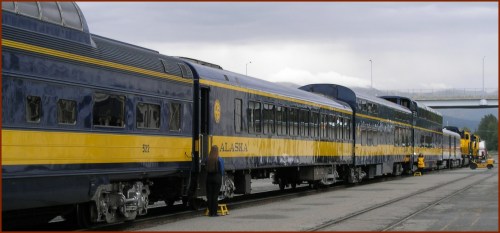
Alaska Railroad © 2009 America In Context

The key to an enjoyable ride on the Alaska Railroad, in fact the key to a fulfilling trip to Alaska in general, is, in my opinion, to bag the cruise packages entirely and book with an Alaska travel “arranger” like Alaska Tour and Travel (the firm I used). These outfits simply collect hotels, transportation, and various tours, events or excursions into packaged itineraries. You can select adventure itineraries or low-impact itineraries or “just give me a hot tub and a bottle of tequila” itineraries. This provides the best of two worlds: it helps you put together a trip that suits your interests without having to make tons of phone calls (or struggling to figure out which cruise line has the party boats vs. the fogey boats), but it also gives you loads of freedom that a full, all-in-one cruise package can’t (or won’t).

In the case of the railroad, you end up with a ride on the historic cars. Why is that a big deal? Because all the cruise ship folks are packed into one or two cruise-owned cars (the “Princess Car” or the “Carnival Car” or whatever), and you can’t roam from one to the other! Cruise people are stuck, just like they’re stuck on that boat. I talked with lots of folks on the “freedom” part of that train, everyone from locals  to intrepid wilderness backpackers to a family of Germans straining to see a moose (don’t they have moose in Germany?). On the Carnival Car, you’re stuck talking to the same cruisers you’ve been stuck with for the past week. You know, the ones who never shut up at dinner or wear too much perfume all the time or don’t care much for their personal hygiene (“hey, I’m on vacation, why bother bathing”)? Bleagh.
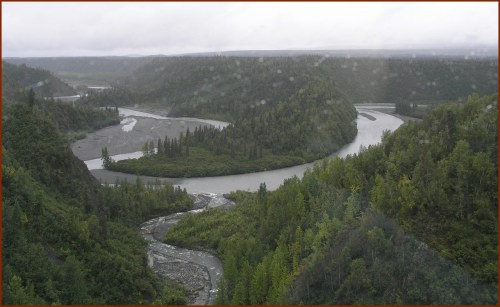
View through a Rain-Spattered Window © 2009 America In Context

Before my trip on the Alaska Railroad, I’ve never ridden on a train outside of the Metro North or various city subway systems, and there is no comparison. The Metro North rails are lined with trash and abandonment, the subways are lined with urban decay or tunnel darkness. The Alaska Railroad is lined with gorgeous scenery. The Alaska countryside is so beautiful, so interesting, you can look out the windows for hours and hours  and never get bored. Even more appealing, on the day I rode (late August, nearing the end of the season), the railroad was about 1/3 full, if that. I sat in the upper viewing booth (the one with the sign saying “30 minute limit”), by myself at times, at other times with only a handful of interesting people, for almost the entire trip. That itself was a lot of fun, it’s like watching great previews before the movie at the local multi-megaplex. It soooo gets you into the right frame of mind for beautiful Denali Park.

Life in a Tourist Town

I stayed at Denali. No, not in the park. I stayed at the tourist town just outside of Denali that is also called, I guess, Denali (I wonder if Denali is Alaskan for “Smurf”?). Anyway, Denali is literally just that: a tourist town, meaning no one actually resides there. People live there during the tourist season to wait tables or operate the local sub shop or drive the tour buses or clean the hotel rooms or run the river rafting excursions. Tourism is the sole reason the place exists, and when there are no tourists, there is no town.
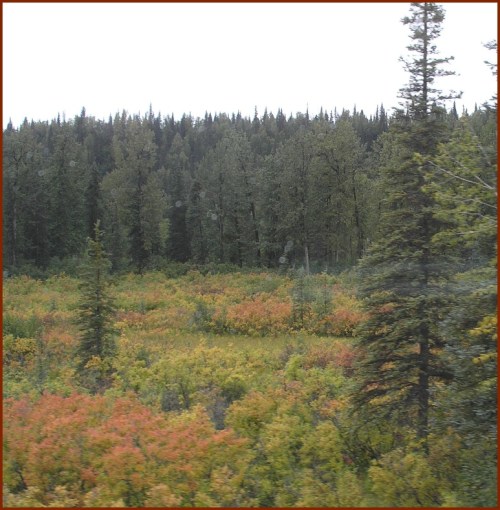
Trackside Colors © 2009 America In ContextGoing at the end of season was actually kind of cool in that aspect. You get the sense that Denali Town is like a big travelling circus or something, by the end of the season everyone who’s been living there for the past 2-3 months not only knows each other really well, they’ve consequently learned how to relax and party (or participate in :ahem: other activities) with each other. They also realize that they will soon be going back to their real lives wherever their real lives are. This gives such a relaxed, carefree, Bohemian vibe to the place (sort of like a Dead concert with a high cost of living). It was even getting close to Denali New Year, a manufactured holiday, complete with midnight countdown, marking the end of the tourist season.  Soon the town would be boarded up and evacuated, all the bartenders or shopkeepers or chambermaids going back to Russia or New Orleans or Croatia or Los Angeles or wherever else they really call home.

I enjoyed being in Denali Town at the end of season, in fact I liked being in Alaska at the end of season for a lot of reasons. If you go, I recommend you go the last week of August into the first week of September.

J.C. and the Boys

The very afternoon I arrived in Denali Town, I had my first excursion: horseback riding on the tundra. A grizzled local (yes, an actual local, imagine that!) picked up several of us from our hotel and took us to a ranch in nearby Healy. Our guide was a nice chap, a Coloradan ranch hand who worked in Alaska during the season to pick up extra cash. I was joined by five or six other folks, all nice people who actually knew how to act around animals even if they weren’t experienced  riders. I’ve ridden horses before, but am still a pretty weak horseman. I do know the cardinal rule of horseback riding: treat the animal with respect and kindness, but don’t be afraid to tell him where you want to go. So many folks are either scared to death, are unwilling to take control, or simply don’t treat the animal right. Horses sense all these things and will act accordingly. I’ve seen people lose complete control of their horse, usually with painful consequences.
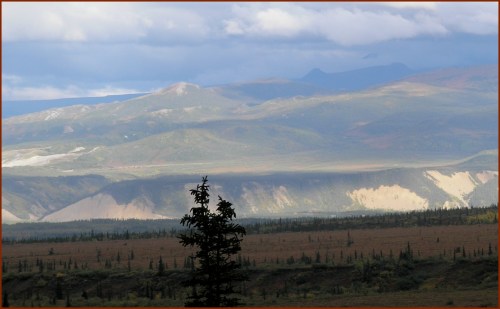
Alaska Range © 2009 America In Context

Fortunately, I was with a great bunch of folks, and the nature of the tundra prevents most accidents. The tundra is squishy and soft and full of unsuspected holes, so there is no galloping. The pace is slow, actually, to be accurate, I should say “slooooooooowwwwwww.” Going at any type of speed is dangerous to the animal, and because you’re on the animal’s back, it’s dangerous to you, too. Our guide was very clear in that regard, and there were no problems. He gave me a horse named J.C. (clearly a religious connection, quite ironic if you know my own views on religion). J.C., I was told, is an independent spirit, more likely to leave the trail and wander on his own than the others. Being an independent spirit myself, we got along great, didn’t have a single problem. I wish I could ride more often, I get along great with animals but don’t hang out with them as much as I’d like …

We were out there for a couple of hours, and right away, I fell in love with the place. Alaska is big and sparsely populated. That means it’s incredibly easy to get out into the wild, away from it all. We only had to go through the gate and cross one small hill to experience what it’s like to actually be out there. No visible roads. No sounds of car engines or gangsta subwoofers. Nothing but birds and wind and the flump flump sound of hoof on tundra. Our guide actually didn’t speak much for the first 20 minutes or so, and that was intentional. You can’t really experience Alaska without experiencing that quiet of remoteness, and he let us soak it up for a time before going into tour guide mode.

Horse and Tundra © 2009 America In Context

Once he did turn talkative, we started to learn more of the ins and outs of Alaska life. He explained the two cardinal rules of wildlife encounters (“run from moose, don’t run from bears”). He explained the nature of the tundra (it’s a carpet of tangled root systems laying on top of permafrost). He explained the significance of fireweed (“it turns redder as winter approaches” — it being the end of season we saw several plants with reddish leaf tips). All of it low key, all of it interesting, and, best of all, he was simply a good guy to us and to the animals. None of the arrogance of the typical impatient or bored tour operator, you could tell he liked what he was doing, and liked dealing with people.

After a couple of hours, we were back at the ranch, and the local drove us back to Denali Town. He wasn’t too thrilled to hear about the fireweed (they take winter very seriously up there), but he chatted us up with some of the local folklore. I ended up back at the hotel quite satisfied: I just had my first day at Denali, and so far, it was a great trip.
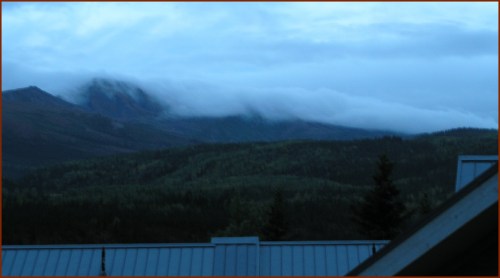
Hotel View at Night © 2009 America In Context

[Pics are mine and copyrighted thusly. More to come on the next post.]

====================================================

Links

Denali National Park

Alaska Railroad

Alaska Tour and Travel

Google map to Denali

Read Full Post »
« Newer Posts - Older Posts »