Mary McLeod Bethune Council House National Historic Site, Washington, DC
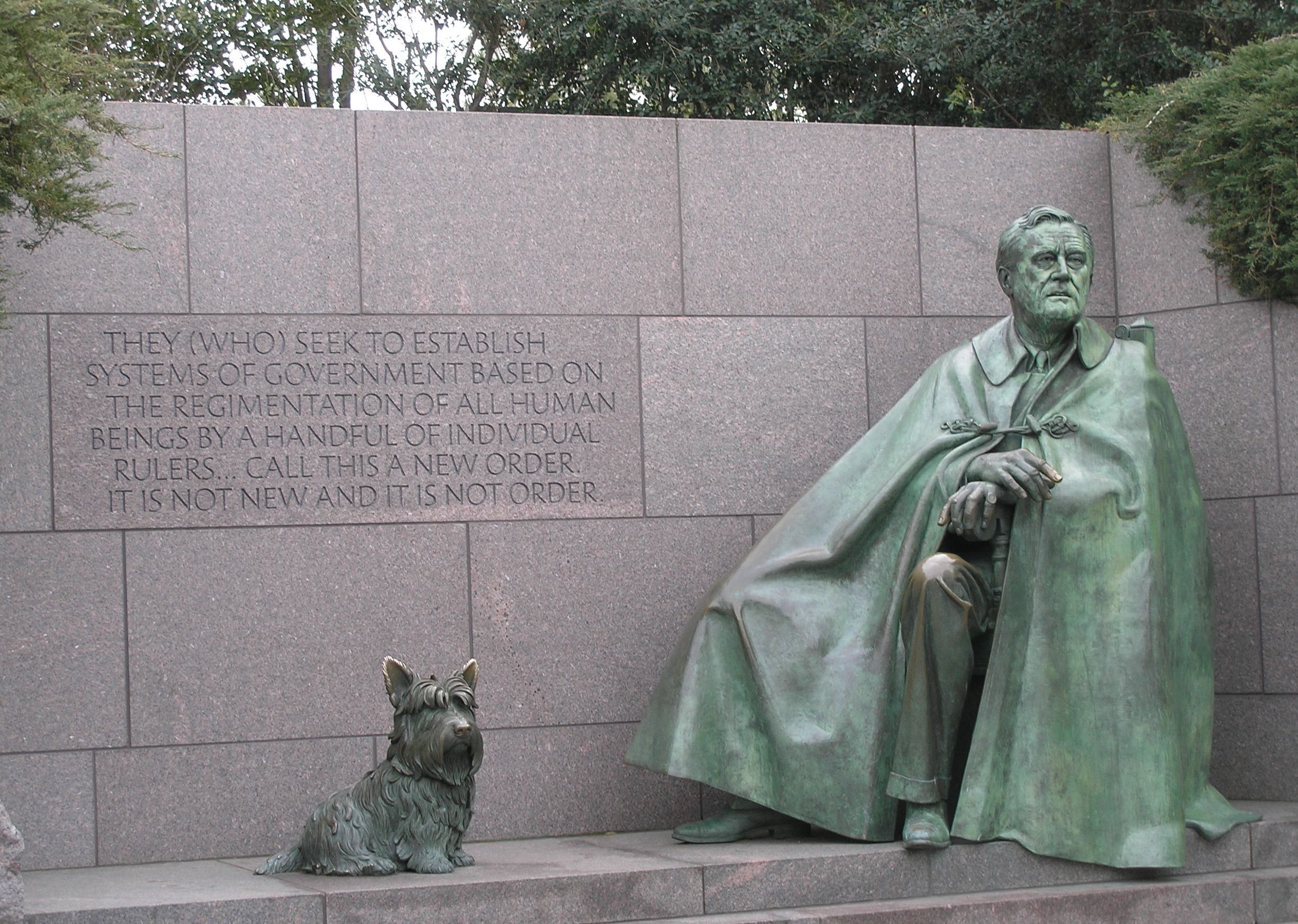
In 1936, nearly 80% of Black voters cast their ballots for Franklin Delano Roosevelt. This represented a massive shift in the electorate: in 1932, Herbert Hoover won the majority, but four years later (thanks to Roosevelt’s popular social programs), they voted Democrat in a major way. Partly as a reward, and partly as an acknowledgement that even his programs weren’t addressing Black poverty as well as they could, he created the Federal Council on Negro Affairs, also known as the Black Cabinet, with Mary McLeod Bethune at the helm.
Born in 1875 in Mayesville, South Carolina, Mary Jane McLeod was one of seventeen(!) children of former slaves Sam and Patsy McLeod. She had a very typical childhood for second-generation ex-slaves: recipient of derogatory remarks from former slaveowners; witness of White mob violence against Blacks on thinly fabricated charges; and observant of the reality that Black communities had less material wealth and opportunity than their White counterparts. Always interested in educating herself, she attended seminary from the ages of 13 to 19, initially intending to become a Presyterian missionary in Africa, but eventually fated to serve her own countrymen. Mary McLeod — later Mary McLeod Bethune when she married Albertus Bethune — taught Black children for several years, eventually starting her own school, the Educational and Industrial Training School for Negro Girls, in Daytona Beach in 1904. She charged 50 cents for tuition, and raised more money selling sweet potato pie and ice cream to local workers. She eventually bought land from an adjacent dump, upon which she built Faith Hall, and over two years, enrollment increased from five to 250 girls.
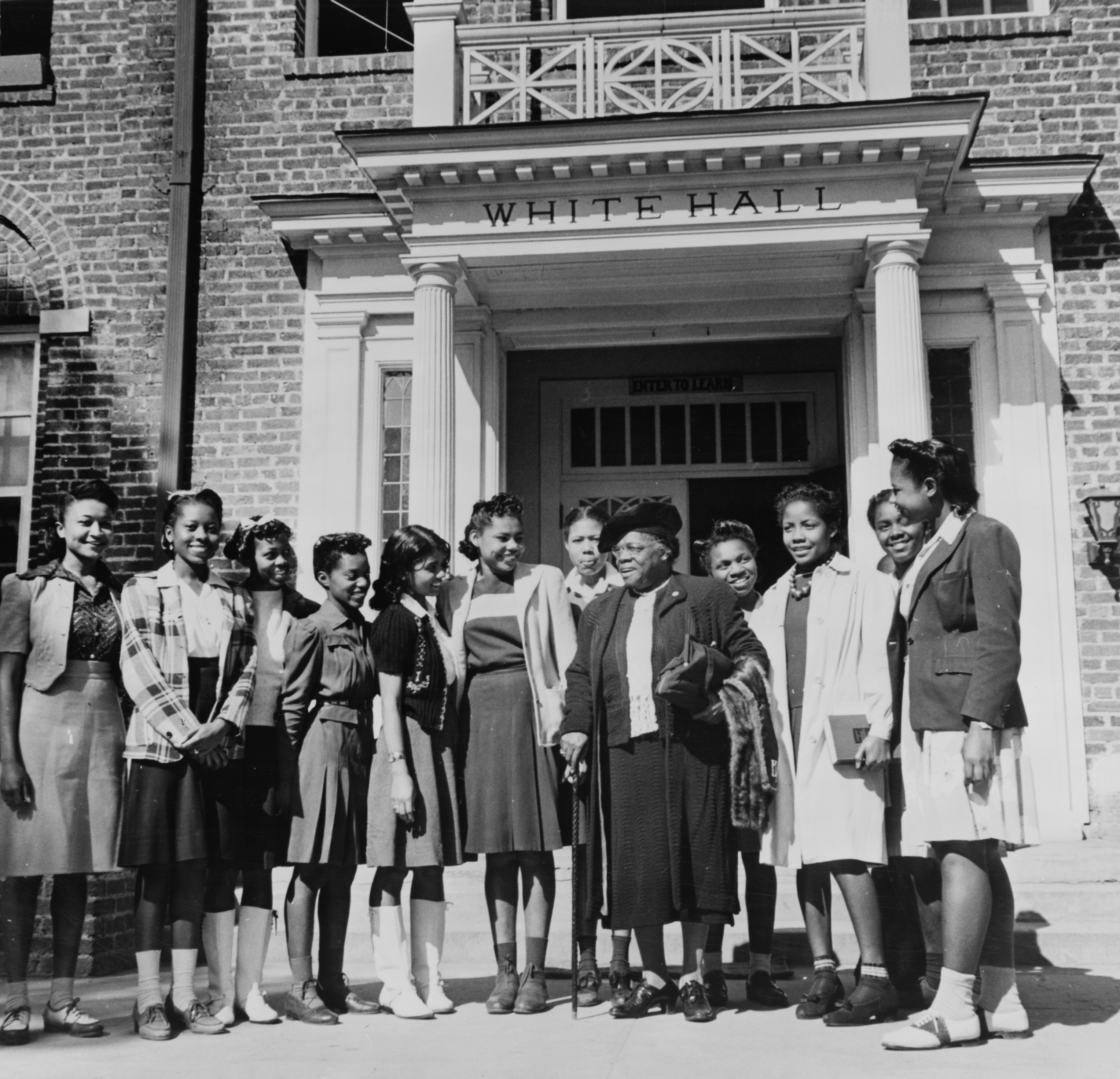
By Gordon Parks – image is available from the United States Library of Congress’s Prints and Photographs division
She learned from Booker T. Washington the importance of gaining support from White benefactors. In the process, she came to know several, like James Gamble (of Procter & Gamble), Ransom Olds (of Oldsmobile fame), and John D. Rockefeller. By far, however, her relationship with Eleanor Roosevelt was most beneficial. By 1923, with the help of these and other supporters, she merged the school with another Black institution to form what was eventually named Bethune-Cookman College (still in operation as the private Bethune-Cookman University).
As if running a college wasn’t enough, she tackled inequities in health care. Daytona Beach did not contain a single hospital that would take Black patients, regardless of the situation. After a close call with one student’s appendicitis, she was determined to build a hospital herself. She raised money to build a cabin near her school, opening the McLeod Hospital. It started with two beds, and eventually twenty. Black and White doctors worked there, along with student nurses from the school. Many Black lives were saved in the twenty years it operated, including the year of the 1918 flu epidemic. She also worked to open up library access, and was appointed as the only Black member of Daytona Beach’s housing board, successfully pushing for public housing. There was hardly an issue in racist Daytona that she didn’t personally work to resolve.
She didn’t stop there, of course. She joined the Equal Suffrage League, pushing for voting equality. Once the 19th Amendment gave women the right to vote, she worked to gain improved access for Black women voters. She raised money to pay poll taxes, tutoring for literacy tests, and mass voter registration drives. Despite threats from the KKK, she served as president of the National Association of Colored Women’s Clubs; the organization eventually set up their headquarters on 1318 Vermont Ave in Washington, DC. Republican presidents Calvin Coolidge and Herbert Hoover appointed her to positions regarding child health and welfare.
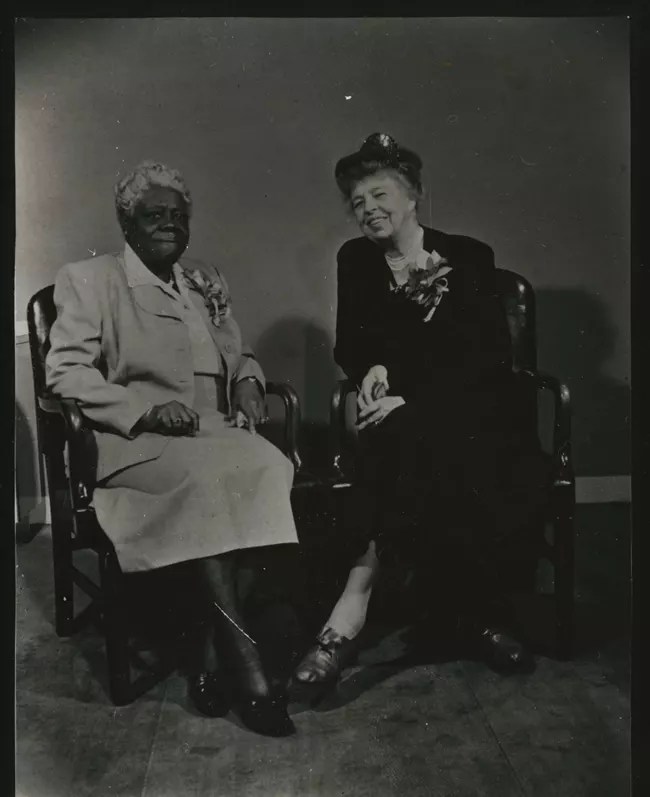
I could go on and on about all her projects and appointments, but her biggest was quite likely being the Director of Negro Affairs for the National Youth Administration under Roosevelt’s WPA, she therefore became the first Black woman to lead a federal agency. She then became the nominal head of Roosevelt’s Black Cabinet, recruiting many of the members herself. This agency, formally called the Federal Council of Negro Affairs, was an advisory board to Roosevelt during the Depression. She also, of course, advocated for civil rights across the entire country; her words after the Brown v. Board of Education ruling (making school segregation illegal), still resound today:
“There can be no divided democracy, no class government, no half-free county, under the constitution. Therefore, there can be no discrimination, no segregation, no separation of some citizens from the rights which belong to all. … We are on our way. But these are frontiers that we must conquer. … We must gain full equality in education … in the franchise … in economic opportunity, and full equality in the abundance of life.“
I would wager that you, as I did before I visited the national historic site in Washington, DC, never even heard of Mary McLeod Bethune. It feels like that’s a real travesty, yet another failure of our public school system. She deserves better.
FDR wasn’t the perfect ally of Black America: he never supported a poll tax ban, nor did he make lynching a federal offense, nor did he desegregate the military. But in the long line of civil rights baby steps, the creation of the Black Cabinet and the appointment of Bethune were important ones. As for Mary McLeod Bethune herself, she always took anything but baby steps. If she were alive today, I’m sure she’d be appalled at the nation’s current backsliding on minority rights, and I’m certain she would be doing something about it.
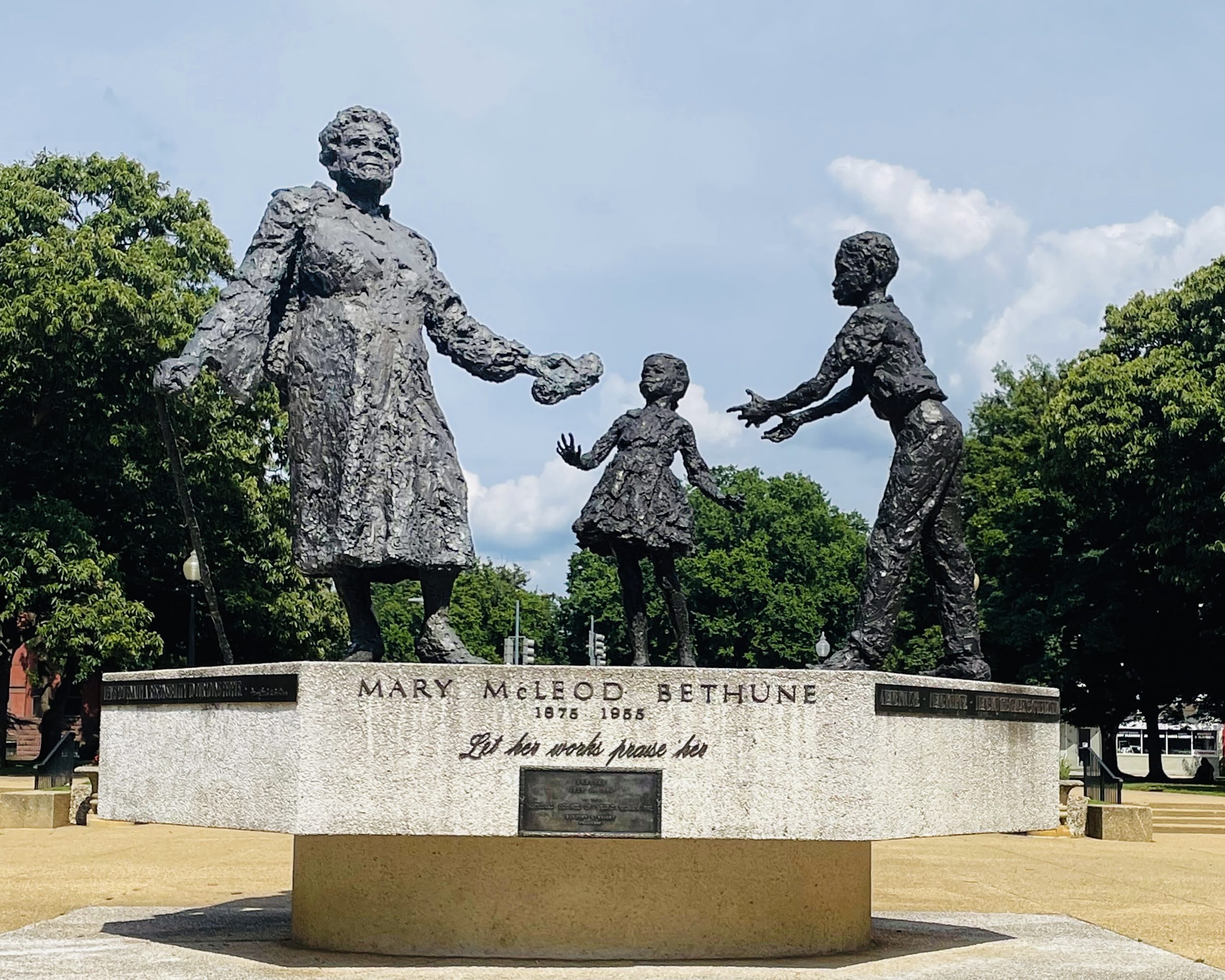
[I did not have a digital camera when I visited Mary McLeod Bethune Council House National Historic Site. Pictures are not mine and no ownership is claimed.]
Links:
Mary McLeod Bethune Council House National Historic Site


 I don’t think you can doubt that those were the hardest twelve years in this nation’s existence. The Great Depression was the deepest economic catastrophe this nation has ever seen, and the Great War was the biggest geopolitical conflict the world has ever seen. These were tremendous challenges, and spawned tremendous change in this country. One steered us towards military power and global influence, the other steered us towards progressivism and social justice. In today’s highly polarized political environment, you probably think one is good, and one is bad (which is which depends totally on your point of view). Regardless, those twelve years undoubtedly shifted the path of the United States for at least 65 years, and perhaps more (depending on how we weather the current terrorist, economic, and environmental crises).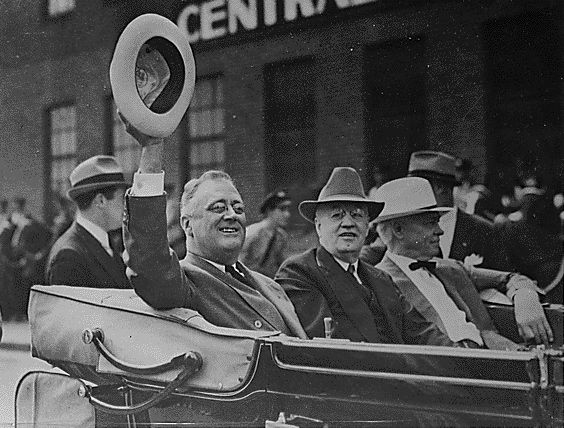
 Is it charisma? Charisma seems to attract a following but, by itself, can’t sustain one. Followers, at least the smart ones, will flee in the face of failure, and then all you’re left with are the sycophants, the incapable, and the unstable.
 Maybe (as lame as it sounds) it’s just something you’re born with, like blue eyes or a musical ear or general athleticism. I do suspect it’s something that is not easily taught in a seminar or gained from reading a book. The few books on “leadership” I’ve come across read like leavings of the the rest of those infinite number of monkeys who didn’t write the complete works of William Shakespeare. Corporate America is full of three-day seminars on the topic, but Corporate America as of late is full of terrible leaders who’ve made terrible decisions and led their companies and countries to ruin. I’ve seen good leaders in the corporations I’ve worked in, but these were also folks who didn’t learn how to lead at some symposium. These folks had it in their genetic makeup long before they completed their first job application.