Feeds:
Posts
Comments

Iconography and Foolishness

How incredibly iconic is this image?

This is a picture taken in 1869 at the joining of two great railroads — the Union and the Central Pacific — in 1869. Setting aside the poor quality of mid-19th century photography, this is terrific photo. How better to depict years of labor by hardworking Americans and immigrants, and the importance of joining the battle-scarred and reconstructing East to the Pacific Coast, a land of wealth and promise, than this image? You see the engineers and work crews of the two big railroads, sharing champagne and smiles at the importance of the moment. This event was celebrated with drink and fiddles, dance and jubilation, pomp and circumstance. The joining of the railroads, one of those moments that marked significant change for this nation, beautifully captured for all time in this great iconic image.

Important it was, too, for this country was made strong by the railroads. Like the Internet of today, the railroads meant everything to 19th century America. They expanded commerce. They enabled safe travel. Because the telegraph shared the right-of-way, they improved communications. Most importantly, they tied the country together, and they eventually did more to unite the country than the War Between the States. No longer would you have to spend weeks of misery traveling across the country on horseback or in wagon trains, subjected to the harshness of the elements and the dangers from bandits and natives. You could now board a train in Philadelphia and — depending on your fortitude — eventually disembark in San Francisco.

I am one of those folks who maintains romantic views of these old railroads. I find the whole history of the railroads wonderfully fascinating, and places like Golden Spike NHS enforce this fascination. They have two terrific, working replicas of the two locomotives: the Pacific Central’s Jupiter and the Union Pacific’s No. 119, sitting on rebuilt tracks on the original rail bed. The site itself is still remote, on the opposite side of the Great Salt Lake from Utah’s big metropolis. You can feel the winds of the plateau, smell the lake’s salt spray, and imagine yourself in this desolate land in 1869, laying the final tracks to unite a great nation.

Of course, our iconic and romantic imagery of these great railroads is not accurate. The railroads were not perfect. Because they were powered by burning coal, they were filthy. They were also noisy, uncomfortable, prone to breakdown and delay, and were occasionally assaulted and robbed. They gave rise to the Robber Barons, men of such wealth and influence they seemingly ran the nation from seats of financial power to the detriment of the nation and the ire of Teddy Roosevelt. Even the east-west joining of the railroads does not stand up to our romantic notions. In fact, this activity can be used to show how government interference into commerce and industry is inefficient and stupid.

You see, the government funded the creation of the transcontinental railroad, starting with the Pacific Railway Act of 1862. Through it and several other bills throughout the years, the government provided land grants across the vast unpopulated areas between Omaha and Sacramento. The government also paid railroads to lay track across the Great Plains, the Rocky Mountains, the Sierra Nevada, and the inaccessible plateaus in between. To this day, this still sounds like a shining example of the types of investments the federal government should make, investments whose resulting projects would provide great benefit to the entire nation.

Of course, the implementation itself proved to be horrid. First of all, the railroad land grants were far larger than they needed for these railroads, so they were able to sell parcels at tremendous profit, none of which made it back to government coffers. This, coupled with other forms of corruption during construction, means the government basically enabled the robber barons to become those tyrants and puppet masters we hear of today.

Then there were the foolish reimbursement formulas. The government basically paid the railroads by the mile, and also paid extra for crossing difficult terrain. This inspired the railroads to create winding and inefficient railways, and multiple cases of crossing difficult terrain instead of taking a simpler path in order to earn more government reimbursement. This led to that great anathema to those of us with engineering and scientific mindsets: tremendous inefficiency, idiocy, and profiteering displacing sound design and technological competence. Maddening, ever so maddening, and it is still a process that continues today in the form of pork-barrel projects, unnecessary weapon systems, and bridges to nowhere.

Promontory, Utah itself represents this misdirected mindset of federal funding. It has been debated that, had the railroads concentrated on building efficient East-West connections instead of taking advantage of flaky federal reimbursement rules, the railroads wouldn’t have been anywhere near Promontory. I’m not entirely sure that’s true, but it is definitely true that the spot was bypassed 35 years later, and hasn’t been a part of the transcontinental railroad since then. It is a dead, empty stretch of the Utah plateau, irrelevant except for a small plot of land celebrating the Golden Spike ceremony of 1869.

I still loved my short visit to this site. Regardless of the tainted history, it’s still an incredibly romantic, iconic moment in American history. And in an ironic way, the abandonment of Promontory by the transcontinental railroad has actually worked towards preserving the site as it was on a sunny day in May of 1869. Take a visit when you’re in the area, watch a steam engine demonstration, and imagine yourself in a bygone era, when a single moment changed the course of American history.

[The first two images are taken from the National Archives. The rest are my own photos and copyrighted as such.]

================================

Links:

Golden Spike National Historic Site

An essay on federal aid and the transcontinental railroad

Central Pacific Railroad Photographic History Museum

Google map to Promontory, Utah

Happy New Year!

Reboot

Happy new year, everyone!

Today, I celebrated by taking a four-mile hike along the Metacomet Trail in Suffield.

Um, what?

Yeah, that’s right. I “celebrated” by hiking in the woods. I consider it a celebration because I wanted to start the year off right. Over the past two years, I’ve become a right nasty slug, spending more time in front of my computer watching videos, getting irritated by political blogs, and playing MMOs. Resultingly, I’ve become slothier and slothier, and actually feel myself atrophying.

So I am attempting to turn over a new leaf in that area, and hit the woods more often. Hence, today’s romp on the Metacomet.

It was a good day for a hike, tempteratures in the mid 40’s F, little wind, no precipitation. The ground had about an inch or two of wet snow, but I have good waterproof boots so it wasn’t a problem. It was a fairly easy hike, although I am out of shape so I am pretty beat right now.

I think I’ll continue my New Year’s celebrations with … a nap. 🙂

San Francisco, You Lucky Bastard

I am sure San Franciscans know it, but they have it really good. Sure, they have one of the highest cost of living in the whole country, and a pesky little thing called the San Andreas Fault, but beyond that, it’s a really great city. Lots to do, lots of good restaurants, great natural sites within a couple hours’ drive, and a fairly rich history for a city only about 150 years old. I even like the weather: a fun combination of sunshine, chill winds, and surrealistic fog.
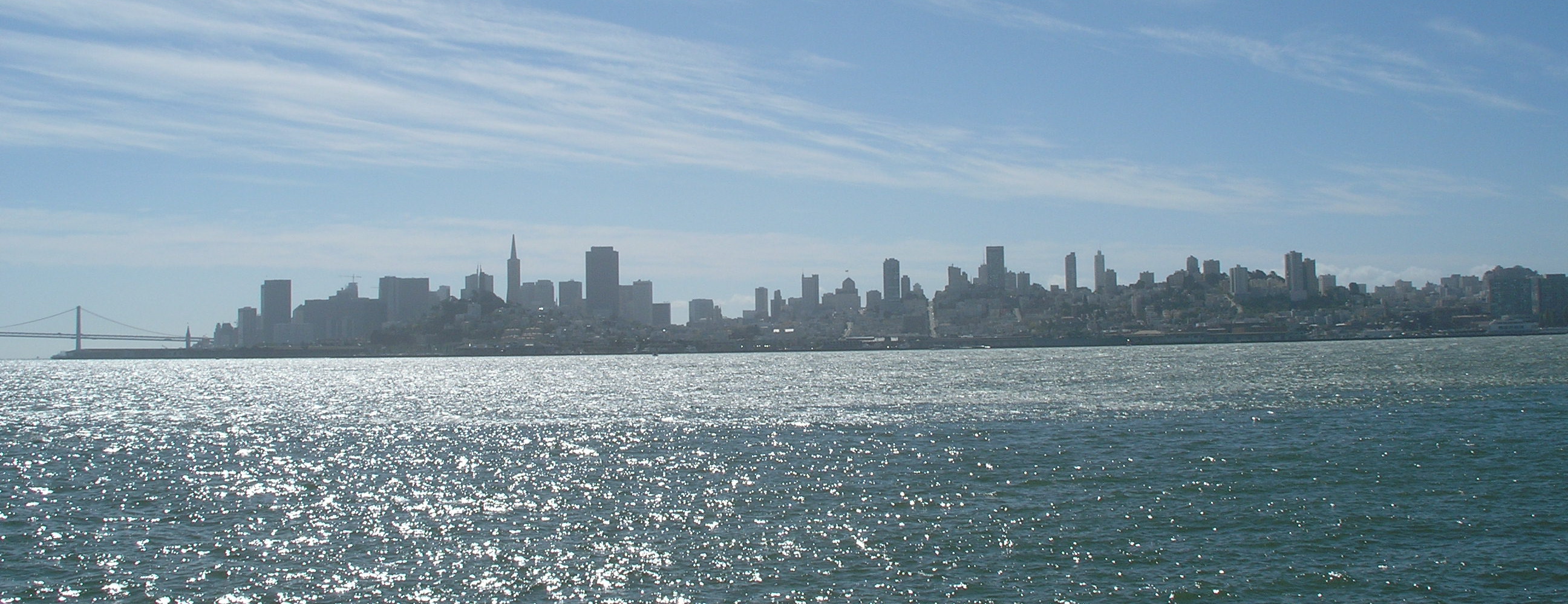
In my opinion, its greatest features is a series of greenspaces and historic sites strung together to form the Golden Gate National Recreation Area. These sites – including Alcatraz, old forts and battlements, beaches, historic homes, and wooded trails — weave in and out of the city, from the Pacific to the Bay, and up and down the ridgelines stretching north and south of the city. And the best part? All of it fully accessible to the public (and some even to their pets) for their enjoyment and recreation.

I’ve been to the city several times. On my last trip, I made it a point to visit as many of the sites as I could. I only had a couple days, but I hit a good selection. And besides the interest and convenience of these places, what really impressed me was how much use these sites got. The locals use these sites. They are walking the beaches, throwing Frisbees in the parks, walking their dogs on the paths, playing softball in the fields. These folks use their greenspaces, and this is a good thing.
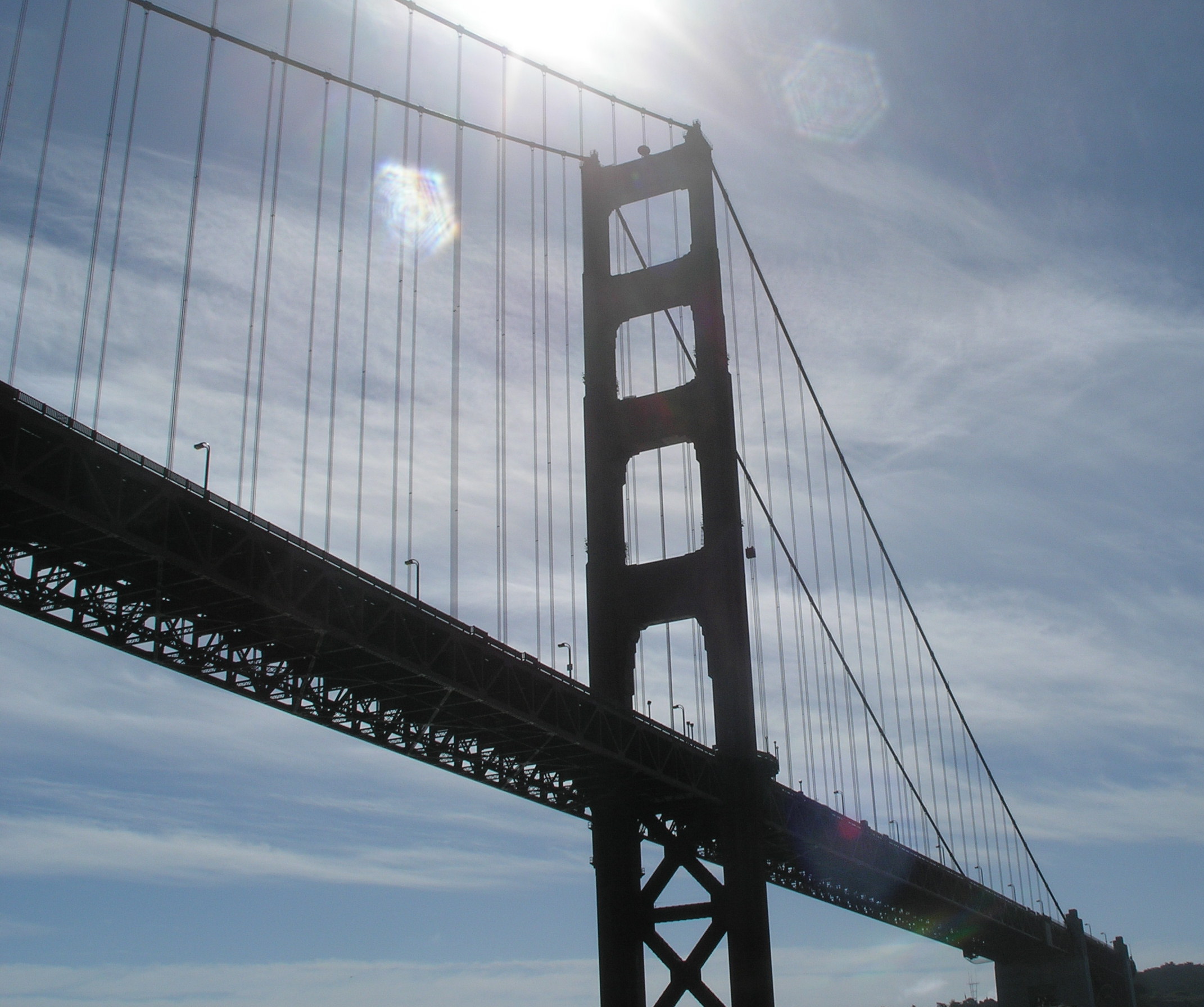
Historically, it was hard to keep greenspaces, especially waterfront greenspaces such as those in San Francisco. During the maritime age, seafront property was wanted for docks, wharfs, flophouses and canneries. During the Industrial Revolution, land was taken over for production, power generation, or transportation. In the 80’s right on through to today, overbuilding for commercial development, high-end housing, or tourism is the big problem. But there was a really strong movement to preserve all this greenspace in San Francisco and the surrounding area, big enough to override the moneyed interests moving in the opposite direction. The preservation movement won out, and today, I doubt there is a single resident of the city who’d like it any other way.

Nowadays, driving around the country, I see plenty of abandoned factories and overbuilt developments. At one time, long before the excavators went in, those lots were greenspaces, filled with trees, streams, or grasslands. Once you tear them up, pave them over, or build on them, they’re gone. And yes, gone forever. How many buildings have ever been torn down and replaced by trees, streams, and grassland? Virtually none by comparison. Building is permanent and will not be undone, it’s just the fact of the matter. Zoning boards, planning boards, developers, and taxpayers need to understand this. Once you build, what you’ve built on is gone. Better be damned sure what you’re building is necessary and appropriate, and won’t simply be another foreclosed or abandoned property in 10 years.

Green is forever … until we tear it up. Spread the word. And go to San Francisco at least once. Spend a week, there’s plenty to see and do.

[Pics are mine and thusly copyrighted.]

==========================================

Links:

Golden Gate National Recreation Area

San Francisco Parks Trust

EPA’s Greenscaping page

21st Amendment Brewery

Google map for San Francisco


A Christmas Message

Hope, Perserverance, and Strength

2010 has been a tough year. It’s been a tough year for me, for my family, and for my friends. It has been a tough year for most of the citizens of this great nation of ours, from the lobster coast of Maine to the shrimp coast of Louisiana; from the suburbs of California to Las Vegas to Cleveland, Ohio; from the financial houses of our major cities to the small businesses in your hometown. From sea to shining sea, people have lost their jobs, lost their homes, lost their pride. Some have lost their marriages, lost their children, or even lost their freedom to a government which seems to have lost its mind. Some have lost loved ones in battles overseas, to the debilitating effects drugs or alcohol, or to highway accidents at the hands of the thoughtless and careless. Some have lost their farms, lost their businesses, lost their pensions, or lost their minds due to debilitating dementia in their older years. Even those of us fortunate enough not to have lost any of these things are still feeling the stresses of a horrible economy and a nation seemingly going astray. For we know we could be next, we could fall, we could fail, we could lose, we could succumb to the great malaise that has crept over the country. Most of us are only one paycheck, one bad performance review, one missed mortgage payment, or one cancerous lesion away from total financial ruin and a life spent in a cardboard box under an I-84 overpass.

But today, on the eve of our only near-universal High Holy Day, there are still opportunities for hope. The source of that hope is not only in the kind messages carried across a faraway land by a humble man two millenia ago, there is also a source of hope in our own history, a source of hope in the perseverance of the best of mankind.

As a people, we’ve suffered a lot over 400 years of history. Our ancestors suffered the savageness of the frontier; under the harsh yoke of slavery; from the invisible demons of imported diseases run amok. They suffered life in filthy tenement buildings in New York City, festering sweatshops in Chicago, indentured servitude on Western railroads, or the penniless existence of Depression-era Appalachia. They suffered in the poisonous foxholes of France, on marches of pain in the Philippines, in the frozen mountains of Korea, and in the steamy jungles of Vietnam.

Yet through all this suffering, all this pain, all this trauma, we’ve survived. We’ve not only survived, but we’ve come out stronger and better than before. Sure we’ve strayed from time to time, for we are only human, but the trend is still upward. This should be, must be, a source of hope for all of us. We’ve gotten ourselves through all of that, and we’ll get through this as well. There is a way out, a way through, and a shining light at the end of it all. It requires hope, and perseverance, and strength.

———————

There exists a great, philosophical synergy between Christmas and New Year’s Day. Christmas is a celebration of hope, hope brought to the world by a great prophet long, long ago. It is also a time to reinforce the bonds of family and friends and neighbors, for those bonds should give us strength. It is also a time to regroup, rethink, catch one’s breath and propel yourself into the New Year with the strength and hope to enable you to persevere, overcome, and succeed.

I wish all my readers a very Merry Christmas, and much success in the New Year. 🙂