I just came back from my spring National Parks trip. With all the economic uncertainty, plus my need to pay off credit card debt (like the rest of America), I kept it small. Drove through upstate New York, then Ohio, across West Virginia, then home via Maryland. Hit eight more, albeit small, sites on the list, bringing the total to 185. Still not quite halfway there.
During this trip, I also visited my two all-time favorite museums: the amazing National Museum of the U.S. Air Force in Dayton, Ohio (about which I’ll post at a later time) ; and the Rock & Roll Hall of Fame and Museum in Cleveland, Ohio.

The poor Rock Hall doesn’t get a lot of respect. Some think it’s self-serving to a lot of rich, arrogant, rock egos. Others think it’s unfathomable that you could put the energy and rebelliousness of rock music into something as stuffy as a museum. Still others can’t get over the fact that non-rockers like the Bee Gees or Madonna have been inducted, while their favorite act (KISS or Journey or Emerson, Lake and Palmer or whoever) still aren’t in there.
 I love the place, absolutely love it, loved it from the beginning. I was there during the opening, 8-hour concert on Labor Day weekend in 1995, where I saw everyone from Chuck Berry to Johnny Cash to Dr. John to Aretha Franklin to Iggy Pop. That was a fantastic experience. The next day I saw James Brown sauntering through the crowd, surrounded by some of the biggest, scariest bodyguards imaginable, on his way into the Rock Hall. I’ve been back several times since, and love it more and more every time I go. For me, it goes beyond being a fan of rock music. My love of rock & roll dovetails nicely into my love of American history.
Most countries or cultures are defined by their art. For the Greeks, it’s architecture and epic tales. The Italians have religious iconography and works by Michaelangelo and Leonardo da Vinci. The French have Impressionism, the Germans and Slavs people have composers such as Beethoven, Tchaikovzky and Mozart. Africa, China, Japan, Polynesia, even the Native American tribes have unique art tied directly to their culture and their history. America has its own unique art form, developed straight from our culture and history: Rock & Roll.
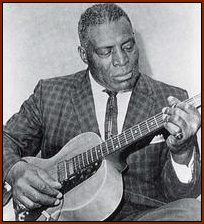
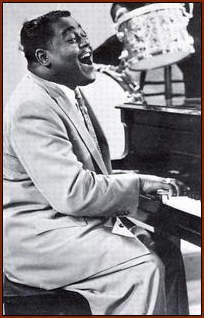 Rock & roll is uniquely American because of it’s “origin story”. Rock’s primary grandfather was The Blues. Political correctness aside, The Blues was the black man’s music. It’s basically a lament about hard times and suffering set to a quick-paced but rough tempo. The Blues was fostered in a segregated South and derives directly from music sung by plantation slaves. This is Part I of why Rock is uniquely American, it’s the only positive thing to ever come out of our slaveholding past. Without the caustic cauldron of atrocity known as antebellum slavery, and the emotional agony of Jim Crow, the genetic material of The Blues would not have been created. No Blues, no Rock.
Another grandparent of Rock & Roll was Folk music (and its close cousins called Country and Bluegrass). All three of these forms sprouted out of the barrenness of the Depression. Yes, the Depression affected lots of countries, not just the USA, but there was something special about America’s experience that led to the birth of these three forms of music. Maybe it was the rural nature of Depression-era America, maybe it was the unique experience of the Dust Bowl, maybe it was the influence of our unique take on the religious revival. Whatever it was, folk, country & bluegrass evolved as uniquely American styles.
 Then there’s Jazz. Jazz, in my view, represents the independent American mentality applied to music. People wanted to play what they wanted to play, and wanted to hear what they wanted to hear. It’s improv, blending, mixing things up, and doing what you want. It’s throwing away musical convention, just like we threw away monarchial convention. We tossed out the King and made our own government, then we tossed out musical conformity and made our own Jazz. It’s the Declaration of Indepence set to music.
All of rock’s “early influences” were masters of these forms of music: Robert Johnson, Leadbelly, Woody Guthrie, Hank Williams, Bill Monroe, Louis Jordan, Elmore James. But it took something else, something more. It took the lightning strike known as Capitalism to give Rock & Roll life. It took people like Alan Freed and Ahmet Erteghun and Jerry Wexler to realize that money could be made, people who had the savvy to prop up firebrands like Elvis Presley and Jerry Lee Lewis and make all this roughshod music palatable to the young masses and their disposable income. Only in America could art be turned into something so immensely popular, and therefore immensely profitable.
 Rock has then been changed and modified and altered by so much more since then: the injustice of the Vietnam War draft, the poverty of inner cities, the rebellion of angsty white suburbanite teens, plus America’s penchant to abuse mind-altering substances …. All of these things are, again, uniquely attributable to the U.S. and the unique mix (or train wreck, if you prefer) of our culture.
Now I know some (er, most?) will shout back “but what about the Beatles or the Stones or Led Zepplin, asswipe? These are Brits who revolutionized rock!”. Well, yes, that’s true. But all of these bands will tell you themselves that they got into rock because of Muddy Waters, or Bo Diddly, or Buddy Holly. Besides, just as the U.S. is a nation of immigrants, so too is rock a music of immigrants. Artists from all over the world have morphed and shaped rock to suit their needs, and have influenced other artists in return. It’s a great melting pot of music styles and cultures.
I highly recommend going to the Rock Hall. It does a great job showing the continuing evolution of a great, rebellious art form, a form of music whose greatest contribution is giving convention the big middle finger.
[Only the picture of the Rock Hall is mine. The others are from allmusic.com, a great web site for music research. Copyrights apply in some cases, this is a not-for-profit blog so I think it’s OK here. I’m sure lawyers will call if it ain’t :-P.]
=========================
Links:
 I titled this post “America’s Queen Mum” for a reason. Eleanor Roosevelt, like Britain’s Queen Elizabeth (the current Queen Elizabeth’s mother, who passed away in 2002) was a beloved figure during terribly troubled times. Throughout the Depression and then the War, both women were strong role models for their beleaguered citizenry. These ladies did what leaders are supposed to do: walk amongst the people. With regular public addresses, newspaper articles, and visits to various cities and towns, they were inspirations to the people when they needed it most. Cowards sit in their undisclosed locations or corner offices or posh resorts when the shit hits the fan. Leaders stand in front and take the full spray. OK, I think that’s the most repulsive sentence I think I ever typed, but it makes the point….


 The only problem I have with proclaiming Lincoln as the “greatest American” is his actions really only saved the country. When I hear “greatest American”, I think globally: which American did the most for the world? Now that is an entirely different question. Sure, some could extrapolate “well, America is the greatest country, and Lincoln saved America, so Lincoln is the greatest”. That not only shows a grotesque level of hubris, it’s not really accurate. America wasn’t a world player for nearly a century after Lincoln’s time. We were an isolationist nation. We were protected on two fronts by mighty oceans, and only had two neighbors. No threats = no conflict = no interest in the world. Plus we were a nation of immigrants, collectively giving Europe the big middle finger as we went on our way, making our own prosperity (and driving the native population into their graves, but that’s the subject for yet another post). Saying Lincoln was a great world figure is simply disingenuous.
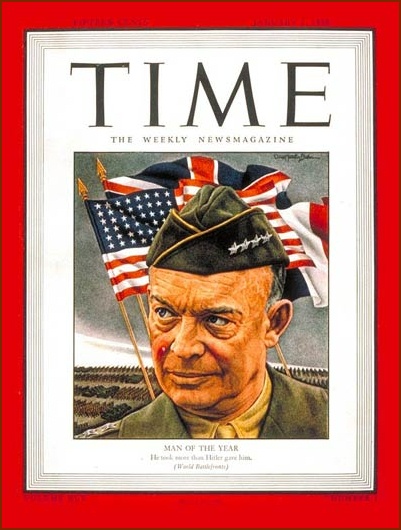
 This leads me to my own approach to the “Greatest American” question. First, did the individual have a postive, global impact; and second, did the individual act with the best of our core American principles (life, liberty, pursuit of happiness, etc.)? I say Ike deserves serious consideration as the Greatest American under that context, and I say it for one big reason: World War II.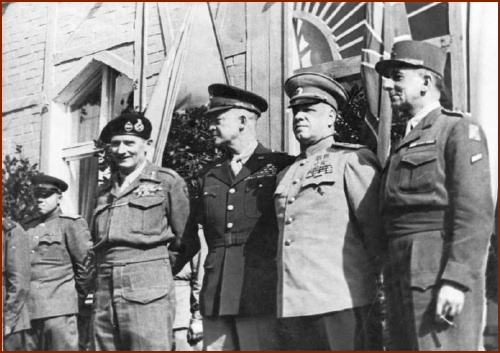




 America In Context