Torture and Corruption
Two sites in the National Park System have actually brought tears to my eyes. They represent events of such travesty and abhorrence; tears are a more-than-reasonable reaction. One of these sites is the Vietnam Veterans Memorial, a topic for another post. The other is the Civil War prison, Andersonville, and its accompanying National Prisoner of War Museum.

What does war do to humanity? Textbooks love to spout out casualties: how many died, how many wounded, how many missing, how many captured. How many sorties, how many megatons of TNT, how many cities bombed, how much damage done. The list goes on: how many refugees, how many homeless, how many orphans, how much disease, how much starvation, how many exterminated due to simply being of the wrong race in the wrong place at the wrong time. Numbers: simple, cold, heartless, textbook numbers.
None of these statistics can actually tell us what war does to humanity. That’s what places like the Andersonville are for.
Andersonville was a huge Confederate prison, not much bigger than your average Big 10 Conference college football stadium, except instead of 10,000 drunken fans, it held over 30,000 Union prisoners-of-war in absolutely fetid conditions. The sleeping arrangements, food quality, water purity, and sanitation were so horrid, 13,000 men died in a span of 14 months. At its peak, it was shoveling 100 corpses a day into the red Georgia clay.
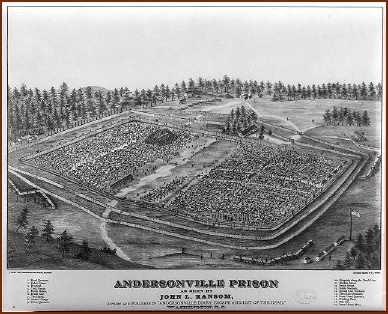
If you think it was the Confederacy that left these men to die under such deplorable conditions, you’re right, but the Union did it, too. Camp Douglas in Chicago was as bad as Andersonville, it’s just that, as the victor, it was easier for the Union to ignore. Andersonville was run by the enemy, who must be held accountable. Our crimes, well, they’re justified because we won. Hurrah.
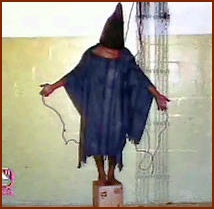
The civilized world should not ever tolerate inhumane treatment of any man, enemy or friend. Of course, a wartime society is anything but civilized. There’s something about war that turns people into something other than “human”. People look at all the atrocities from wars past and present, and say “oh, look what happened to those poor victims?”, and they are right to do so. But take a look at it from another angle. What happened to those poor perpetrators? What would drive a man, any man, to the point where he would starve another man, or poke a prisoner with sharp sticks, or Napalm children, or gang-rape young girls, or burn old women alive, or firebomb a city to ashes?
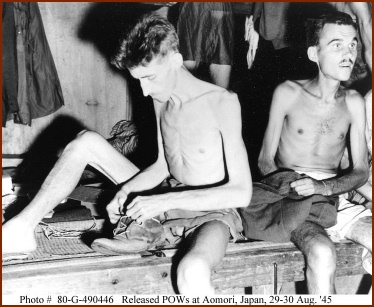
Man’s inhumanity to man: the real Neverending Story. But here’s the story that no one tells too often: all of these perpetrators of brutality, they were all created, too. It took thousands of soldiers to run Andersonville and the other Civil War POW camps. It took thousands of Nazis to exterminate millions of Jews. It took thousands of soldiers to execute the Bataan Death March. It took thousands of Hutus to slaughter the Tutsis. No sane man could believe that this many evil men are born every day, and that they also just happen to be born in pre-WWII Germany or mid-20th Century central Africa. No, these men, these masters of cruelty, are made.
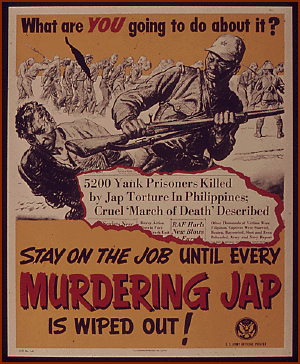 How is evil created? The answer: on purpose. Through dogma, or jingoism, or biased textbooks. By stating that the enemy are lesser creatures, creatures who would kill you given the chance, creatures less deserving of God’s grace, creatures who must be removed for the good of all. And then, by repeating that message over and over and over again, until the sheep-like masses buy into it, and agree. It’s hard to kill a fellow human being, but it’s easy to hate, torment, torture, and kill lesser creatures. So all you have to do is convince your people that “the enemy” are lesser than they, and your people will do your dirty work for you. Then you can go back to your secret retreat in the mountains and feast on banquets, or snog your high-priced whores, or choke on your pretzels, for you have created your own force of evil, ready to sacrifice their own humanity to the misfortune of the enemy.
This is why war must be avoided for all but the most vital and necessary of causes. As soon as you declare war against another, you are sacrificing the very souls of your own people. To wage war, your people must become monsters, and lose their humanity. War must not be used as a means to an end unless there is absolutely no other means: it is a weapon that leaves casualties for both the vanquished and for the victor. For one, it’s death. For the other, it’s inhumanity.
I think every American, regardless of political persuasion, should visit Andersonville. The lesson it has to teach is invaluable. It’s a lesson on what happens when society loses its humanity. If we all learn the lesson then maybe, just maybe, we can regain and keep ours for a long, long time.
Sadly, my visit to Andersonville preceded my ownership of a digital camera. So no photo links this time.
Links:
I would be horribly remiss if I didn’t post a link to Amnesty International after this post.
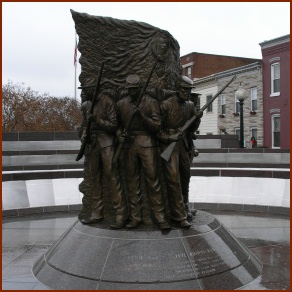 I wanted to post an essay about the courage of black soldiers during the Civil War; about their bravery, their sacrifice, and the difficulties they faced. There is so much to tell, so much the average American doesn’t know. But I find myself distracted with more immediate concerns.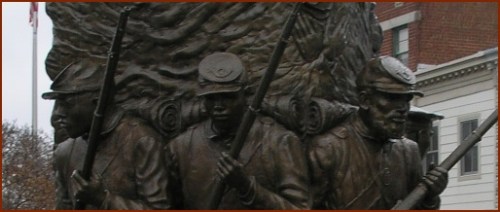
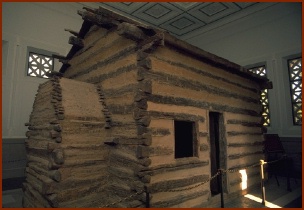 After this almost mandatory exchange, I asked the ranger how many people ask her this stupid question every day. “A lot”, she replied. Of course the log cabin at Lincoln’s Birthplace isn’t original. The original one was surely torn down and replaced by the next residents after the Lincolns moved to Indiana (log cabins were not known for their longevity). The ranger did proceed to discuss what was really important: the thoughts and writings of our greatest President, Abraham Lincoln.
 We should ask ourselves “why?” Why would a man who presided over the one and only War Between the States (the worst human bloodletting ever witnessed on the North American continent), a man who initiated the first widespread draft in America (leading to riots in New York City and other places), a man who suspended many legal rights (an act used years later as justification for Japanese interment and the Patriot Act), still be so loved by the American people? Not only loved, but perhaps even deified.
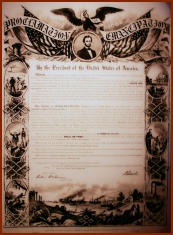 But there is another meaning to the word “right”. Lincoln was also the right President at the right time. People tend to forget the mess this country was in before Lincoln. The “slave problem” was a menace, a canker, a tumor on the very heart of America. It ate at the very core of our beloved Constitution. America, a nation supposedly founded on freedom, held hundreds of thousands in thrall, was a nation of hypocrites.


 America In Context