Money Matters
Who is Albert Gallatin? And why does he have so many places named after him?
- Gallatin School of Individualized Study at New York University
- Gallatin Hall at Harvard Business School in Boston, Massachusetts
- Gallatin Hall at Robert Morris University in Pittsburgh, Pennsylvania
- USCGC Gallatin, a Coast Guard cutter
- Gallatin River, Montana
- Gallatin Range, Montana
- Gallatin County, Illinois
- Gallatin County, Kentucky
- Gallatin County, Montana
- Albert Gallatin Area School District
- Gallatin, Missouri
- Gallatin Gateway, Montana
- Gallatin, Tennessee
- Gallatin Street in Washington, D.C.
- Gallatin Street in Pico Rivera, California
- Gallatin Street in Downey, California
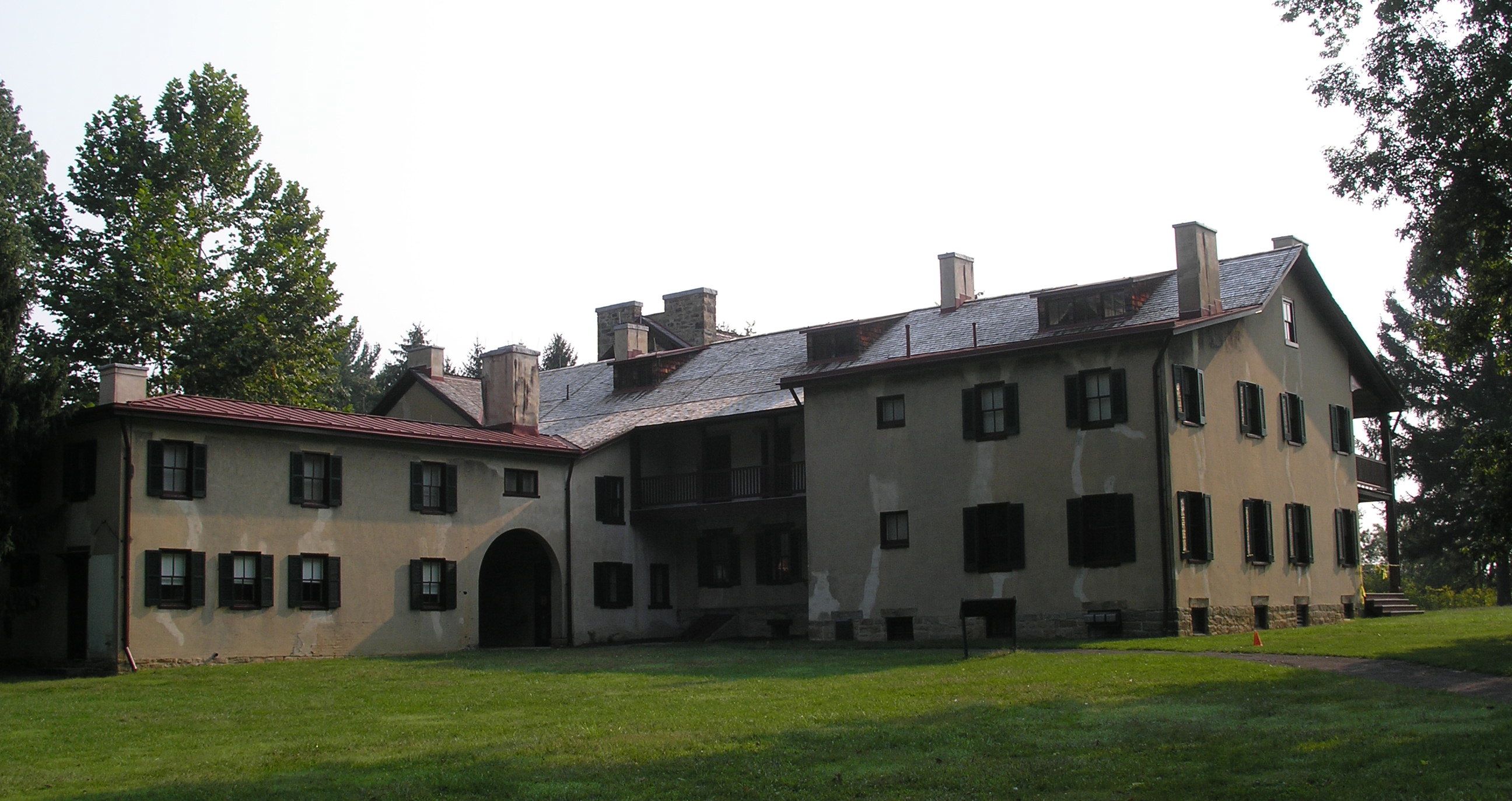
 Albert Gallatin was a statesman in the early years of this country. Born in Switzerland, he was an accomplished linguist, politician, diplomat, and educator. He was a Congressman, House Majority Leader, devoted anti-Federalist, and a sensible foe of an arrogant Alexander Hamilton. Personally ineffective as a businessman, he was nevertheless a sharp and shrewd operator in the ways of governance and policy. He became a Pennsylvania icon, and his home at Friendship Hill is regularly visited by schoolchildren and history buffs alike.
What made him famous, what keeps him known, what keeps him revered by fiscal conservatives, and what should make him revered by Teabaggers (if they stopped their fascination with unremarkable, fluffy windbags), was his leadership in fiscal matters for a fledgling government.
Albert Gallatin was our longest-serving Treasury Secretary, serving from 1801 to 1813 under Presidents Jefferson and Madison. During his term, he did something truly remarkable: he cut the national debt almost in half while at the same time financing the Louisiana Purchase, doubling the size of the country. This is still regarded as an outstanding achievement, and he is still regarded as our greatest Cabinet secretary. No other Secretary of any department has a site in their name in the National Park Service without having gone on to bigger things (like being elected President). And with a few exceptions (George Marshall, perhaps), I don’t think there are any Cabinet secretaries in our history who are more deserving of accolades than Albert Gallatin. [I’m interested in any reader thoughts on this question, feel free to post your own nominees in the comments.]

In Gallatin’s day, there was a completely different view on debt, especially amongst Jeffersonians. TJ himself wrote “there [is a measure] which if not taken we are undone…[It is] to cease borrowing money and to pay off the national debt.” This notion came from a very strong work ethic of colonial and founding generations of Americans, but also came from an understanding that monetary freedom = personal freedom. This is straight from pre-revolutionary experience: taxes were a form of tyranny, as was debt. Debt was an insidious instrument wielded by aristocrats to abuse the poor. Debtors prisons were very real and very dangerous, as were most lenders. The colonists knew that, in fact lots of colonists escaped to the New World to escape their debts. These colonial experiences translated directly into the thought processes of our early leaders.
Today, we don’t have that work ethic anymore. We began to believe that prosperity can be gained by financial legerdemain and borrowing. Thus, we have a huge federal budget problem, and until recently, most people didn’t care, because they, too, live under tremendous debt. Of course, the carpet got pulled out from under all of us starting in 2007, and we’ve paid a terrible price. Now we’re paying attention, and if you are truly paying attention, you realize we still have even more problems looming on the horizon, and one key part of those problems is our national debt.
 Federally, 30% of the budget isn’t funded by anything, it’s paid for by borrowing. Who lives like that? I recently dug myself out of a debt I considered intolerable. Looking back on it, at my worst my total unsecured debt equaled about 40% of my annual income, and that was the result of about 15-20 years of irresponsibility. That’s only a few percent a year compounded, and I considered it very dangerous. No person can live at a 30% annual borrowing level for very long before receiving their comeuppance, and it’s not possible for a country to do that, either. The national comeuppance will be coming soon, of that there is no doubt. As it is, there are plenty of quite plausible conspiracy theories that China can one day metaphorically conquer the United States by simply calling in all our markers and bankrupting us. Of course, the likelihood of this is quite small because of other factors, but still, this debt burden is a major problem.
But here’s the bigger problem: today, the general public does not understand how debt works, how the federal budget works, and what the impact would be of the austerity program required to pay down this debt to a reasonable level. There is a great deal of fundamental, blatant stupidity on the part of the general public of all parties and independents. Organizations like the Tea Party and others are being dishonest when they say “slash and burn the federal government and pay it down”. “Cut our taxes” is equally stupid.
I say it’s stupid because it’s simplistic and understates the problem. It’s not just “tax & spend”. If one could simplify the real core of the problem right now, IMHO it would be honestly stated as follows:
Our government is completely entangled in, and nearly inseparable from, our very economy. The American people like it that way, our leaders are more than happy to enable that thinking, and we’re too stupid to realize we have to pay for it.

Take a good, honest look around. How much of our economy is based on federal spending? Roads, bridges, waterways, power generation, power transmission, water treatment, currency exchange, education, social welfare, health care — all of these things have some reliance on the federal government, either through direct spending and subsidy or through a regulatory structure required to keep every factory from turning in the Triangle Shirtwaist Company or every neighborhood from turning into Love Canal. We can’t simply “cut spending”, or “cut regulation”. Again, take a look: this is manifested in a lot of ways.
- Manufacturing has moved overseas in tremendous numbers. So what’s left? Well, defense and pseudo-defense manufacturing. This stuff is still here because export laws prohibit companies from moving this stuff overseas. You cut defense spending (necessary for any honest austerity program), you effectively kill a significant quantity of remaining manufacturing. Manufacturing jobs are great jobs, for over 100 years entire families have risen themselves out of poverty thanks to manufacturing jobs. You kill them, you kill that rise and mangle our economy.
- Farm subsidies provide significant portions of farmer incomes. Lots of farmers in this country use either farming subsidies directly, or rely on federal insurance programs to keep their livelihoods going. We kill those programs, we kill family farms.
- About 20% of American adults don’t enough income to live. This is that wonderfully crappy 10% unemployment rate + social welfare programs + social security. These programs are a huge part of federal and state budgets. You cut that, you have millions of folks living on the beveled edge of survivability. We’ll have our own tin villages akin to those shown on late-night Save the Children infomercials.
- People love pork projects. Oh sure, we all get upset when we hear about Alaska’s Bridge to Nowhere. But let’s be honest: no one loves their pork like the voters who get it spent in their districts. We are being bribed by our own Congress and we love it.
- Then there’s the chain-o’subsidies across all government entities. The feds subsidize state governments, states subsidize local governments, and local governments provide the things we need (fire, police, schools, snowplows, etc.). You start slashing the feds then the states go bankrupt, you start slashing the states and towns go bankrupt. It’s the domino effect of governance.
- When something happens, Americans instantly start screaming “what is the government doing about it?” Listen to it, even the right-wing, supposedly “small government” folks cry out “where’s the government” when things happen. This is because, for generations, we’ve expected government to “do something”. We’ve simply lost our ability to help ourselves.
- But then we have a situation where almost every government effort to “help” fails in some way. Katrina recovery was a disaster, the financial system bailout was wasteful and resulted in massive bonuses to bank managers, even our post-9/11 wars failed to catch or kill the folks responsible. Well, why do they fail? Incompetence? Probably, but let’s be honest: we get what we pay for and when it comes to governments, we don’t want to pay much. So we get crappy service, and then we complain and want to pay less so we get even crappier service. We are a world superpower but want a Wal-Mart government.

Albert Gallatin had it easy. In its youth, the federal government wasn’t intertwined in everything. He could easily chop out 1/3 of federal employees and not really hurt much of anything. He could slash-and-burn other spending and only irritate early 19th century lobbyists. The general welfare of the populace, which wasn’t very pretty back then (hard labor, tough living conditions, etc.), was effectively unchanged by those austerity programs. He also had huge tracts of cheap land he could chop up and sell at a profit to raise money for the treasury without raising taxes (he and TJ actually cut taxes during this time).
We don’t have any of that. We have a federal government intertwined in damn near everything, like some sort of symbiotic parasite from a Star Trek episode. You start cutting whole tendrils and the host body (our economy) will crash and die. We have to understand this reality and make smart, intelligent, responsible choices. We have first got to understand there are some functions that can only be accomplished by a sound, effective federal government, and then understand that government is ineffective in everything else. Then, bit-by-bit, we have to chop out those ineffective things in a manner that doesn’t bring everything crashing down. And we have to honestly allow this to happen even if it risks our own personal wealth or well-being, and we have to pay the amount of taxes required to make those necessary functions effective and actually helpful.

Gallatin lived in risky times, and if one can make any criticism of his work, it’s that he actually weakened the country and made us vulnerable for the War of 1812. We live in risky times of a different source, and the criticism I make of the “slash-and-burn” Tea Bagger mentality is that, too, can weaken the country and make us vulnerable to the next big crisis. Thomas Jefferson and Albert Gallatin were smart folks, we need their counterparts of today to step forward and act similarly smart.
And we, the American citizenry, must support responsibility, sensibility, and intelligence in our leaders.
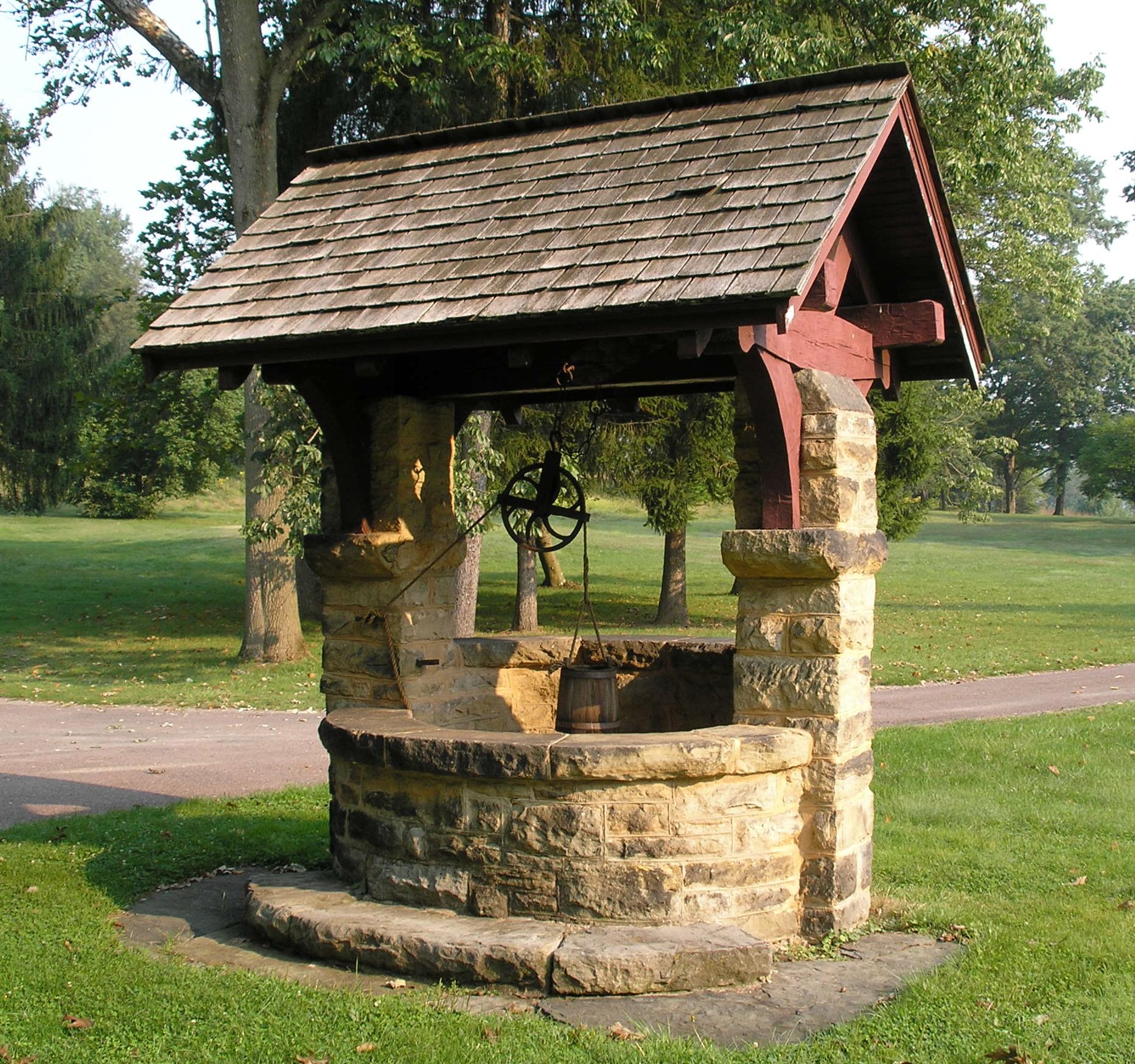
[The daguerreotype photo of Gallatin is in the public domain. Photos are mine and copyrighted thusly. ]
======================
 Links (lots of statistical & policy ones this time :yawn:)
Charts on US Government Spending
Congressional Budget Office report on manufacturing jobs
Illogic of farming subsidies
Bureau of Labor Statistics
Social Security Facts & Figures
Read Full Post »





 It all started with the settlement of interior North America. The French got their first and got busy. By the mid-18th century they had settlements from modern-day Quebec down the St. Lawrence River to the Great Lakes and down the Mississippi to New Orleans. They also had spots on the Ohio River and other tributaries. They were in a pretty good position actually, but their settlers were more concerned with fur trapping and trade than continental domination. The Seven Years’ War with England (called the French and Indian War by us Yanks) came along, the French got beat pretty badly and, in the Treaty of Paris, England gained possession of all those forts. Of course, the Brits being the Brits, they figured they could just plop some redcoats in the forts and claim lordship over the lands. The French settlers still worked their farms, collected fur pelts, and paddled up & down the river in trade like they had for a generation, while theoretically under British “control”.





 America In Context