Feeds:
Posts
Comments

Posts Tagged ‘revolutionary war’

Minuteman National Historical Park, Lexington & Concord, Massachusetts

I was eleven years old for America’s bicentennial in 1976. That’s an incredibly impressionable age, and the festivities left a significant mark on me that lasted my whole life. I remember the Tall Ship parades in New York and Boston harbors; the bicentennial parade in Washington; and the general feeling of pride and patriotism across the nation. A field trip took us to see “1776” in our local cinema, and being good Massachusetts boys & girls, we applauded when William Daniels as John Adams rose to sign the Declaration during the final, climactic moment. I even lobbied to rename our candlepin bowling team to “Minutemen”, although I was heavily outvoted (being the worst bowler in the entire league didn’t give me any cred).

The Battle of Lexington and Concord reached mythic levels in my home state, the “shot heard ‘round the world” even hit Schoolhouse Rock. For natives, it’s second only to the Battle of Bunker Hill, which is actually the Battle of Breed’s Hill (if anyone from Massachusetts fails to correct this in conversation, they might be an extraterrestrial). What they might not correct, for many still misunderstand, is who the famed Minutemen actually were.
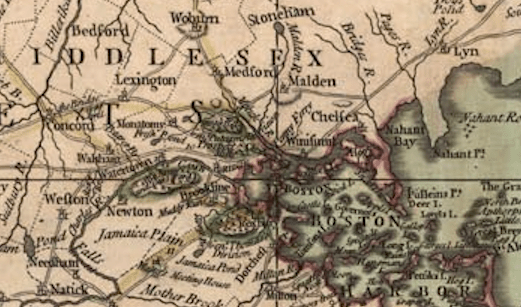
Ancient Massachusetts

The great misconception is the Minutemen were a ragtag bunch of citizen soldiers. That does them a great injustice. First of all, many of these men were veterans of the French & Indian War (aka the Seven Years’ War in European parlance). They knew how to fight, knew how to respond quickly to tense situations, and (being on the receiving end many a time), understood guerrilla tactics. They continually trained in their home towns, keeping their muskets ever at the ready. They were also readying for conflict with the British regulars, having established many caches of weapons and ammo throughout New England. Meanwhile, the British Regulars (the “Redcoats”) weren’t as seasoned. The European theater of the Seven Year’s War took a significant toll on the British army, most Regulars serving in North America were new recruits, or even victims of impressment. They had little, if any, personal commitment to the causes of Britain, especially regarding a foreign land across an ocean. The Minutemen, however, knew the stakes.

The Colonials weren’t just sparring over Stamp Acts and Intolerable Acts and tea parties, there was another existential threat hovering out there, driving them towards rebellion. Another British colony, fully subjugated, treated it’s citizenry as no better than serfs. No property rights, the results of their labor exported to the mother country, and beset with near-famine conditions that took nearly 400,000 lives in the 18th century. Ben Franklin learned of the conditions in Ireland, and made it his mission to inform everyone in the Colonies of those travesties.
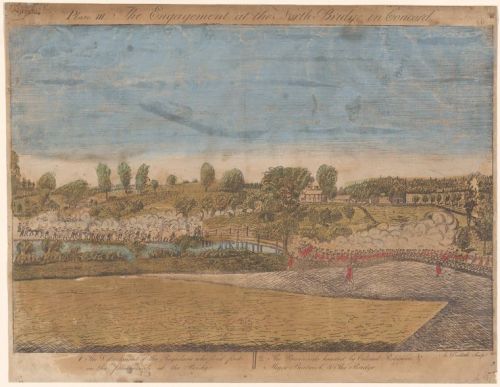
Doolittle Engraving Plate III: The Engagement at the North Bridge in Concord (1775, New York Public Library Digital Collections)

Franklin’s missives did not sit well in Massachusetts: with its shipbuilding and mercantile industries, it was the wealthiest colony per capita. Most of the population were property owners, owning the land on which they farmed, and keeping or selling the fruit of their labors as they saw fit. These Minutemen, therefore, had everything to lose if King George had his way. It’s no surprise that when the word spread to the surrounding towns and farms that the Redcoats were on the move, 4,000 Minutemen showed up to defend the town of Concord. Thousands more were on their way, from the western counties as well as neighboring Connecticut and Rhode Island. New Englanders were dead serious about defending their rights, that’s for damned sure.

With stories like that, it’s no surprise this Massachusetts boy would grow up with a strong sense of patriotism. I’ve held onto the presumed American ideals as best as anyone can into adulthood. The principles of liberty, freedom, equality, perseverance, and the continual effort to make things better for all have been more important in my life than anything I picked up in parochial school. I have to admit, though, the events of the past ten years are straining these principles, and draining that sense of patriotism.
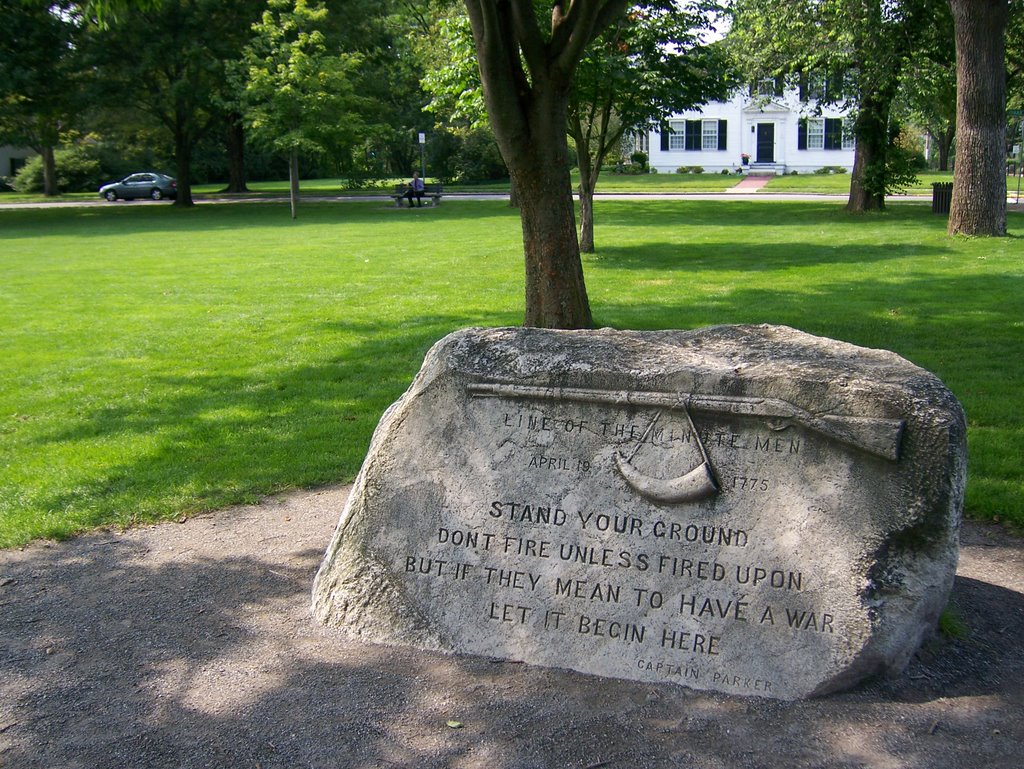
Lexington Monument

It’s been said that a country is only as good as its people, and in a democracy, that’s doubly, or even trebly, so. We can complain about the process, or the back-room dealings limiting our choices, or the oligarchs using their financial abundance to hold their thumb on the scale, but in the end, we still have choices, quite likely the most choice any people has ever had in determining their country’s direction in all of human history. Yet what did we do with this power of choice? Elect a twice-impeached, four-times-indicted former president; whose first term was the most corrupt administration of the modern era; who inspired a riot in Washington, D.C., where his followers attacked police officers with flagpoles and smeared their shit on the walls of the Capital.

The Minutemen marshaled to fight for their freedom and keep their families out of serfdom. Two hundred and fifty years later, MAGA fights for the “right” to strip jobs from minorities under an “anti-woke” agenda; to strip the right to control their own person from millions of women; and for masked men to beat up immigrants and shoot protestors dead in the streets. Oh the difference a couple of centuries makes ….
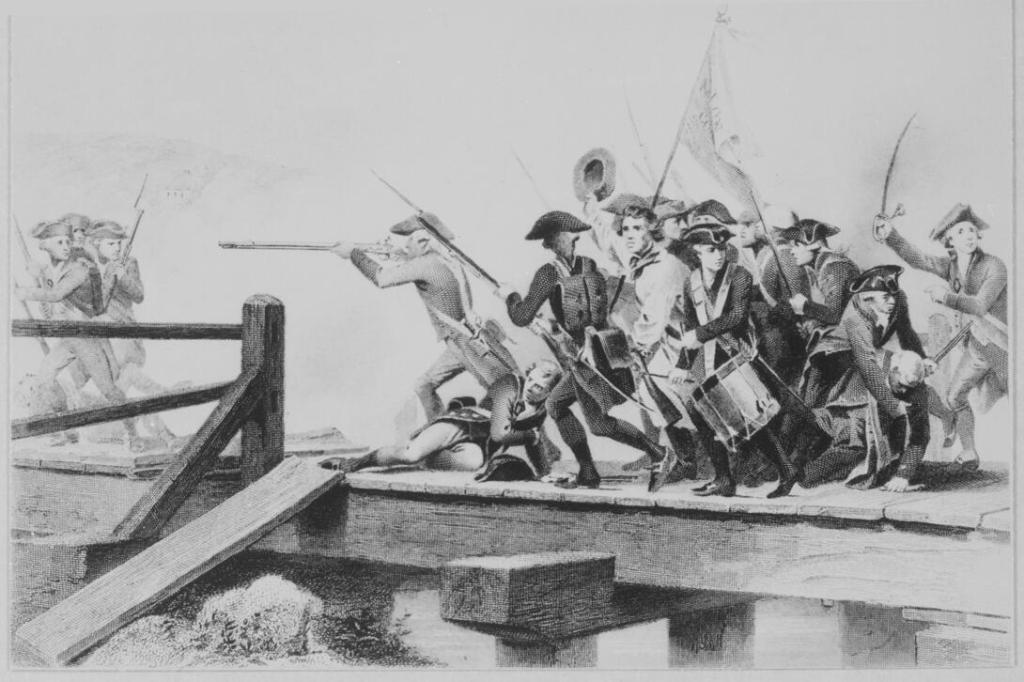
The Struggle at Concord Bridge (copy of engraving by W.J. Edwards after Alonzo Chappel, circa 1859. National Archives.)

Recently, I’ve felt some of my patriotism returning. I’ve been reminded the last election was won by a plurality of votes, not a majority, that provides a wee bit of comfort. Current presidential approval ratings are in the toilet, the worst of any president at this stage of their presidency since modern polling began. This is mostly because of the economy, of course, and not any of those high-fallutin’ concepts of “liberty”, but I’ll take it as a win. Cracks are certainly showing in the MAGA coalition, with some senators even showing some backbone by pushing back on the $1.8B MAGA slush fund. Maybe these are signs Congress might return to doing their fundamental check-and-balance duties.

I guess there’s some hope out there. Slim, I suppose, but better than none. I’ll take it.

[Sadly, I did not have a digital camera when I visited Minute Man National Historical Park. Pictures posted are not mine]

===============

Links:

Minute Man National Historical Park: https://www.nps.gov/mima/index.htm

1976 Boston Parade of Sail: https://youtu.be/1opx0W_PbBQ

“Sit Down, John!”: https://youtu.be/dYDxyIzPe98

Bliain an Áir, the Irish Famine of 1740-41: https://en.wikipedia.org/wiki/Irish_Famine_(1740%E2%80%931741)

Lexington and Concord: The Battle Heard Round the World, George C. Daughan, 2018: https://www.amazon.com/gp/product/B073VX9CP1

The Exotic Mysteries of Candlepin Bowling: https://www.thesportofbowling.com/blog/candlepin-bowling/
Read Full Post »

The South: Not Just for Civil War Geeks

Yankees typically vacation in the South for two reasons. Most of the time, we cross the Potomac and head to the beautiful beaches and sea towns along the Atlantic and Gulf coasts. Once there, we race rented jet-skis, play golf, crowd ocean-view restaurants, soak in the sun, and make general drunken nuisances of ourselves. We likely complain a lot, occasionally tip well (but more likely not), and then scurry back to our cul-de-sacs in the suburbs and harp on “funny sounding southerners” while trying to figure out how to screw our neighbors out of something or other.

The other reason vacationers head south is to tour Civil War sites. The greater Fredericksburg area is popular, but Richmond,  Appomatox,  Fort Sumter, Chickamauga, and Vicksburg are on that list as well. This is pretty good for the southern states. Most of these sites are well away from the coast in areas that could use some tourist dollars. And I like to think “history tourists” are better behaved than their sunburned, drunken brethren (although I’m sure we’re annoying in our own special way).

But here’s what’s forgotten, even by the history tourist: the South was crucial to colonial victory in the Revolutionary War, and has a lot to offer for students of that conflict. North and South Carolina had special significance during the Revolution, perhaps even more so than they had in the Civil War. South Carolina was literally riddled with battles of all shapes and sizes, and North Carolina was the site of one of the most pivotal battles of that entire conflict: the seldom-discussed Battle of Guilford Court House.

The early stages of the war were fought in the troublesome northern colonies, home of the original irksome Tea Partiers and a certain troupe of rabble-rousers in Philadelphia and New York. Those battles are legendary and often-taught in schools and shown on the History Channel: Lexington and Concord, Ticonderoga, Bunker Hill, Trenton, Saratoga. Those sites get all the visitors and all the attention when it comes to Revolutionary War tourism. Little attention is paid to the Southern Theater of that war, except Yorktown of course. That’s really sad: what happened in the Carolinas actually assured victory for all the colonies and assured the new United States would be as big and bi-coastal as it is today. What started in the North concluded successfully in the South.

The battle had shifted in upstate New York. The battle of Saratoga was a huge victory for the Continental Army and colonial militias. General Horatio Gates defeated and surrounded General Burgoyne’s redcoat troops in a humiliating defeat for the British. It was quite a stunning victory, really, and not only cost the British dearly in men and arms but also encouraged the French and Spanish to enter the fray on the side of the fledgling Americans. The Brits were going down for a defeat, something that simply would not stand in the eyes of the landed gentry, Parliamentarians, and King George. So the Brits came up with a new strategy.

Their new goal became not subduing all the colonies, but weakening their power by attacking the supposedly “soft” underbelly: Georgia and the Carolinas. The Brits were convinced the lower colonies were full of Loyalists, unwilling to surrender the honor of being part of the Empire to join with a band of Puritanical misfits and wannabes. All the Brits had to do was get past the coastal defenses and move into the interior where the North American landed gentry would gladly join them. With the low colonies firmly in British hands, resource-rich Virginia would fall, and to hell with the miscreants in Pennsylvania and Massachusetts. They could have their little country, firmly surrounded and contained by Britain and her loyal followers.

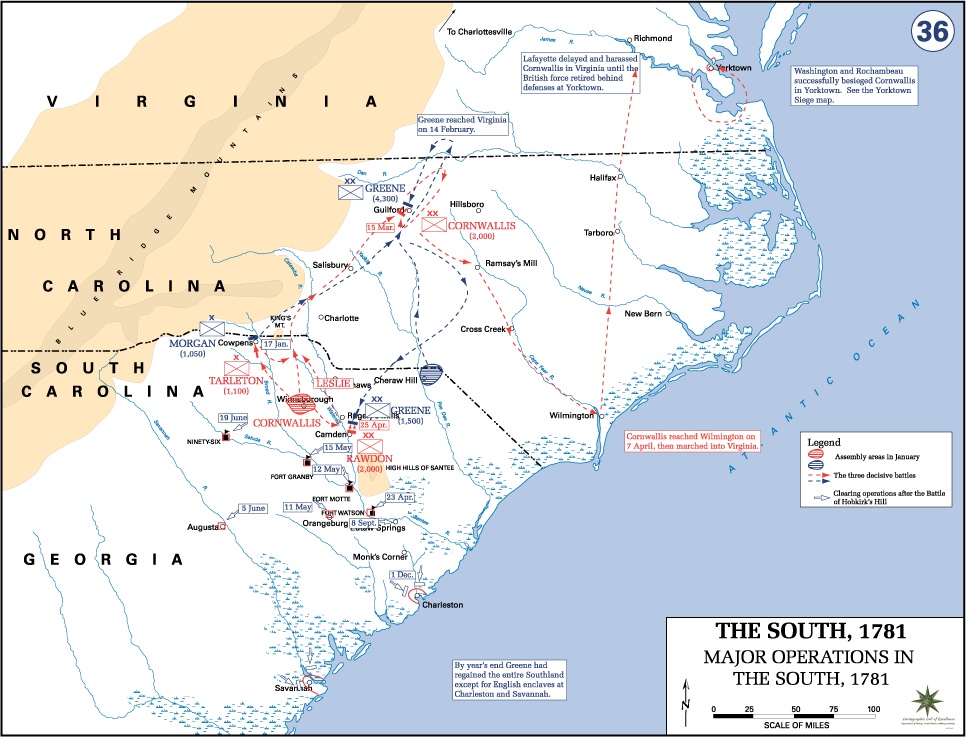
In March of 1780, they besieged and eventually conquered Charleston,  the biggest port south of the Chesapeake. They then moved inland, fighting and skirmishing all over interior South Carolina, picking up some Loyalists along the way but also (foolishly) stretching their supply lines and slowly whittling away at their core group of highly trained soldiers. But in their eyes, they were doing exactly what they wanted to do. Georgia was effectively out of the fray, South Carolina was theirs, and North Carolina (theoretically full of loyal British subjects) would be won. Then they could gather their strength and take back the Chesapeake Bay ports and the colony of Virginia.

After a series of mixed-result battles throughout South Carolina, bold Lord Cornwallis (descendant of barons and earls and nephew of archbishops and governors) lightened the load of his armies by abandoning equipment and supplies, and led them all into North Carolina in hot pursuit of the fleet-of-foot Continentals led by that much-beloved Quaker, General Nathanael Greene of Rhode Island. A brave and very astute commander, Greene’s motto became “we fight, get beat, rise, and fight again”, directly copying a strategy made famous by Fabius Maximus centuries earlier: war through attrition.
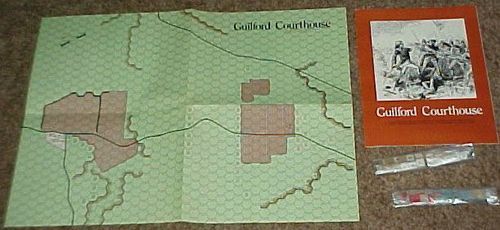
Greene did that over and over in the southern campaign, and culminated that strategy at Guilford Courthouse near Greensboro. He met Cornwallis’ 1900 crack troops with over 4000 of is own. He knew his men didn’t have the skill or fortitude to defeat Cornwallis, but he’d have them pound the British as much as they could. Worked, too. Worked fabulously well. The Brits won the battle due to superior tactics and arms (and, supposedly, through the use of nasty friendly-fire tactics), but they paid a high price for their victory. Cornwallis lost a quarter of his men and (due to “lightening the load” weeks earlier) most of their supplies. Cornwallis had no choice but to retreat over inhospitable land to coastal Wilmington. The British lost their chance to split the Colonies forever, and were eventually met with defeat in Yorktown months later.

There’s a lot we don’t know about the history of our own country. We tend to remember a few key events (poorly), but miss the whole. It’s quite interesting, actually, how one event leads to another, how  a series of small defeats can lead to a great victory and the eventual redirection of history. The Battle of Guilford Courthouse is one such event.

Oh, and North Carolina is my favorite Southern state. Just thought I’d toss that out there. 🙂

[I didn’t own a digital camera when I visited Guilford Courthouse, so no pictures. All illustrations & maps are public domain.]

==============================================

Links

Guilford Courthouse National Military Park

The order of battle

Natty Green’s Brewing Company

Google map to Guilford Courthouse

Read Full Post »

Right Place, Right Time, Right Action

In 2002,  I decided to stage my escapade through Kentucy and Indiana from Louisville. From there, I would take day trips to Lexington, Abe Lincoln’s birthplace,  Mammoth Cave, and George Rogers Clark National Historical Park.Most times when I take my park excursions, I plan at the last minute and don’t do a ton of research. And most times I find myself disappointed by the uninspired mundanity of my accommodations, and the realization I may have missed something grand or at least interesting.  However, for once, my lack of foresight had good consequences. I figured Louisville would be a typical, decaying, Middle American city, with typically craptastic restaurants and nothing much to see or do. Well, as occasionally happens during my ill-planned sorties,  I was shocked and pleasantly surprised. Louisville actually has a hoppin’ Bohemian district!

This place was great. Lots of restaurants, high-end shopping (which meant cadres of good looking women), used book & music stores, antique shops, and great clubs & brewpubs. It had head shops, tie-dye stores,  acupuncturists, and even a Church of Scientology (located in some sort of run-down, drive-through bank building). I couldn’t believe it. Here — lying in stark contrast to the decidedly Christian backwater that comprises the rest of Kentucky — is this little nook of cultural strangeness. Hard to believe this section of Louisville is in the same state as the Creationism Museum with its displays of man peacefully co-existing with dinosaurs….

Of course, it is only a couple square miles. One can’t expect more in this part of the country. Heading northwest from the city, it doesn’t take long to get back to what one would expect:  a traditionally decaying mill town; surrounded by smallish, uninteresting suburbs; dropping into Indiana corn country.  It’s not a bad ride to Vincennes, really. Yeah, it’s a bit boring, but the countryside is moderately unspoiled and you do pass through the Hoosier National Forest. There are worse 2-hour drives in the country, I’ve been on some :coughwesttexascough:

—-

Poor, forgotten George Rogers Clark. A Revolutionary War general, he’s sadly missing from the text-book lists of American founders. That’s a big list: Washington, Jefferson, Franklin, Lee, Lafayette, Kosciuszko, Hancock, Adams. Yet Clark’s vision ensured the westward expansion of a post-revolutionary, fledgling United States of America. It’s actually a funny story (in a geeky, history-buff kinda way).

It all started with the settlement of interior North America. The French got their first and got busy. By the mid-18th century they had settlements from modern-day Quebec down the St. Lawrence River to the Great Lakes and down the Mississippi to New Orleans. They also had spots on the Ohio River and other tributaries. They were in a pretty good position actually, but their settlers were more concerned with fur trapping and trade than continental domination. The Seven Years’ War with England (called the French and Indian War by us Yanks) came along, the French got beat pretty badly and, in the Treaty of Paris, England gained possession of all those forts. Of course, the Brits being the Brits, they figured they could just plop some redcoats in the forts and claim lordship over the lands. The French settlers still worked their farms, collected fur pelts, and paddled up & down the river in trade like they had for a generation, while theoretically under British “control”.
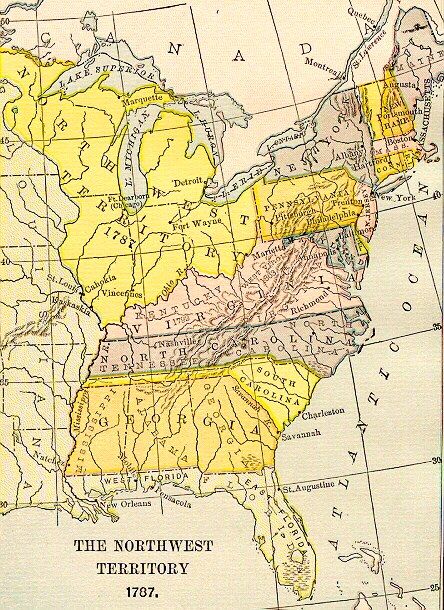
Then along came the American Revolution. The thirteen colonies wanted their independence, and badly. Unfortunately, the colonists also knew the British would be a problem even if they won. The Brits would control almost all the fledgling country’s borders: their territories to the north (modern-day Canada) and all these forts along the lakes and rivers to the west. So even if the colonies gained independence, the new nation would still be bottled in, and likely harassed in perpetuity, by Great Britain. Kinda like living in your mother-in-law’s house after the divorce. Awkward!!

George Rogers Clark saw this problem. He beseeched the Virginia militia commanders, who saw the brilliance of his proposal and lent him a band of raiders to harass these forts. Up they marched to the Ohio River, and then down to the first fort … which they took without much of a fight. Then they  marched to the next fort, and … took it, too, without much of a fight. Why? Well, the French settlers kinda didn’t give a crap for the British, and basically told the militia “well, go ahead and take it, we don’t care. We just want to kill some fluffy little animals.” The two or three Redcoats manning those forts, realizing they had no logistical support, high-tailed it out of there or just sat drinking their tea and said “meh”. Result: the colonial powers now owned the Northwest Territories, the Great Lakes, and the Mississippi down to Louisiana. Hardly any casualties (other than long marches in the wilderness would claim).

This was met with great “huzzahs!” by the Continental Congress and Washington’s army, and deservedly so. Now the country had a chance to not only be independent, but have the breathing room it needed to keep it safe and sound for the foreseeable future. Clark was heralded and promoted and eventually fought in actual combat situations. But he’s honored at a humble little shrine in Vincennes, Indiana for basically ensuring the Brits wouldn’t be on our flank for all time.

If there’s a story to take away from Clark, it’s this: it’s not only about being in the right place at the right time, but taking the right action. And it helps if the French don’t give a crap.

[Sadly, I didn’t own a digital camera when I visited GRC NHP. All pics are public domain from Wikipedia or the links referenced below. Some also came from www.earlyamerica.com, a nice, simple site on American history I thought worthy of blogrolling to the right.]

==============================

Links:

George Rogers Clark National Historical Park

The Highlands of Louisville

Creationism Museum

Neat Kentucky history link

Read Full Post »