History of an Art Form
The greatest joy I have in studying history is coming across those amazing “nexus” moments, those moments where you realize “holy crap, if X didn’t figure this out, and Y didn’t make that choice, then not only would Z have turned out differently but A, B, and C might not even exist”. It’s those “EUREKA!” moments that makes this little hobby of mine worth while.
Lately I’ve been trying to flesh out my understanding of the history of music. Not Bach, Brahms, and Beethoven, but Chuck Berry, Jimmy Yancey, and Muddy Waters. Not only am I a big fan of rock & blues, but I find the whole history of it to be utterly fascinating. As an art form, well, there are definitely richer, more textural forms of music out there, but as an evolving cultural movement, it’s inspired, and fascinating, and controversial, and revolutionary, and damn sexy.
 This is American classical music, not born out of an age of royalty and patronage, but cooked in the cauldron of Jim Crowe oppression, Depression-era poverty, Dust Bowl hardship, and Edison electricity. It comes from the fertile loins of the uniquely American amalgam of races and cultures. There is no other place on Earth where this unique confluence of happenstance existed, and there is no other place on Earth where the music we now know as Rock & Roll could have possibly been invented.
As much as I love it, I’m also terribly ashamed my knowledge of it is not incredibly deep. I’ve only just recently listened to Dylan’s “Blonde on Blonde” end-to-end! I’ve really missed out on an awful lot of classic recordings, and therefore am clearly missing out on a lot of great stuff and a lot of great context. It’s embarrassing, really. So, in order to correct this gross oversight, I decided to go back and not only acquire, but really listen to, all the classic recordings throughout rock history.
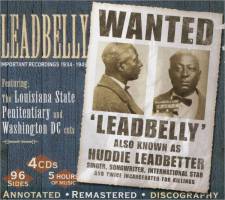
The other day I was perusing my favorite used music store (http://www.turnitup.com/) and came across the 4 CD box set Leadbelly: Important Recordings 1934-1949. Leadbelly (aka Huddie Leadbetter) is one of the preeminent, influential figures, having been inducted to the Rock & Roll Hall of Fame as an Early Influence in 1988. He’s definitely known as a forefather of the Blues, but only when I gave this box set a solid listen did I appreciate just how much of an influence he truly was, and just how reflective of an entire chunk of neglected history his music truly is.
Let’s just start with the recordings themselves. These are gritty. Full of scratches and stutters and variations. No dreaded autotuning here.This man is the real deal, with all his pockmarks, rough edges and foibles there for all to see. In today’s overproduced age, where anyone can be a star thanks to audio waveform manipulation, this realism is incredibly refreshing.
————————————————————————————————————
Modern-day marvels:
————————————————————————————————————
Assuming you lived through that, try this:
————————————————————————————————————
Important Recordings causes a time machine effect as well. A trip through this collection is a trip back to Precambrian rock, soul, and R&B. I love finding older versions of modern songs. It’s like finding a dinosaur skeleton and realizing it’s the great-grandpappy of the blue jay. On this box set, you’ll hear 60+ year-old versions of such great songs like “C. C. Rider” (later covered by John Lee Hooker, Jerry Lee Lewis, Elvis Presley & the Grateful Dead); “The Gallis Pole” (retitled “Gallows Pole” & recorded by Led Zeppelin); “Midnight Special” (famously covered by Credence Clearwater Revival); “Rock Island Line” (a Johnny Cash staple and a famous John Lennon bootleg); “How Long” (covered by Eric Clapton on his excellent From the Cradle CD); an amazingly uptempto “In New Orleans” (aka “House of the Rising Sun”, inarguably the biggest hit of the Animals); and “Where Did You Sleep Last Night”, which was eventually covered by, of all people, Nirvana on their outstanding Unplugged album. Hearing these songs in their near-original state is akin to going to the Smithsonian to see the Model T or the first light bulb.

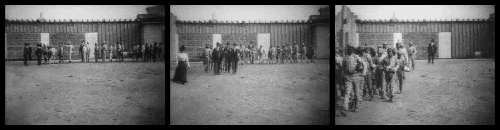
As great as these old finds are, the real heart and soul of Important Recordings is reflected in the other tracks, the tracks that haven’t made it into the vernacular of modern music. These are tracks like the repentent “I’m Sorry Mama”, the work-weary “Boll Weevil”, the sorrowful “Po’ Howard”, the fairly creepy “Black Snake Moan”, and the lamenting “My Friend Blind Lemon”. These are songs from the forgotten era of the sharecropper, a hardscrabble life of poverty where your only support is from faith, friends & family. You’ll also hear more than a handful of Negro work songs like “Pick a Bale of Cotton”, and chain gang songs like “Take This Hammer”, complete with the percussive “huh” grunting by unnamed background vocalists. Give these a good listen, try to put yourself in the shoes of these men in their time, and tell me it doesn’t give you the chills.
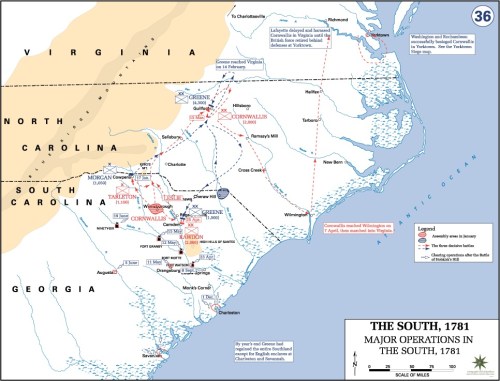

 After a series of mixed-result battles throughout South Carolina, bold Lord Cornwallis (descendant of barons and earls and nephew of archbishops and governors) lightened the load of his armies by abandoning equipment and supplies, and led them all into North Carolina in hot pursuit of the fleet-of-foot Continentals led by that much-beloved Quaker, General Nathanael Greene of Rhode Island. A brave and very astute commander, Greene’s motto became “we fight, get beat, rise, and fight again”, directly copying a strategy made famous by Fabius Maximus centuries earlier: war through attrition.


COMMENTARY: To All Iraq Veterans: “Thank You”
Posted in Uncategorized, tagged commentary, history, Iraq, patriotism, responsibility, war on December 29, 2011| 1 Comment »
Mistakes Were Made — Again
The last U.S. troops have been pulled from Iraq. To all the folks who served in that country, thank you. I’ll never know what you went through, but I’m certain it wasn’t pretty. I hope you’ve at least made it home safely. And to those who’ve lost a spouse, a family member, or a friend in that country, I am truly sorry, and very much appreciate the sacrifice you’ve made. So thank you, all of you.
Instead of saying “thank you”, however, I really should be saying “I’m sorry”. It certainly seems much more appropriate, and much more honest. What I really should do is paraphrase terrorism expert Richard Clarke’s famous opening statement to the 9/11 Commission: your government failed you, those entrusted with protecting you failed you, and the people of these United States – all of us – failed you, too. It was a terrible, terrible mistake to invade Iraq. It was off-purpose, off-policy, off-mission and incredibly stupid, and should never have been done in the first place.
I wonder what you, the Iraq veterans, think when you hear or read comments like this. It probably pisses you off something fierce. You went halfway around the world to some Godforsaken country, fought a ruddy complicated insurgency, avoiding exploding garbage cans and roadside trash all the while, and hopefully made it back home in one piece, all to hear jerks like me say stuff like “it was all a mistake”. But I can’t say anything else about it. It was a mistake, a huge mistake, and a mistake that didn’t need to be made.
Now, I could write paragraph after paragraph about the manipulated intelligence, the fabricated link between Saddam Hussein & al Qaeda, and the lack of WMDs. I could write about the theoretical Neocon conspiracy to commit fraud upon the country and the world for their own political (or perhaps financial or perhaps retributional) gain. I could discuss at great length all the strategic and tactical blunders that occurred: dropping the ball in Afghanistan; letting bin Laden go; not providing adequate body armor; poor Humvee design; aggravating international relations; trusting the advice of an ex-pat Iraqi playboy. But all of these things have been talked about ad infinitum, and by people far more knowledgeable. I will say that all of these things, put together, are enough to convince me that we owe you all a tremendous apology for all we’ve put you through.
From the viewpoint of an amateur historian, here’s the real reason why we owe you an apology: it seems we all forgot what “war” really meant. Which was completely idiotic, we’ve been in enough wars that we should definitely have known better. But in the days leading up to the invasion, I heard almost no one in power talk about war in realistic terms. No one talked about the inevitability of American casualties. No one talked about the inevitable impact on families. No one talked about the certainty some veterans would suffer disabilities, brain damage, or PTSD. No one talked about the inevitability of massive civilian casualties, and the immense amount of guilt good soldiers have when they kill civilians. No one talked about friendly fire, prisoner abuse, and other ugly facets of war that I will not speak of here, but all of these things are (and here’s that word again) inevitable in wartime. We basically forgot history and repeated it, which is sacrilege to a historian (even an amateur like me), and man am I sorry for that.
I do want to be clear on one thing: I have no illusions that we live in some “cuddly, fluffy” world where there is no real evil and war is pointless and we should all plant daisies in our gun barrels. No, not at all. War has been and will continue to be necessary in certain situations. But before you go you have to weigh the reasons for the war (including the accuracy of the intelligence), the benefits of the victory, the risk of a defeat, versus the damage it will cause, and THEN make a decision whether war is necessary. With all the unreliable intel and shady connections (not to mention MUCH bigger fish to fry, namely al Qaeda & the Taliban), there is no way that such an analysis, done sanely, would result in “yes, let’s invade Iraq”. But a sane analysis was not done, so we invaded, and the entire country owes you an apology for that.
So why am I the one apologizing? I didn’t sign any declaration of war. I’m just some schmuck with a homemade soapbox. Well, it’s simple: I am a citizen of this country, which happens to be a democracy. According to the law of the land, I have a say in government equal to every other citizen. I am 1/300-millionth responsible for everything that happens in this country. And every other American citizen is equally responsible, and they also need to be accountable for the nation’s failings.
We all like to sit on our fat asses in our Lazy-Boy recliners and piss-and-moan about the government. But you know what? The sh*t that happens here, like the fatally flawed invasion of Iraq, is our fault. We’ve allowed this to happen to our country, through our sloth and our focus on rash consumerism and our willingness to vote for people “we’d like to have a beer with” rather than paying attention, voting soundly, and fighting for what’s right. We can all whine and cry that “we’re all powerless” but you know what? We are powerless because we allow ourselves to be powerless. All we want is Monday Night Football and Wal-Mart and 3-D movies and Starbucks. We don’t want to be involved, we don’t want to take a stand, we don’t want to take our country back. Even with this recent wave of activism from both ends of the political spectrum, how many people are actually involved in movements like the Tea Party or Occupy Wall Street? 1%? I seriously doubt there are 3 million people actively involved in these or other movements intent (rightly or wrongly) on fixing our country. The real 99% just doesn’t give a damn.
Well, I don’t give a damn if they don’t care. If someone’s a citizen of this country, then they are 1/300-millionth responsible for it anyway. And the least they can do for you, the Iraq war veteran, is walk up to you and, as sincerely as they possibly can, say “I’m sorry”.
UPDATE: another good post on this topic: http://themoderatevoice.com/132701/gratitude-wont-pay-the-bill-for-returning-iraq-afghan-war-veterans/
Read Full Post »