Failure In Success
Antietam is one of the great battles of the American Civil War, involving 130,000 soldiers (infantry, cavalry, and artillery). There’s only one way to describe the Battle of Antietam: a bloody, awful mess. It is remembered in history as the single, deadliest one-day battle ever fought on American soil. The Union won the field that day, in spite of bad command decisions by General George McClellan and his field commanders. Lee was driven away, his weaker numbers unable to take victory, despite his own tactical brilliance. By the end of the day, over 3600 men were dead, and another 19,000 injured (and likely dead shortly thereafter, thanks to medical practices in the 19th century). A bloody, awful mess, indeed.

A lot of men died in the Civil War. Over 600,000 men gave their lives on the field of battle through the course of the war, and (as always happens in war) an uncountable number of civilians lost theirs as well. But Antietam holds another special place in American history. The pre-Grant Union Army could do what only the pre-Grant Union Army could do: it snatched defeat from the claws of victory. If Gen. McClellan was any kind of able commander, instead of the pompous ass he was, he would have crushed the Confederate army right then and there, and ended the war within 18 months of its inception at Fort Sumter. But McClellan lacked something that defines winners from losers: energy and drive. He allowed his forces (thousands of whom didn’t even fire a shot) to rest on their laurels while Robert E. Lee’s men retreated southward. If only McClellan had acted then and there, and whupped Lee in the fields of Maryland, the war would have been over.
 I really want to let that soak in a bit. If McClellan had acted, the Battle of Fredericksburg would not have happened (2,000 dead). Spotsylvania would not have happened (4,000 dead). Chancellorsville would not have happened (est. 5,000 dead). Chickamauga would not have happened (est. 6,000 dead). The Battle of Gettysburg would not have happened (8,000 dead). Richmond would not have been sacked and looted. New York would not have had its draft riots. Atlanta would not have been burned to the ground. Virginia would not have had its entire countryside scoured by war. And maybe an assassin would not have claimed the life of the greatest President we ever had.
But McClellan sat on his lazy ass, Lee got away, and country had three more years of war. Good job, Georgie!
I suppose there is success in failure as well. One good thing came out of Antietam (beyond McClellan’s immediate firing): Lincoln’s most famous, yet most misunderstood, act — the Emancipation Proclamation. Lincoln had been working on it for some time, but needed the right moment to release it. As lame as McClellan’s actions were, he gave Lincoln that moment: a Union victory over the Confederate army. Lincoln released his document to the public, gave a wonderful speech, and America turned a vital corner away from slavery (read more commentary on Lincoln and the Emancipation Proclamation here).
Walk the Path of History
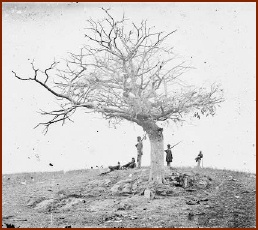 Even though I love the National Park Service and the sites they protect, I have to admit: many of the Civil War sites are nearly undecipherable. You have to really use your imagination to envision the order of battle or the strategic importance of the terrain. It’s hard to imagine a line of Union artillery in a Wendy’s parking lot. What were they firing at, the Avis Car Rental?
Antietam, on the other hand, is a great park to envision an old battle. The Dunker Church still stands, the Cornfield has been replanted. Bloody Lane is still discernable, and the sturdy Burnside Bridge remains. The latter represents the greatest blunder of the Civil War behind Pickett’s Charge. Union Major General Ambrose Burnside ordered thousands of men to storm across the stone bridge, where they were easily slaughtered by well-placed Confederate riflemen. Old Dumb Ass didn’t realize he could send his thousands of troops across the creek itself, where their numbers would simply swarm over the enemy positions. The ruddy thing was only a couple of feet deep! Nothing I could write could explain the idiocy of funneling all your men across a tiny bridge where they could be slaughtered like crawdads at a Cajun restaurant. The Antietam National Battlefield preserves this land so perfectly that a short visit and some clever observations will reveal what should have been so obvious in 1862.
Antietam is a wonderful park to visit. It’s not a long drive from Washington, DC. Next time you’re in the nation’s capital, stop by Antietam. Make sure you stop by for a pint at Brewer’s Alley in Fredericksburg, MD!

Sadly, I didn’t own a digital camera when I visited Antietam. Historical pictures courtesy of a terrific Civil War website: Antietam on the Web.
——————————–
Links:
Antietam National Battlefield and Cemetery
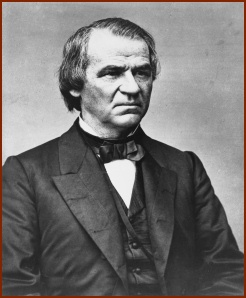 Johnson would later go on to near-total failure as President. He started Reconstruction on horrible footing, famously vetoing the Freedman’s Bureau: “This is a country for white men, and by God, as long as I am President, it shall be a government for white men.” He also blocked initial passage of the 14th Amendment (which includes the extremely important Due Process and Equal Protection Under the Law clauses). Real enlightened there, Andy…

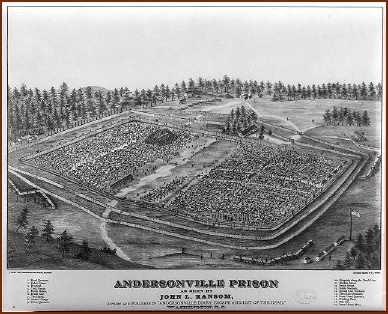
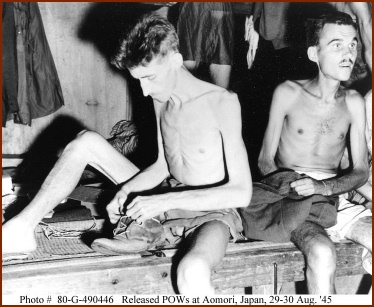
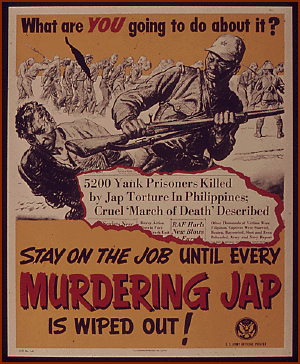 How is evil created? The answer: on purpose. Through dogma, or jingoism, or biased textbooks. By stating that the enemy are lesser creatures, creatures who would kill you given the chance, creatures less deserving of God’s grace, creatures who must be removed for the good of all. And then, by repeating that message over and over and over again, until the sheep-like masses buy into it, and agree. It’s hard to kill a fellow human being, but it’s easy to hate, torment, torture, and kill lesser creatures. So all you have to do is convince your people that “the enemy” are lesser than they, and your people will do your dirty work for you. Then you can go back to your secret retreat in the mountains and feast on banquets, or snog your high-priced whores, or choke on your pretzels, for you have created your own force of evil, ready to sacrifice their own humanity to the misfortune of the enemy.