Feeds:
Posts
Comments

Posts Tagged ‘history’

Ukraine

Three things I never thought I’d see in my lifetime: a global pandemic that would kill 6 million people worldwide; a non-peaceful transition of power between U.S. presidents; and a ground war in Europe.

These are three things I would have rather not seen.

I’ve been stewing and stewing on Ukraine for the past couple of days, as I suspect most of you have. I have some thoughts, some of them ugly. As always, I’m not a true historian nor a military expert, so go ahead and refute my positions in the comments.

Sanctions Need to Be Harsh & Broad

As I mentioned in my last post, war is hell. Over the past few decades, thanks to smart bombs and modern sympathies, we’ve come to believe in “war lite”: we can invade countries yet spare civilian casualties, and that makes us “better” somehow. These thoughts pervade the Biden White House today: let’s have targeted sanctions against oligarchs and Putin’s family, and call it a day.

What a bunch of bullshit. The Russian people are letting this happen*, they have to be convinced to end it. No more of this ‘targeted sanctions’ crap. Sanctions need to be broad-based and applied to the entire Russian economy. Cancel all Russian visas, send all Russian citizens without Green Cards or higher status back. Stop all artistic, scientific, and educational collaborations, immediately. Eject any official Russian teams from all international sporting events. Stop all trade with Russia (and Belarus, cuz fsck those guys). Sure, have exceptions for medical supplies and agriculture, that seems appropriate. But most importantly, stop energy trade and enact a SWIFT block. We have to hit them hard, make them (literally) pay for their actions.

The point is to bring enough economic pain that the Russian people demand Putin end hostilities. Russia has fallen to revolution before, just sayin’.

*I know that there have been intense anti-war protests in Russia. I’m talking about the broad-based public, who are, at best, apathetic to the whole thing.

Europe and America Needs to Be Strong

Americans and Europeans are soft. We’re pussies. 75 years of relative peace will do that to you. We like our gas-guzzling SUVs and McMansions heated to a comfy 72 degrees. We like our kale salads and brioche toast and $2.99 gallons of milk and stock market growth fueling our 401(k)s. Well, you know what enables all that great prosperity? Peace, that’s what. And Putin ruined all of that.

We have to be willing to take it on the chin to shut Putin down. What’s the alternative? More war? Is your 401K worth half a million casualties? What happens if we whimp out now and end up in a real war in three years? This bullshit needs to stop right now, and we have to stop being whiny pussies about gas prices.

Stop China Tariffs

Let’s offer an olive branch to China. In exchange for a condemnation of Putin’s actions and cooperation (or at least a public declaration of their neutrality) against Russia, offer to eliminate all of Trump’s anti-China tariffs. They were stupid anyway. That’ll help with supply chain and inflation problems, too. There’s a *serious* risk of a China/Russia alliance, and if that happens in earnest, we are seriously fscked. Let’s try to get ahead of the problem for a change.

On a related topic, remind the countries of the Arabian peninsula how we saved their collective asses from Iraq, and get them to take up the slack from any Russian oil embargo by upping their production. Bunch of ungrateful bastards.

Fire Up the Propaganda Machine

Is Radio Free Europe still a thing?

Let’s fire it up, using any media at our disposal. The message to broadcast to the Russian people? World War II killed 20 million Russians. War is bad for you. You need to stop. Just to put that number into perspective, that’s over 10% of the total population of the country at the time! Imagine if 34 million Americans died over a five year period. The Russians suffered more casualties than any other country in WWII. The Russian people know what death is, what war is, and they don’t like it. Remind them.

Open Up More Fronts

Time to ship arms to Georgia, Armenia, Azerbaijan. Let them kick up their rebellions, strengthen their own borders. Time to have serious talks to the various ‘Stans, remind then that Putin and Russia are anti-Islamic, and a clear threat to their own independence. These countries form 5,600 miles of borders with Russia, that’s an awful lot of threat for them to deal with (in contrast, the U.S./Mexico border is only 1900 miles).

Call Up the National Guard

Call them up. Right now. Prepare for war. Better to prepare for war and not have it happen, than have it happen without being prepared. Plus it’ll show we mean business. Make some noise. Get planes in the air. Time for some exercises.

Smack Down Collaborators

There have been a lot of K Street lobbyists working for Russia over the past few years. Let’s out those fsckers. Publish the names of their directors and their high-paid lobbyist staff. I implore all journalists to report these clowns, loudly and broadly.

Then there are the Russian collaborators in Congress, like the shitheels who traveled there on the 4th of July, 2018, to kiss the ring. Get their names out. Nothing like a good public shaming.

  • John Kennedy (R-LA)
  • Richard Shelby (R-AL)
  • Steve Daines (R-MT)
  • John Hoeven (R-ND)
  • John Thune (R-SD)
  • Jerry Moran (R-KS)
  • Ron Johnson (R-WI)
  • Kay Granger (R-TX)

There are more of these bozos out there. Shame them all.

Finally, can we please, for the love of God, stop platforming Putin’s ultimate Tangelo Toadie. FFS, I’m sick of hearing from that guy. He’s a goddamned traitor and deserves to be treated as such.

This Sucks

None of this should be happening. It’s madness. It’s stupid. It’s goddamned outrageous. But, here we are. It should come as no surprise. I’ve come to a general conclusion that we’ve had (relative) peace for so long, we’ve had economic growth for so long, we’ve had it so good for so long, we’ve all forgotten what true hardship, true famine, true catastrophe, true war, really is.

I’ve often said that the only reason the world is turning back to fascism and autocracy is because all the heroes of World War II, and all the victims of the Holocaust, are dying off. 25 years ago, when these people were alive and in charge, none of this shit would have even been possible. Today, they’re all gone, and all we have is History Channel war fetishism, social media disinformation campaigns, and growing prejudice and tyrannical thought (FFS, book burnings are back!!). So, we’ve gone around full circle. War, tyranny, injustice, persecution: it’s all back. In full force.

The question is: are we brave enough to stop it? Or are we too concerned about our 401(k)s?

Read Full Post »

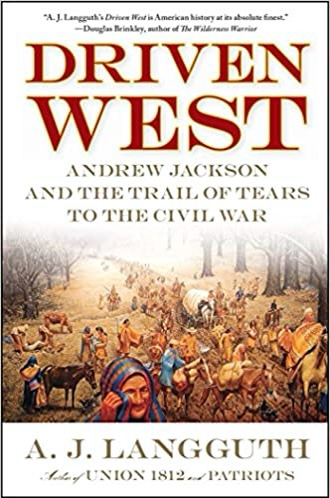
One of the first history books I read for my own enjoyment was A. J. Langguth’s 1988 work, Patriots: The Men Who Started the American Revolution. I enjoyed that book immensely, Langguth does a good job narrating the sequence of events leading up to American independence after the Battle of Yorktown, and how the Founding Fathers shaped those events.

Langguth’s style is to dedicate each chapter to an individual as they affected events. Patriots, for example, starts off with a chapter devoted to James Otis, the Boston lawyer who spoke against bogus British practices in 1761. It then rolls from statesman to statesman, as Langguth relates the iconic tales of American rebellion. It’s a good book, I recommend it to anyone wanting to learn about the Revolution beyond a high-school level.

That format works for a book about individuals, like Patriots. Driven West, however, isn’t that kind of book. It’s trying to tell the story of a great travesty: the uprooting of thousands of native peoples from their homelands in the Deep South, and their deadly relocation to the parched scrublands of Oklahoma. This is not a story about personalities, it’s a story of betrayal and trauma and sadness and death. Sadly, Mr. Langguth didn’t shift gears to a style that would suit this type of material.

He dedicates chapters to the titular 7th President, a man synonymous with native oppression. He dedicates chapters to Henry Clay, who opposed Indian relocation throughout most of his career; to Major Ridge, a key Cherokee negotiator; to Sequoyah, the creator of the written Cherokee alphabet; and a few others. It’s not like the cast list is any less stellar than during any other event in history, it’s just misplaced for the topic at hand.

The story of the Trail of Tears isn’t a tale of presidents and congressmen and chieftains. It’s a story about the 60,000 people who were uprooted from their homes; of the estimated 10,000 who lost their lives as a result; and of the decades and decades of oppression of the native peoples that followed. Focusing on individual personalities throughout this book cuts the philosophical and emotional core out of the story. Langguth spends barely a third of a chapter on the marches themselves, or of the trauma faced by thousands of faceless refugees as they lost their homes. I think the book suffers from this lack of attention. This is not a cry for schmaltzy heart-string tugging, this is a statement that a good writer needs to find a narrative style that suits the core of the story. A personality-driven story works for the Revolution, it doesn’t work for the Trail of Tears.

The book still contains a lot of value. There are many tidbits of this episode that Americans don’t know. Langguth covers tribal ownership of slaves, a travesty on top of a tragedy. He covers the massive inter- and intra-tribal infighting, up to and including murder, that occurred throughout the era. He covers all the back room shenanigans and profiteering that undercut any last smidgeon of decency in the whole wretched affair. And he covers the often-forgotten stories of Cherokee support for the Confederacy in the Civil War. All of these are useful, insightful additions to the book, and worthy of discussion.

Driven West provides thorough coverage of a sordid era of the nation’s history. Sadly, it misses the proper, emotive link to the true heart of the tale.

Read Full Post »

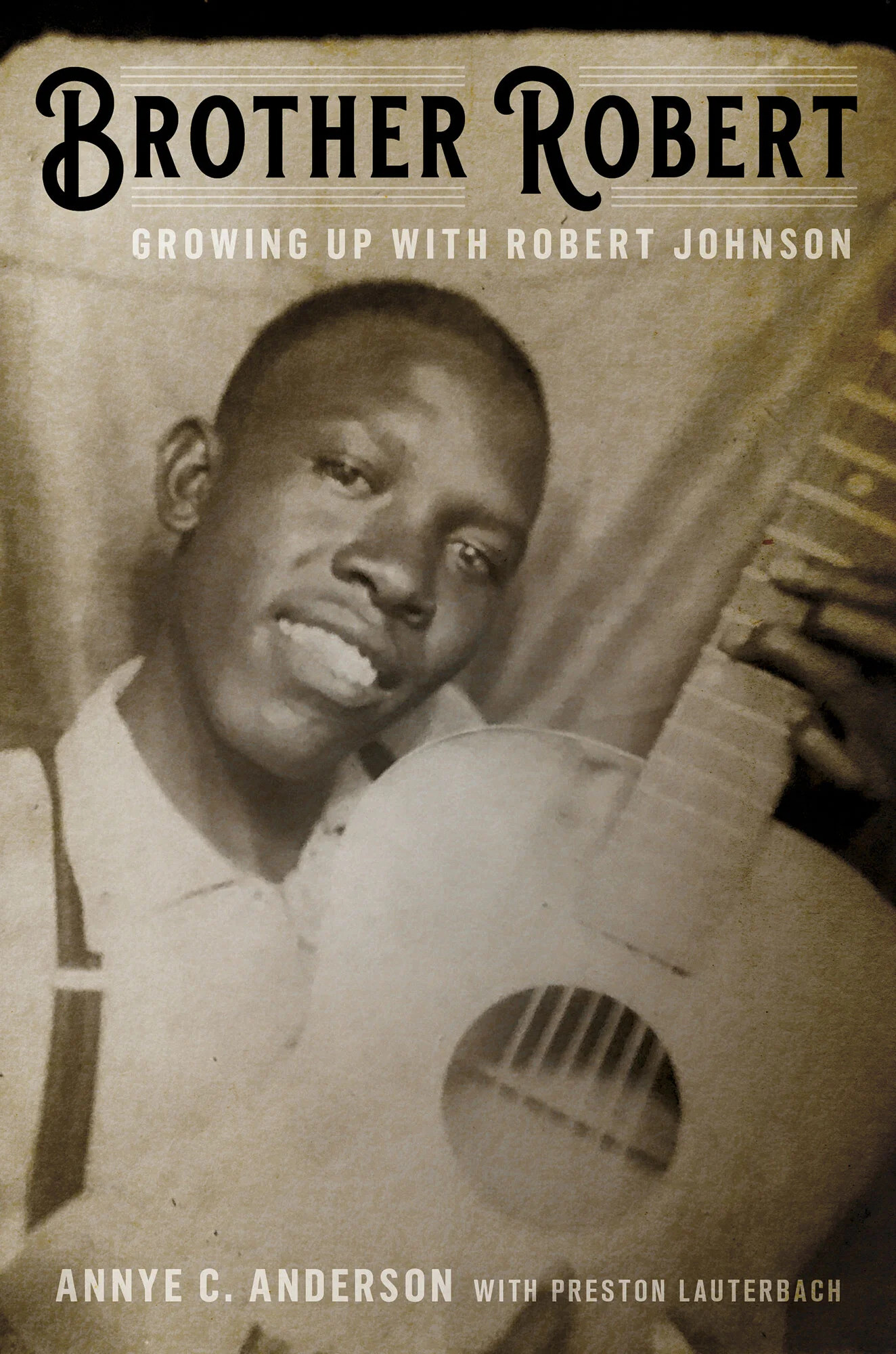
Who would’ve thought Robert Johnson’s step-sister, a person who personally knew the famed blues guitarist, would still be alive? Who would’ve thought that person — his step-sister, 94-year-old Annye Anderson — would today reside in Amherst, Massachusetts? And who would’ve known that she would still have the faculties, and ability, to tell intriguing stories of perhaps the most important American musician in history?

Robert Johnson, who died in 1938, is still quite an enigma. He’s a larger-than-life figure who, legend says, sold his soul to the devil in exchange for writing the best blues songs in history. Johnson was a vagabond, a hobo, a showman, a visionary, and (according to some) the most important guitarist to ever exist. Johnson single-handedly re-invented the blues, and provided the musical DNA that evolved into rock & roll, inspiring acts from the Stones to Led Zeppelin to Cream, Fleetwood Mac, Bob Dylan, and more. The devil met him at the crossroads, and together they changed the world.

To Mrs. Anderson, well, he was Brother Robert.

Brother Robert cuts right through all the mythical nonsense, and tells as much of the true story of Robert Johnson as one will ever read. She knew him, knew his roots, knew what he liked (Jimmy Rogers yodeling, for one), and what kind of man he was. Although she never knew how he died, or where he’s buried (beyond the various rumors), she does know how shady lawyers and the general music industry tried to screw her family out of any royalties from his work, about how fraudulent “descendants” tried to sneak their way into the legends (and the profits), and the pain all these dealings caused other members of her family.

None of that stuff, however, makes this book special. The heart of this book is Mrs. Anderson’s recollections of life in Jim Crow, Depression-era, Memphis, Tennessee. She tells stories of a hardscrabble life, where everyone worked every possible job imaginable to make some money to feed their families. She tells stories of moving in the dead-dark of night, the only way for a black man to survive when accused of pestering a white woman. She tells stories of juke joints and sewing circles and church socials and life of a long-dead era. This is a first-hand account of life lived well in a very dark time, and the way it both brought her family together and tore it apart.

Brother Robert is an engaging read, and highly recommended.

Read Full Post »

Family Time

I’m a solo traveler, especially on my national park trips. I’m a spectacular hermit; but also my friends and family have other hobbies and interests, and simply don’t share my enthusiasm for American history and the natural world. It’s OK, though. I find solitude enables greater opportunities for observation, reflection & understanding.

When I went to visit JFK’s birthplace, however, I switched things up, and made a conscious decision to share the experience. I took my mom.

It wasn’t just because I thought she’d enjoy the trip, it was also because I wanted to hear what it was like to live during the vaunted “Camelot” era. JFK was  the first  modern-day celebrity president, and I wanted to know what that was like. John and Jackie’s superiority in handling themselves on television changed everything about campaigning, getting elected, and serving in the highest office in the land. Suddenly, it became less about stump speeches, shaking hands, working the political machinery, and back-room deals. It became more about media savvy.

The tales of Camelot have entered into American legend. JFK’s photogenics destroyed Richard Nixon in the presidential debates. He then became the second youngest person to ever take office. Jacqueline Kennedy was charming and pleasant, with impeccable fashion sense. As a couple, the Kennedys were hip and new, and gave the promise of a bright future. 

5375F7E8-155D-451F-67966F3A9B6BE810HiResProxy

Funnily enough, my mom didn’t have too many stories about the Kennedy era. Neither her nor my father were political types, rarely turning on the news and never talking about it at the dinner table. The only thing she talked about was the shame of the assassination, and how it saddened the whole nation. She talked a lot about the funeral, and how Jackie held up with such grace through it all. 

Then she told me about how she met JFK. 

When she was in high school, she worked on the school paper. A young John Kennedy, then Congressman John Kennedy, was running for the Senate, and touring the state, trying to drum up votes. He came to Western Massachusetts, quite likely just once (the western part of the state rarely gets much attention from Boston). So the high school paper decided to go meet him for some photo ops. 

My mom went with three other girls from her class. The photographer asked the other three to step out of frame because, as my mother said, “they weren’t pretty enough”. [Note: her intonation suggested the photographer was a bit of a perv.] She then had her picture taken, which was published in the paper later that week.

Being a typical high school girl, she was unhappy with how her hair looked, so she never kept a clean copy of the photo. Fortunately, the local paper still had the photo in their archives, and she was able to get a decent copy. 

Mom and JFK

It’s been many years since we went to JFK’s boyhood home in Brookline. She enjoyed the trip, and had fun reminiscing. Today, she can’t get around quite like she used to, her days of travel are long over. She’s seen quite a bit in her years: the Great Depression, World War II, the Civil Rights Movement, Watergate, 9/11, a global pandemic, and now an insurrection. She’ll be 87 in a few weeks, still doesn’t like talking about politiecs and, woefully, is not happy with how her hair looks.

Read Full Post »

« Newer Posts - Older Posts »