Next week, President Obama will be giving the first State of the Union speech of his second term. I’ve listened to a lot of SotU speeches over the years, and after a time, they all sound the same. The same beats, the same phrases, the same patters and pauses and phony applauses. That’s why SotU Bingo is so popular, everyone knows it’s just a big bag of phony.
The sentence that always gets my dander up is “The state of our union is strong!” Obama said it, Bush said it, Clinton said it, even Roosevelt said it (with a slightly different phrasing). But when you look at it, right now, in the world in which we currently live, it actually isn’t. No politician will ever have the courage to say it, but in my opinion it needs to be said. Just as a man will never get out of the rut he is in as long as he is lying to himself, so too will a nation never get out of its rut unless it is honest with itself.
I would love for President Obama to give a State of the Union speech that brings out a level of harsh, basic, patent honesty that will truly shake up this country. Something, perhaps, like this:
—————-
“Mr. Speaker, Mr. Vice President, members of Congress, distinguished guests, and fellow Americans: today I come to you, as President and in accordance with the traditions of the office and my duties as defined in Article II, Section 3 of the U.S. Constitution, to address this body and this nation on the state of our union.
“For two hundred and twenty-three years, Presidents have delivered addresses, in writing or in person, to this assembled body. For two hundred and twenty-two years, Presidents have declared that “the state of our union is strong”. Through war, recession, and catastrophe, presidents have continued to maintain that the nation is strong and we can work through any peril that may face us. I, too, believe that this nation can strongly and bravely face any external peril, be it foreign aggression, economic tribulation, or the hazards of climate and nature. However, the one thing that can harm this country, and that harms this country today, comes from within. We can not be defeated, but we can defeat ourselves.
“The strength of this nation comes from the strength of our ideals and the strength of our citizens. That much is undoubtedly true, and based on those factors alone, I could easily stand here before you and say “our country is strong”. But this type of strength is not enough to make for a strong UNION. A strong nation not only requires a citizenry of high character and strength, but a government that can perform those functions necessary to bring stability, justice, safety, and peace. Unfortunately, we do not have such a government, and that is keeping this nation from truly being great in this 21st century.
“Our Founders had the wisdom and foresight to create a fabulous document, the first written democratic Constitution in the history of mankind, a document that specified an amazing notion: the idea of three branches of government and the separation of powers. Put in the context of the span of human civilization, this was a magnificent creation! A chief executive, a notion existing since the dawn of humanity, providing leadership, especially in times of crisis or war. An independent judiciary, answerable only to the law and the principles upon which the group was founded, ensuring justice is applied evenly and fairly. And a legislature, the representatives of the people, giving a voice to all the members of the group in the decisions that are made. These three branches form the strength of a triangle, and, like a three-legged stool, when one is weak, the whole thing topples.
“Ladies and gentlemen, this nation is a three-legged stool wobbling on the weakness of one. We have a situation where one branch is failing this nation, and their failure is putting the entirety at risk. This Congress, this assembled body, is in a state of disarray the like this nation has not seen since the day Charles Sumner was caned on the floor of the Senate in 1856. This chaos is keeping this country back. It is holding our economy hostage. It is preventing the honest exchange of ideas. It is interrupting the wheels of justice. It is not capable of providing the necessary oversight to prevent Executive Branch overreach. It is engaging in a level of hostility that is inspireing division amongst the people. It is acting in a way unbecoming to the intent and purpose of Article 1 of the Constitution, and is an embarrassment to the people of these United States and to the free nations of the world.
“We have a Congress that cannot perform its most basic of duties. We have a Congress that cannot propose, much less adopt, a budget. We have a Congress that cannot confirm federal judges, leaving an overwhelmed judiciary. We have a Congress that forces the Chief Executive to invent clever ways to circumvent it because they are incapable of action. We have a Congress that, on the one hand, decries something as evil and demands action, yet on the other neuters the very agency designed to do it. This is a Congress that does not even allow the free discussion of ideas within its own halls, a body whose very rules allow an anonymous few to squelch even discussion of a topic! Regardless of political philosophy, right or left, the suppression of debate is fundamentally, morally, ethically WRONG and the Senate ought to be ashamed of itself for even having those rules. And the House isn’t much better: the majority party will only discuss things THEY want to discuss, to the detriment of fair and open discussion.
“Ladies and gentlemen of this Congress: this country needs a working legislative branch. It cannot function without it. Without a functioning legislature, we have uncertainty. We have doubts about our future. Nothing cripples a society like an uncertain future. We also have injustice, the injustice resulting from the silencing of open debate. This Congress, those of you assembled here, have duties. You have responsibilities, and you took oaths of office, sworn upon Bibles and Torahs and the Bhagavad Gita. Your oath compels you to serve this nation and the Constitution of the United States, not your party, not your ideology, not your favorite radical talk-show host or blogger, and certainly not the lobbyist who frequents your office on a daily basis. You need to serve your country and the Constitution. But you are not doing so, and judging by polls taken across the country, the people know this and are judging you poorly for it. This body needs to get to work, doing the people’s business, not perpetuating your own petty feuds.
“This Congress has a job to do, and needs to begin immediately. Propose and pass a valid budget. Vote on the appointments before you, ESPECIALLY the judicial appointments. Begin open and honest debate on the issues before you, and allow them to come before a vote. Eliminate any and all rules that allow anonymous blocks of any debate or appointment. Tackle the gun issue head on, free up the CDC to study the issue with scientific methods and allow the ATF to enforce the laws that you’ve passed OR repeal those laws if they’re too invasive, just don’t let them remain in the worthless state they’re in. Tackle climate change head on with honest, scientific debate, free from those who would skew such debate with lies and deception. Tackle this economy head-on by passing tax and regulatory reforms you deem necessary, and make them long-lasting so our business community knows there will be stability in our economy. Stop the pointless bickering over the debt ceiling, that is a fabricated issue and you know it. And get the lobbyists out of your offices and into the gallery with the rest of the citizens of the country. They are no better than the average person simply because they have large purse strings. And if there are members of this institution who find themselves incapable of performing their duties and fulfilling their oaths, then at least have the decency to step aside, retire, and allow another to take your place.
“This nation cannot survive and thrive with a malfunctioning government. We need a competent and honest Congress. Please give us one. Thank you, good night, and God Bless America. ”
—————-
Yeah, won’t happen. We’ll have more platitudes and more “mystery guests” in the balcony and more standing ovations of the same applause lines we’ve heard time and time again. Entropy will continue, and things will get worse, until either the next great leader, or the next great crisis, comes along and gives us the impetus to change our ways.
[Editted to include an oversight on “executive branch oversight”. Was intended to be part of this post but was missed.]



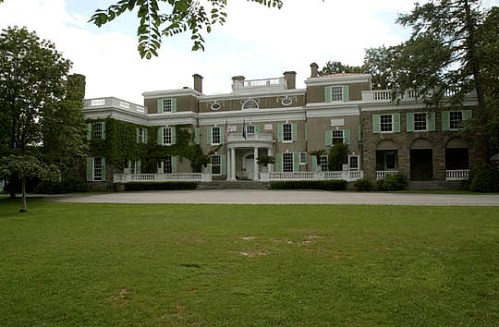
 I find this utterly fascinating. Sure, pundits & partisans would complain about the economics of the New Deal and the court packing scandal, but FDR had to be dead 60 years before the common man started questioning his Presidency and leadership. That’s almost three generations! I can’t think of anyone short of George Washington and perhaps Thomas Jefferson who escaped such criticism for so long. The people of FDR’s time had to basically die before public opinion turned against him. Today, we decry the previous loser the day after Election Day.
 Here’s my own take on why Roosevelt inspired such devotion: he had the “perfect storm” of confidence, communication, competence, and empathy. His family, especially his mother, Sara, gave him a good education and instilled in him a measure of self-confidence absolutely required of a good leader. FDR was a great communicator. His speeches are the stuff of legend and they were delivered, not as oratory, but as conversation, meaning they were genuine. Was FDR competent? Sure, you could say his policies weren’t necessarily wise, but he got them done. People respect people who get things done, action is rewarded far greater than thought or bearing. And FDR did accomplish an awful lot in his 12 years as President.


 America In Context