Feeds:
Posts
Comments

Posts Tagged ‘history’

Tales of Infinite Sadness

I started my expedition through all the units of the National Park System to satisfy my fascination with all aspects of nature (flora, fauna, geology, aquatics, atmospherics). I did not expect to quickly fall in love with the other side of the parks: the historical side. As I began to tour each of those smaller sites, reading up on the history of each and their placement in the overall scheme of things, I also began to see the Great American Narrative forming, piece by piece, and was inspired to blog about it. It is only by seeing all these bits and pieces, filling in all the gaps created by our own, pufferied view of history, can one really see who we are and what we’re all about.

Yes, we are writing the Great American Narrative. And oh, what a narrative! We have heroes and villains, success and failure, trauma and reprieve, disaster and rebuilding, winning and losing. But through it all, there is something that is clear: we are making forward progress. Oh, sure, we’ve had setbacks. Right now, between lingering recession, erosion of certain civil liberties, the War on Terror and a culture that pits right against left in a Kobayashi Maru of political degradation, it feels like we’re going backwards. But really, we’d have a long way to go before we fall back to where we’ve been. Think about it: there’s no way any of our founding fathers would ever have imagined us having a half-black President. Like him or not, that’s a massive advancement from our formation over 225 years ago, when we held nearly 700,000 souls in lifelong bondage (a number that would swell to nearly 4 million by the time the War of Emancipation).

OK, so maybe progress is a little stalled …

That’s the interesting part of the Great American Narrative: we always seem to come out ahead, one way or another. The slaves were freed, but then they had to suffer through Jim Crow segregation, racial discrimination, institutional poverty, entrapping government subsidy programs, and bad educational systems, yet are finally coming out the other side. Sure, we’re not post-racial yet, but you can tell we’re really, really close (I’m guessing one more generation and we’re done with it — the recent Trayvon Martin murder debacle notwithstanding). Women also have made gains, from being the Great Unseen to becoming the major breadwinner in 40% of households and damn near winning the Presidency themselves. We’ve seen advances everywhere else, from sanitation & health to science & technology to occupational safety and even how we treat our children. Yep, we’re winning everywhere.

Well, we’re winning everywhere, unless you’re talking about the American Indian. When it comes to the Native American, there are no tales of victory. There is no Appomatox. There is no Seneca Falls or Nineteenth Amendment. There is no VE Day or the fall of a Berlin Wall. There is no eonomic security or energy independence. When it comes to the Native American, there is only one narrative, and that is a long tale of misery and betrayal and hardship and defeat and pain and infinite sadness.

The Parks reflect this in spades. Every park has some tiny, preamble segment of its visitor center museum dedicated to “early inhabitants”: always some native tribe who “lived off the land” only to, inevitably, be driven out of their homeland, be defeated in battle, be wiped out by some disease or pushed into starvation through overhunting or economic blockade. The lucky would be stuck on some downtrodden reservation, their pride replaced by the plagues of alcoholism, obesity and diabetes.

rez_house

North Dakota reservation house, circa 2009

Horseshoe Bend is just one of hundreds of chapters in this sad, sordid book of misery. In this case, it is a tale pitting one side (the Cherokee tribal nation) against the other (the Creek) for the benefit of the middle (white Southerners). This particular Creek tribe wanted to keep their lifestyle and land and resisted American assimilation. White European settlers wanted the land for their own expansion. The Cherokee were allies of the U.S. and joined up with the militias of several states (led by future New Orleans hero and President, Andrew Jackson) to take Creek land through “justifiable” retaliation for some Creek raids on farms and forts throughout Alabama. The Creek, despite fortifications that impressed even Old Hickory, were eventually surrounded and horribly defeated. Out of a thousand Creek warriors, only about 200 escaped to south Florida to join up with the Seminoles. They had to surrender 23 million acres of land to Alabama and Georgia (2 million of which would go to the same Cherokee who turned their back on their brethren). It would end up being a short-loved victory for the duplicitous Cherokee: within 25 years those same people were expelled from Georgia & Alabama and forced to march down the Trail of Tears to dusty, infertile Oklahoma, where they would lead a hardscrabble life for generations. In the end, the only victor would be the white Europeans who used trickery, deception and long-standing inter-tribal rivalries to defeat the natives and take their land.

1b-002-ss-07-egander_lg

Only those with the bleakest heart can travel through Horseshoe Bend and the rest of the 400+ units of the National Park Service, and not be touched by the Tales of Infinite Sadness of the Native American.

[Unfortunately, I did not own a digital camera when I visited Horseshoe Bend.]

=========================

Links:

Horseshoe Bend National Military Park
Creek-Cherokee War

Scientific analysis of the demise of the Native American

Google map of Horseshoe Bend

Read Full Post »

Next week, President Obama will be giving the first State of the Union speech of his second term. I’ve listened to a lot of SotU speeches over the years, and after a time, they all sound the same. The same beats, the same phrases, the same patters and pauses and phony applauses. That’s why SotU Bingo is so popular, everyone knows it’s just a big bag of phony.

The sentence that always gets my dander up is “The state of our union is strong!” Obama said it, Bush said it, Clinton said it, even Roosevelt said it (with a slightly different phrasing). But when you look at it, right now, in the world in which we currently live, it actually isn’t. No politician will ever have the courage to say it, but in my opinion it needs to be said. Just as a man will never get out of the rut he is in as long as he is lying to himself, so too will a nation never get out of its rut unless it is honest with itself.

I would love for President Obama to give a State of the Union speech that brings out a level of harsh, basic, patent honesty that will truly shake up this country. Something, perhaps, like this:

—————-

“Mr. Speaker, Mr. Vice President, members of Congress, distinguished guests, and fellow Americans: today I come to you, as President and in accordance with the traditions of the office and my duties as defined in Article II, Section 3 of the U.S. Constitution, to address this body and this nation on the state of our union.

“For two hundred and twenty-three years, Presidents have delivered addresses, in writing or in person, to this assembled body. For two hundred and twenty-two years, Presidents have declared that “the state of our union is strong”. Through war, recession, and catastrophe, presidents have continued to maintain that the nation is strong and we can work through any peril that may face us. I, too, believe that this nation can strongly and bravely face any external peril, be it foreign aggression, economic tribulation, or the hazards of climate and nature. However, the one thing that can harm this country, and that harms this country today, comes from within. We can not be defeated, but we can defeat ourselves.

“The strength of this nation comes from the strength of our ideals and the strength of our citizens. That much is undoubtedly true, and based on those factors alone, I could easily stand here before you and say “our country is strong”. But this type of strength is not enough to make for a strong UNION. A strong nation not only requires a citizenry of high character and strength, but a government that can perform those functions necessary to bring stability, justice, safety, and peace. Unfortunately, we do not have such a government, and that is keeping this nation from truly being great in this 21st century.

“Our Founders had the wisdom and foresight to create a fabulous document, the first written democratic Constitution in the history of mankind, a document that specified an amazing notion: the idea of three branches of government and the separation of powers. Put in the context of the span of human civilization, this was a magnificent creation! A chief executive, a notion existing since the dawn of humanity, providing leadership, especially in times of crisis or war. An independent judiciary, answerable only to the law and the principles upon which the group was founded, ensuring justice is applied evenly and fairly. And a legislature, the representatives of the people, giving a voice to all the members of the group in the decisions that are made. These three branches form the strength of a triangle, and, like a three-legged stool, when one is weak, the whole thing topples.

“Ladies and gentlemen, this nation is a three-legged stool wobbling on the weakness of one. We have a situation where one branch is failing this nation, and their failure is putting the entirety at risk. This Congress, this assembled body, is in a state of disarray the like this nation has not seen since the day Charles Sumner was caned on the floor of the Senate in 1856. This chaos is keeping this country back. It is holding our economy hostage. It is preventing the honest exchange of ideas. It is interrupting the wheels of justice. It is not capable of providing the necessary oversight to prevent Executive Branch overreach. It is engaging in a level of hostility that is inspireing division amongst the people. It is acting in a way unbecoming to the intent and purpose of Article 1 of the Constitution, and is an embarrassment to the people of these United States and to the free nations of the world.

“We have a Congress that cannot perform its most basic of duties. We have a Congress that cannot propose, much less adopt, a budget. We have a Congress that cannot confirm federal judges, leaving an overwhelmed judiciary. We have a Congress that forces the Chief Executive to invent clever ways to circumvent it because they are incapable of action. We have a Congress that, on the one hand, decries something as evil and demands action, yet on the other neuters the very agency designed to do it. This is a Congress that does not even allow the free discussion of ideas within its own halls, a body whose very rules allow an anonymous few to squelch even discussion of a topic! Regardless of political philosophy, right or left, the suppression of debate is fundamentally, morally, ethically WRONG and the Senate ought to be ashamed of itself for even having those rules. And the House isn’t much better: the majority party will only discuss things THEY want to discuss, to the detriment of fair and open discussion.

“Ladies and gentlemen of this Congress: this country needs a working legislative branch. It cannot function without it. Without a functioning legislature, we have uncertainty. We have doubts about our future. Nothing cripples a society like an uncertain future. We also have injustice, the injustice resulting from the silencing of open debate. This Congress, those of you assembled here, have duties. You have responsibilities, and you took oaths of office, sworn upon Bibles and Torahs and the Bhagavad Gita. Your oath compels you to serve this nation and the Constitution of the United States, not your party, not your ideology, not your favorite radical talk-show host or blogger, and certainly not the lobbyist who frequents your office on a daily basis. You need to serve your country and the Constitution. But you are not doing so, and judging by polls taken across the country, the people know this and are judging you poorly for it. This body needs to get to work, doing the people’s business, not perpetuating your own petty feuds.

“This Congress has a job to do, and needs to begin immediately. Propose and pass a valid budget. Vote on the appointments before you, ESPECIALLY the judicial appointments. Begin open and honest debate on the issues before you, and allow them to come before a vote. Eliminate any and all rules that allow anonymous blocks of any debate or appointment. Tackle the gun issue head on, free up the CDC to study the issue with scientific methods and allow the ATF to enforce the laws that you’ve passed OR repeal those laws if they’re too invasive, just don’t let them remain in the worthless state they’re in. Tackle climate change head on with honest, scientific debate, free from those who would skew such debate with lies and deception. Tackle this economy head-on by passing tax and regulatory reforms you deem necessary, and make them long-lasting so our business community knows there will be stability in our economy. Stop the pointless bickering over the debt ceiling, that is a fabricated issue and you know it. And get the lobbyists out of your offices and into the gallery with the rest of the citizens of the country. They are no better than the average person simply because they have large purse strings. And if there are members of this institution who find themselves incapable of performing their duties and fulfilling their oaths, then at least have the decency to step aside, retire, and allow another to take your place.

“This nation cannot survive and thrive with a malfunctioning government. We need a competent and honest Congress. Please give us one. Thank you, good night, and God Bless America.

—————-

Yeah, won’t happen. We’ll have more platitudes and more “mystery guests” in the balcony and more standing ovations of the same applause lines we’ve heard time and time again. Entropy will continue, and things will get worse, until either the next great leader, or the next great crisis, comes along and gives us the impetus to change our ways.

[Editted to include an oversight on “executive branch oversight”. Was intended to be part of this post but was missed.]

Read Full Post »

Boring Built America

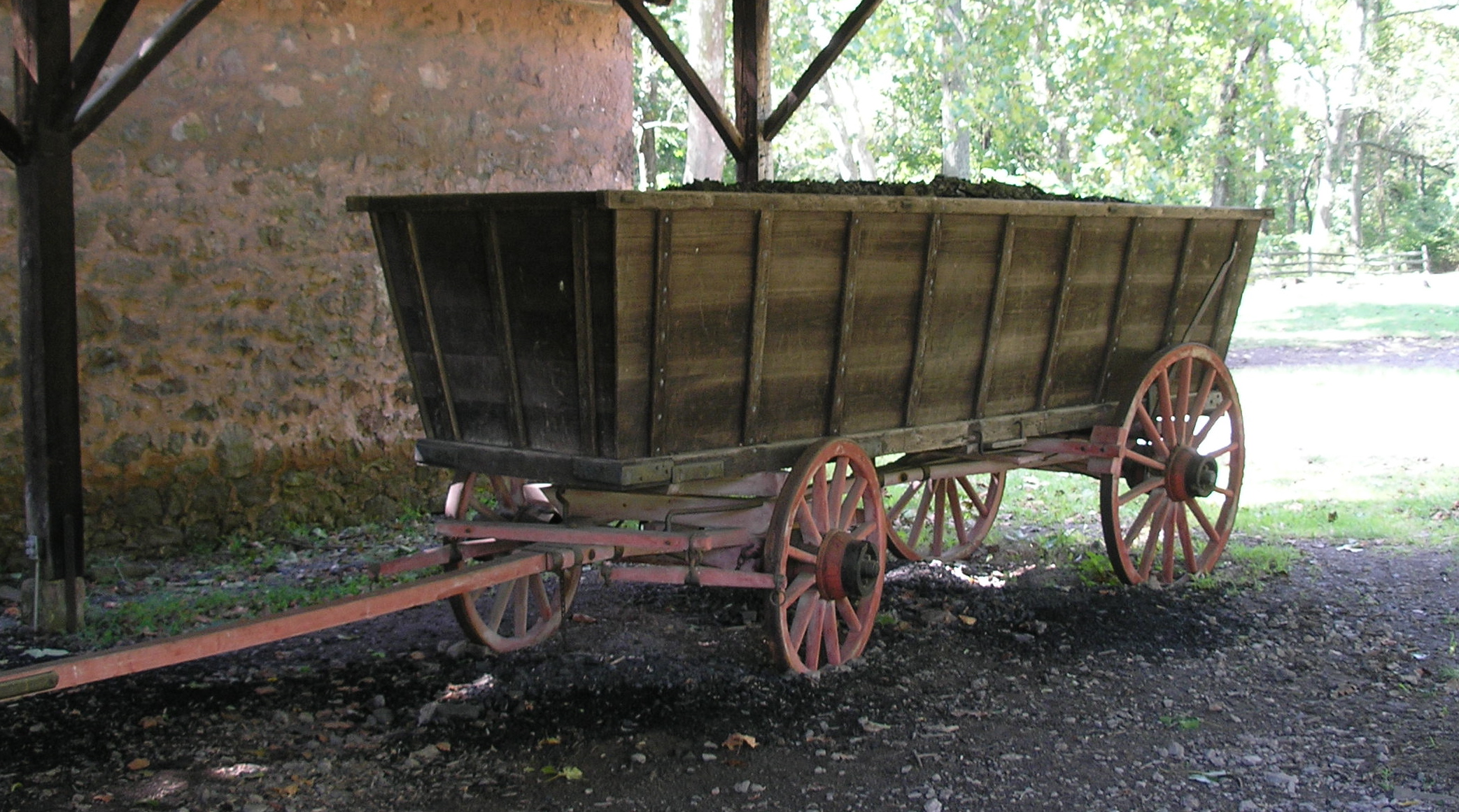
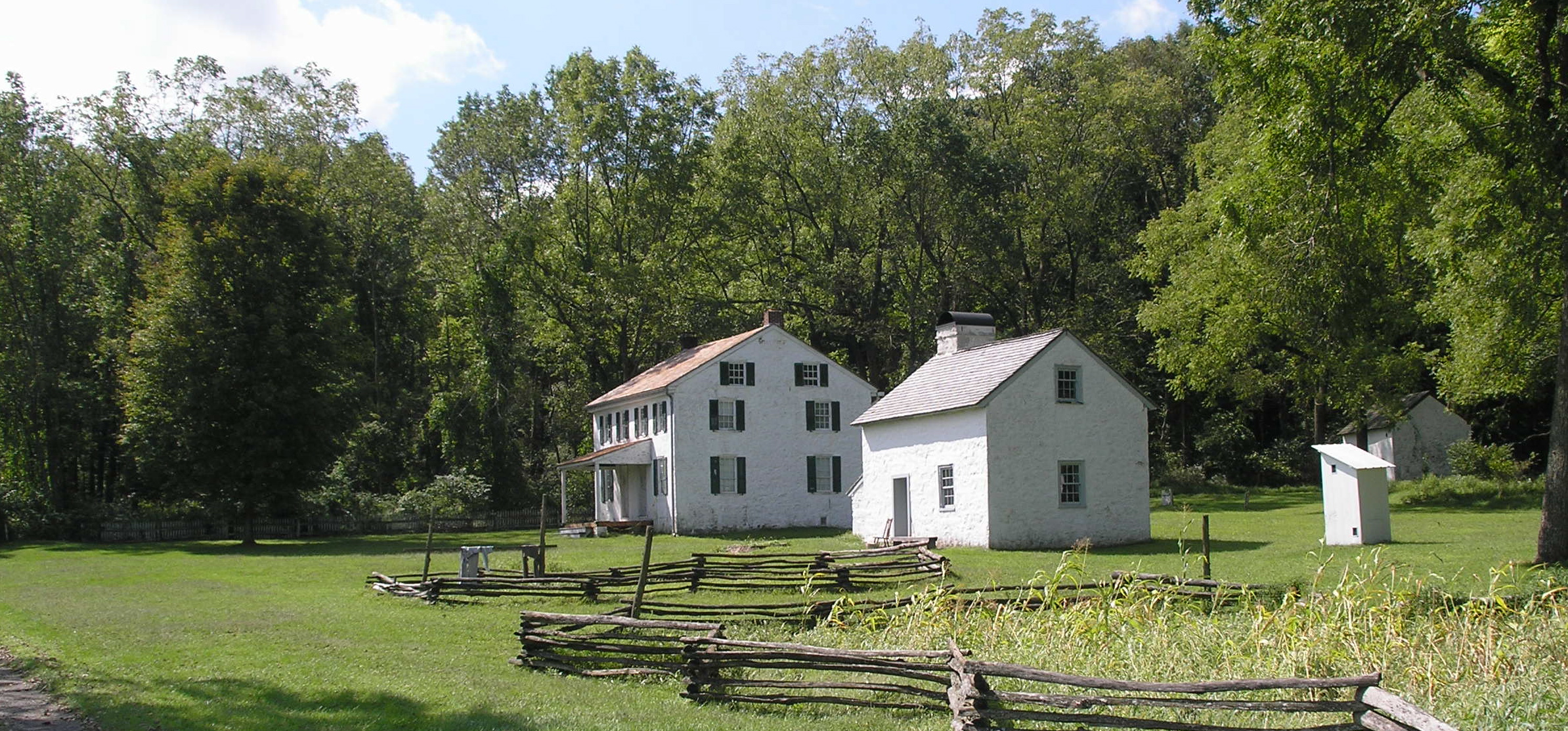
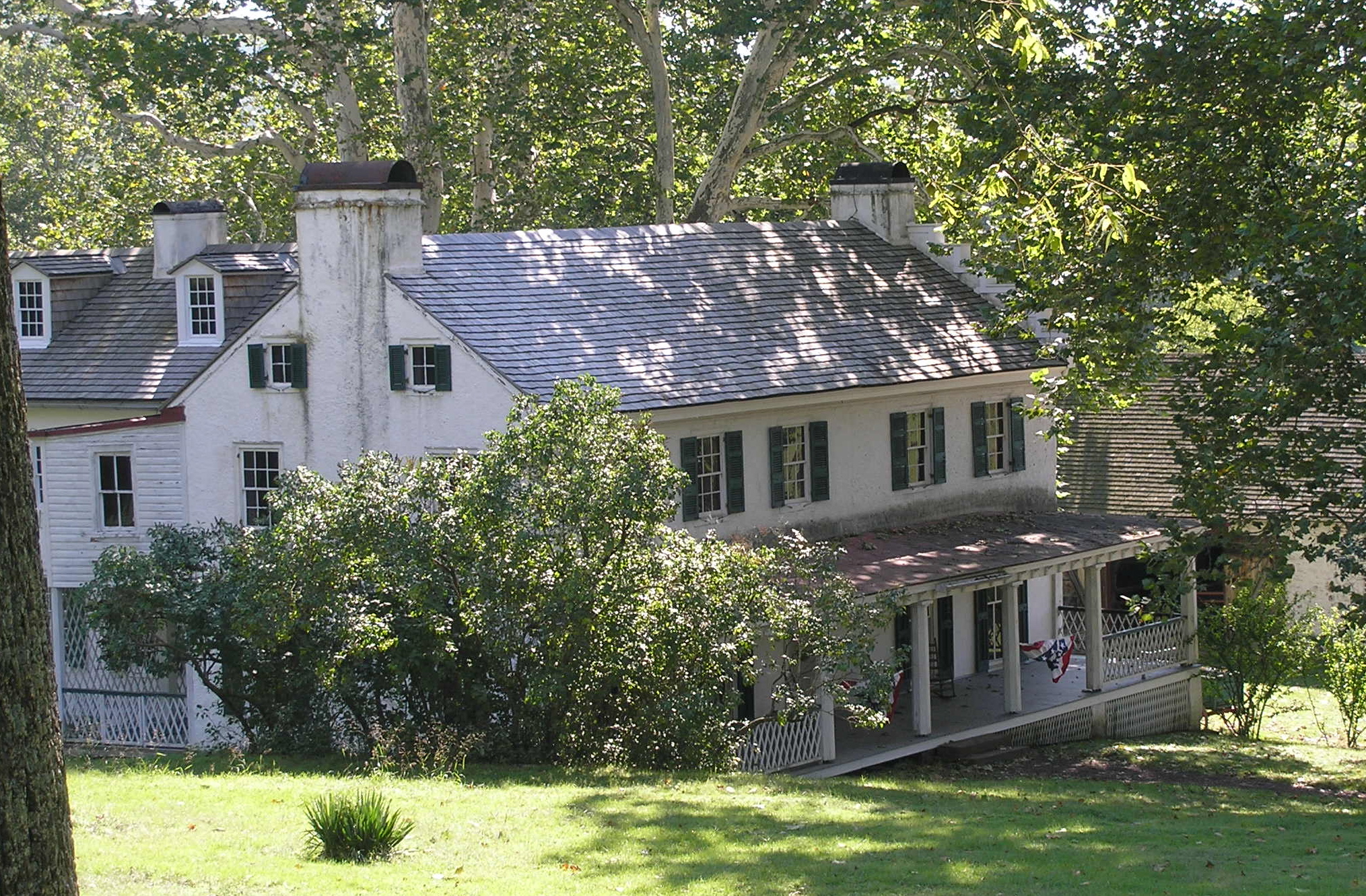
The National Park Service has a couple hundred small, unimposing, mundane historic sites spread all over the country. They don’t cover events of magnitude, like Pickett’s Charge or the Gold Rush or the battle of the Alamo, but they are loved by their local communities and tell important stories nonetheless. Hopewell Furnace, in rural south-central Pennsylvania, tells one such story: mundane, boring, but vital.

Hopewell was an early ironworks, a forging business operating in  the late 18th, early 19th centuries. There, you can learn how charcoal was made; how limestone was harvested; and how those two materials were combined in a blast furnace with raw ore to form iron, the metal that transformed the world. Mundane & boring? Sure. Hopewell is well-maintained, the people are pleasant, the visiting children seemed to like it, but it isn’t particularly exciting. But you know what? Boring isn’t so bad: it built and defended this nation for over 200 years now.

It shouldn’t be too great of a leap to understand that iron built America. We look at the musket-carriers of the Revolutionary War with great reverence, but if it wasn’t for places like Hopewell, there would be no iron or steel for the musket barrels, wagon wheels, and cannons. We were in the early days of being an industrial juggernaut, producing 30,000 tons a year at the beginning of hostilities. Iron built the weapons that fought off enemies, shot at brothers, and conquered new territory. But it didn’t stop there. Iron built the railroads, and the great engines that rode on them. Iron built the ocean liners that shipped our goods everywhere in the world. Iron built the buildings and skyscrapers that housed finance, engineering, science, and even religion.

Yes, it’s all very poetic. What’s not poetic is how mundane it all is. Hundreds of men crawled around in mines, breathing in noxious fumes and dust and working themselves to the bone to extract ore. Dozens more gathered wood and endured the laborious process of turning wood into charcoal. Others dug limestone from cliff faces. Then there were the oxcart drives and teamsters, hauling stuff to and fro. Awfully boring, awfully dangerous, awfully hard work, all necessary to the production of iron at Hopewell Furnace.

But that’s what built this country. Not politicians, not “captains of industry”, not wealthy elitists, nor Harvard graduates or published authors or generals or soldiers or even architects. All of those occupations are worthless without real people doing real boring, mundane, uninteresting, hard work. Even today, it’s the trades who continue to build stuff. Whether they live & work in Pennsylvania or Mexico or China, today the entire world is built by the hard working folks doing the most boring of tasks over and over and over.

Next time you’re bored, remember: boring built America. And if you’re going to do something boring & monotonous, at least make it worthwhile to someone.

[All pictures are mine and thusly copyrighted. A few more, in black & white, are here.]

==================================

Links:

Hopewell Furnace National Historic Site

A Brief History of Iron & Steel

Pennsylvania Iron Furnace Sourcebook

Voluntary Simplicity

Google map to Hopewell Furnace

Read Full Post »

Compelling History

“Ugh, history is SOOOO boring!”

I hear ya, eighth grader! It’s not your fault. The fact is, most history writers suck. They may be brilliant historians but, by and large, they are lousy writers.

—-

I had my angle for my post on FDR plotted out before I wrote it. The site in question was FDR’s home, I felt the need to write about who he was rather than what he did. Yet most of my prior reading was on the latter: FDR and the Depression, FDR vs. the courts, FDR  at war, etc. There’s a lot of interesting reading there, but these isolated issues don’t give a full measure of the man. 

I knew what I needed. I needed to sit down & read a book spanning his whole life. Only that would let me understand FDR himself. But let’s be fair: writing a biography of one of history’s great figures is hard enough, but putting it in one volume while covering it well is damned near impossible. The stories of Lincoln, Eisenhower, Napolean, Gandhi, and FDR can’t adequately be covered in one volume. But I did some scrolling through Amazon’s reviews, and I found a book that had good recommendations. “FDR”, by Jean Edward Smith, might meet my need.

So how does one fit a momentous life into one volume? Well, this is my first complaint about Smith’s effort. He took a monumental, perhaps impossible, writing challenge, and wasted the entire first chapter on FDR’s family ancestry: Roosevelt’s wealthy forebears and Dutch family tree. Right off the bat, the book is as boring as the Book of Numbers! Who begat who, from wence did they come. Madness! Why bother with that stuff? It’s not really relevant. Sure, his upbringing is important (his relationship with his mother, Sarah, is crucial), but all that farfle about how his family emigrated to the U.S. and continually married their cousins? Who cares? It’s eating up valuable pages, and by doing it right up front, it’s setting a horrid tone for the book.

Then there’s Smith’s penchant to retroactively drop in characters. Out of nowhere, Smith will bring in a character who, it turns out, knew FDR since college! But wait, he already wrote about those college years.  Why didn’t he mention this person then? No, he drops him in and talks again about the past to bring us up to speed about this one guy and then gets moving along the main path again. This rubber-banding doesn’t happen too frequently (thank goodness) but when it does, it’s certainly annoying.

But here’s the worst part. Smith ends the book abruptly. “FDR died. The end.” No denouement, no nothing. Just “he’s dead.” Not even a wrap-up, or a summation, or an epilogue. Nothing but bibliography. It’s like, in the end, FDR’s life didn’t have any meaning. In reality he got a tombstone and a monument in Washington, but Jean Smith couldn’t be bothered to write another couple of paragraphs about his funeral train or the eulogy delivered by Winston Churchill. Perhaps he was as tired of writing the book as I was of reading it.

—-

History is A STORY. I love history, and historians love history, because it’s a fascinating story. Tell it like one! FDR’s life had all the hallmarks of a great novel: a man of privilege and bearing with a fairy-tale existence, suddenly struck with adversity. A man who learned, from that adversity, to become a leader of a troubled nation. A man who formed a powerful alliance of capitalists, monarchs, tyrants, egotists and soldiers that would go on to defeat the greatest evil of the 20th century and, when all was said and done,  would still remain as perplexed as the rest of us by that elusive thing known as love. What a story! But, sadly, told rather poorly in this case.

In this day and age, no one can go through their professional life with only one set of skills and hope for success. Doctors are learning to be business managers to succeed in their practices. Business managers are learning about databases in order to target their customers. Computer programmers are learning how to be salespeople so they can garner their next consulting gig. And historians need to learn, too. They need to learn how to write, how to craft a narrative. They need to learn about plot, and dialogue, and character development, and how to engender empathy through prose.

This is not to say historians should fabricate or embellish the story. I’m not suggesting they create Twilight: The Yalta Conference. I am suggesting they learn through their studies what narrative exists in the history that’s real, and use good writing to bring it out and make it interesting.

Read Full Post »

« Newer Posts - Older Posts »