Mammoth Cave National Park, Kentucky
I was a freshman in high school when I was introduced to Dungeons & Dragons. I was smack in the middle of the target demographic for Gary Gygax’s brainstorm. I read a lot of Greek myth as a boy (I was more fascinated by Odysseus and Bellerophon than I was by dinosaurs). Rankin-Bass’ 𝘛𝘩𝘦 𝘏𝘰𝘣𝘣𝘪𝘵 introduced me to Tolkien’s 𝘓𝘰𝘳𝘥 𝘰𝘧 𝘵𝘩𝘦 𝘙𝘪𝘯𝘨𝘴, which I read voraciously and repeatedly. The 𝘚𝘪𝘯𝘣𝘢𝘥 movies came out in the prior decade and hit rerun television so often I almost knew them by heart. Then, of course, there was 𝘔𝘰𝘯𝘵𝘺 𝘗𝘺𝘵𝘩𝘰𝘯 𝘢𝘯𝘥 𝘵𝘩𝘦 𝘏𝘰𝘭𝘺 𝘎𝘳𝘢𝘪𝘭 (Ni!). Between a deep understanding of these pop-culture references, my coke-bottle glasses, and a total lack of athleticism, it was inevitable I’d play D&D. It was the perfect fit: a social activity that required imagination, a propensity for dick jokes, and math. Lots of math.

One of D&D’s milieus is the underground. “Dungeons” is in the name, after all. Not just creepy basements under spooky castles, but vast networks of deep tunnels; expansive caverns housing fantastic cities; underground rivers filling huge underground lakes; all filled with horrific monsters and evil civilizations. One of my favorite adventures was Descent Into the Depths of the Earth. You play a band of heroes (of course), hot on the trail of evil underground-dwelling elves called “drow”. Traversing miles of tunnels, wide enough for trade caravans, you search for clues in warrens of troglodytes, and negotiate with schools of walking, cannibalistic fish-men called “kuo-toa”. Danger lurks around every dark corner. Adventurers succeed or die gruesome, horrible deaths. Great fun.
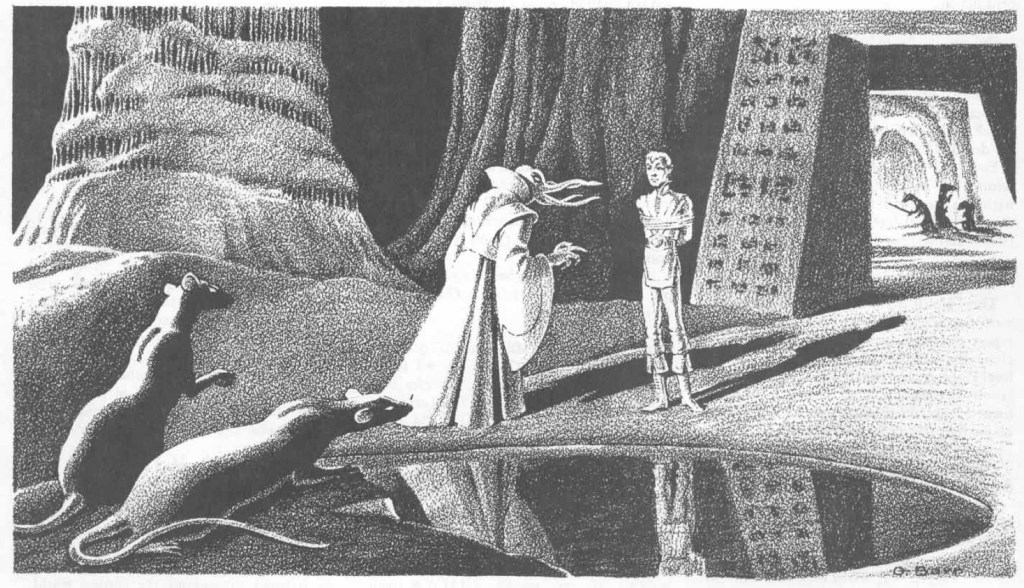
Of course, it’s all fantasy. All these fictional worlds, whether Dungeons & Dragons, or Riftworld, or Middle Earth, or Pandora, or whatever, are fantastic places that can’t possibly exist. Physics, gravity, geology, hydrology: they simply don’t work that way. You can’t have flat planets, you can’t have floating islands, you can’t fly a dragon to the moon, and you can’t have huge underground cities connected by caravan-wide tunnels.
Or can you?
Websites around the world proclaim this or that to be the “world’s biggest” or “world’s best”, but you rarely believe such exaggerations. There’s always disappointment, always overselling, always that feeling of being let down, just around the corner. But when I went to the original natural entrance of Mammoth Cave, a gaping maw at least 30’ wide, I knew this was, indeed, something special.
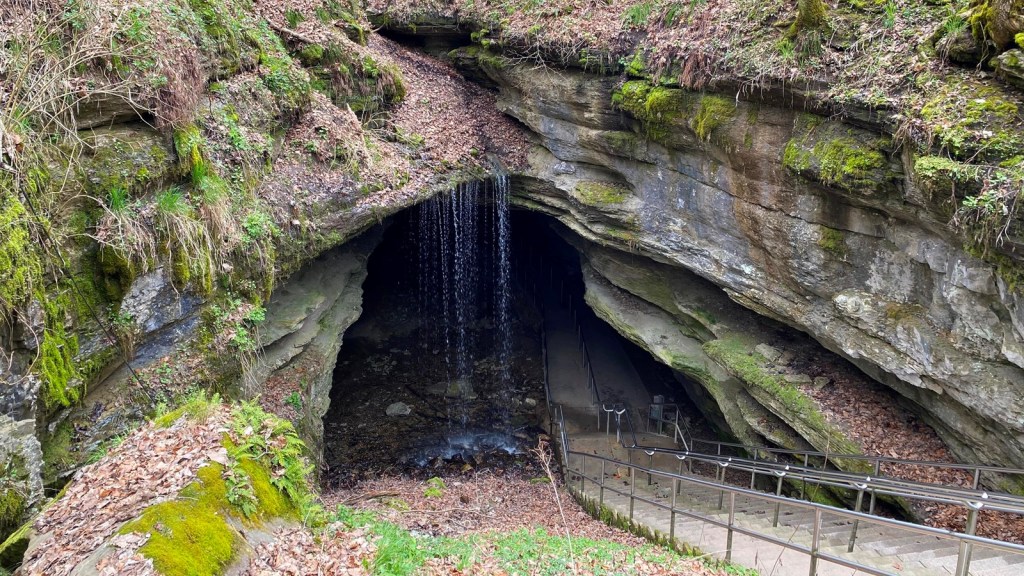
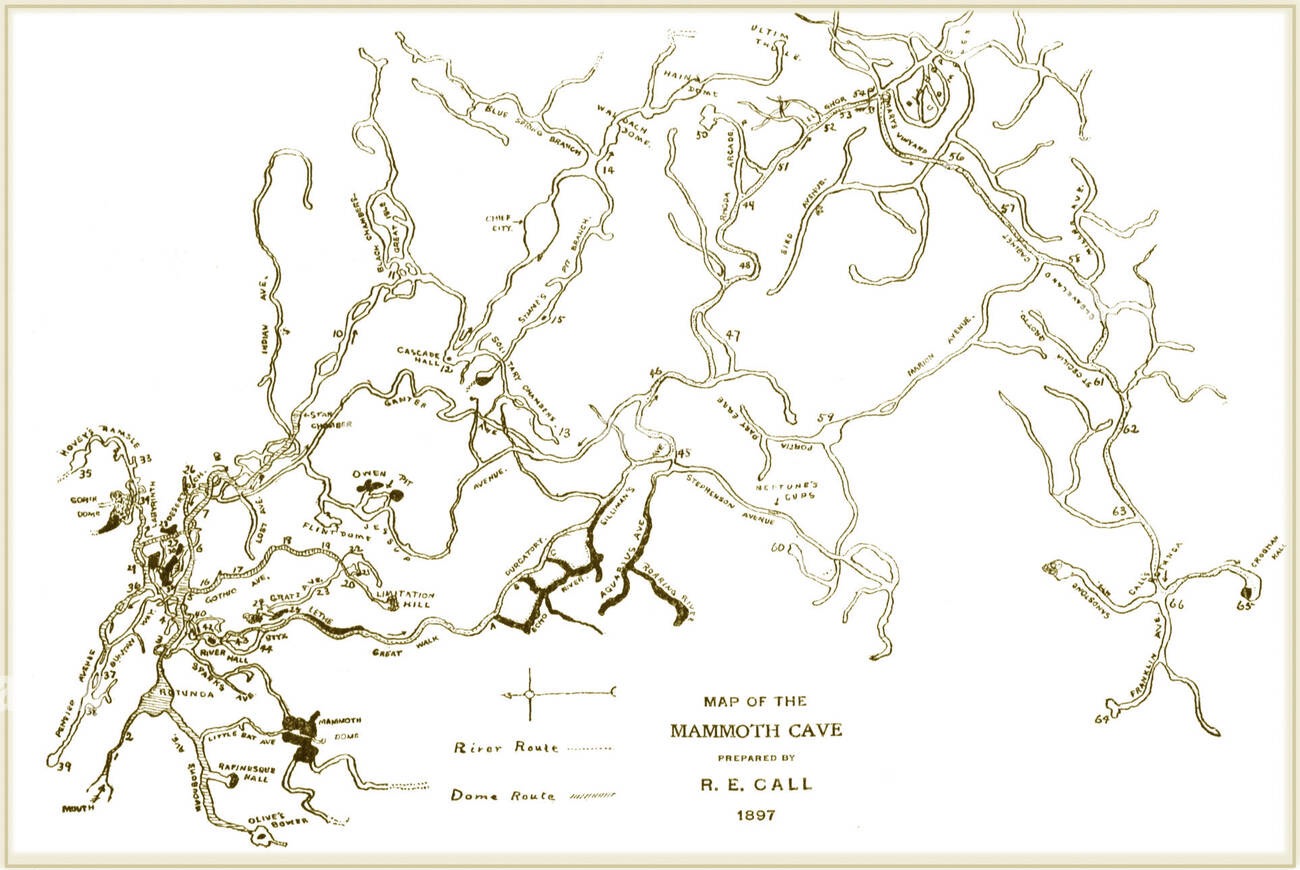
The cave system contains over 400 miles of passages, with more being discovered every year. Some of these passageways are 30’ wide, and tall enough for a school bus. Many of them are easy walking (constructed walkways mostly for accessibility and protecting fragile formations). Deeper down are the windy, spelunk-worthy crawl-ways, but there’s also an underground river where they used to offer boat tours! It’s hard to explain how large and fantastic these caves are without seeing them, and unfortunately I didn’t have a digital camera all those years ago when I toured. I’ll throw links at the bottom of this post, you can see for yourself the scale of the thing.
I love letting my imagination run wild when I go to these places. How can you not envision pre-Columbian Lakota buffalo hunting when you visit Big Sky Country? How can you not imagine great whaling ships when you visit New Bedford, or the struggles of Martin Luther King when you walk the streets of Birmingham, or immense alien spaceships while standing in the shadow of Devil’s Tower? Or drow and kuo-toa whilst inside Mammoth Cave?
I still play D&D from time to time. It hits differently than it used to, of course, but it’s still fun to get together with a bunch of like-minded nerds to roll dice and tell dick jokes and swing vorpal swords at green dragons. It’s cheaper than playing poker, beats sitting around a bar ruining your liver, and there’s nothing but crap on all these streaming services anyway. If you can’t be in the woods, on a mountain overlook, or deep in a cave system, grab some dice and roll up a gnome illusionist.
================
Links:

 It all started with the settlement of interior North America. The French got their first and got busy. By the mid-18th century they had settlements from modern-day Quebec down the St. Lawrence River to the Great Lakes and down the Mississippi to New Orleans. They also had spots on the Ohio River and other tributaries. They were in a pretty good position actually, but their settlers were more concerned with fur trapping and trade than continental domination. The Seven Years’ War with England (called the French and Indian War by us Yanks) came along, the French got beat pretty badly and, in the Treaty of Paris, England gained possession of all those forts. Of course, the Brits being the Brits, they figured they could just plop some redcoats in the forts and claim lordship over the lands. The French settlers still worked their farms, collected fur pelts, and paddled up & down the river in trade like they had for a generation, while theoretically under British “control”.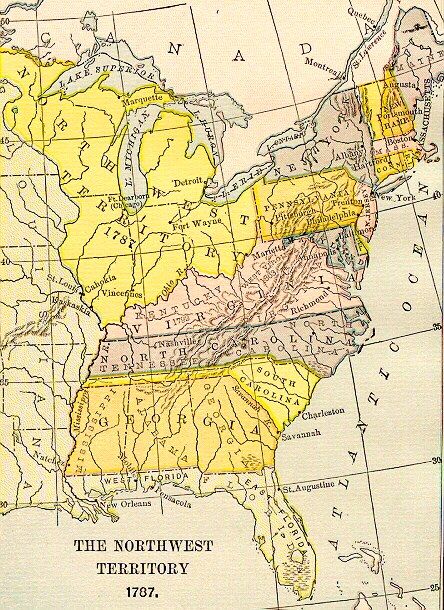




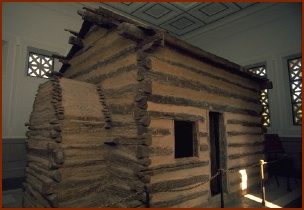 After this almost mandatory exchange, I asked the ranger how many people ask her this stupid question every day. “A lot”, she replied. Of course the log cabin at Lincoln’s Birthplace isn’t original. The original one was surely torn down and replaced by the next residents after the Lincolns moved to Indiana (log cabins were not known for their longevity). The ranger did proceed to discuss what was really important: the thoughts and writings of our greatest President, Abraham Lincoln.
 We should ask ourselves “why?” Why would a man who presided over the one and only War Between the States (the worst human bloodletting ever witnessed on the North American continent), a man who initiated the first widespread draft in America (leading to riots in New York City and other places), a man who suspended many legal rights (an act used years later as justification for Japanese interment and the Patriot Act), still be so loved by the American people? Not only loved, but perhaps even deified.
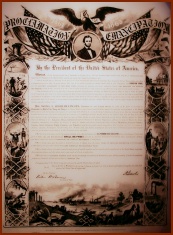 But there is another meaning to the word “right”. Lincoln was also the right President at the right time. People tend to forget the mess this country was in before Lincoln. The “slave problem” was a menace, a canker, a tumor on the very heart of America. It ate at the very core of our beloved Constitution. America, a nation supposedly founded on freedom, held hundreds of thousands in thrall, was a nation of hypocrites.


 America In Context