Failures in Leadership
When it comes to posting about Jimmy Carter — Nobel Peace Prize winner, home builder, human rights advocate, international statesman — I could have gone in many directions. In light of his recent cancer diagnoses, I could have focused on his positive, post-1980 accomplishments, and may have gotten a lot of positive comments and referrals. Instead, I feel compelled to talk about his greatest failure: his leadership during his tenure as the 39th President of the United States.
Before I go on, I have to say it’s really unfair for me to criticize others for poor leadership. I have practically no leadership abilities at all. I’ve proven time and time again that this is a skill or talent that I simply do not possess, and almost every attempt I’ve made to take leadership of anything has been a fairly abysmal failure. However, I think I can recognize good leadership when I see it. I’ve known a lot of good, and even great, leaders personally, and through careful observation of their methods, I think I have a fair bead on what makes a good leader. I’ve also known a lot of horrible leaders, and am fairly certain I know what poor leaders lack.
Any post criticizing Jimmy Carter would also be unfair if it did not include a disclaimer statement about “level of difficulty”. Carter was elected President in 1976, a period of great internal strife in the U.S. President Nixon resigned in disgrace in 1973. America’s most divisive and most embarrassing confrontation — the Vietnam War — ended in 1975 with the Fall of Saigon. The Cold War’s nuclear arms race was well into its fearful Mutually Assured Destruction phase. Inflation was at a troubling 12%, and the nation was in a depressing funk barely masked by the revelries celebrating our nation’s 200th birthday. Carter was entering into a losing proposition, it would take immense skill to turn the ship of state around.

Yeah, times were GREAT!
Unfortunately, Jimmy Carter, during his tenure as President, was a pretty poor leader.
Of course, that’s not particularly insightful. Folks have been saying this for 35 years, Jimmy Carter has taken quite a bashing from all sides since 1980. If he hadn’t been so successful in his post-Presidential career, he’d be nothing but an entry on a list between Martin Van Buren and Calvin Coolidge: barely remembered unless you went to Carter High School or your commute took you over the Carter Bridge. I’m glad he went on to do great things after his presidency, he’s probably one of the most ethical men to ever hold the office, and he deserves better than a minor footnote in a history textbook. So how did an otherwise good man fail to be an effective leader?
In my opinion, one event, more than any other, illustrates exactly why Carter was such a bad leader as President. That event was his infamous Malaise Speech, delivered to the nation via broadcast television on July 15, 1979. This was a speech that, although initially receiving a favorable reception by the American people, would go down in infamy as the worst speech ever given to the nation by a seated President. This was a speech that would become so reviled, it not only resulted in the loss of the White House to the Republicans in 1980, it most certainly caused the death of American progressive politics.
But wait, something here doesn’t quite compute, does it? How could a simple speech ruin a Presidency and kill a political movement? Speeches are nothing, really, just air exiting through a larynx, magnified by microphones and amplifiers. Most people, even then, rarely listen to political speeches, and of those who do, few even remember anything about them. Throughout American history — over 400 years if you include the colonial period — only half a dozen or so political speeches (“The only thing we have to fear is fear itself”, etc.) have entered into the national consciousness. It’s certain that dozens upon dozens of Presidential speeches quite literally sucked, full of triteness and pandering and even lunacy. Did any of them derail a presidency?
No, and this speech, itself, did not derail Carter’s. What killed his presidency, and what marked Jimmy Carter as a terrible leader during that phase, was he felt that the nation actually needed a speech to solve its problems. That was the fundamental mistake, the fundamental error, the fundamental misunderstanding of leadership that Carter had during that period. What he did was deliver a speech as the solution, rather than delivering a speech to communicate the solution.
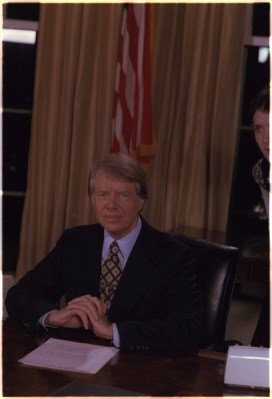
Not a great idea.
So many people in positions of authority try this tactic. These folks think that they can inspire people by words. They’ve heard the lore of those half-dozen cool American speeches, or have seen Patton, Braveheart, Henry V, or even Independence Day, and think “ooh, that’s what I need to inspire my troops, a good speech!” Well, no, nothing can be farther from the truth.
My first encounter with a real leader was my Boy Scout scoutmaster. He was a quiet, soft-spoken guy. I can’t remember his speaking voice, honestly. But all the kids loved him because he did stuff. We always had stuff to do, every meeting was full of activities, and our camping trips were chock-full of things to do. His job moved him to second shift, and we got a new scoutmaster. That one was a chatty guy, and the absolute worst scoutmaster. Activities dropped, camping trips dropped, and I dropped Scouts entirely.
Later, I worked at an apple orchard. The owner was not necessarily soft spoken, but he was a great guy. He motivated us to work hard, not through his words, but because he was a hard working guy. If you were employed by him, you would be ashamed to be a slacker because he worked so hard.
I would see other good leaders who displayed good leadership because they loved what they did, or they took the time to teach those under them, or they took bold moves, or they were simply good at their job. They were leaders because they did stuff, not because they talked about stuff. It’s not even about caring for your people — there is no doubt that Jimmy Carter cared about the American people — it’s about recognizing that doing is a prerequisite to leading.
If Carter had focused more on getting things done as President, he could have made all the crappy speeches in the world and no one would have cared. But he felt the people needed a speech, and history has proven that was a bad choice. Fortunately, Mr. Carter would go on to do plenty of good things in his post-Presidential career, and now he is well respected by many. But for one, brief time, when it was needed the most, he had the wrong idea of what true leadership actually is.

Well, maybe I stand corrected.
==============
I didn’t bring my camera when I visited the Jimmy Carter National Historic Site. All photos used in this post are public domain and hosted on Wikipedia Commons.
Jimmy Carter National Historic Site
Character Above All Essay on Jimmy Carter
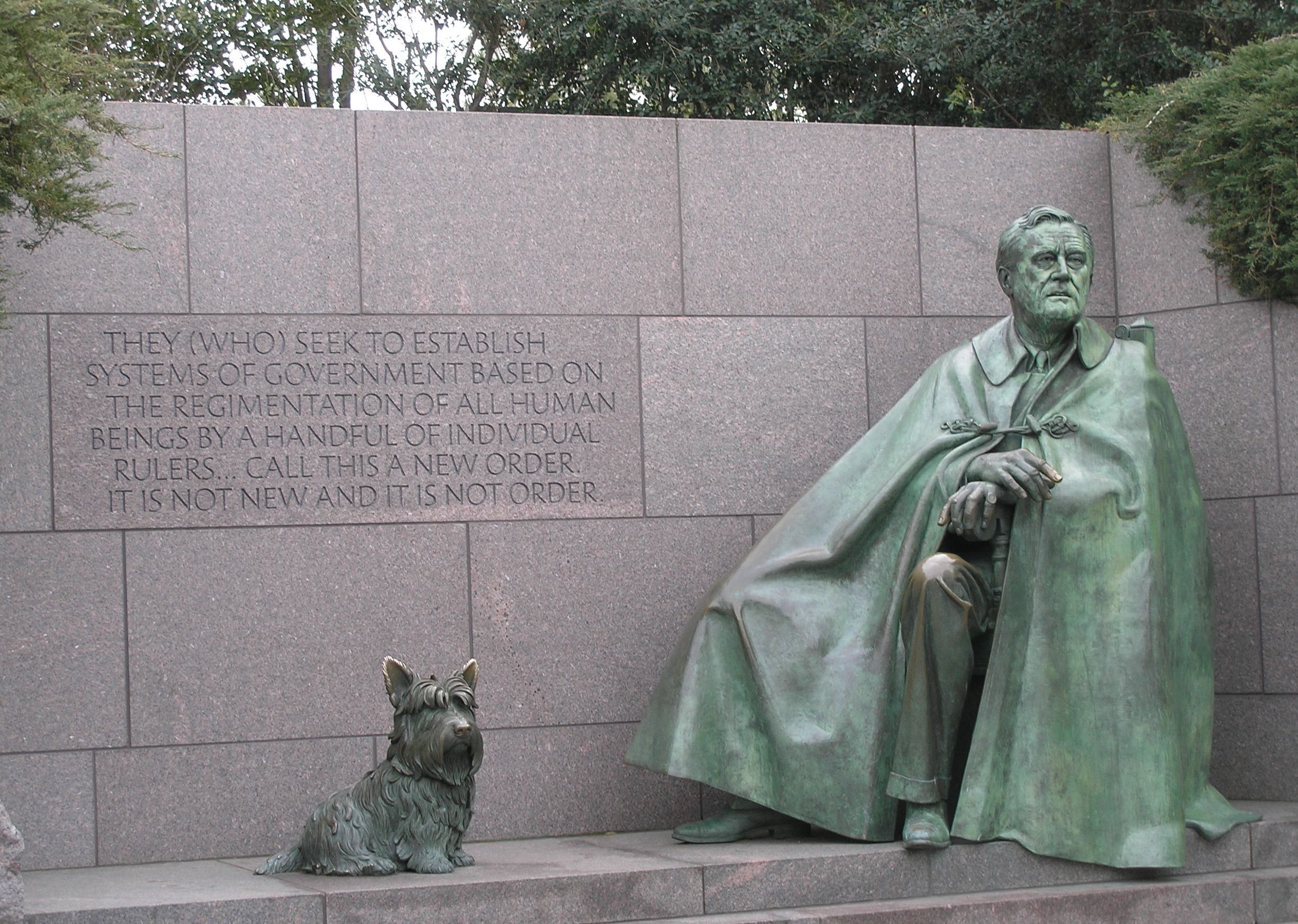
 I find this utterly fascinating. Sure, pundits & partisans would complain about the economics of the New Deal and the court packing scandal, but FDR had to be dead 60 years before the common man started questioning his Presidency and leadership. That’s almost three generations! I can’t think of anyone short of George Washington and perhaps Thomas Jefferson who escaped such criticism for so long. The people of FDR’s time had to basically die before public opinion turned against him. Today, we decry the previous loser the day after Election Day.
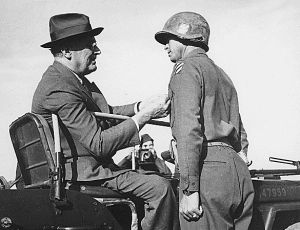
 Here’s my own take on why Roosevelt inspired such devotion: he had the “perfect storm” of confidence, communication, competence, and empathy. His family, especially his mother, Sara, gave him a good education and instilled in him a measure of self-confidence absolutely required of a good leader. FDR was a great communicator. His speeches are the stuff of legend and they were delivered, not as oratory, but as conversation, meaning they were genuine. Was FDR competent? Sure, you could say his policies weren’t necessarily wise, but he got them done. People respect people who get things done, action is rewarded far greater than thought or bearing. And FDR did accomplish an awful lot in his 12 years as President.
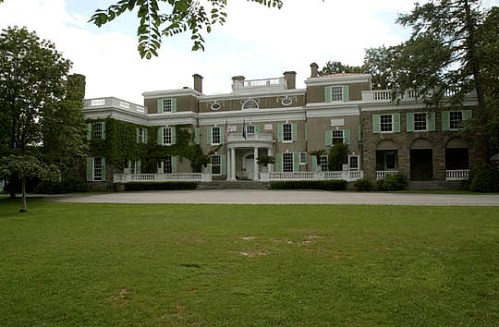
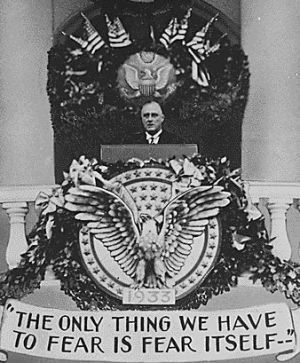 I don’t think you can doubt that those were the hardest twelve years in this nation’s existence. The Great Depression was the deepest economic catastrophe this nation has ever seen, and the Great War was the biggest geopolitical conflict the world has ever seen. These were tremendous challenges, and spawned tremendous change in this country. One steered us towards military power and global influence, the other steered us towards progressivism and social justice. In today’s highly polarized political environment, you probably think one is good, and one is bad (which is which depends totally on your point of view). Regardless, those twelve years undoubtedly shifted the path of the United States for at least 65 years, and perhaps more (depending on how we weather the current terrorist, economic, and environmental crises).
 Is it charisma? Charisma seems to attract a following but, by itself, can’t sustain one. Followers, at least the smart ones, will flee in the face of failure, and then all you’re left with are the sycophants, the incapable, and the unstable.
 Maybe (as lame as it sounds) it’s just something you’re born with, like blue eyes or a musical ear or general athleticism. I do suspect it’s something that is not easily taught in a seminar or gained from reading a book. The few books on “leadership” I’ve come across read like leavings of the the rest of those infinite number of monkeys who didn’t write the complete works of William Shakespeare. Corporate America is full of three-day seminars on the topic, but Corporate America as of late is full of terrible leaders who’ve made terrible decisions and led their companies and countries to ruin. I’ve seen good leaders in the corporations I’ve worked in, but these were also folks who didn’t learn how to lead at some symposium. These folks had it in their genetic makeup long before they completed their first job application.


 America In Context