Feeds:
Posts
Comments

Posts Tagged ‘National Parks’

A Touch of Imagination

The traveler scrambled down the banks of Siphon Canyon. It wasn’t much of a canyon, really, more like a gully. It was the end of the dry season, but the creek still meandered between its banks. The traveler headed into that gully for a reason: it was far cooler in the shade of the ash, willow & mesquite trees fed by the perpetual, life-giving waters of the spring at the head of the creek.

It was that famed spring the traveler sought. Once he reached that spot, he would head east towards his destination. But a shadow in the trees moved in the wrong direction. There was something up ahead, blocking the path. Small eyes stared past a broad snout, straight at the traveler. The two, the wild boar who belonged, and the unarmed man who did not, locked gazes. One would react with instinct, the other needed to react with thought or risk being gored. This far from civilization, that would not be a good outcome.

——————————————————–

It was dry up on the knoll, far to the east of the creek and spring. That’s where they built these forts back in the day: the inevitable filth from dusty soldiers couldn’t pollute the only reliable water supply. Despite the dry, hot air, there seemed to be a mist, a spectral haze, hovering over the ruins. The entire place was eerie. The air was still, not a leaf was blowing. There was no sound beyond the traveler’s own breathing. No squirrels were shuffling leaves in the woods, no birds were twittering in the trees. Even the ground was heavy, the traveler barely kicked up any dust as he wandered through the ruins.

The ruins themselves were downright ghostly. The remnants of adobe walls, white and rounded from decades of wind and monsoons, dotted the area like mournful apparitions. Nothing of substance grew on the pathways. Life, it seemed, wanted nothing to do with this place. This was a place of evil, a staging area for mayhem, conflict, abuse, and genocide. This was a place used by one people for the subjugation of another, used by the powerful to forcibly take the land and lifestyle from another. Now, the very place murmurs out a mournful “why?”, but of course, there’s no one to listen. No one but a lone traveler who briefly bows his head and continues on to his next destination.

——————————————————–

I’m a firm believer in imagination, and in my view, there’s no better place to exercise one’s imagination than in the varied sites of the National Park System. Let’s face it, some of the sites are pretty lame: a four-room loft in a Philadelphia townhouse, an old steel foundry in a sleepy Massachusetts suburb, a forgotten fort in an unspectacular chunk of Arizona. A little imagination goes a long way in such places.

One can imagine the past and try to reconstruct how people lived and thought in days gone by. One can imagine the future by applying old lessons to today’s situations. Fort Bowie’s remoteness and appearance encourages imagination, perhaps the plot for some third-rate fantasy novel or Peter Jackson film project. Because of this, Fort Bowie is one of my favorite National Historic Sites.

Imagination is good. Exercise it from time to time. And take a trip out to remote Fort Bowie.
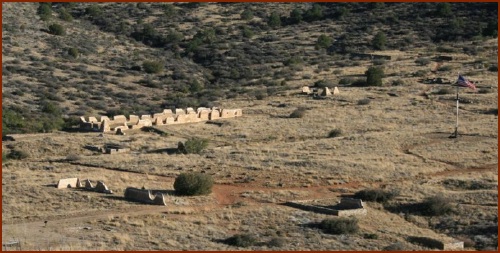
[Sadly, I didn’t own a digital camera when I visited Fort Bowie. Pics are public domain from the University of Arizona and a neat site I stumbled upon: Fort Wiki.]

==================================================

Links:
Fort Bowie National Historic Site

Fort Wiki

The Capture of Geronimo

Google map to Fort Bowie

Read Full Post »

Premonitions

Ford’s Theater is one of those few true “shrines” in our country. It marks a spot of such profound tragedy in our nation’s history, it stands in an august group with Gettysburg, Pearl Harbor, and Ground Zero.

When I think of Ford’s Theater, what comes to my mind isn’t the figurative or literal theatrics of Lincoln’s assassination, but of the premonitions Lincoln himself had of his own death. Now I don’t believe in supernatural precognition (folks like Nostradamus, Edgar Cayce, Jeanne Dixon, and that freakish Jamaican hag from late-night TV make me want to vomit with force and intent), but I do believe folks who are trying to make a significant impact on the world know full well that someone, somewhere, is out to kill them for it.

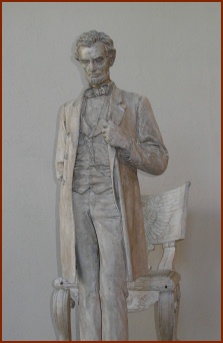
Lincoln by Saint-Gaudens“About ten days ago, I retired very late. I had been up waiting for important dispatches from the front. I could not have been long in bed when I fell into a slumber, for I was weary. I soon began to dream. There seemed to be a death-like stillness about me. Then I heard subdued sobs, as if a number of people were weeping. I thought I left my bed and wandered downstairs. There the silence was broken by the same pitiful sobbing, but the mourners were invisible. I went from room to room; no living person was in sight, but the same mournful sounds of distress met me as I passed along. I saw light in all the rooms; every object was familiar to me; but where were all the people who were grieving as if their hearts would break? I was puzzled and alarmed. What could be the meaning of all this? Determined to find the cause of a state of things so mysterious and so shocking, I kept on until I arrived at the East Room, which I entered. There I met with a sickening surprise. Before me was a catafalque, on which rested a corpse wrapped in funeral vestments. Around it were stationed soldiers who were acting as guards; and there was a throng of people, gazing mournfully upon the corpse, whose face was covered, others weeping pitifully. ‘Who is dead in the White House?’ I demanded of one of the soldiers, ‘The President,’ was his answer; ‘he was killed by an assassin.’ Then came a loud burst of grief from the crowd, which woke me from my dream. I slept no more that night; and although it was only a dream, I have been strangely annoyed by it ever since.” — A. Lincoln
Now this is, indeed, creepy, but it’s not evidence of the paranormal. Lincoln knew full well that he was waging a war against fellow Americans, a war that not everyone in what remained of the Union supported. He knew that he was violating folks’ rights, that Sherman was burning great swaths of farmland in Georgia and the Carolinas, that hundreds of thousands of draftees were laying dead on the fields from Monocacy to Vicksburg. And he knew that someone, or many someones, wanted him dead. Even though he was doing the right thing, he was stomping on somebody, and that somebody would kill him. How sadly accurate his premonition turned out to be.

Lincoln Funeral in Ohio

A while ago, I listened to an interview of comedian Chris Rock, of Saturday Night Live fame. He’s a brilliant comic. Rough-edged and provocative, to be sure, but brilliant nonetheless (or, perhaps, because of). He clearly rattles cages, but he also makes people think about race, and class, and stupidity, and of other topics equally truthful but irritating. He told the interviewer (and I’ll paraphrase): “when I became famous, I figured I’d be dead.” Not because of drug overdose like other SNL alums like John Belushi or Chris Farley, but because someone would shoot him.

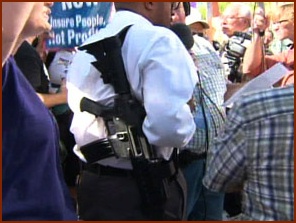
Isn’t that terrible? And I’m sure he’s not the only famous entertainer or politican who thinks that. How many duly-elected Representatives or Senators actually wondered “will I get shot today” when they went to all those raucous “health care town hall” meetings? I would question the sanity of any of them who didn’t think that. And why would they be shot? For trying to give more people health insurance? For being the target of an astro-turf uprising orchestrated by talk radio and billionaire media moguls with their own, selfish, ratings-raising axe to grind?

assault weapon (2)

It’s a sad state of affairs in this country that folks of vision (whether philosophical or political or economic or medical or scientific) can be intimidated into submission or silence not by the power of persuasion or debate or fact-driven decision making, but through threats — real or imagined — of force from the very populace they’re trying to reach. Is this what we have become? Is this what the great democratic experiment has wrought? A society where thoughts and efforts to improve the lot of the nation is met with violence? Are the recent events simply a blip, a blemish on the soul of the country, or are we heading down a steep slope to Somalian anarchy?

Lincoln, of course, didn’t back down. He continued on a path he knew was right. He paid the ultimate price for it. But although the aftermath was rocky, the nation reunited, got on its feet, and became the most powerful nation the world has ever seen.

But now, I wonder. Was it really worth it?

America??

[I don’t have many good pics of Ford’s Theater, so I didn’t post any. All of these are from public domain sources.]

===================================================

Links:

Ford’s Theater National Historic Site

Editorial

Best YouTube Video Ever!

Google map to Ford’s Theater

Read Full Post »

Is It Time?

How long does it take for an event to move from the present into history?

I’ve listened to a lot of talks by a lot of historians. It never fails, someone will inevitably ask “how will history look back on the the events of today?” And historians almost always give the same reply: “well, we won’t know until enough time has past. Future historians will have to judge.” Yadda yadda yadda.

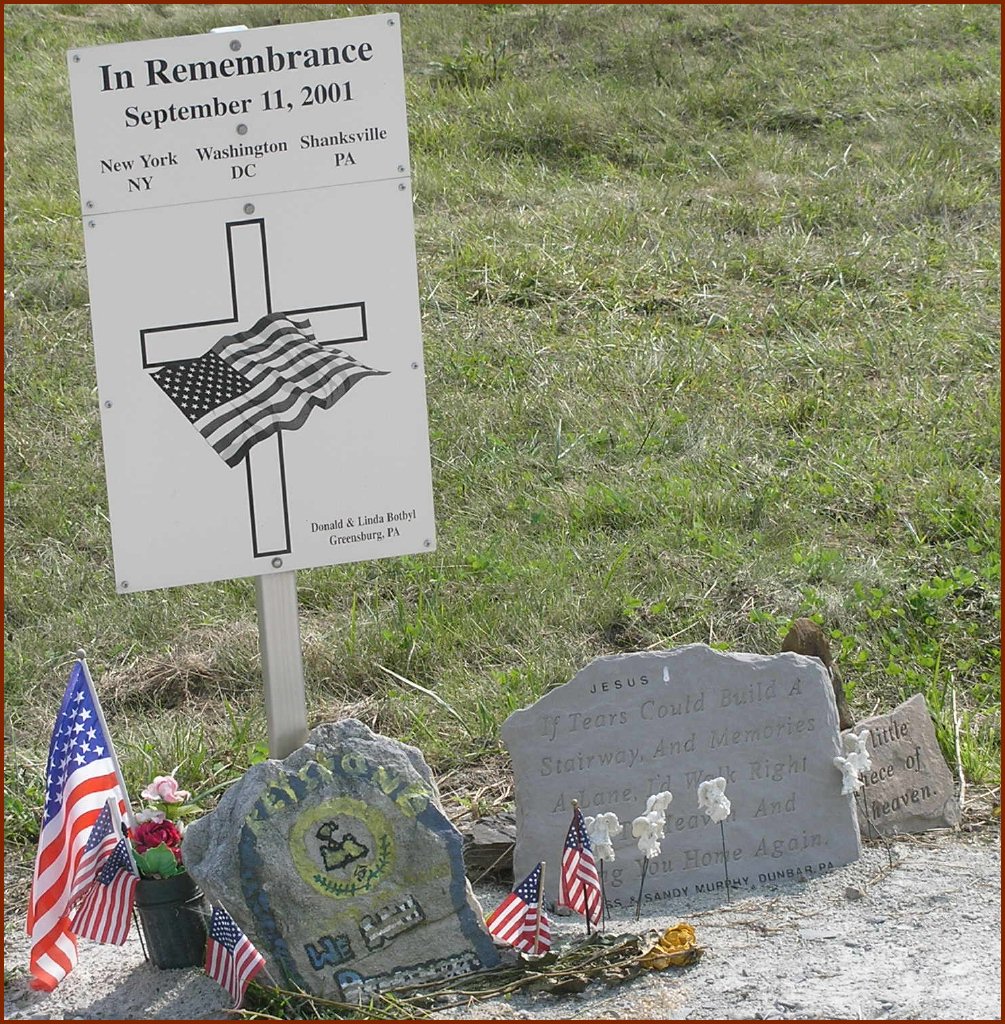
In Remembrance © 2009 America In ContextI’m wondering: has enough time passed to honestly and objectively look back on 9/11? There hasn’t been another terrorist attack on U.S. soil, but al Qaeda still makes is presence felt elsewhere.  The administration of President George W. “9/11” Bush is over, but the resulting wars in Afghanistan and Iraq are still going on. And bin Laden is still out there, somewhere. We don’t know if he’s dying of cancer or plotting the next attack. So I’m not quite sure enough time has past to put 9/11 in its proper context, it seems like we are still living it today. If we are still living it, has it past into history? Hmmm….

Because I’m not sure it has past into history, I’m also not quite sure we can properly memorialize it. Time has to pass before one can honestly reflect on an event. There’s too much emotion otherwise, and you end up acting completely on impulse and make bad judgements that you then have to live with. So has enough time passed to build memorials, things that will stand for generations and generations? Will such a memorial teach the right lesson to those who weren’t here in 2001?

Jacket and Stuff © 2009 America In ContextThe Vietnam Veteran’s Memorial was built in 1982, seven years after the fall of Saigon. Here we are, eight years after 9/11, so maybe it is time after all. The only difference, of course, is the Vietnam War actually ended. The conflict itself was closed, the troops were brought home. The scars and carnage remained, but at least the nation had those seven years to reflect, and think, and figure out how those lost lives should be remembered. We now have one of the most moving memorials ever created on the west end of the National Mall.  I want the same thing for 9/11, a symbol that evokes the right emotion and conveys the right message to those who might visit it 20, 50, or 100 years later. I don’t want some rushed hunk of granite garbage that evokes a response of “WTF?”

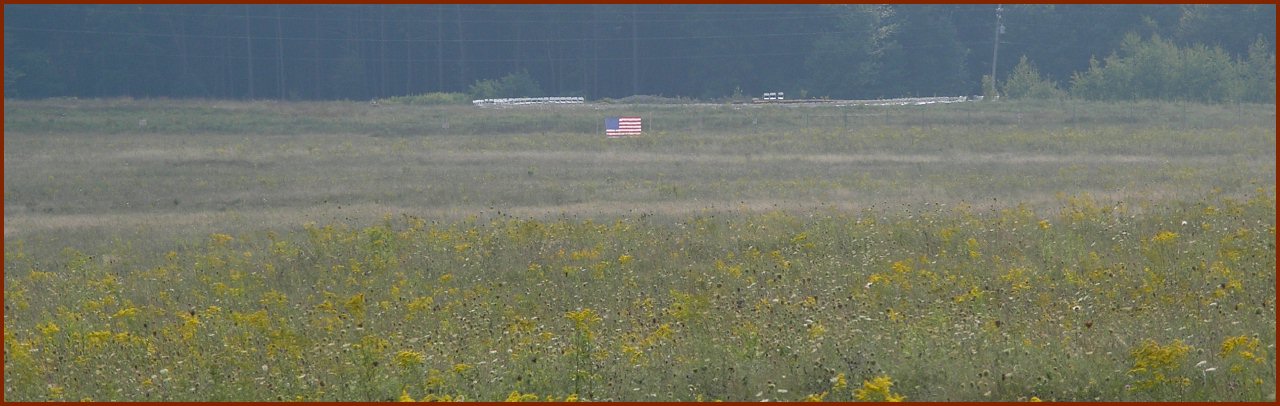
Regardless of the answer to this heavy question, I do like the design for the memorial to Flight 93. I’ve reviewed it, and I’ve visited the site, and I have to give my own, “mouse that roared” thumbs-up to the proposed memorial in Shanksville, PA. I think it’s subdued enough, thoughtful enough, and emotive enough to qualify as a true, honorable monument to those 40 folks who gave their lives in a senseless, pointless act of violence. I especially like the groves of trees and the low, graceful lines of the design. It fits in with the landscape and the dignity we’d all like to see.

I don’t ask this often, but I hope you’ll take the time to visit the Flight 93 Memorial Project and make a  contribution to the creation of this monument. After wrestling with the issue during the crafting of this post, I think its time has come.

Sacred Ground © 2009 America In Context

[Pics are mine and appropriately copyrighted. More are here.]

=============================================================

Links:

Flight 93 National Memorial

Flight 93 Memorial Project

Google map to the Flight 93 memorial

Read Full Post »

The Good Life

A little while ago, in my post on Edgar Allan Poe, I talked about a creative genius whose life would suffer through poverty and hardship and end in tragedy and mystery.

Today, I’m posting about another great literary figure whose life progressed quite differently: Nobel- and Pulitzer-prize winning playright, Eugene O’Neill.

I am, admittedly, not “well read”. I’ve only read one or two of the classics, and only because certain college courses demanded it. I also don’t attend a lot of theater, although I will attend plays by Shakespeare whenever our local playhouses present one. So I really don’t know that much about O’Neill or his plays, other than a forced reading of “The Hairy Ape” for that three-credit “art domain” course at the state university. But there is no denying the man is one of the giants in American literature, having penned renowned plays such as “Morning Becomes Electra” and “The Iceman Cometh”.

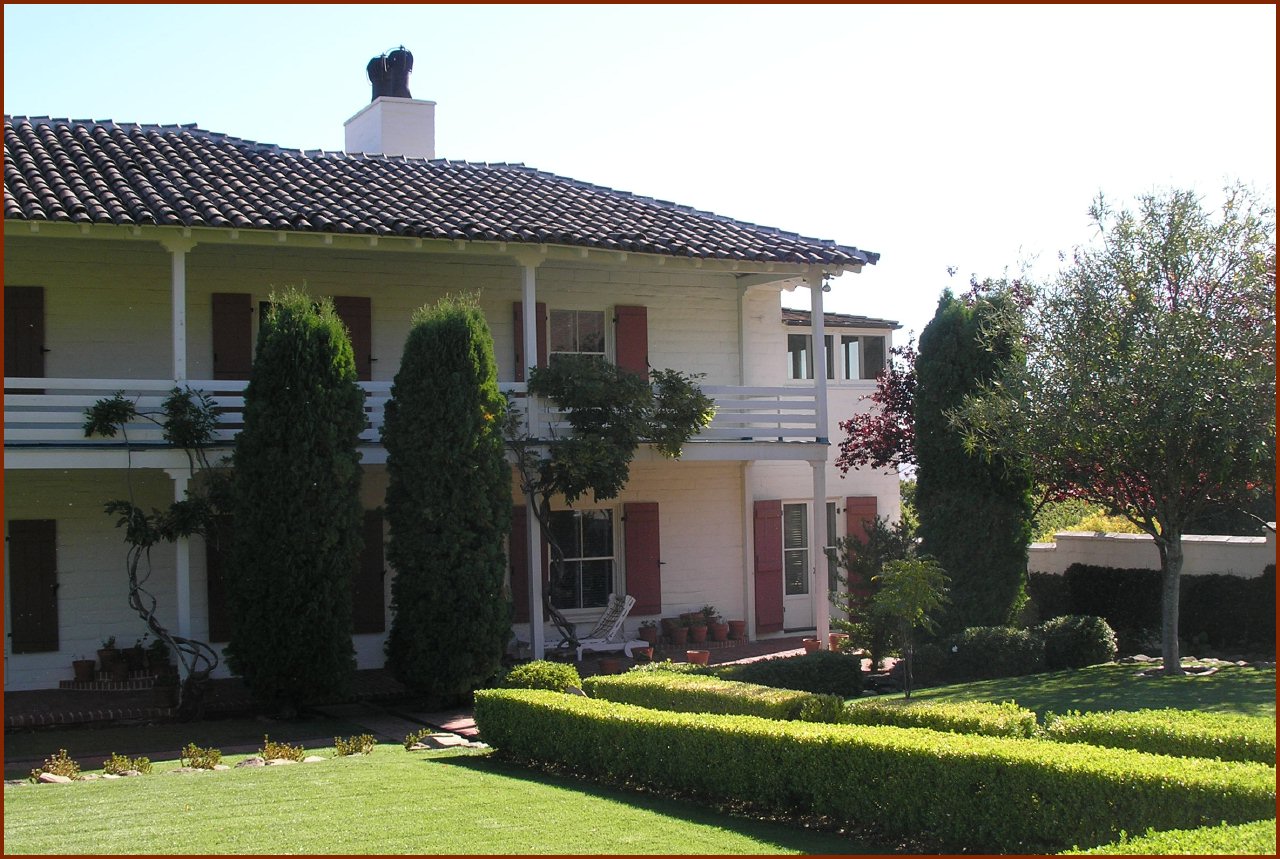
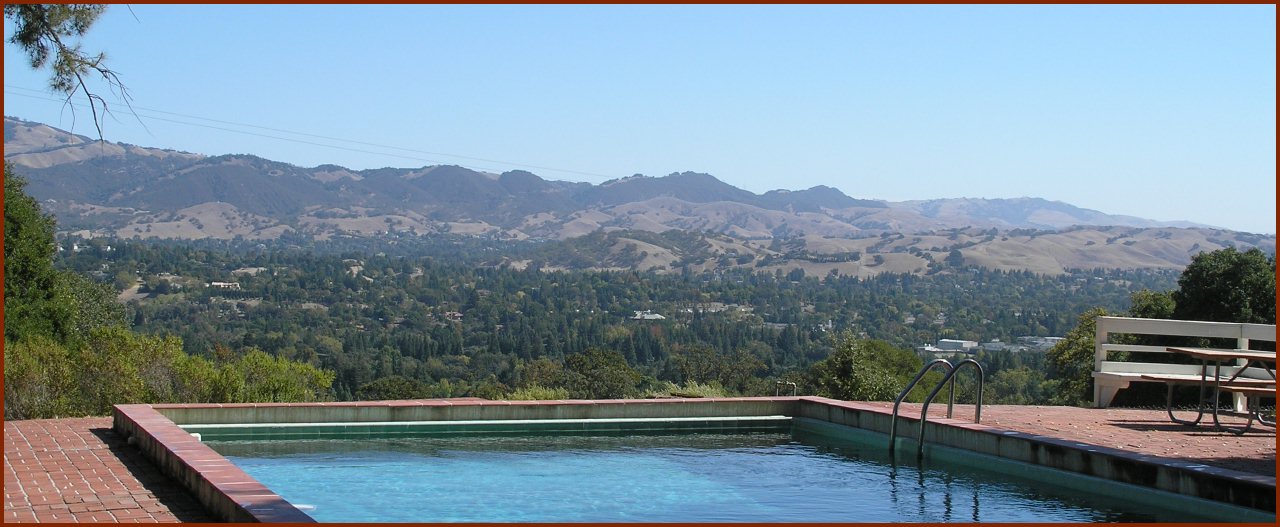
Porch © 2009 America In ContextWhen you visit his home in the hills of Contra Costa County, California, it becomes abundantly clear that he, unlike Poe, enjoyed the fruits of his labors. It’s a beautiful Spanish Colonial house, set on a wonderfully landscaped lot, overlooking the valley below, and backed by the rocky, wooded hills of the Las Trampas Regional Wilderness. It’s a truly elegant setting, fit for a man clearly loved for his dramatic creations. The only tragedy here is his wife, Carlotta, was extremely light-sensitive and kept the windows covered by thick wood blinds and shades. Such tremendous views wasted, although I don’t fault her. I suffer slightly from light sensitivity, I can empathize with her dilemma.

I’m not quite sure what else to say about Eugene O’Neill, except for this: I never begrudge artists, whether authors or playwrights or actors or musicians, from living well off their talents. Artists are special, and art advances us as a species like nothing else can. Art is more influential than technology or governance or business or medicine in that regard. Art is the gateway to the spirit of mankind, and it is that spirit that advances us.

I know this sounds trite and packaged. Aren’t we all supposed to say “art is the gateway to the spirit of mankind” or some such crud? Sounds like it’s right from the mouth of a guest star on Oprah. But I’m convinced it’s true. There’s something personal and unique about an encounter with art. You see it, or read it, or listen to it, or watch it, and your initial reaction is unique to you and you alone. Art tends to cut through all those social filters that muddy up our society and sends a message straight to the individual (instead of the huddled masses).

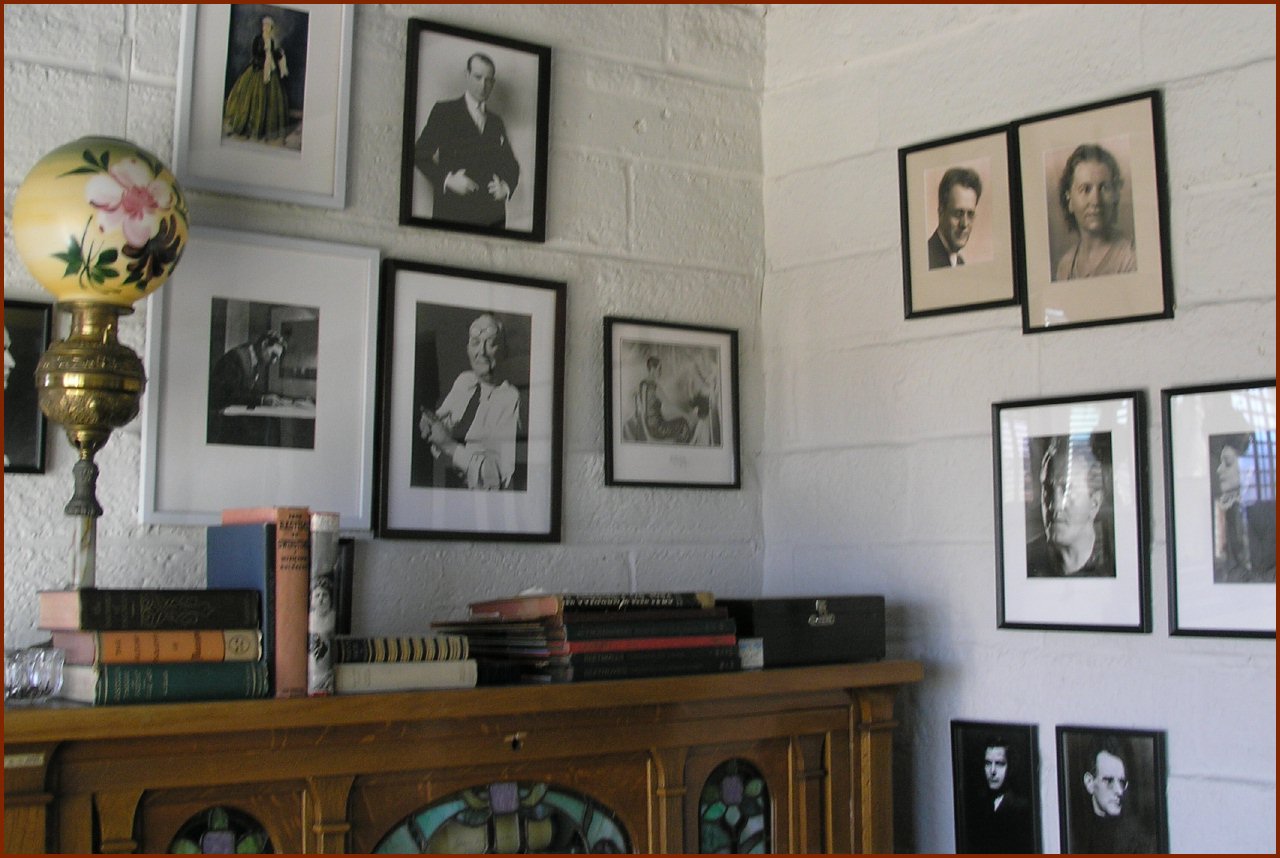
Friends © 2009 America In ContextNow, that message might be: “Hi. I’m really, really ugly. Please take note.” And that’s fine, because the next guy, totally independently, can receive a message: “Hi. I’m you. You really need to take a hard look at this, and change your life before it’s too late,” and that can be a really powerful message.

Famous and beloved artists tend to touch more people, send out those messages that give them hope, or give them insight, or give them motivation to change. Technology can’t do that, it only provides a vehicle to get things done. Politicians can’t do that, all they can do is further enslave us into dependency on government. Theocrats can’t do that, all they can do is entrap us deeper into the constraints of dogma. Only artists can do that. Or maybe a real, good friend.

Folks like O’Neill, Bob Dylan, George Carlin, Steven Spielberg, Robert Plant, Stephen King, and a host of others, all manage to reach out and touch lots and lots of people, and I have no problem when these folks living well. In fact, I hope they do so.

Now Brittany Spears, well, that’s an entirely different topic …

Front View © 2009 America In Context

On a side note, I do want to mention one key difference between Poe’s and O’Neill’s NPS sites. In my prior post, I remarked how the Poe site’s neighbors seemed to like having Poe in the neighborhood. They do readings for local kids, and no one has ever defaced that wonderful mural of the author, even though it doesn’t seem like a pleasant neighborhood. It’s sad to say so, but it certainly appears that O’Neill’s neighbors aren’t particularly interested in having his site in their neighborhood. It’s a very upscale, expensive neighborhood, and you have to be bused in from a commuter parking lot (no tourist cars are allowed), and there doesn’t seem to be the connection between the neighborhood and the site or the man. In all fairness, the winding roads and limited parking are not conducive to lots of tourists, but you definitely get the feeling folks int he area don’t care too much for having a National Park unit in their vicinity. It’s sad, and in my view, it doesn’t speak well to their character.

I hope someone from the area can post here contradicting me. It was just an observation, drawn from a particular moment in time and seen through my jaded eyes. Hopefully reality is different. If you have direct experience with this site and its neighborhoods, and you think I’m full of crap, please post & tell me (just keep it civil 😉 ).

[Photos on this post are mine and copyrighted thusly. See other photos of Eugene O’Neill’s home on my Photobucket page.]

========================================================

Links:

Eugene O’Neill National Historic Site

Eugene O’Neill Archives

Google map to E.O. NHS

Read Full Post »

« Newer Posts - Older Posts »