Feeds:
Posts
Comments

Posts Tagged ‘National Parks’

Liberty Enshrined

Everyone believes in something. Even agnostics and atheists believe in something. Some put blind faith in money, thinking it will make them happy. Some put blind faith in material possessions, because, well, *sparklies*. Some put blind faith in their political party or right-left-center talking points. Some put blind faith in celebrity, buying Bieber cologne or other ludicrous claptrap. Some put blind faith in themselves, being so arrogant as to think they are infallible and therefore beyond question. Some even put blind faith in science, as odd as that sounds, believing that any and all studies that cross their path must be true (this leads to a lot of fad diets as well as other errors).
Copyright America In Context

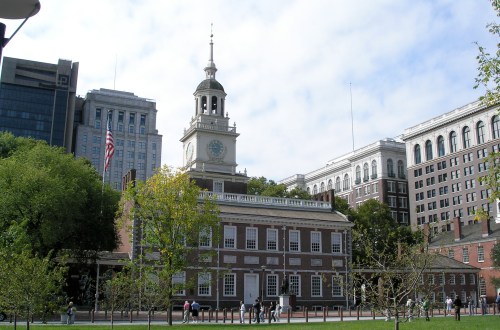
Liberty’s Shrine

In my own case, I tend to put blind faith in the American ideal. For folks like me, Independence Park in Philadelphia is the Temple Mount, the Ganges River, the Mecca of our own beliefs. It’s a place of extreme importance, a shrine commemorating the place where the founding principles of this country were put to paper and approved by an assemblage of great minds and strong characters. A place where heretofore un-codified principles were defined and written into law and principle, grandiose notions such as “[w]e hold these truths to be self-evident, that all men are created equal”; “whenever any Form of Government becomes destructive of these ends, it is the Right of the People to alter or to abolish it”; or “[t]he privilege of the writ of habeas corpus shall not be suspended, unless when in cases of rebellion or invasion the public safety may require it”. Fabulous ideas, amazing ideas, ideas that would inspire nation after nation to rebel against tyrants and kings and establish democracy. It’s the Great American Way that Independence Park symbolizes, the Great American Way that I hold most dear.

Unfortunately.
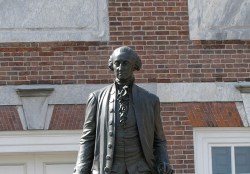
Folks are going to worship me someday, aren't they? :sigh:

“Folks are going to worship me someday, aren’t they? :sigh:”

If there’s one thing I’ve learned, ideals aren’t real. They don’t exist, and you can’t count on them. If you do, you will be betrayed. Every time. The American Ideal is the same: it’s full of betrayal. The original Constitution says that certain people are only worth 3/5ths of other people, and also said that those in bondage who escape to another state must be returned into bondage. Basically, it protected the vile institution of slavery for nearly 100 years. Even today, long after that particular abomination was wiped out by amendment, there is betrayal. These documents have been subverted, abused and weakened, leaving a system of government so devolved it barely represents the will of the people at all, and our nation is in a fine ruddy mess because of it.

Then again, it’s still important to hold onto ideals. It’s vital, actually. They are the goal, the dream, the vision, and without our goals, dreams and visions, we are a dead species. And to keep goals, dreams and visions alive, it is important that kids be indoctrinated (for lack of a better word) with ideals that are truly valuable, else they, too, will grow up to be tyrants and monsters; and you can’t do any worse than indoctrinating them into the important American ideals of equality, liberty, self-governance, and independence.

And naked statuary, of course

And naked statuary, of course

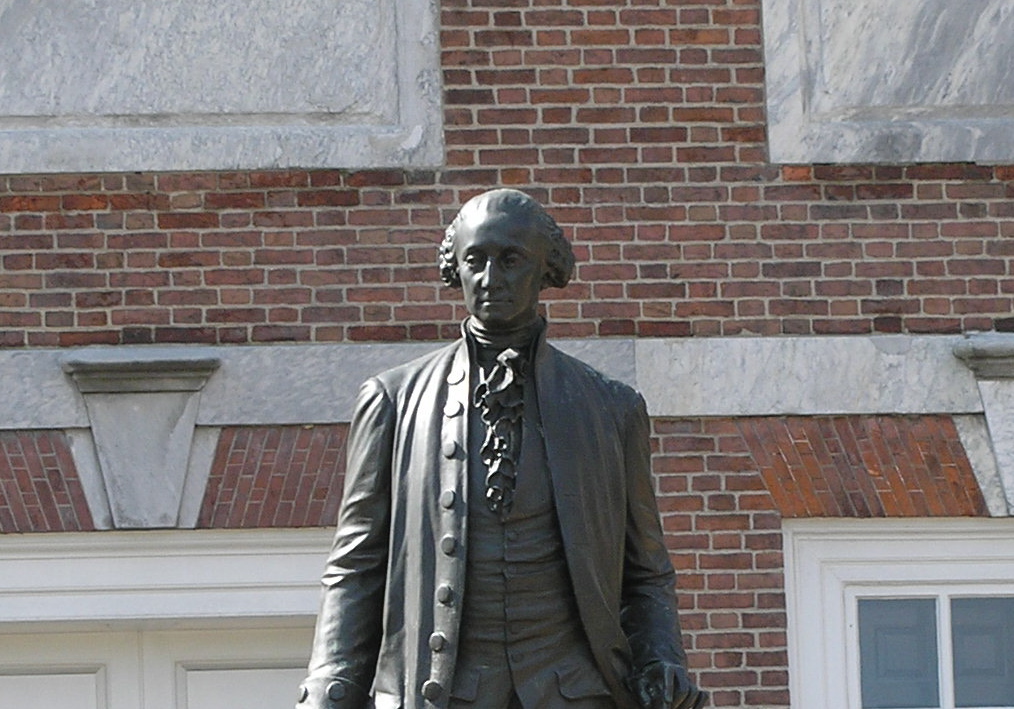
There is also no better element of that indoctrination than a trip to Independence Park in Philadelphia. I really like Philadelphia for one simple reason: the park is dedicated not to rebellion (like Boston, with it’s homage to the Boston Massacre, Faneuil Hall, and Paul Revere), nor to warfare (like Valley Forge or Yorktown), nor to marble monoliths (like Washington, DC) but to ideas, thought, consideration, and debate. It’s a site that contains meeting rooms, and convention halls, and judicial chambers;  not cannons, trenches, or cemeteries, but desks. It is a truly remarkable place in that aspect, it’s dedicated to ideas, and I find that refreshing.

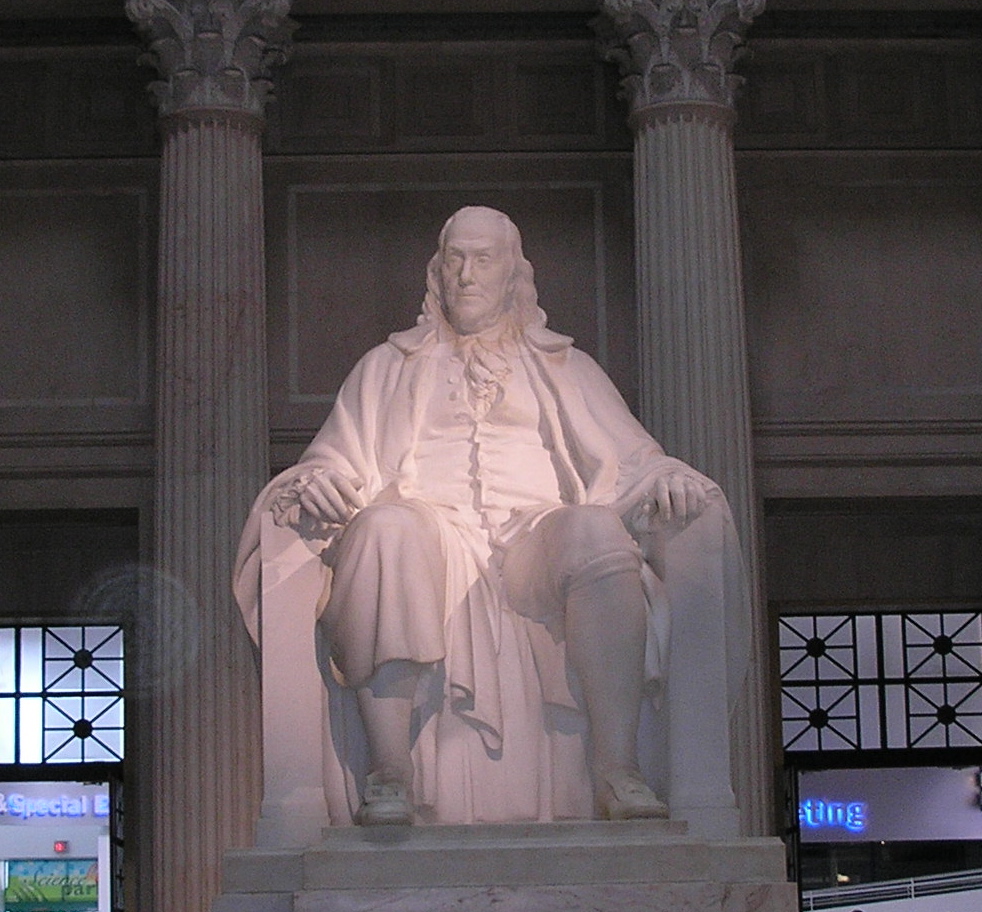
But he's just sitting there! THINKING!

But he’s just sitting there! THINKING!

Liberty Imprisoned

I first visited Philadelphia in the 90’s. At that time, the Liberty Bell was in a non-descript glass enclosure inside Independence Hall. Anyone could see it. I never bought into Bell lore myself (like most American legends, it’s more tall tale than fact), but I kinda liked the presentation: subdued, no drama, viewable by everyone, kinda like I envision liberty itself. Freedom should not be a big deal, it should not be something we put on a pedestal. It should just “be”. You don’t pay attention to it when it’s there, you just live your life, yet everyone notices when it’s absent.

Then 9/11 happened, our liberties were sacrificed to the Lords of Fear, and The Liberty Bell became a symbol of our shift to madness.

In the grief-stricken days after 9/11, we were all expecting more terrorist attacks. We went bat-shit crazy protecting everything.  We improved airport security, then we “improved” airport security, then we began the systematic groin-groping known as the TSA. We started monitoring financial transactions, then started monitoring foreign communications, and now the NSA has a full-blown domestic spy program best suited for watching cheating spouses and stealing credit card numbers. We placed Jersey barriers in front of government buildings, we put metal detectors at the entry of every government building and landmark, and we built a prison for the Liberty Bell.

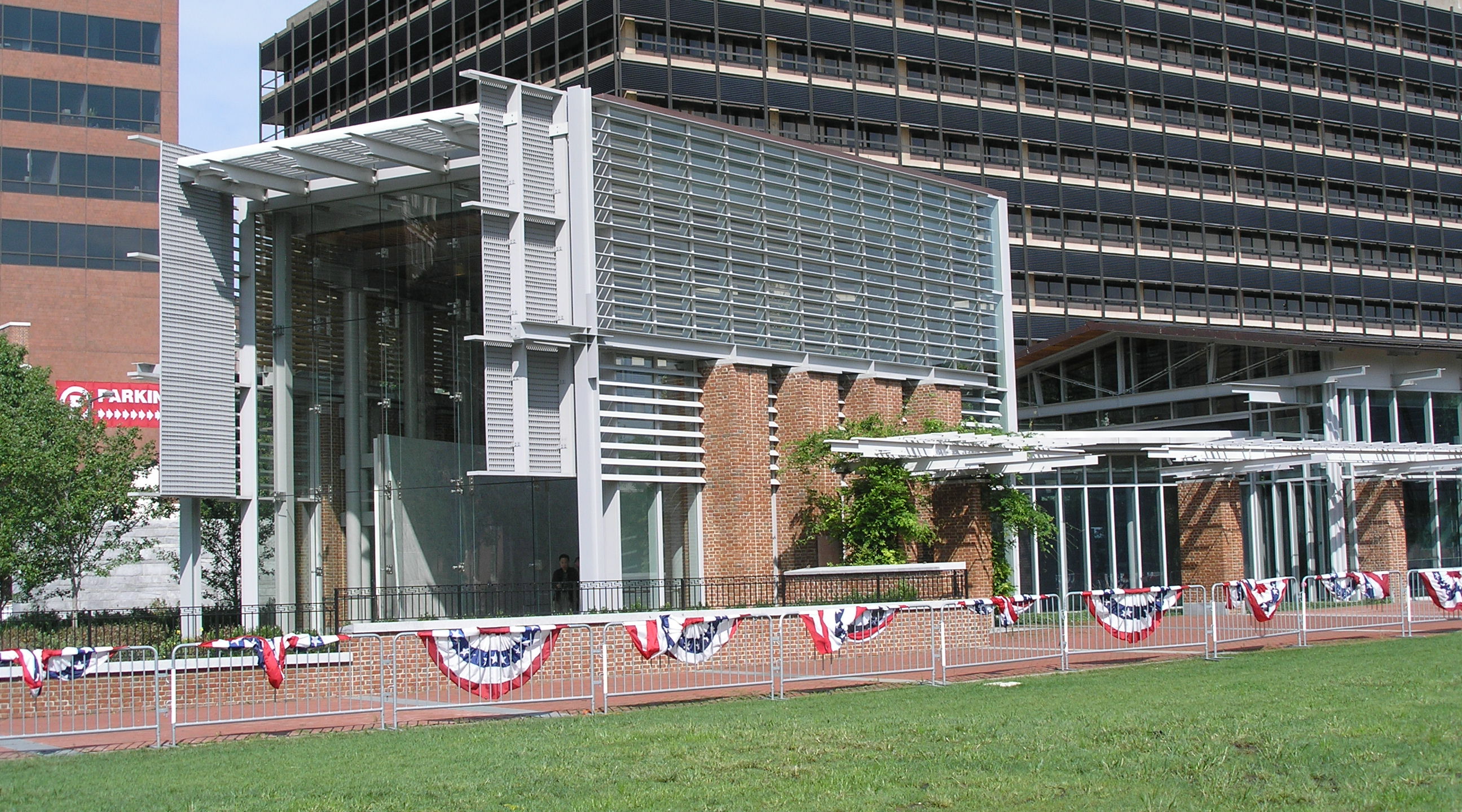
Liberty's Prison

Liberty’s Prison

On my second visit to Independence Park, I spotted the Liberty Bell Center, and it saddened me. The Liberty Bell is no longer just “there”, like our liberties should be. It is encased in a steel and glass structure, surrounded by guards and various security devices, reminiscent of a prison. It also, oddly, has the look of a high-end shopping mall, meaning not only is Liberty imprisoned but it’s also commercialized (they should call it Liberty Disney). I was so repulsed by the appearance of the Liberty Bell Center from afar, I didn’t have it in me to go there. Liberty was imprisoned and I didn’t want to be stuck on the outside, pressing my face against the glass in the hopes she’d remember me in her confinement.

I think the NPS has toned down the security in the intervening years, and I’ve heard from others that the Center is actually a pretty nice facility. But for me, the illusion has been shattered. The Liberty Bell, like the very civil liberties it represents, is not just cracked but contained, with an admission fee, groin groping, and gift shop.

[Photos on this blog entry are mine and thusly copyrighted.]

——————————————————

Links:

Independence National Historical Park

Founding Fathers Fetish (slate.com)

3D Tour of the Liberty Bell

Google Map of Independence National Historical Park

Read Full Post »

Tales of Infinite Sadness

I started my expedition through all the units of the National Park System to satisfy my fascination with all aspects of nature (flora, fauna, geology, aquatics, atmospherics). I did not expect to quickly fall in love with the other side of the parks: the historical side. As I began to tour each of those smaller sites, reading up on the history of each and their placement in the overall scheme of things, I also began to see the Great American Narrative forming, piece by piece, and was inspired to blog about it. It is only by seeing all these bits and pieces, filling in all the gaps created by our own, pufferied view of history, can one really see who we are and what we’re all about.

Yes, we are writing the Great American Narrative. And oh, what a narrative! We have heroes and villains, success and failure, trauma and reprieve, disaster and rebuilding, winning and losing. But through it all, there is something that is clear: we are making forward progress. Oh, sure, we’ve had setbacks. Right now, between lingering recession, erosion of certain civil liberties, the War on Terror and a culture that pits right against left in a Kobayashi Maru of political degradation, it feels like we’re going backwards. But really, we’d have a long way to go before we fall back to where we’ve been. Think about it: there’s no way any of our founding fathers would ever have imagined us having a half-black President. Like him or not, that’s a massive advancement from our formation over 225 years ago, when we held nearly 700,000 souls in lifelong bondage (a number that would swell to nearly 4 million by the time the War of Emancipation).

OK, so maybe progress is a little stalled …

That’s the interesting part of the Great American Narrative: we always seem to come out ahead, one way or another. The slaves were freed, but then they had to suffer through Jim Crow segregation, racial discrimination, institutional poverty, entrapping government subsidy programs, and bad educational systems, yet are finally coming out the other side. Sure, we’re not post-racial yet, but you can tell we’re really, really close (I’m guessing one more generation and we’re done with it — the recent Trayvon Martin murder debacle notwithstanding). Women also have made gains, from being the Great Unseen to becoming the major breadwinner in 40% of households and damn near winning the Presidency themselves. We’ve seen advances everywhere else, from sanitation & health to science & technology to occupational safety and even how we treat our children. Yep, we’re winning everywhere.

Well, we’re winning everywhere, unless you’re talking about the American Indian. When it comes to the Native American, there are no tales of victory. There is no Appomatox. There is no Seneca Falls or Nineteenth Amendment. There is no VE Day or the fall of a Berlin Wall. There is no eonomic security or energy independence. When it comes to the Native American, there is only one narrative, and that is a long tale of misery and betrayal and hardship and defeat and pain and infinite sadness.

The Parks reflect this in spades. Every park has some tiny, preamble segment of its visitor center museum dedicated to “early inhabitants”: always some native tribe who “lived off the land” only to, inevitably, be driven out of their homeland, be defeated in battle, be wiped out by some disease or pushed into starvation through overhunting or economic blockade. The lucky would be stuck on some downtrodden reservation, their pride replaced by the plagues of alcoholism, obesity and diabetes.

rez_house

North Dakota reservation house, circa 2009

Horseshoe Bend is just one of hundreds of chapters in this sad, sordid book of misery. In this case, it is a tale pitting one side (the Cherokee tribal nation) against the other (the Creek) for the benefit of the middle (white Southerners). This particular Creek tribe wanted to keep their lifestyle and land and resisted American assimilation. White European settlers wanted the land for their own expansion. The Cherokee were allies of the U.S. and joined up with the militias of several states (led by future New Orleans hero and President, Andrew Jackson) to take Creek land through “justifiable” retaliation for some Creek raids on farms and forts throughout Alabama. The Creek, despite fortifications that impressed even Old Hickory, were eventually surrounded and horribly defeated. Out of a thousand Creek warriors, only about 200 escaped to south Florida to join up with the Seminoles. They had to surrender 23 million acres of land to Alabama and Georgia (2 million of which would go to the same Cherokee who turned their back on their brethren). It would end up being a short-loved victory for the duplicitous Cherokee: within 25 years those same people were expelled from Georgia & Alabama and forced to march down the Trail of Tears to dusty, infertile Oklahoma, where they would lead a hardscrabble life for generations. In the end, the only victor would be the white Europeans who used trickery, deception and long-standing inter-tribal rivalries to defeat the natives and take their land.

1b-002-ss-07-egander_lg

Only those with the bleakest heart can travel through Horseshoe Bend and the rest of the 400+ units of the National Park Service, and not be touched by the Tales of Infinite Sadness of the Native American.

[Unfortunately, I did not own a digital camera when I visited Horseshoe Bend.]

=========================

Links:

Horseshoe Bend National Military Park

Creek-Cherokee War

Scientific analysis of the demise of the Native American

Google map of Horseshoe Bend

Read Full Post »

Boring Built America

The National Park Service has a couple hundred small, unimposing, mundane historic sites spread all over the country. They don’t cover events of magnitude, like Pickett’s Charge or the Gold Rush or the battle of the Alamo, but they are loved by their local communities and tell important stories nonetheless. Hopewell Furnace, in rural south-central Pennsylvania, tells one such story: mundane, boring, but vital.

Hopewell was an early ironworks, a forging business operating in  the late 18th, early 19th centuries. There, you can learn how charcoal was made; how limestone was harvested; and how those two materials were combined in a blast furnace with raw ore to form iron, the metal that transformed the world. Mundane & boring? Sure. Hopewell is well-maintained, the people are pleasant, the visiting children seemed to like it, but it isn’t particularly exciting. But you know what? Boring isn’t so bad: it built and defended this nation for over 200 years now.

It shouldn’t be too great of a leap to understand that iron built America. We look at the musket-carriers of the Revolutionary War with great reverence, but if it wasn’t for places like Hopewell, there would be no iron or steel for the musket barrels, wagon wheels, and cannons. We were in the early days of being an industrial juggernaut, producing 30,000 tons a year at the beginning of hostilities. Iron built the weapons that fought off enemies, shot at brothers, and conquered new territory. But it didn’t stop there. Iron built the railroads, and the great engines that rode on them. Iron built the ocean liners that shipped our goods everywhere in the world. Iron built the buildings and skyscrapers that housed finance, engineering, science, and even religion.

Yes, it’s all very poetic. What’s not poetic is how mundane it all is. Hundreds of men crawled around in mines, breathing in noxious fumes and dust and working themselves to the bone to extract ore. Dozens more gathered wood and endured the laborious process of turning wood into charcoal. Others dug limestone from cliff faces. Then there were the oxcart drives and teamsters, hauling stuff to and fro. Awfully boring, awfully dangerous, awfully hard work, all necessary to the production of iron at Hopewell Furnace.

But that’s what built this country. Not politicians, not “captains of industry”, not wealthy elitists, nor Harvard graduates or published authors or generals or soldiers or even architects. All of those occupations are worthless without real people doing real boring, mundane, uninteresting, hard work. Even today, it’s the trades who continue to build stuff. Whether they live & work in Pennsylvania or Mexico or China, today the entire world is built by the hard working folks doing the most boring of tasks over and over and over.

Next time you’re bored, remember: boring built America. And if you’re going to do something boring & monotonous, at least make it worthwhile to someone.

[All pictures are mine and thusly copyrighted. A few more, in black & white, are here.]

==================================

Links:

Hopewell Furnace National Historic Site

A Brief History of Iron & Steel

Pennsylvania Iron Furnace Sourcebook

Voluntary Simplicity

Google map to Hopewell Furnace

Read Full Post »

Charisma is My Dump Stat

Ever since I was a young pup, growing up in the Western Massachusetts confluence of mill towns and dairy farms, people routinely sang the praises of Franklin Delano Roosevelt. “He saved the country and the people” was the mantra. If you were a blue-collar worker, FDR was a hero. If you were a farmer, FDR was a hero. If you held degrees in the arts or sciences, FDR was a hero. His name was always spoken with reverence. “He got us out of the Great Depression”. As a kid, I never understood it, but it was taught to me from a very early age. Actually, “taught” may not even be the operative word here, it was almost genetic.

This reverent view was especially held by those who actually lived through the Depression. My grandparents – disinterested in politics otherwise – loved FDR, as did their brothers & sisters, family friends, and others of the same generation. My parents’ generation, mere tweens during the 30’s & 40’s, also spoke lovingly of the man. It’s only now, with my grandparents’ generation is 20 years dead and my parents’ rapidly disappearing, that FDR is receiving critical attention by the general public.

I find this utterly fascinating. Sure, pundits & partisans would complain about the economics of the New Deal and the court packing scandal, but FDR had to be dead 60 years before the common man started questioning his Presidency and leadership. That’s almost three generations! I can’t think of anyone short of George Washington and perhaps Thomas Jefferson who escaped such criticism for so long. The people of FDR’s time had to basically die before public opinion turned against him. Today, we decry the previous loser the day after Election Day.

How in the world does this happen? How is it even remotely possible that any leader can earn such true devotion amongst his people? His wasn’t based on fear, nor was it based on indoctrination (contrary to right-wing conspiracy theorists). The devotion FDR enjoyed was real, and true, and long-lasting. This is the real story of FDR: not the impact of his policies but the power of his charisma. Utterly fascinating!

I have many flaws. Perhaps the most striking one is my near-total lack of charisma. I’m not particularly likable, and have virtually no leadership skills. I couldn’t convince people to escape from a burning building. If I was at a picnic and implored people to not eat the botulism-tainted potato salad, a score of ambulances would be needed to cart away the doubled-over masses. To me, strong & genuine leadership qualities are as alien as an iPhone to Neanderthals. That is why I find FDR so fascinating. His charisma is akin to string theory: practically unknowable.

Here’s my own take on why Roosevelt inspired such devotion: he had the “perfect storm” of confidence, communication, competence, and empathy. His family, especially his mother, Sara, gave him a good education and instilled in him a measure of self-confidence absolutely required of a good leader. FDR was a great communicator. His speeches are the stuff of legend and they were delivered, not as oratory, but as conversation, meaning they were genuine. Was FDR competent? Sure, you could say his policies weren’t necessarily wise, but he got them done. People respect people who get things done, action is rewarded far greater than thought or bearing. And FDR did accomplish an awful lot in his 12 years as President.

So that leaves empathy. Empathy is the capacity to care about your fellow human being: to see, understand and relate to other people and their troubles. In the beginning, FDR (like most bluebloods) didn’t have much in the way of empathy. He was “upper crust”, raised in the bubble of Hudson Valley prestige and private school. He was not fit to lead the U.S., at least not in a manner to receive such a tremendous amount of public adulation. But something happened that gave him the empathy he needed to be one of the top five Presidents in history. That something? Polio. To alleviate the pain of polio (or perhaps Guillain-Barre syndrome), FDR would visit Warm Springs, Georgia. There he’d meet poor farmers and others trying to live in impoverished conditions. It’s there he learned to empathize with the common man, and where he gained the final skill required to be a strong leader.

It’s both sad and relieving that presidents like FDR are far and few between. On the one hand, we could certainly use more competence in our nation’s capitol. We are certainly sick and tired of politico-speak (the near opposite of  good communication). And empathy? If there’s a skill that’s dead in Washington, it’s empathy. That’s why our government is failing us, that’s why Congress has minute approval ratings, why our President — like the one before him — barely holds 50%, why no one trusts the courts and dissatisfaction rules the land.

But on the other hand, imagine what leaders like FDR can do. He inspired such huge devotion, devotion that lasted for decades, can you imagine what would have happened if he wasn’t an honorable man? Well, carnage, that’s what. If history has taught us anything, it’s “beware the charismatic man.” It’s the people who inspire loyalty and devotion in others who are the most dangerous.

We got lucky with FDR. We may not be so lucky with the next one.

[I did not own a camera when I visited Hyde Park. All photos are in the public domain and pulled from various sources, including those links given below].

=======================================================

Links:

Home of Franklin Delano Roosevelt National Historic Site

FDR Presidential Library and Museum

FDR’s Ties to Georgia (University of Georgia site)

American Rhetoric: Top 100 Speeches

Google map to FDR’s home

Read Full Post »

« Newer Posts - Older Posts »