Feeds:
Posts
Comments

Posts Tagged ‘National Parks’

Hope, Perserverance, and Strength

2010 has been a tough year. It’s been a tough year for me, for my family, and for my friends. It has been a tough year for most of the citizens of this great nation of ours, from the lobster coast of Maine to the shrimp coast of Louisiana; from the suburbs of California to Las Vegas to Cleveland, Ohio; from the financial houses of our major cities to the small businesses in your hometown. From sea to shining sea, people have lost their jobs, lost their homes, lost their pride. Some have lost their marriages, lost their children, or even lost their freedom to a government which seems to have lost its mind. Some have lost loved ones in battles overseas, to the debilitating effects drugs or alcohol, or to highway accidents at the hands of the thoughtless and careless. Some have lost their farms, lost their businesses, lost their pensions, or lost their minds due to debilitating dementia in their older years. Even those of us fortunate enough not to have lost any of these things are still feeling the stresses of a horrible economy and a nation seemingly going astray. For we know we could be next, we could fall, we could fail, we could lose, we could succumb to the great malaise that has crept over the country. Most of us are only one paycheck, one bad performance review, one missed mortgage payment, or one cancerous lesion away from total financial ruin and a life spent in a cardboard box under an I-84 overpass.

But today, on the eve of our only near-universal High Holy Day, there are still opportunities for hope. The source of that hope is not only in the kind messages carried across a faraway land by a humble man two millenia ago, there is also a source of hope in our own history, a source of hope in the perseverance of the best of mankind.

As a people, we’ve suffered a lot over 400 years of history. Our ancestors suffered the savageness of the frontier; under the harsh yoke of slavery; from the invisible demons of imported diseases run amok. They suffered life in filthy tenement buildings in New York City, festering sweatshops in Chicago, indentured servitude on Western railroads, or the penniless existence of Depression-era Appalachia. They suffered in the poisonous foxholes of France, on marches of pain in the Philippines, in the frozen mountains of Korea, and in the steamy jungles of Vietnam.

Yet through all this suffering, all this pain, all this trauma, we’ve survived. We’ve not only survived, but we’ve come out stronger and better than before. Sure we’ve strayed from time to time, for we are only human, but the trend is still upward. This should be, must be, a source of hope for all of us. We’ve gotten ourselves through all of that, and we’ll get through this as well. There is a way out, a way through, and a shining light at the end of it all. It requires hope, and perseverance, and strength.

———————

There exists a great, philosophical synergy between Christmas and New Year’s Day. Christmas is a celebration of hope, hope brought to the world by a great prophet long, long ago. It is also a time to reinforce the bonds of family and friends and neighbors, for those bonds should give us strength. It is also a time to regroup, rethink, catch one’s breath and propel yourself into the New Year with the strength and hope to enable you to persevere, overcome, and succeed.

I wish all my readers a very Merry Christmas, and much success in the New Year. 🙂

Read Full Post »

Peace & Respect

In this blog, I try to recreate the thoughts, experiences & emotions I felt during a visit to each site in the National Park System.

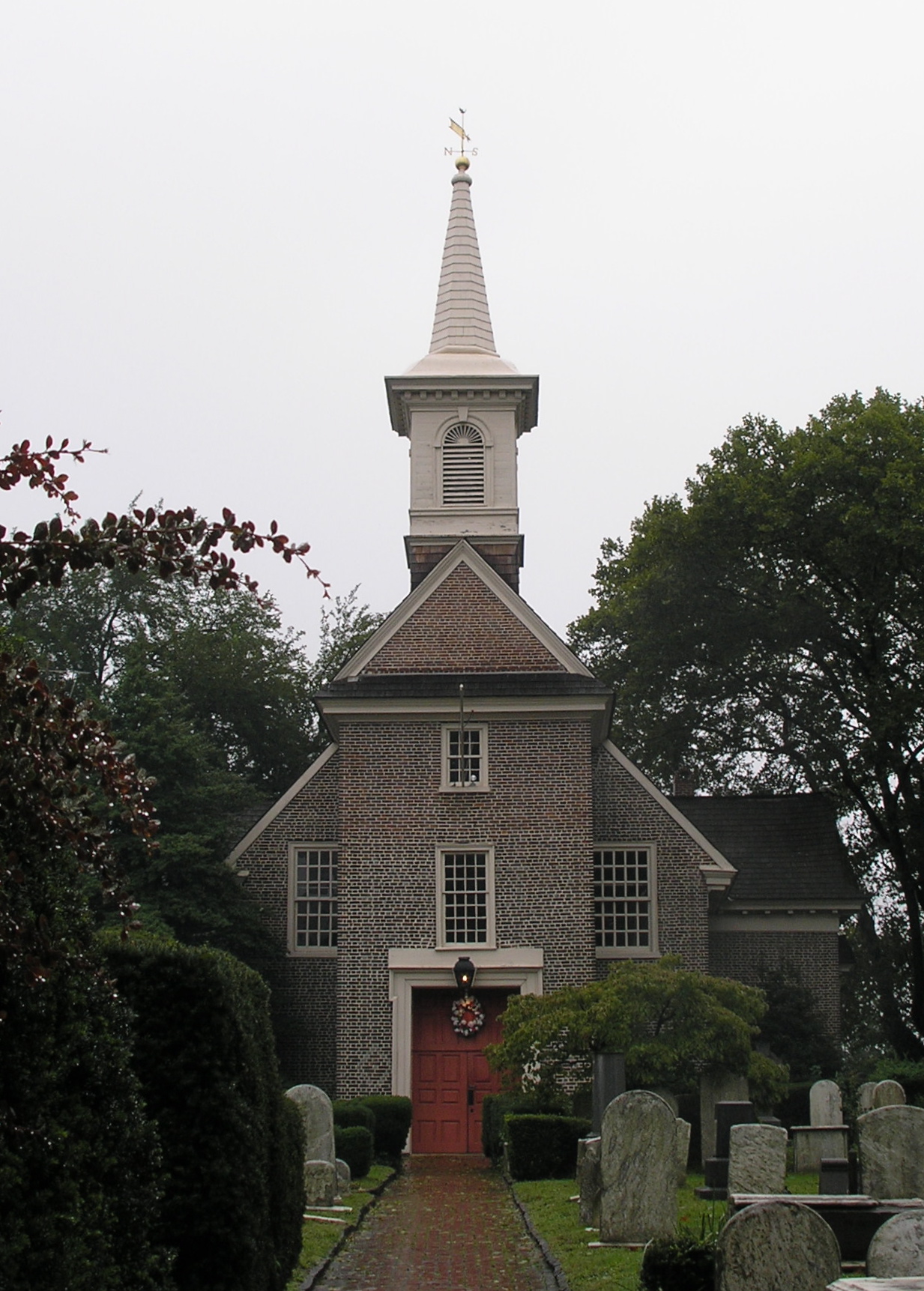
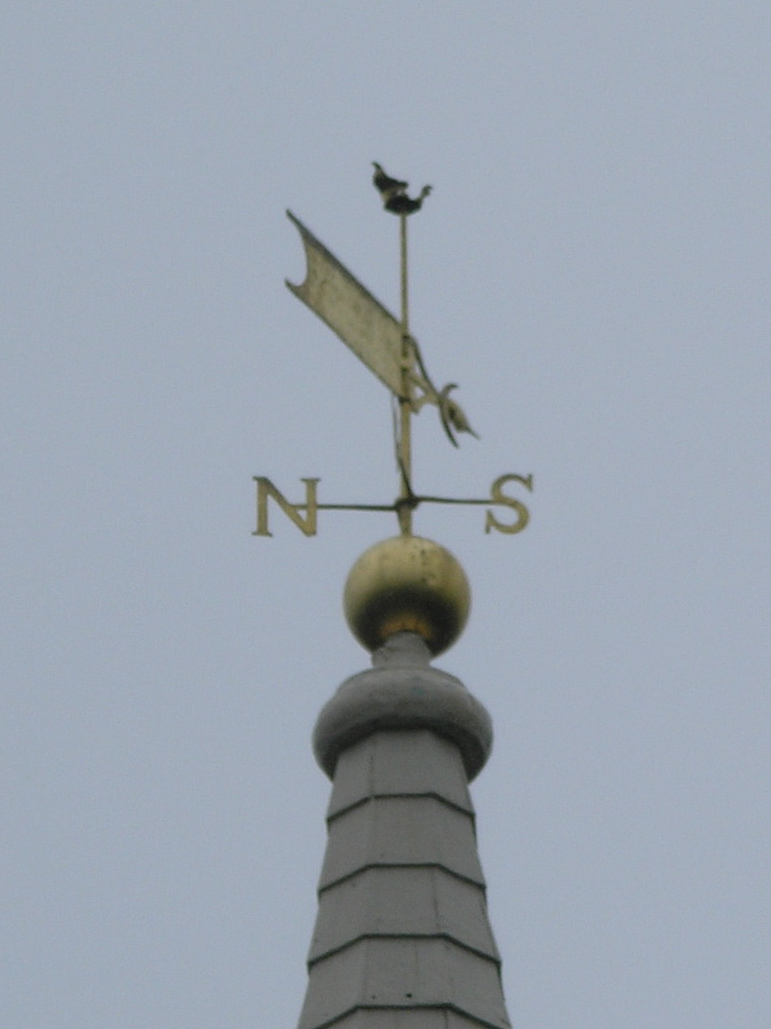
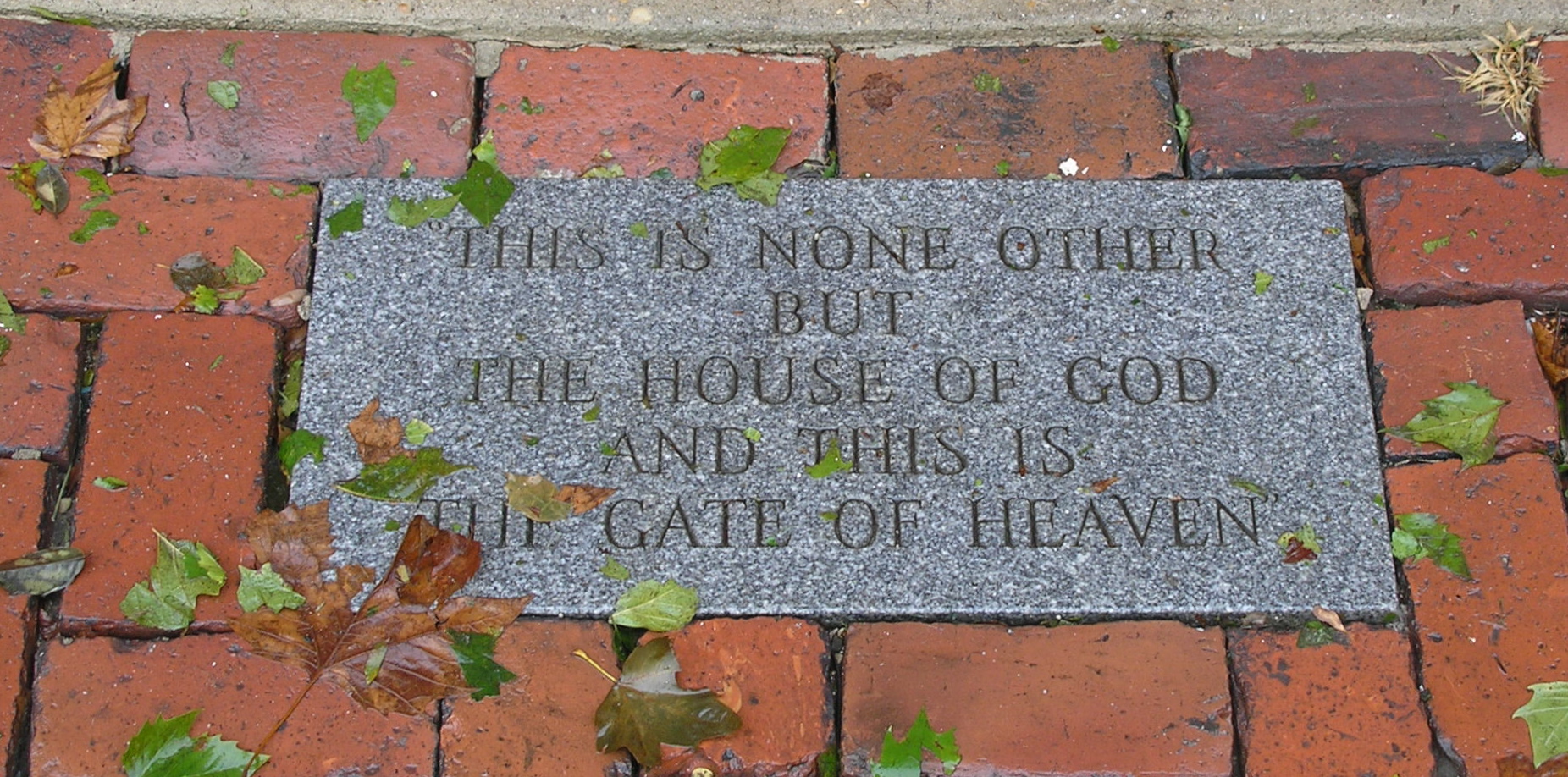
On the day I visited Gloria Dei, the old Swedish church in Philadelphia, there were services going on. Therefore, I unobtrusively snapped a couple of pictures and moved on my way, as quiet as I could be. This post will reflect that visit: a few pics and a few  unobtrusive sentences.

Peaceful people practicing their faith in a peaceful manner need to be respected. Give them that respect, whether it’s in the NPS or not.


[This post is dedicated to the memory of David Ericson, formerly of Naugatuck, Connecticut. He was a church choir singer, Boy Scout leader, proud father, devoted husband, strong UCONN Women’s Basketball fan, the nicest guy I have ever worked with in a professional setting anywhere anytime, and a true-blue Swede. Rest in peace, Dave.

Photos on this post are mine and thusly copyrighted.]

======================================

Links:

Gloria Dei Church National Historic Site

The Old Swede’s Church

Swedish Immigration in North America

Google map to Gloria Dei

Read Full Post »

Preconceptions and Perceptions

I did not want to write this post on Gettysburg. I’ve been dreading it for some time, but now it’s time, and I have to write it.

Gettysburg marks the place of one of the primary events in American history: the end of the farthest advance for the Confederacy, the turning point for the war that saved the Union, a war whose dead were honored in one of the greatest speeches ever given on American soil. This post should be an amateur historian’s dream.

But I can’t write about any of that. Instead, my mind goes to stuff like this:

Threats to Gettysburg

Land Use: The Second Battle of Gettysburg

Gettysburg, Ground Zero: Secular Sacred Spaces

For years, I’ve been reading about overdevelopment near Gettysburg. Story after story, anecdote after anecdote, describing all the fast-food restaurants, shopping plazas, and apartment blocks rising up near the Hallowed Ground. The despoilment of the views, the crush of traffic, the smell of greasy, fatty fried foods wafting through the monuments. When I finally made it to central Pennsylvania, I had all that … stuff … in my head. And that’s exactly what I saw, exactly what I smelled, exactly what I felt. Every time I stopped to read a memorial to a state’s militia, I saw parking lots. Every time I tried to contemplate the pained or foolish decisions of a military commander, a billboard loomed in the background. Every time I wanted to quietly ponder the fate of a slaughtered battalion, I smelled the unforgettable, rancid stink of Kentucky Fried Chicken. I was distracted and ultimately disappointed by my visit.

But then an odd thing happened. In researching this post, I decided to do a little googlemapping. A couple of clicks later, I found something amazing: the stretch of developed road, the concentration of fast-food restaurants, the prevalent strip-malls, are really only in a small corner of the park. I then drove to the park again, years after my first trip, to see it again for myself. Now that I have a few more historical park visits behind me, I feel I can honestly say Gettysburg isn’t that bad. Which begs the question: is this level of development really an impingement on Gettysburg, or is all the press about the impingement on Gettysburg causing an impression on the visitors that isn’t necessarily true?

I have to be honest with you and with myself: as smart as I think I am, as impartially observant as I want to be, as factual and non-judgmental as I should be, I am still a human being, and I can still be influenced by the media, by public opinion, by emotion, and by rumor. I now think that’s what happened during my first visit to Gettysburg, and alas, those preconceptions effectively ruined my trip.

The problem of “paving over our history” is real. Every year, more historically significant sites and buildings are demolished, defaced, or allowed to fall into decay. There are reports of this all over the country, from adobe churches in New Mexico to the World Trade Center Vesey Sreet staircase. They even want to build a casino near Gettysburg (a terrible idea in my opinion). We’re losing or despoiling our heritage. It’s a sad thing.

Or is it?

Like all great ideas, the desire to protect our historical heritage can be taken too far. We can’t stagnate, we have to continue to make progress, and change is part of progress. I once read there is no stability, no steady-state, there is no maintaining the way things are (or were). There is only advancement through change, or there is entropy and decay. The battle of Gettysburg was fought around the existing village of Gettysburg, it would have been unfair to prevent that village from growing over time simply to preserve a battlefield. If we try to hold things close, try to latch on to the past, try to keep everything the same, we’ll never move forward, and succumb to entropy and decay. The town of Gettysburg would have died in the name of “preservation”.

When it comes to history, it is important that we preserve what is truly important, the sites that mark the true turning-point events, sites that can teach our generation and all the future generations, and put the continuing story of America into the proper context. But we can’t preserve everything that once was, because then we’d have no room for what will come. Historic preservation is like every other good idea: it can be taken too far.

But can we at least get rid of some of the KFCs out there?

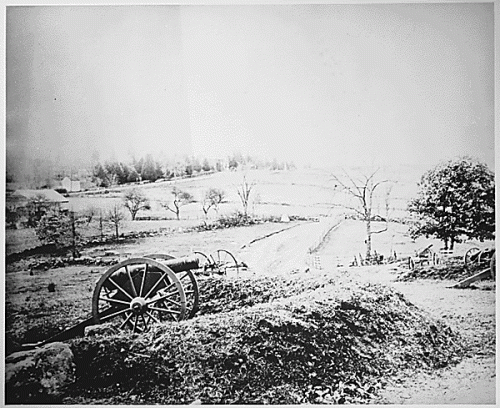
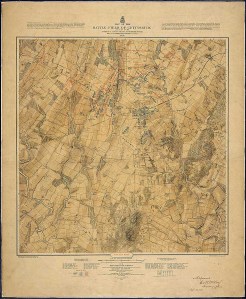
[Again, I visited this site before I got a digital camera. Everything’s from the National Archives. I know this post isn’t what some of you may have expected. Trust me, I love Civil War history. Check out my Antietam and Chickamauga posts.]

===================================================

Links:

No Casino Gettysburg

National Trust for Historic Preservation

Historic Preservation: Gentrification or Economic Development

National Archives Maps of Gettysburg

Appalachian Brewing Company

Read Full Post »

Right Place, Right Time, Right Action

In 2002,  I decided to stage my escapade through Kentucy and Indiana from Louisville. From there, I would take day trips to Lexington, Abe Lincoln’s birthplace,  Mammoth Cave, and George Rogers Clark National Historical Park.Most times when I take my park excursions, I plan at the last minute and don’t do a ton of research. And most times I find myself disappointed by the uninspired mundanity of my accommodations, and the realization I may have missed something grand or at least interesting.  However, for once, my lack of foresight had good consequences. I figured Louisville would be a typical, decaying, Middle American city, with typically craptastic restaurants and nothing much to see or do. Well, as occasionally happens during my ill-planned sorties,  I was shocked and pleasantly surprised. Louisville actually has a hoppin’ Bohemian district!

This place was great. Lots of restaurants, high-end shopping (which meant cadres of good looking women), used book & music stores, antique shops, and great clubs & brewpubs. It had head shops, tie-dye stores,  acupuncturists, and even a Church of Scientology (located in some sort of run-down, drive-through bank building). I couldn’t believe it. Here — lying in stark contrast to the decidedly Christian backwater that comprises the rest of Kentucky — is this little nook of cultural strangeness. Hard to believe this section of Louisville is in the same state as the Creationism Museum with its displays of man peacefully co-existing with dinosaurs….

Of course, it is only a couple square miles. One can’t expect more in this part of the country. Heading northwest from the city, it doesn’t take long to get back to what one would expect:  a traditionally decaying mill town; surrounded by smallish, uninteresting suburbs; dropping into Indiana corn country.  It’s not a bad ride to Vincennes, really. Yeah, it’s a bit boring, but the countryside is moderately unspoiled and you do pass through the Hoosier National Forest. There are worse 2-hour drives in the country, I’ve been on some :coughwesttexascough:

—-

Poor, forgotten George Rogers Clark. A Revolutionary War general, he’s sadly missing from the text-book lists of American founders. That’s a big list: Washington, Jefferson, Franklin, Lee, Lafayette, Kosciuszko, Hancock, Adams. Yet Clark’s vision ensured the westward expansion of a post-revolutionary, fledgling United States of America. It’s actually a funny story (in a geeky, history-buff kinda way).

It all started with the settlement of interior North America. The French got their first and got busy. By the mid-18th century they had settlements from modern-day Quebec down the St. Lawrence River to the Great Lakes and down the Mississippi to New Orleans. They also had spots on the Ohio River and other tributaries. They were in a pretty good position actually, but their settlers were more concerned with fur trapping and trade than continental domination. The Seven Years’ War with England (called the French and Indian War by us Yanks) came along, the French got beat pretty badly and, in the Treaty of Paris, England gained possession of all those forts. Of course, the Brits being the Brits, they figured they could just plop some redcoats in the forts and claim lordship over the lands. The French settlers still worked their farms, collected fur pelts, and paddled up & down the river in trade like they had for a generation, while theoretically under British “control”.

Then along came the American Revolution. The thirteen colonies wanted their independence, and badly. Unfortunately, the colonists also knew the British would be a problem even if they won. The Brits would control almost all the fledgling country’s borders: their territories to the north (modern-day Canada) and all these forts along the lakes and rivers to the west. So even if the colonies gained independence, the new nation would still be bottled in, and likely harassed in perpetuity, by Great Britain. Kinda like living in your mother-in-law’s house after the divorce. Awkward!!

George Rogers Clark saw this problem. He beseeched the Virginia militia commanders, who saw the brilliance of his proposal and lent him a band of raiders to harass these forts. Up they marched to the Ohio River, and then down to the first fort … which they took without much of a fight. Then they  marched to the next fort, and … took it, too, without much of a fight. Why? Well, the French settlers kinda didn’t give a crap for the British, and basically told the militia “well, go ahead and take it, we don’t care. We just want to kill some fluffy little animals.” The two or three Redcoats manning those forts, realizing they had no logistical support, high-tailed it out of there or just sat drinking their tea and said “meh”. Result: the colonial powers now owned the Northwest Territories, the Great Lakes, and the Mississippi down to Louisiana. Hardly any casualties (other than long marches in the wilderness would claim).

This was met with great “huzzahs!” by the Continental Congress and Washington’s army, and deservedly so. Now the country had a chance to not only be independent, but have the breathing room it needed to keep it safe and sound for the foreseeable future. Clark was heralded and promoted and eventually fought in actual combat situations. But he’s honored at a humble little shrine in Vincennes, Indiana for basically ensuring the Brits wouldn’t be on our flank for all time.

If there’s a story to take away from Clark, it’s this: it’s not only about being in the right place at the right time, but taking the right action. And it helps if the French don’t give a crap.

[Sadly, I didn’t own a digital camera when I visited GRC NHP. All pics are public domain from Wikipedia or the links referenced below. Some also came from www.earlyamerica.com, a nice, simple site on American history I thought worthy of blogrolling to the right.]

==============================

Links:

George Rogers Clark National Historical Park

The Highlands of Louisville

Creationism Museum

Neat Kentucky history link

Read Full Post »

« Newer Posts - Older Posts »