Feeds:
Posts
Comments

Posts Tagged ‘nature’

Mammoth Cave National Park, Kentucky

I was a freshman in high school when I was introduced to Dungeons & Dragons. I was smack in the middle of the target demographic for Gary Gygax’s brainstorm. I read a lot of Greek myth as a boy (I was more fascinated by Odysseus and Bellerophon than I was by dinosaurs). Rankin-Bass’ 𝘛𝘩𝘦 𝘏𝘰𝘣𝘣𝘪𝘵 introduced me to Tolkien’s 𝘓𝘰𝘳𝘥 𝘰𝘧 𝘵𝘩𝘦 𝘙𝘪𝘯𝘨𝘴, which I read voraciously and repeatedly. The 𝘚𝘪𝘯𝘣𝘢𝘥 movies came out in the prior decade and hit rerun television so often I almost knew them by heart. Then, of course, there was 𝘔𝘰𝘯𝘵𝘺 𝘗𝘺𝘵𝘩𝘰𝘯 𝘢𝘯𝘥 𝘵𝘩𝘦 𝘏𝘰𝘭𝘺 𝘎𝘳𝘢𝘪𝘭 (Ni!). Between a deep understanding of these pop-culture references, my coke-bottle glasses, and a total lack of athleticism, it was inevitable I’d play D&D. It was the perfect fit: a social activity that required imagination, a propensity for dick jokes, and math. Lots of math.

Lots of other things, too.

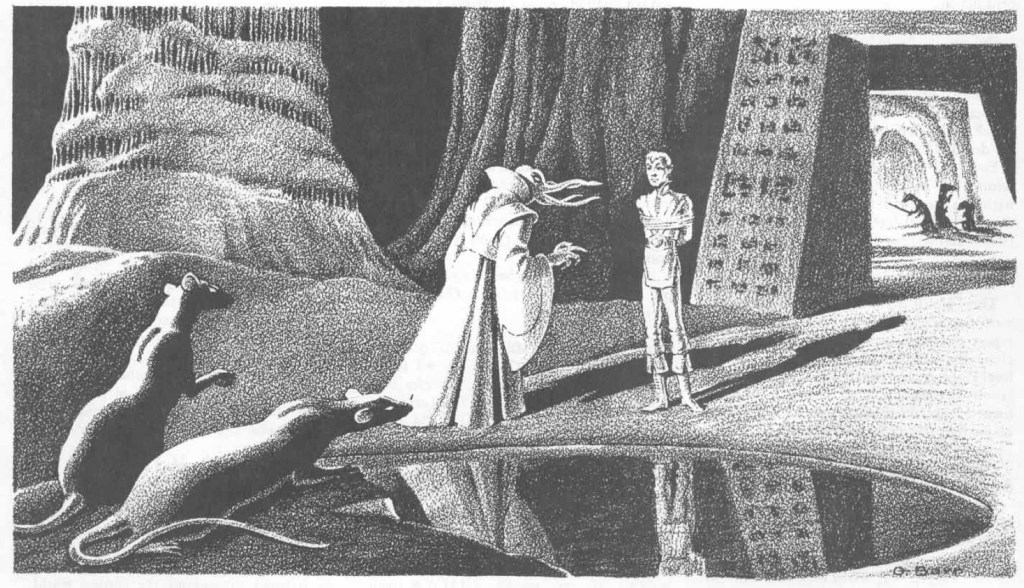
One of D&D’s milieus is the underground. “Dungeons” is in the name, after all. Not just creepy basements under spooky castles, but vast networks of deep tunnels; expansive caverns housing fantastic cities; underground rivers filling huge underground lakes; all filled with horrific monsters and evil civilizations. One of my favorite adventures was Descent Into the Depths of the Earth. You play a band of heroes (of course), hot on the trail of evil underground-dwelling elves called “drow”. Traversing miles of tunnels, wide enough for trade caravans, you search for clues in warrens of troglodytes, and negotiate with schools of walking, cannibalistic fish-men called “kuo-toa”. Danger lurks around every dark corner. Adventurers succeed or die gruesome, horrible deaths. Great fun.
:slrrgrrlph: Have you read “The Watchtower”? :slrrgrrlph:

Of course, it’s all fantasy. All these fictional worlds, whether Dungeons & Dragons, or Riftworld, or Middle Earth, or Pandora, or whatever, are fantastic places that can’t possibly exist. Physics, gravity, geology, hydrology: they simply don’t work that way. You can’t have flat planets, you can’t have floating islands, you can’t fly a dragon to the moon, and you can’t have huge underground cities connected by caravan-wide tunnels.

Or can you?

Websites around the world proclaim this or that to be the “world’s biggest” or “world’s best”, but you rarely believe such exaggerations. There’s always disappointment, always overselling, always that feeling of being let down, just around the corner. But when I went to the original natural entrance of Mammoth Cave, a gaping maw at least 30’ wide, I knew this was, indeed, something special.
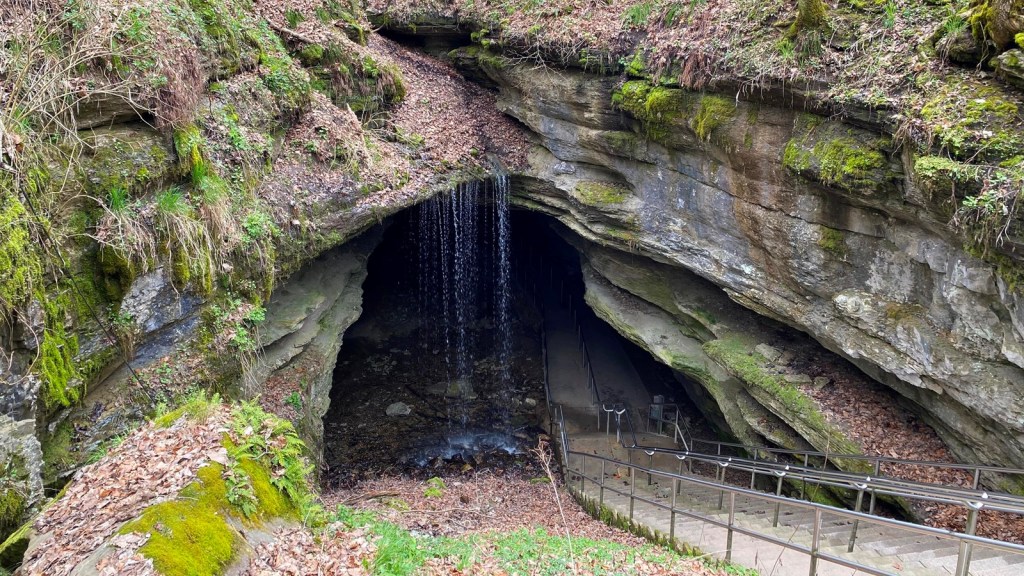
Natural Entrance

The cave system contains over 400 miles of passages, with more being discovered every year. Some of these passageways are 30’ wide, and tall enough for a school bus. Many of them are easy walking (constructed walkways mostly for accessibility and protecting fragile formations). Deeper down are the windy, spelunk-worthy crawl-ways, but there’s also an underground river where they used to offer boat tours! It’s hard to explain how large and fantastic these caves are without seeing them, and unfortunately I didn’t have a digital camera all those years ago when I toured. I’ll throw links at the bottom of this post, you can see for yourself the scale of the thing.
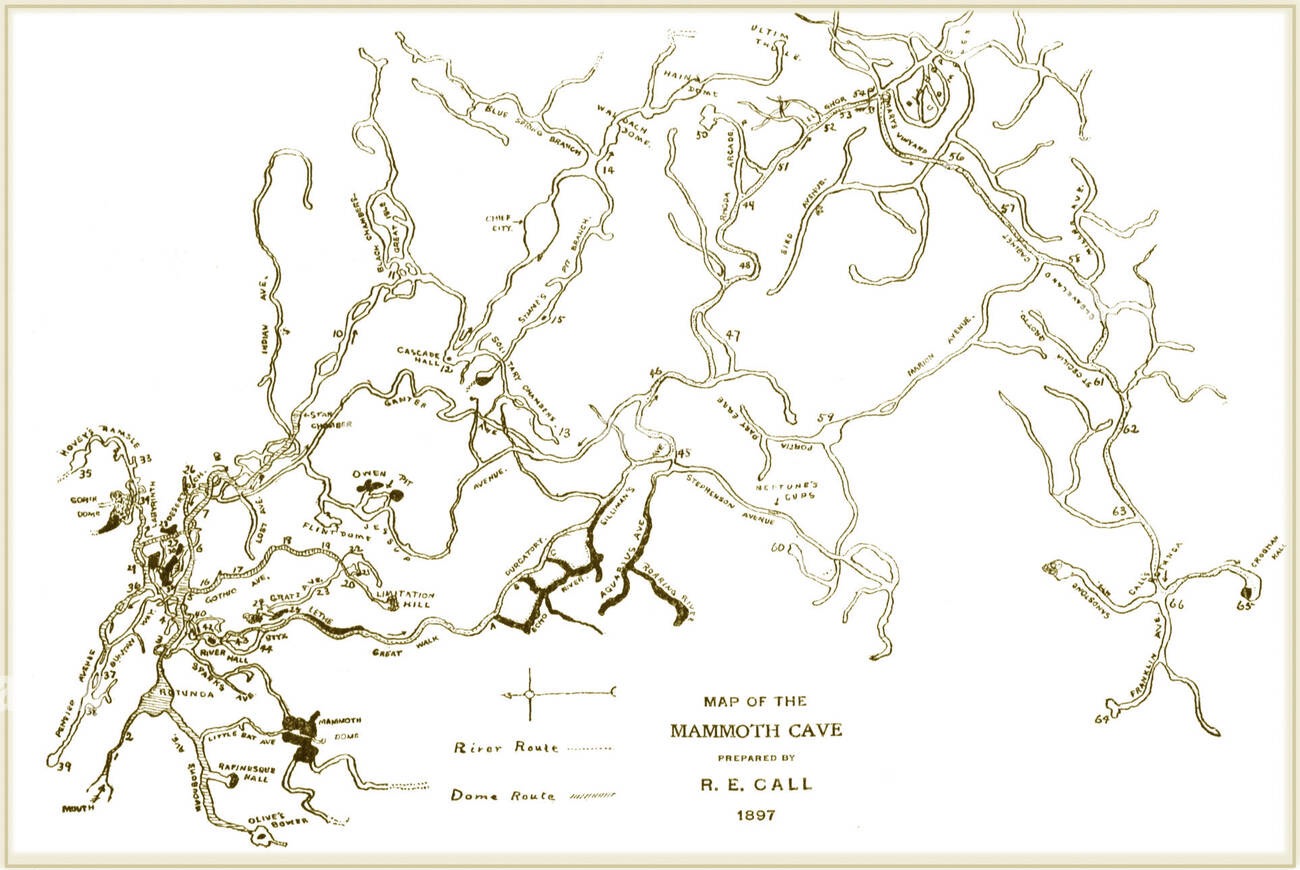
You Are Here

I love letting my imagination run wild when I go to these places. How can you not envision pre-Columbian Lakota buffalo hunting when you visit Big Sky Country? How can you not imagine great whaling ships when you visit New Bedford, or the struggles of Martin Luther King when you walk the streets of Birmingham, or immense alien spaceships while standing in the shadow of Devil’s Tower? Or drow and kuo-toa whilst inside Mammoth Cave?

I still play D&D from time to time. It hits differently than it used to, of course, but it’s still fun to get together with a bunch of like-minded nerds to roll dice and tell dick jokes and swing vorpal swords at green dragons. It’s cheaper than playing poker, beats sitting around a bar ruining your liver, and there’s nothing but crap on all these streaming services anyway. If you can’t be in the woods, on a mountain overlook, or deep in a cave system, grab some dice and roll up a gnome illusionist.

================

Links:

Mammoth Cave National Park

MCNP: Natural World Heritage Site

Google Maps: MCNP

Nerds Only

Read Full Post »

Forgotten Stepchild National Park

Poor Kings Canyon. At one point, it had a real patriotic name: General Grant National Park, named not after the Civil War victor, but after the General Grant, the second largest sequoia tree on earth (which is named after the Civil War victor). Back then, in 1890, the park only protected the Grant Grove itself. Decades later, after long battles, the rest of the canyon was protected with National Park status, under the boring moniker Kings Canyon National Park.

Kings Canyon gets no respect. It’s in the heart of California’s Sierra Nevada range, a truly beautiful part of the country, but, unfortunately, it’s sandwiched between two behemoths: Yosemite, with its magnificent valley and El Capitan, to the north, and Sequoia, with its groves of massive trees, to the south. Eventually, the NPS merged Kings Canyon with its southern neighbor, and, like Gracie to George Burns, it got second billing: Sequoia-Kings Canyon National Park. But I think that sucks. Kings Canyon deserves to stand alone, as its own National Park.

As usual, I visited Kings Canyon on a big road trip through a slew of National Park Service sites. Yosemite and Sequoia are grand places, to be sure, but they’re also grandly crowded. Yosemite, especially the valley area, were insufferable to drive through. People stopped for every spot of wildlife or beautiful vista, and the light dusting of snow on Day 1, although wonderfully esthetic, only made the drive more miserable. And Sequoia, well, the groves were not only crowded by noisy. All those tourists, yammering on an on. The mansplainers were completely insufferable.

Then I went to poor, disrespected Kings Canyon … and I loved it. Yes, it doesn’t have the grandeur of Yosemite. It doesn’t have the massive sequoia groves. But what it does have are great hikes, hikes where you can be alone if you want to be. I took a valley hike, and I think I only saw one other couple on the trail at all. While everyone else was scrambling for a spot in some scenic pullout, I was doing what I really love: walking in the woods, away from everything.

When you’re on your own tour of the western Sierras, don’t ignore Kings Canyon. It deserves your attention, your respect, and your feet, walking on its trails.

[Pictures on this post are mine and thusly copyrighted]

Read Full Post »

Enchantment Under the Sun

I stumbled into my first trip to the desert. I was in southern California on business, and decided to stay an extra couple of days. After work was done, I took the four-hour drive east on I-10, through the San Fernando Valley and San Bernardino (traffic was surprisingly light), and past hundreds of hypnotizing wind turbines, each of which seemingly beckons you to drive off the shoulder and take a nap (hopefully in that order).

I had not planned to visit the park, it was almost a spot decision. I managed to throw my hiking shoes and day pack into my luggage, so I wasn’t totally unprepared, but I did not do any meticulous planning nor any research into sites to see. Fortunately, it didn’t matter: Joshua Tree is a beautiful park, a perfect way to start touring desert terrains, and is basically an open book. There are no “secret spots”, they’re all out there, easy to find. I fell in love with it almost immediately, touring the Cholla Cactus Garden, driving up to the Keys View vista, and making the trek out to the Lost Palms Oasis. Joshua Tree NP a beautiful place to visit: if you find yourself in Southern California, it’s definitely worth a day trip, even if all you do is a drive through.

At least, I’m hoping it’s still worth a day trip. I was heartbroken to hear the park suffered extensive damage by dirtbag vandals during the 2019 government shutdown. Then there’s the possibility that Joshua trees are going to be extinct before too long. Like everything else that’s beautiful in this country, it’s in danger because we can’t act like responsible adults.

Iconic Place, Iconic Art

The Joshua trees themselves are surreal. There are some stellar photographs of the park out there on the web, it’s remarkably photogenic. Sunsets in particular are fantastic, probably because of Southern California air pollution. I didn’t have a camera when I toured there, but I did buy the photograph shown above from the visitor’s center. I couldn’t find the artist on-line anywhere to give proper credit, and it’s so similar to stock images, I may have been duped. It doesn’t matter: it’s a great photo and I love having it on my wall.

I’m not the only one who found the place to be so fascinating. The most obvious example of art inspired by the park is the 1987 album by U2. Interviews with the band confirm that the harshness, blankness, and mystery of the desert provided inspiration for songs on that album, one that would propel them into megastardom. It’s a great album from a great band with a great motif.

The Joshua Tree wasn’t the only work inspired by the park. The cover of the Eagles debut album contains a photo of Joshua Tree. The delightfully twisted film Seven Psychopaths was partly filmed there. John Lennon recorded The Joshua Tree Tapes nearby. Jim Morrison apparently did acid trips with friends either in J.P. or in the nearby Mojave Desert. That story may be apocryphal, but if you want to read a sadly bizarre true story, read about the funeral of Graham Parsons. Plus hey, you can get some cornball wedding photographs taken there!

It’s so obvious, upon visiting, why deserts are so enchanting and inspiring. The desolation, the parched landscape, and the unbroken vistas makes one think about the vastness of it all. The presence of life, even in such harsh settings, reminds you that damned near anything is possible. Or it may be the heat making you a tad loopy. Either way, it’s a great place to sit and think and get inspired (just bring enough water and remember where you parked).

Bottom line: 5 stars out of 5. Plan to see it if you’re ever in southern California. Like nearly everything else, see it before it’s gone.

Read Full Post »

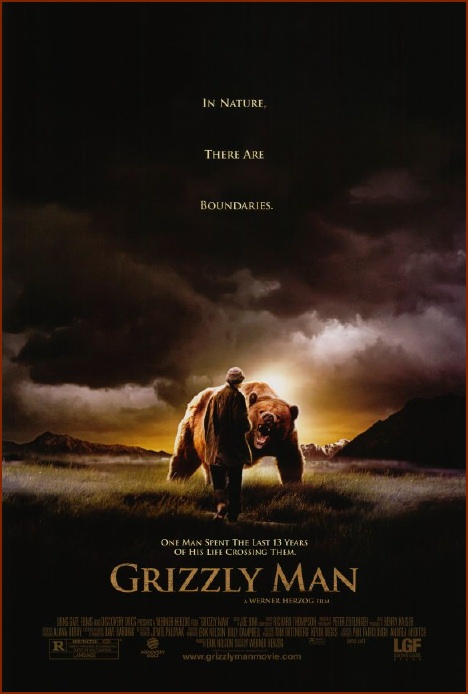
I meant to post this immediately after my Denali posts, but forgot. Life kinda gets in the way of blogging, ya know? Anyway, Grizzly Man is a film, by noted director Werner Herzog, about Timothy Treadwell, a surfer-turned-actor-turned-grizzly activist who decided to spend several summers living amongst bears in Alaska, to “bring awareness to their plight”.

Grizzly Man

This recommendation dovetails not only into Denali, but also into my Chiricahua post. That post was about man’s stupidity (specifically my own stupidity) in the face of nature. That post and this film tell a valuable story: nature is not to be trifled with. It doesn’t care who you are, or what you do, or how “in tune” you think you are with it: when nature needs you to be food, you will become food, regardless of how high-minded you think you are or how many trees you hug.

So here’s the spoiler: Treadwell eventually gets eaten. Well, it’s not that big of a spoiler really, it’s pretty much said right up front this story is a tragedy. What makes this film so compelling is you see what’s coming, the ending is so patently obvious, yet Treadwell plods right along to that ending, making bad decision after bad decision, all leading up to a certain, gruesome fate. I won’t spoil it any more, it does have to be seen to be believed.

Some watch Grizzly Man and feel sadness for a poor, kindhearted soul who only wanted to do the best for the poor bears and paid the ultimate price. I see this as the story of an egotistical idiot who, like Steve Irwin, though nature was his playground, mealticket, and the means to inflate his own arrogant self-worth. In his case, like Irwin’s, nature turned its mighty claw and gave him a swipe.

Just to remind him, and us, who’s boss, I suppose.

Read Full Post »

Older Posts »