Feeds:
Posts
Comments

Posts Tagged ‘travel’

It’s All About Terrain

One of the great moments for historians (amateur and, I can only assume, professional alike) is when they visit the landscape of a famous event and say “oh my God, I understand it all now!” For me, Chickamauga and Chattanooga National Military Park is one such place.

Federal Camp by Tennessee RiverPeople tend to forget that old battles, battles before mechanized cavalry, helicopters, spy satellites, and unmanned drones, were all about terrain. Old strategies involved taking the high ground, controlling mountain passes, utilizing waterways for transportation and defense, and sneaking to the enemy’s position in the gloom of the morning fog. Entire wars from ancient Thermopylae to Pacific Ocean island hopping in World War II involved strategic uses of terrain to overwhelm and defeat an enemy.

In the American Civil War, Chattanooga was undoubtedly a terrain prize. It was the gateway to the Deep South manufacturing centers in Georgia. The Tennessee River was important to the transportation of goods and men, and acted as a natural defensive barrier against Union incursions. The lowlands around the river, and the natural passes through the Appalachians nearby, made it an easy place for railroad construction. Like the circulatory system of the human body, the Confederacy’s railroads were vital to its survival and its greatest vulnerability for defeat. Chattanooga developed into a great railway crossroad, and was the femoral artery of the Confederacy.

Chattanooga Battle Map

Surrounding this artery were the most famous ridgelines of the Civil War: Missionary Ridge to the east; and Lookout Mountain to the west, overlooking the Tennessee River. If anyone intended to take, and keep, the Chattanooga transportation hub, they needed to take, and keep these ridgelines. High ground is holy ground in armed conflict: gravity becomes your greatest asset. Your enemy needs to climb up to challenge you, an exhausting task by itself. In the days of the Civil War, with heavy rifles and, even worse, cannons and artillery, that task is nearly impossible. So a defender, perched high above, has an unbelievable advantage and an opportunity to rain hot death upon the enemy. Of course, having the high ground automatically makes you a target, and can button you in. Surrounding the base of the mountain traps the defenders, making them ripe for a slow death by siege. The holder of the high ground has increased chances for both life and death.

Train Depot and Lookout MountainI’m not going to recount the entirety of the battles surrounding Chickamauga and Chattanooga, there are resources out there that would do a far better job than I ever could. I will say these battles definitely revolved around the lay of the land, and actually being there brings that “eureka” moment. You can read in a book that Union soldiers raced up the slope of Lookout Mountain to chase out the Confederates, but actually going there, and seeing that side of Lookout Mountain is more of a cliff than a slope, really drives the point home that these soldiers were strong, and tough, and committed, and quite amazing. The feats these men (on both sides of the conflict) are truly mind boggling.

I enjoyed my visit to C&C. The area hasn’t been overdeveloped (although there are tony homes on top of Lookout Mountain – why do the rich, who would have bought their way out of service during the Civil War, now command America’s ridgelines? I sense a master’s thesis in there somewhere…). The ridges, of course, do have some terrific views of the countryside. The Chickamauga Battlefield Visitor’s Center has the best collection of American military rifles I have ever seen (definitely a must-see for gun enthusiasts). And it’s one of the few Civil War sites where an amateur historian can go and say “wow, now I really get it”, just by being there.
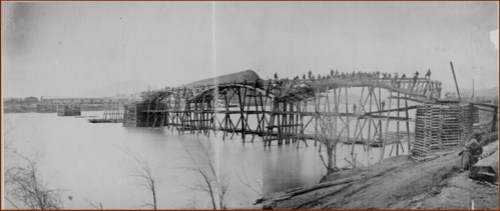
Span Over Tennessee River

[Sadly, I didn’t own a digital camera when I visited C&C. Public domain historic photos from the National Archives, map from the Library of Congress.]

Links:

Chickamauga & Chattanooga National Military Park

Civil War photographs from the National Archives

Civil War maps from the Library of Congress

Description of the Battle of Chattanooga

Google map to C&C NMP (zoom in & switch to terrain view to get the point)
Read Full Post »

Babies on the Rocks
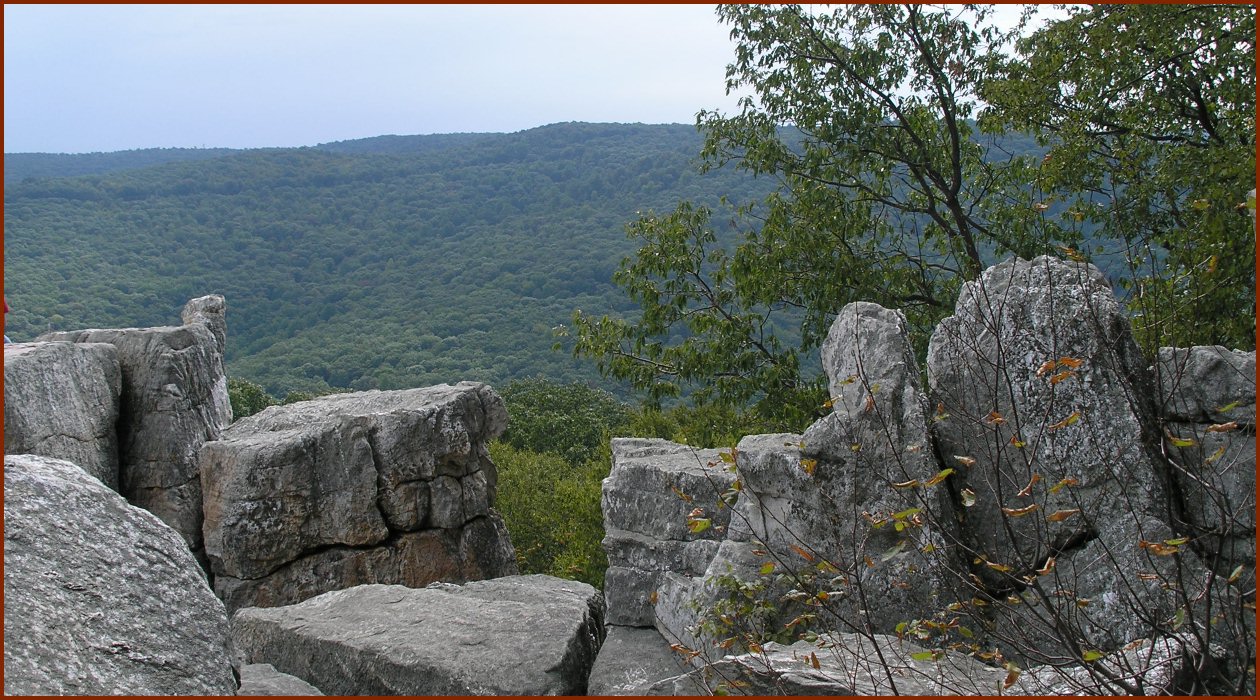
Little Catoctin Mountain Park is sort of a red-headed stepchild of the National Park System. It’s just a “park”, not a “national park” nor a “national monument” nor a “national historic park” nor any other such designation. It doesn’t have any grand natural wonders: no canyons, no snow-capped peaks, no staggering escarpments, no 2,000-year old trees. It doesn’t have herds of buffalo, grizzly bears, elk, or endangered manatees. Maybe a few bald eagles, that’s about it.

It does fit two good niches, however. First, a portion of Catoctin was carved out and turned into the Presidential retreat of Camp David, site of important moments in American history from FDR’s war councils, to the Sadat-Begin summit in ’78, to Iraq war lie crafting by the Bush administration. I’m sure having a National Park Service site as a neighbor helps with Camp David’s security and secrecy (although ask any pizza delivery guy in the area and you’ll get instant directions to the place, proving that even the greatest military power in world history still travels on its stomach).

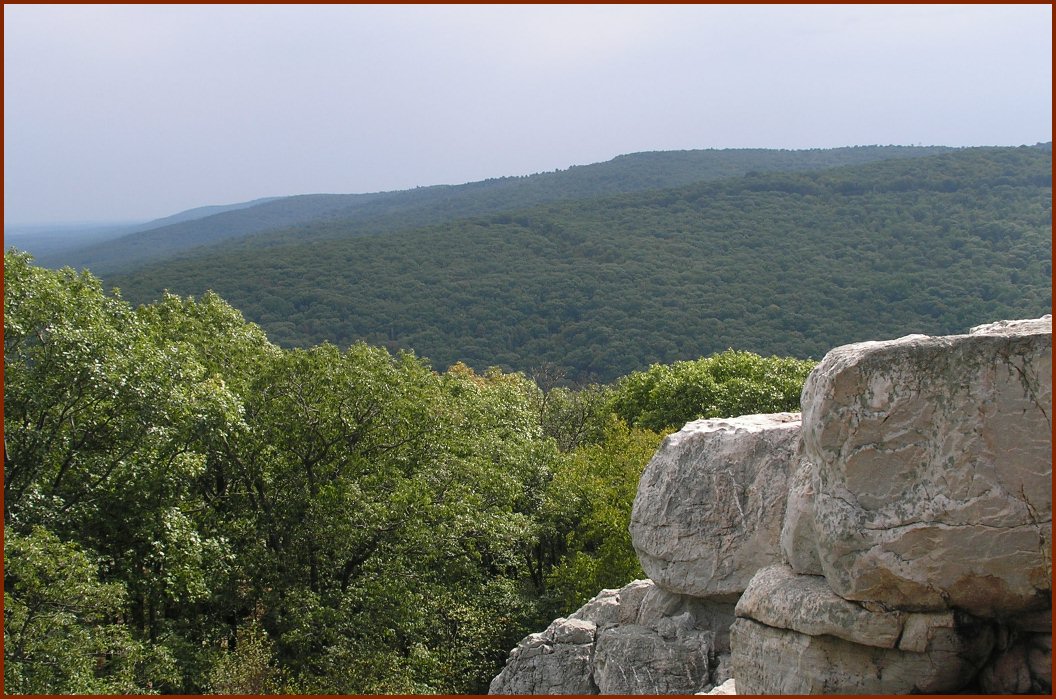
Vista © 2008 America In Context

The second, and in my opinion more important, niche that Catoctin fills is it’s status as a destination campground available to millions of people in the greater Baltimore-Washington metropolis. I’m a firm believer that everyone should have access to the great outdoors, especially those in the big cities who might otherwise not even think about trees & forests. In Catoctin’s case, it provides access for millions in just an hour’s drive or so. It certainly seemed quite popular when I visited: the campground area was nearly sold out, and dozens of folks were hiking the trails.

Wolf Rock © 2008 America In ContextThere’s a popular spot in Catoctin called Wolf Rock, a flat granite expanse full of cool nooks & crannies. Hopping over all the crevices is pretty entertaining, especially for the pre-teens in the crowd. Boys and girls alike were having all sorts of fun clambering over the rocks and jumping the various pits & cracks in the rock face. Just good, old-fashioned, dangerous fun, the kind kids have been having for hundreds of years. I’m not one of those adults who think kids should be prevented from having dangerous fun, the danger is part of the fun and needs to be embraced by kids. After all, it’s healthier than sitting in a sheltered environment playing video games. Let’s see: a slight risk of a head injury, or a near certain future of obesity and Type 2 diabetes? I’ll take the craggy rocks, thank you.

Say No To Crack © 2008 America In ContextBut let’s get realistic here. After my own brief experience hopping craggy rocks (much more difficult on 40-year-old joints than 12-year-old joints), I headed back to the trail. I passed a group of young adults with backpacks, obviously ready for their own turn on Wolf Rock. Turning for a polite “good morning” to my fellow park enthusiasts, I noticed one of them actually had a baby on a backpack carrier, ready to walk on craggy Wolf Rock! Now I think kids need to be exposed to the risks of the world, and I don’t think parents of young children should be captive in their own homes, but come on! It’s a craggy rock face full of sharp points and deep crevices, and you bring your baby with you? Come on, kiddies! You’re parents now, show some responsibility, for God’s sake! Taking the baby into the woods is fine, but be careful where you’re walking, folks.

I’ve seen lots of people doing stupid things in the National Parks, but bringing a baby onto Wolf Rock is definitely in the Top Ten Stupidest list.

Rolling Hills © 2008 America In Context

[All pics on this post are mine and copyrighted thusly. This is just about the extent of my pics of Catoctin, however. It’s a nice spot, to be sure, it’s just not particularly photogenic. A couple more photos can be found here]

Links:

Catoctin Mountain Park

Brief History of Camp David

Google map to Catoctin Mountain Park

Read Full Post »

[Note: the following post contains some mature language. Sorry, Mom.]

Tourists are People, Too

I spend an awful lot of time harping about tourist traps. I find them crowded, expensive, artificial, and uninteresting. I’m probably one of the 1% (or less) of Americans who’ve been to Disney World and didn’t like it. The best part of my trip to Disney was the people who went there with me. Spending quality time with good friends is always a good thing, but the park itself is overpriced and over-hyped. Thankfully, the guy who arranged the trip was an amateur Disney specialist: he picked the best time for us to go and we didn’t run into any noticeable crowds. We went on Space Mountain four times in 20 minutes!! Even I have to admit that was pretty cool ….

Public Domain Photo, University of South Florida

I spend an awful lot of time harping about tourists, too. So many of them are aggravating, pushy, disrespectful, and uninteresting. I’ve been to so many fascinating places in this country, and almost without fail, there will be some other tourist there who does nothing but bitch and whine about everything from the weather to the fact that you actually have to get off your fat ass and walk half a mile on a trail to see Devil’s Tower in its full glory. Generically, tourists piss me off, even when I’m one of them.

My friends tell me I’m too judgmental and intolerant. And yeah, by and large, they’re right. It’s part and parcel of being a socially dysfunctional hermit :P. But, as that great American philosopher, Popeye the Sailor, says: “I yam what I yam.” However, I’m going to shock all who know me: for this post on the old Spanish fort of Castillo de San Marcos, I thought I’d cut everyone some slack.

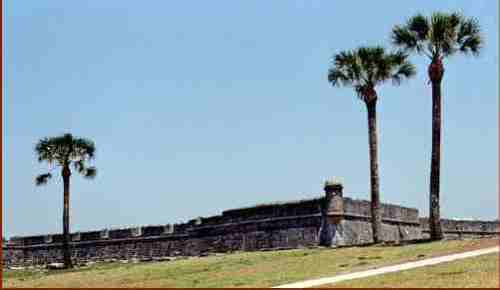
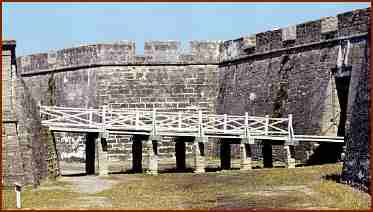
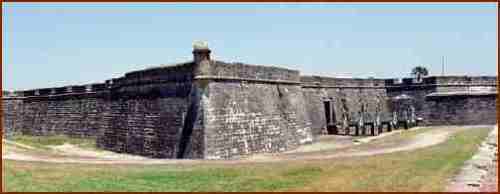
Public domain photo courtesy of the University of South FloridaCastillo de San Marcos is right on the waterfront in beautiful St. Augustine, Florida. St. Augustine is a great little city: clean, green, properly developed (meaning neither a dead city nor a frenzy of strip malls). The day I visited was a beautiful, clear day, and I was in a terrific mood. I was on my long, one-way drive from Palm Beach County, Florida, back to New England, beloved land of my birth. I had lived in Florida for over two years, and I just never fit in.
I met some great people and made some good friends but, generally, I was a terrible Floridian. I hate sunbathing (I’m a burner, not a tanner). I love walking outside during snowstorms (walking outdoors during wildfires just ain’t the same, regardless of what the brochures say). I’m not a graceful Rollerblader (I once wiped out on top of a fire ant nest, not pleasant). And I just can’t waste my entire paycheck on a boat, even on the “p*ssy boat” a buddy of mine wanted to co-buy. Don’t get me wrong: I’m all in favor of attracting p*ssy, but two cans of malt liquor and some Dairy Queen is a lot cheaper than an 18-foot cigarette boat.

So let’s swoop back from female anatomy to Castillo de San Marcos. I was on this long, 24+ hour drive from Palm Beach back to my home state of Massachusetts, back to be with all those special folks I left behind in the first place, and knew I’d need a lot of breaks. Fortunately, there are lots of NPS sites on the path, including San Marcos. I swung in to St. Augustine for my visit.

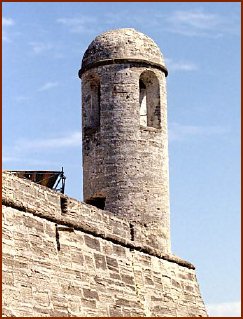
Public domain photo courtesy of the University of South Florida

I was very impressed. Not only is the fort well-preserved and interesting (I find the evolution of warfare to be extremely fascinating), but it blends in wonderfully with the city itself. I’ve been to so many NPS sites that are simply “there” as far as the locale goes. They’re usually off the beaten path, away from the city hub, not integrated at all with the social scene, basically forgotten by the populace. The great thing about San Marcos is it’s right there, downtown, within site of the beaches and next door to some great bars & restaurants.

To top it all off, the city itself is clean, well maintained, upscale, and nice to visit. But it’s not incredibly snobbish either, all the folks are really friendly, even the normally-annoying tourists. I found a nice pub nearby, had a good lunch & a brew, a quick chat with some locals, and headed back to the highway. Even I, the Uncultured Yankee Cynic, can’t find a single, negative thing to say about either Castillo de San Marcos specifically or St. Augustine in general.

Yes, I was truly in a good mood that day.

Public domain photo from the University of Central Florida

[Sadly, I didn’t own a digital camera when I visited Castillo de San Marcos. Public-domain photos courtesy of the University of South Florida. They have a neat little site with photos and brief descriptions of the defense measures of the fort. See link list below.]

Links:

Castillo de San Marcos National Monument

University of South Florida Castillo de San Marcos Site

Find Your Own P-Boat

Google map to Castillo de San Marcos

Read Full Post »

Valiant Efforts in Preservation? Or Goofy Self-Serving Construct?

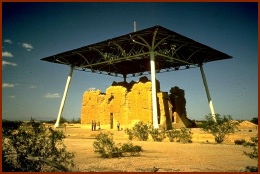
Casa Grande Ruins -- public domain photo from www.ohranger.comWhen I was a boy, I remember seeing pictures of the Casa Grande Ruins in my school textbooks. It would be in the American pre-history section, the “time before the Pilgrims” when the native tribes ran the place. Back then, I found it bizarre that a modern pavilion had been built over the ruins. The textbooks would talk about the great adobe homes of the early tribes, but they’d never, ever mention this canopy. The pictures were a bizarre mix of old and new that made no sense.

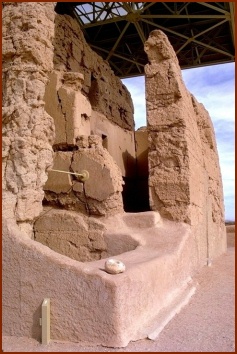
Twenty years later, when I finally arrived at the site in person, it still looked goofy. Obviously this canopy was intended to protect the ancient structure from the Arizona monsoons (an infrequent but torrential series of rainstorms), and I suppose that’s goodness, but it still seems as if it’s manufactured for our pleasure, like the Pirates of the Caribbean ride at Disney World. The surroundings made it seem worse: a gigantic Volde-Mart, replete with acres and acres of SUV-laden parking lots, sits right across the street. “Come and see the ruins, then spend your hard-earned cash on Made in China crap that will kill your pets and poison your children!!”

Bumper sticker available at www.stampandshout.com

There’s actually a huge controversy in the American preservation movement. How far should the government or private interests go to preserve historical relics such as the Casa Grande Ruins? After all, entropy is part of human existence as well. Does this preservation serve the interests of history and culture, or does it simply serve the interests of developers looking to profit off a landmark? Should nature be allowed to take its course, or should we spend millions preserving relics?

Casa Grande Walls -- public domain photo from www.ohranger.comThere was a story on NPR this week about German castles. See, most of the great castles in Germany were destroyed in World War II. Now that Germany is back from the brink of destruction, they find they miss their castles. So they are in the process of re-building their old castles from scratch to house … shopping malls. Oh yes, there’s historical context for you. “And here, the Earl of Salzburg would enjoy an Orange Julius while his daughters leered at the 12-foot, half-naked himboes plastered on the windows of Abercrombie & Fitch.”

There are a lot of naturally preserved tribal dwellings all over Arizona, mostly cliff dwellings in places like Walnut Canyon and Canyon de Chelly. So you have to wonder why they went to such great lengths to preserve this one in 1932. Tourism, no doubt. But at one time native Americans lived in grand adobe buildings on the open flatlands, at the crossroads of enormous north-south, east-west trade routes. Casa Grande is the best example still standing on this continent. It fills an important niche in the physical historic record of the country.  In 1932, at the height of the Depression, it must have been hard to get the funding to build the canopy. I guess we should be thankful.

But to look at the site with its own personal pavilion, you have to ask yourself “is this too goofy?”

Public domain photo taken from Wikipedia

[I didn’t own a digital camera when I visted Casa Grande. All photos are public domain, hover over each pic for source info]

=====================================

Links:

Casa Grande Ruins National Monument

Wikipedia Article on the Hohokam Period

Google map to Casa Grande

Read Full Post »

« Newer Posts - Older Posts »