My Kind of Guy
Forget Ben Franklin. Forget Thomas Jefferson. Forget George Washington. John Adams is my favorite patriot.
I guess it goes back to my youth. I was in elementary school during the American Bicentennial in 1976. That was a huge time for patriotism and flag-waving, and interest in our Founding Fathers was at an all-time high.
One of our field trips actually took us to the movies – for a showing of the film version of the musical 1776. It’s an odd sort of thing, but seeing that film sparked, in me, an interest in American history that would smolder, unnoticed, until college fed it enough oxygen. Anyway, I digress…
There’s one terrific line in 1776 that I’ll never forget. Jefferson, Franklin, and others are trying to convince Adams to pen the Declaration of Independence. His retort? “Mr. Jefferson, I think that you should write it. I am obnoxious and ignored, you know it’s true!”
Even at 11 years old, I knew that described me as well: obnoxious and ignored. A kinship was forged.
 Adams was not only obnoxious and ignored, he was also a rarity: a brilliant ideologue. I’m not overly fond of ideologues. Generally, I find them horribly lacking in any real insight or knowledge, they hide behind their ideology like a shield, avoiding true understanding (because that’s too hard). I prefer pragmatism and practicality. How do we solve problems? That question sparks brilliance, not some high-minded ideal of how the world should work.
But, certainly, there are issues that require staunch and unwavering ideology, dogmatic certainty, and tremendous zeal. At that time, American independence was one of those issues. The abolishment of slavery would be another, I’ll get to that later. As far as John Adams is concerned, he was the right zealot at absolutely the right time, and was the single patriot who pushed for independence more than any other. He absolutely aggravated and aggrieved his contemporaries, but still his point was made, and the Continental Congress moved in his direction.
The great thing about Adams the Zealot was he was also a man of tremendous personal integrity and wisdom. A great husband, a great writer, a great lawyer, a great patriot, unfortunately he was an ineffectual President. But he held fast to his convictions throughout all his life. Some of his quotes still resonate strongly today, and a few are still ominous in their warnings. I think that, after 200 years, and with our current political climate, we can still learn a lot from John Adams:
“There are two educations. One should teach us how to make a living and the other how to live.”
“Liberty cannot be preserved without general knowledge among the people.”
“Facts are stubborn things; and whatever may be our wishes, our inclinations, or the dictates of our passions, they cannot alter the state of facts and evidence.”
“I must study politics and war that my sons may have liberty to study mathematics and philosophy.”
“Because power corrupts, society’s demands for moral authority and character increase as the importance of the position increases.”
“Remember, democracy never lasts long. It soon wastes, exhausts, and murders itself. There never was a democracy yet that did not commit suicide.”
That last one sends a chill down my spine, not only for its morose tone, but for the sneaky suspicion it’s accurate.
The First Emancipator
John Quincy Adams was, up until recently, a rarity: a son who followed his father into the Presidency. He was a rarity, up until recently, in another way: he did not win by popular vote, but won through that great Constitutional technicality, the Electoral College. He was a decent enough President but, like his father, he only served one term. And also like his father, it was his actions outside the Presidency that made him so invaluable to America.
 As a diplomat, he oversaw the acquisition of Florida (so we’d have a place to dump our elderly), and fabricated the Monroe Doctrine, which drew a line in the sand to European colonization in the Americas. To Adams, this was a moral obligation of the United States. Europe must not further muck around in the affairs of the Americas. He didn’t advocate imperialism of our own, his idea was to allow the Americas to evolve into nations of their own, without outside interference. He was right, absolutely right. To this day, we are still dealing with the problems of long-terminated European colonization in Africa, the Middle East, and the Indian subcontinent. The problems of America are our problems, fomented internally, which is much better than problems foisted upon you by outsiders. Sadly, the Monroe Doctrine would later be used to justify invasions and actions on our own (like the Spanish-American War, a topic for a later time).
More importantly, John Q. Adams inherited his father’s zealous ideology in opposition to great injustice. In this case, I am referring to slavery. He not only famously argued the case of the schooner Amistad before the Supreme Court, he was a staunch and vocal opponent of slavery in the halls of Congress, battling that institution at every opportunity. In the decades before the Civil War, Congress managed to pass the Gag Order, prohibiting any discussion of slavery before Congress. This infuriated Adams, who set about trying to fight it at every turn. “I hold the resolution to be a direct violation of the Constitution of the United States, the rules of this House, and the rights of my constituents,” he bellowed across the House chamber.
Eventually, he would even make a grandiose declaration:
“From the instant that your slave-holding states become the theatre of war — civil, servile, or foreign — from that instant the war powers of the Constitution extend to interference with the institution of slavery in every way in which it can be interfered with.”
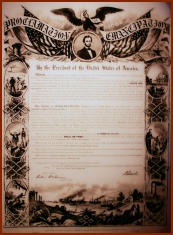
That’s right: John Quincy Adams set forth the principle that Abraham Lincoln would later use to write his famous Emancipation Proclamation. This is one of those brilliant chains in history: events lead to ideas which lead to ideas which lead to events. Uncovering these chains has been one of the great joys of my tours through the National Park System and American history.
Ideology – Well Preserved
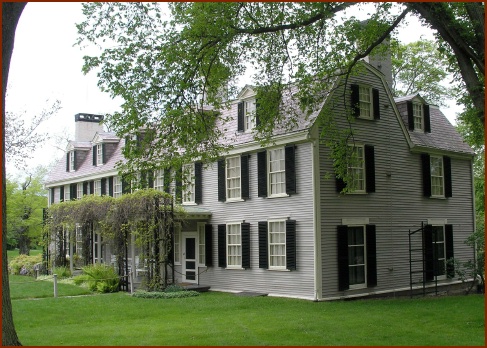
The Adams family houses preserved by the National Park Service are wonderful. They have the two houses where the Adams’ were raised (an amazing feat considering decades of development in greater Boston), as well as the Adams manse “Peacefield”. This expanse is an absolute rarity among historic sites in America: all of the furnishings and contents of these houses is original to the original owners, including the vast collection of John Q. Adams’ books in a beautiful stone library (to protect Adams’ greatest possessions from fire – who says ideologues can’t also be practical?).
Normally (and recently, it would seem) ideologues ruin more than they create. The simplicity of their arguments usually belies the underlying realities of the times and does their constituency a great disservice. However, in at least two cases, this nation had serious issues requiring the intervention by serious ideologues. In both cases, we’re lucky we had the Adamses.
[Pictures of the Presidents are in the public domain, courtesy of Wikipedia. All other photos in this entry are originals by the blog owner.]
See all America In Context original photos of Adams NHP
Links:
Adams National Historical Park
Exploring Amistad
Amistad America
Google map to Adams’ NHP
Read Full Post »
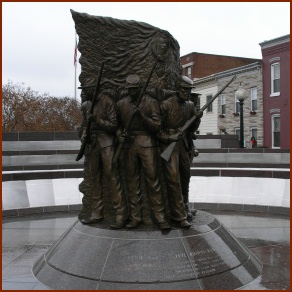 I wanted to post an essay about the courage of black soldiers during the Civil War; about their bravery, their sacrifice, and the difficulties they faced. There is so much to tell, so much the average American doesn’t know. But I find myself distracted with more immediate concerns.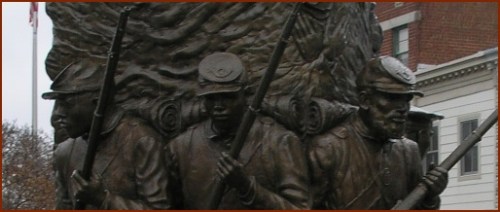
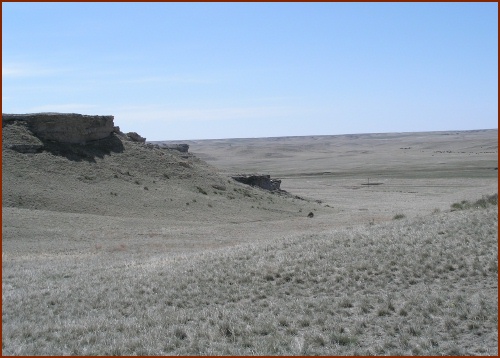
 Agate Fossil Beds itself is nothing special. It’s just a couple of knolls in the prairie. But it does tell a fascinating paleontologic story. See, a couple of million years ago, there was this watering hole. Big herbivores loved this watering hole. Then, one day, it dried up. The herbivores started to starve. Then the predators came and ate them all up, but they too started to starve, for there were no more herbivores. Then the scavengers showed up and ate all the dead predators, but then they, too died, for there was nothing left to scavenge. All of them died in this big heap. A few million years later, paleontologists showed up, and wondered just what the hell happened! Was this some cultic suicide, did these Miocene animals drink some prehistoric Kool-Aid at the bidding of a dinosaur with a bad haircut wearing Ray-Bans? Or was it something more natural? It’s a neat story to those so inclined.

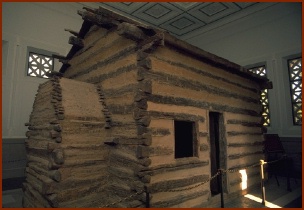 After this almost mandatory exchange, I asked the ranger how many people ask her this stupid question every day. “A lot”, she replied. Of course the log cabin at Lincoln’s Birthplace isn’t original. The original one was surely torn down and replaced by the next residents after the Lincolns moved to Indiana (log cabins were not known for their longevity). The ranger did proceed to discuss what was really important: the thoughts and writings of our greatest President, Abraham Lincoln.
 We should ask ourselves “why?” Why would a man who presided over the one and only War Between the States (the worst human bloodletting ever witnessed on the North American continent), a man who initiated the first widespread draft in America (leading to riots in New York City and other places), a man who suspended many legal rights (an act used years later as justification for Japanese interment and the Patriot Act), still be so loved by the American people? Not only loved, but perhaps even deified.
 But there is another meaning to the word “right”. Lincoln was also the right President at the right time. People tend to forget the mess this country was in before Lincoln. The “slave problem” was a menace, a canker, a tumor on the very heart of America. It ate at the very core of our beloved Constitution. America, a nation supposedly founded on freedom, held hundreds of thousands in thrall, was a nation of hypocrites.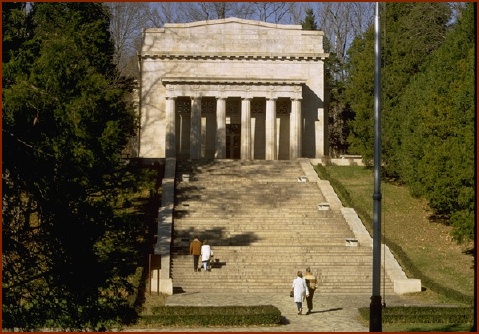


 America In Context