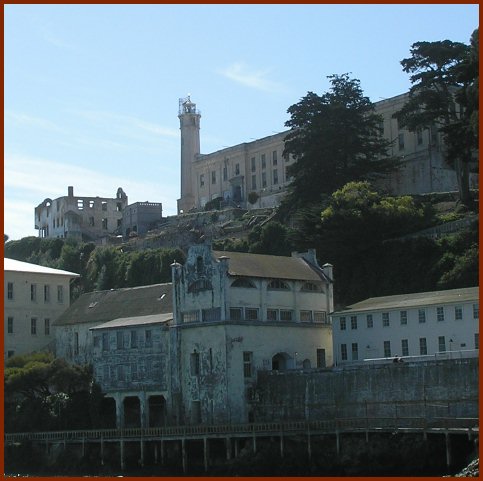
[Alcatraz is part of the Golden Gate National Recreation Area.]
Missed Opportunity – Sort Of
I actually didn’t make it to Alcatraz Island itself during my recent trip to San Francisco. If you go, don’t make the same, dumbass mistake I did. Call ahead and get your tickets in advance! Don’t assume visiting off-season will help you …
An Alcatraz tour an impossibility, I had to settle for second- (or perhaps third- or fourth-) best: a craptastic bay cruise put on by some local outfit. (I’d also add in “expensive”, but everything in San Fran’s expensive, so why bother mentioning it). The boat was a pit, the crew uninspired, and they had this annoying tape of some drunken lout reading a horrible script over lousy speakers. I had to block out these fabulous accommodations, and just zone in the bay itself.
San Francisco is really beautiful, and a great place to take a quick cruise. The bay is frothy and windy and cold, but the views are terrific! You’ve got the city itself, the tony suburbs of Sausalito and Tiberon, the park on Angel Island, and, of course, the magnificent Golden Gate Bridge. The greater Bay Area is truly beautiful.
Well, until you get to Alcatraz Island, that is.

In my travels from sea to shining sea, I’ve never seen a place so truly ugly, so exuding of evil from its very pores, as Alcatraz. Yeah, I’ve seen a lot of miserable slums and decrepitude, but nothing like this. Its ugliness lies in such stark contrast to the beauty of the Bay, it’s shocking. It’s simply … vile. I’m not sure I want to set foot on the island now. Yeah, it might be fascinating, but it’s a morbid fascination: a fascination with criminals and punishment, two things that don’t particularly interest me.
It’s Gotta Be a Sickness
I don’t find crime interesting in the least. I find it repugnant. On top of that, I find it repugnant that people are fascinated by crime. Well, let me be more specific, here. I can see how investigating crimes, tracking perpetrators, and interpreting the criminal mind can be fascinating. I’m a big fan of CSI, for example, and not just because I’ve had a crush on the lovely Marg Helgenberger since China Beach. There’s a whole science to criminal investigation that is incredibly fascinating.
 What I do find repugnant are those folks who dwell on criminals and criminal acts themselves. I’m talking about those who follow cases that have nothing whatsoever to do with them or anyone they know, just for the sheer sick pleasure of doing so. I’m talking about those who follow the lives of criminals, or the suffering of the victims, with a morbid, twisted pleasure at a level much, much worse than traffic-accident rubbernecking or attraction to snuff/torture films like Saw or Hostel. I’m talking about folks like Nancy Grace and other media scumbags who will dwell on the horrors of individual crimes solely for ratings, couching it under terms like “news”, gratuitously amplifying stories to ludicrous extremes that a term like “exploitation” doesn’t seem to do it justice. And yes, I’m talking about folks who watch those shows, too. Jon Benet Ramsay, Nicole Brown Simpson, Ronald Goldman, Laci Peterson: these were all victims, folks! Their deaths are tragedies, not entertainment! Show a little bit of respect for the victims and their families, and leave them alone! And don’t give the media weasels the gratification of high ratings, turn the channel to something more wholesome, like South Park or WWE Wrestling or something.
Crime? Or Punishment?
I’m sure there are a lot of visitors to Alcatraz who have this morbid fascination with crime and the criminal underworld. But there are also others who simply want to see “The Rock” out of curiosity, and that’s fine. The stories of Al Capone and Machine Gun Kelley are interesting, and there are the Alcatraz ghost stories, and the story of the American Indian occupation in 1969. So there is a lot of cool stuff about the island.
But, me being me, I see Alcatraz and have to think, not about crime, but about punishment.
 Crime, unfortunately, is a reality in America. It’s a price to pay for living in a free society (ironically, the most “crime free” nations throughout history were really harsh dictatorships). So how is a free, advanced society supposed to handle crime? I look at how we do it here in America, and I have to think “there must be a better way.” But I can’t figure out what that way is. We seem to focus an awful lot on punishment, but not a lot on rehabilitation. But rehabilitation itself seems a farce, look at recidivism rates. Yet we can’t just keep punishing, for those who chronically punish are themselves lessened by the act (to see more views on what I mean by that, see my Andersonville post). And if punishment is bad, what about the death penalty? But contrast execution of criminals with lifetime imprisonment at public expense, and something doesn’t quite compute there either. It seems like the right answer is to stop creating environments where criminality develops, but until we take seriously the problems of inner city poverty and development, and find a real resolution to the drug problem, that’s a complete pipe dream. Of course, a lot of criminals have nothing to do with inner cities or drugs (John Wayne Gacy, Timothy McVeigh, Charles Manson, etc.)….
I don’t know what the right answer is. Clearly, with about 2.5 million prisoners nationwide, and a recidivism rate of about 50%, America hasn’t figured it out, either.
Bleagh, what a wretched topic. I’m gonna go watch South Park now.

See my other photos of Alcatraz Island here.
Links:
Alcatraz Island (part of Golden Gate National Recreation Area)

 I really want to let that soak in a bit. If McClellan had acted, the Battle of Fredericksburg would not have happened (2,000 dead). Spotsylvania would not have happened (4,000 dead). Chancellorsville would not have happened (est. 5,000 dead). Chickamauga would not have happened (est. 6,000 dead). The Battle of Gettysburg would not have happened (8,000 dead). Richmond would not have been sacked and looted. New York would not have had its draft riots. Atlanta would not have been burned to the ground. Virginia would not have had its entire countryside scoured by war. And maybe an assassin would not have claimed the life of the greatest President we ever had.
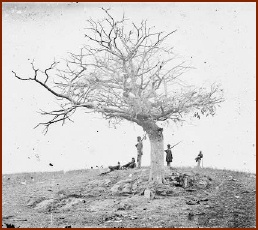 Even though I love the National Park Service and the sites they protect, I have to admit: many of the Civil War sites are nearly undecipherable. You have to really use your imagination to envision the order of battle or the strategic importance of the terrain. It’s hard to imagine a line of Union artillery in a Wendy’s parking lot. What were they firing at, the Avis Car Rental?
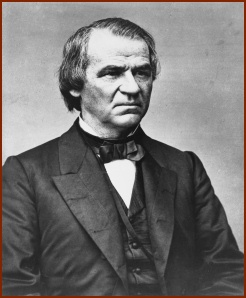 Johnson would later go on to near-total failure as President. He started Reconstruction on horrible footing, famously vetoing the Freedman’s Bureau: “This is a country for white men, and by God, as long as I am President, it shall be a government for white men.” He also blocked initial passage of the 14th Amendment (which includes the extremely important Due Process and Equal Protection Under the Law clauses). Real enlightened there, Andy…

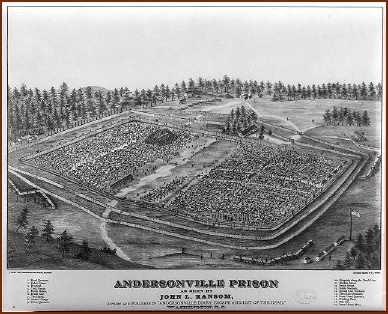
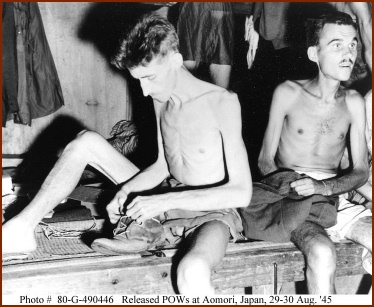
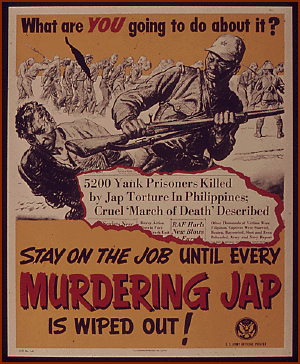 How is evil created? The answer: on purpose. Through dogma, or jingoism, or biased textbooks. By stating that the enemy are lesser creatures, creatures who would kill you given the chance, creatures less deserving of God’s grace, creatures who must be removed for the good of all. And then, by repeating that message over and over and over again, until the sheep-like masses buy into it, and agree. It’s hard to kill a fellow human being, but it’s easy to hate, torment, torture, and kill lesser creatures. So all you have to do is convince your people that “the enemy” are lesser than they, and your people will do your dirty work for you. Then you can go back to your secret retreat in the mountains and feast on banquets, or snog your high-priced whores, or choke on your pretzels, for you have created your own force of evil, ready to sacrifice their own humanity to the misfortune of the enemy.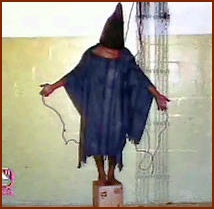


 America In Context