Feeds:
Posts
Comments

Posts Tagged ‘Civil War’

Freedom and Repatriation

The Lincoln Memorial might be our greatest national symbol. It’s everywhere: our currency, our iconography, our culture. Presidents have spoken in front of it. Martin Luther King gave one of his most moving speeches from its stairs. Numerous musical artists including, famously, opera singer Marian Anderson, performed to massive crowds gathered there. It’s appeared in everything from Mr Smith Goes to Washington to Forrest Gump to Planet of the Apes. There’s not much I can add to the lore of it, other than to say every American should make the pilgrimage at least once.

Instead of posting some weak trivia list about the Lincoln Memorial, I’m going to write about The 1619 Project.

Marian Anderson, 1939 (Library of Congress)

————————

The 1619 Project was a collection of essays published by the New York Times in 2019, and again in book form in 2021. I’ll let historian and journalist Lerone Bennett, Jr. explain:

A year before the arrival of the celebrated Mayflower, 113 years before the birth of George Washington, 244 years before the signing of the Emancipation Proclamation, [a] ship sailed into the harbor at Jamestown, Virginia, and dropped anchor into the muddy waters of history. It was clear to the men who received this “Dutch man of War” that she was no ordinary vessel. What seems unusual today is that no one sensed how extraordinary she really was. For few ships, before or since, have unloaded a more momentous cargo.

Bennett, Lerone Jr, Before the Mayflower, 1962

That ship was the White Lion, the year was 1619, and its cargo was “twenty and odd” captives from west Africa.

The central premise of The 1619 Project is this: the collective history Americans hold dear grossly underrepresents the impact and long-lasting effect of slavery on this country. In a series of long-form essays, a variety of authors, journalists, and historians lay out the case that slavery affected America’s viewpoint on everything from property rights to citizenship to economics to the very definition of democracy. These essays are hard-hitting, blunt, and brutal, and together assemble a very sobering read. Of course, they cover the obvious, like the 3/5th clause of Constitution and the collaboration between the KKK and law enforcement in the Jim Crowe South. But they also make links that might not be so obvious, including throwing some shade on our best president, Abraham Lincoln.

Before I go on, let me state up front that this is not intended to demean or degrade the Great Emancipator. Frederick Douglas called him “Tender of heart, strong of nerve, of boundless patience and broadest sympathies, with no motive apart from his country. […] Take him for all, in all Abraham Lincoln was one of the noblest, wisest and best men I ever knew.” Booker T Washington said “[M]ay I say, you do well to keep the name of Abraham Lincoln permanently linked with the highest interests of the Negro race. He was the hand, the brain, and the conscience that gave us the first opportunity to make the attempt to be men instead of property.“ But W.E.B. Dubois was probably more accurate in his own assessment: “Abraham Lincoln was perhaps the greatest figure of the 19th century. Certainly of the five masters – Napoleon, Bismarck, Victoria, Browning and Lincoln, Lincoln is to me the most human and lovable. And I love him not because he was perfect but because he was not and yet triumphed.”

Laborer with Lincoln Memorial (Library of Congress)

Lincoln, as great as he may have been, had one small problem, a bit of a character flaw, or at least a lapse in judgement. That problem was the American Colonization Society. Founded in 1816, the ACS was an unlikely group of early abolitionists, Southern slaveholders, and politicians of all persuasions. These men felt the chief concern of the time had a solution, and that solution was the repatriation of freed Blacks to Africa.

The abolitionists were afraid freed Blacks would simply never fit in, becoming a permanent underclass throughout the North. Slaveowners felt these freedmen would work tirelessly to free their brethren, perhaps engaging in violence or insurrection or even murder. Politicians were afraid they would taint voter rolls, influence elections, and threaten established power. Honestly, it’s hard to say their fears were unjustified, and Lincoln himself seemed to share those fears. Although he was not a member of the ACS, Lincoln espoused the idea of Black relocation as early as 1851. By 1862, he created the position of Commissioner of Emigration, and convinced Congress to appropriate $600,000 to ship freed Blacks to another country.

Black freedmen were appalled. They wanted to be free, yes, but not like that. By this time, some 240 years had passed since the White Lion docked. Generations of their forebears lived in houses, worked the soil, raised their children, all on these shores. They knew not of other lands, knew not of Africa, nor of any other land but America. Repatriation was a deplorable option. The United States, as flawed as it was, as dangerous and hostile as it was to slaves and freedmen alike, was still their home.

They would prove this in short time. After Lincoln’s official Emancipation Proclamation — which did not include any references to repatriation — some 200,000 Black men served in the Union army. That’s an astounding 78% of military-aged men! They took the Civil War personally, it was their fight, for their freedom, in their country.

Colored Troops, Port Hudson, LA, 1864 (National Archives)

———

Lincoln was an imperfect man. His emigration plan was a terrible idea. But he listened to the criticisms, dropped it, and changed the course of American history. Unfortunately, we still stumble across repatriation now and again. In this country, we debate the disposition of the Dreamers, young people smuggled into this country when they were very small, at no fault of their own, who are often threatened with deportation to countries they’ve never known. And right now, in the Middle East, ancient animosities are used as excuses to forcibly evict people off lands they’ve inhabited for decades if not centuries. In these cases, and many, many others, nobody cares. These “intolerables” would be better off gone, some would think.

But no one should be forced from the only home they’ve ever known. This has to be a fundamental precept of freedom.

———

I highly recommend The 1619 Project. I consider it vital reading for anyone wishing to understand this country, past and present.

———

Links:

Read Full Post »

Old John Brown: Martyr? Hero? Madman? Terrorist?

Harper’s Ferry NHP was one of the first historic sites I visited outside my home New England, and is still one of my favorites. It’s a sleepy little hamlet, nestled in a valley at the fork of the Shenandoah and Potomac rivers, with interesting Old Frontier architecture (like the church pictured below) and a calm, relaxed atmosphere.  Visit in the fall, when the air is crisp, the foliage is out, and the fog is on the river in the early morning.

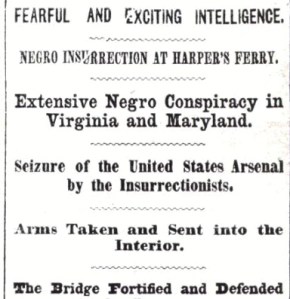
Harper’s Ferry, with two major rivers, a proximity to the Mason-Dixon, and one of the last stops between the colonies and the Frontier, was a true nexus point in early American history. Jefferson and Washington both surveyed the land, it served as a launching point for westward expansion, and was used by the military as a base and weapons depot. But the town is most famously known for the Raid that Started the Civil War.

—-

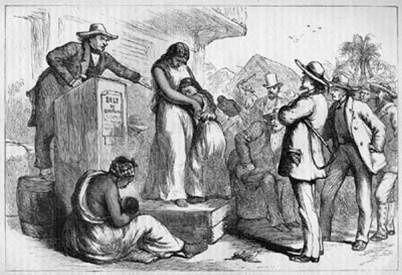
The time between the founding of the country and the fall of 1859 was most definitely the Dark Ages for America. People like to strut around today and say “our rights are threatened”, and that may well be, but this is nothing like it was back in the early 19th century. According to census figures, over 3.2 million free-thinking people were held as slaves in 1850. It was pervasive everywhere in the South, slaves accounted for one out of three souls living south of the Mason-Dixon line. It was no “curious institution”, it was a massive abomination. The work was hard, the treatment harsh. Families were routinely broken up as they were sold to different bidders at auction. In some cases, treatment even got worse in the 19th century. Constant fear of slave rebellion sparked states and counties to restrict slave movements. States passed laws forbidding teaching slaves to read or write, or form groups in the evening, or celebrating weddings, or traveling without a master (even to walk to a creek for water).

But it wasn’t just slaves whose liberties were restricted: the slave laws foisted upon the Union by southern aristocrats (and unopposed by cowardly Northern presidents), challenged the liberties of free men as well. It was illegal to aid in the escape of slaves, which basically forced every citizen (even those in the so-called “free states”) to participate in the captivity of a fellow human being. The states had no say: the Wisconsin supreme court declared the Fugitive Slave Act unconstitutional and would not uphold it, only to be told by the U.S. Supreme Court that they must uphold it whether they liked it or not. Nullification, indeed! Looking back, the honorable free states should have been the ones to secede from a corrupt, anti-liberty federal government right then and there!

Even the very notion of “one man one vote” was bastardized into the 3/5th rule, which gave the Southern gentry undeserved power in the Congress and the Electoral College. The notion that slaves could be counted in apportionment for a democratic society was disgusting, and is wholly responsible for the decades of tyranny foisted upon the nation. That horrible rule  gave the slave states nearly 20 more seats in the 1850 House of Representatives and votes in the 1848 Electoral College than they justly deserved, creating a Congress that passed the dastardly Compromise of 1850 and gave us one of the worst presidents in U.S. history, Millard Fillmore. The North should have been able to railroad the South into giving up that horrendous institution, but instead the Founding Fathers’ greatest mistake led to a wholly unjust government, the enslavement of an entire race of men, and a society teetering on the boundaries of pure evil.

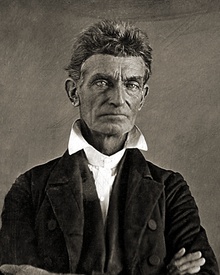
It was into this world that John Brown was born.

A heavily devout Christian, John Brown saw the entire institution of slavery, and the flaws in our political process that enabled it, as a crime against man and a sin against God. He took it so far as to say there was no way the United States could possibly have been founded as a Christian nation, because no true Christian would ever start a country with slavery as part of its core values. He was even more infuriated by individuals like John C. Calhoun, who said slavery was good and rooted in the Bible. To John Brown, that was apostasy, nearly as great a crime as slavery itself. John Brown was more than  prepped for the forthcoming battle, at least on a spiritual level. Then came Kansas.

For over sixty years, the balance between slave state vs. free state was kept through a series of compromises. In 1812, the tally was even: 9 slave states and 9 free states. There was parity in the Senate, and the coveted Electoral College, and close tallies in the House (thanks to the 3/5ths rule). In order to keep the peace, states would be admitted in pairs: one free, one slave. Indiana & Mississippi, Illinois & Alabama, Maine & Missouri. However, in 1854, the anti-slavery faction in Congress won a minor victory: the residents of a territory, upon application for statehood, could vote themselves as to whether or not they would be free or slave. This put the pro-slavery faction in a terrible position: popular opinion in the new territories beyond Missouri was decidedly anti-slavery.  The slave states would soon be outnumbered in the Senate and  would surely lose their political clout and, therefore, their economic foundation. Drastic action was necessary, and drastic action was undertaken.

A cabal of slave-owners and -supporters organized dozens of bands of men called the Border Ruffians to rush to Kansas, create fake homesteads, and engage, not in farming, but in massive voter intimidation and fraud. They managed to elect a pro-slavery legislature for the territory. To counter the threat, abolitionists joined forces to form the Topeka Convention and create a state constitution marking Kansas as a free state. Presidential coward Franklin Pierce decreed the pro-slavery forces were legitimate, and that’s when all hell broke loose. The Ruffians burned and ransacked Lawrence, and John Brown headed to Pottawatomie, and eventually to Harper’s Ferry, leaving a trail of bodies (both friends and foes) in his wake.

What happens next are the opening salvos of the greatest war ever fought on North American soil, a terrible stream of carnage that resulted in the emancipation of not only slaves but also of the American soul. Slavery, regardless of the opinions of the slaveowning aristocracy, was the albatross around the neck of the United States. It was preventing our rise to greatness, and even now, 150 years later, we’re still battling with the demons of our past. But at least they are now in our past, thanks to John Brown. He was like the interventionist to a drug addict: that person who holds up the mirror and says, in a very blunt manner, “look what you’re doing to yourself!!”

The full story of John Brown is a fascinating one, full of character and drive and madness. But it’s also admittedly troubling. Was John Brown a terrorist? He led his devout followers to their near-certain deaths. He committed acts of violence on American soil that took the lives of civilians. He instilled great fear amongst the citizenry, especially amongst the border counties of Virginia. His actions led the United States, especially the southern states, to crack down on civil liberties even harder. His actions ended up instigating a war.

So was he a terrorist? Or should we take into consideration what he was fighting for? He wasn’t grandstanding for an upcoming book tour, there is no doubt he was ardently opposed to slavery and wanted the institution destroyed. He knew the institution was destroying America, and he knew that nothing short of bold action would change the nation’s course. And that course had to be changed: over 3 million lives, and the lives of all their future generations, depended on it.

Before you read on, here are some things to ponder. Do people have the right, or even perhaps the duty, to take bold and deadly action in the face of true evil? It’s a tough question. Is terrorism ever justified? Did John Brown act appropriately? Should he be regarded as a hero or as a demon, especially in light of what he was fighting for?

Made up your mind?

Now think about this: in preparation for his attack on Harper’s Ferry, John Brown worked on a document, to be released to the public if and when he managed to instigate the change he desired. A new Constitution for the United States, with guaranteed rights for all men of any race, a reworking of the system of representation, and a modification of the roles & responsibilities of the three branches of government: Congress, the Presidency and the courts.

All with him as the Commander in Chief in charge of the whole thing.

Now re-ask yourself those questions. You can probably even think up some better ones.

============================================================================

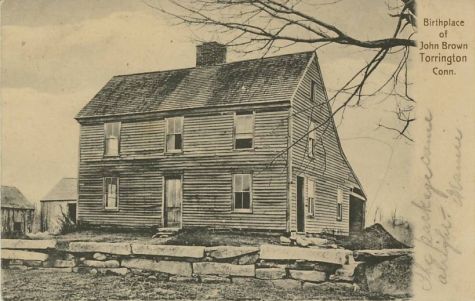
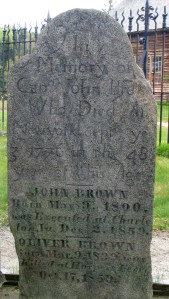
[Sadly, I didn’t own a digital camera when I visited Harper’s Ferry. Photo of St. Peter’s Church is used with permission of Patty Hankins. Check out her website, she specializes in close-up floral photos (something I enjoy doing on my own National Park trips). John Brown Birthplace postcard is available at www.vintagepostcards.org. Photo of John Brown’s tombstone is from the Wikipedia Commons (original). All other works are in the public domain.]

Links:

Harper’s Ferry National Historical Park

Modernizing a Slave Economy

Republicanism and the Compromise of 1850

Google map to Harpers Ferry

Read Full Post »

An Editorial

This year (April 12th, to be exact), marks the 150th anniversary of the shelling of Fort Sumter, the first act of the Civil War.

As usual, this anniversary is controversial. Brooks at Crossroads has been blogging about this controversy for the last few months, he’s stated the issues and inanities far better than I could, so pop over there and catch up if you’d like.

You can probably imagine the various debates: should Confederate soldiers be honored, should slavery be included in any remembrances, was the war really about “states rights” or something far more sinister, etc. There are groups out there trying to use this anniversary for their own political advantage as well, whether drumming up support for unrestricted gun rights, nullification, secession, or even outright rebellion against the current administration/government, or something else. Most of these folks are, of course, nutjobs. But that’s to be expected: every anniversary celebration, whether it’s Independence Day, 9/11, or the sesquicentennial of the War of Northern Aggression, brings out the nutjobs trying to rally support for their own cause. They need to do so, for their cause doesn’t stand on its own, it needs the crutch of misrepresented history to lean on.

In my view, we definitely should honor this sesquicentennial with reverence, respect, and honesty. Yes, the war was about slavery. Yes, the Confederacy was wrong about seceding to “preserve the peculiar institution”. Yes, “states’ rights” arguments were used to dupe Confederate soldiers into fighting. Yes, Lincoln was wrong about suspending habeus corpus. Yes, the draft riots were handled badly. Yes, Reconstruction failed and led to the rise of Jim Crow and the KKK. Yes, yes, yes, nearly every horrible thing that led up to and occurred during that war was tragic and contemptible and disgusting and true. War is like that, war is nasty, miserable business, and always results from failures of leadership and integrity on at least one side, but usually by both.

But yes, we still need to respect and honor the soldiers who gave their lives on either side. Yes, we need to respect that these men were fighting for a cause they thought was just. Yes, we need to allow such ceremonies to take place on either side of the Mason-Dixon. Yes we should have wreath-laying ceremonies at Union and Confederate cemeteries. But yes, we should also recognize the slaves who suffered under the yoke of oppression, and honor those who ran the Underground Railroad and abolitionist movements, or who acted as conscientious objectors to the whole thing. Yes, yes, and yes again.

People need to realize that these events occurred 150 years ago. We are generations and generations removed from those events. There is no longer any need to take any of this stuff personally. It is behind us. Let’s not act like those barbarous regions of the world, areas still waging wars of hate because one country oppressed another 100 years ago, or one king conquered another 500 years ago, or two brothers hated each other 1500 years ago, or some tyrant murdered a prophet 2000 years ago. People and cultures who hold onto these historical transgressions (real or imagined) and allow them to torment them in the current age are weak, foolish, and stupid. When you’re stuck in the past you never move forward. We are Americans, we should be better than that. We need to look at the now, and at the future, and not dwell on what was (or what we erroneously thought it was).

Here’s what we should honor on this 150th anniversary of the War Between the States: we survived the greatest man-made catastrophe to ever occur on North American soil. We never regressed back into further military conflict amongst ourselves in 150 years. How many other nations in the world can claim that? Precious few, that’s for sure. Look around: some regions have been fighting civil wars for 20 years or more! We are “one and done” in terms of civil war. I find that truly remarkable.

Not only that, but we have absolutely thrived in the aftermath. We stretched our influence across the continent, across the world, and into the reaches of space. We have excelled in economics and business to become the world’s leading economic power. We have excelled in science and technology, harnessing the atom, conquering horrible diseases, cracking DNA and connecting the world with electrons and photons. We have turned our slaveholding society into an artistic machine, spawning the blues, folk, gospel, rockabilly, bluegrass, rock-and-roll, country, soul, and R&B. We have done a lot of cool shit, folks, since the end of the Civil War. Yeah, we’re troubled now, things don’t look too rosy, but we still have it pretty good (whether you live in the North or the South).

Here’s my advice for appreciating this Sesquicentennial: take the opportunity to learn about history, and reflect on how far we, as a complete nation, have come since those unenlightened times 150 years ago.

And let the past be the past.

Read Full Post »

Preconceptions and Perceptions

I did not want to write this post on Gettysburg. I’ve been dreading it for some time, but now it’s time, and I have to write it.

Gettysburg marks the place of one of the primary events in American history: the end of the farthest advance for the Confederacy, the turning point for the war that saved the Union, a war whose dead were honored in one of the greatest speeches ever given on American soil. This post should be an amateur historian’s dream.

But I can’t write about any of that. Instead, my mind goes to stuff like this:

Threats to Gettysburg

Land Use: The Second Battle of Gettysburg

Gettysburg, Ground Zero: Secular Sacred Spaces

For years, I’ve been reading about overdevelopment near Gettysburg. Story after story, anecdote after anecdote, describing all the fast-food restaurants, shopping plazas, and apartment blocks rising up near the Hallowed Ground. The despoilment of the views, the crush of traffic, the smell of greasy, fatty fried foods wafting through the monuments. When I finally made it to central Pennsylvania, I had all that … stuff … in my head. And that’s exactly what I saw, exactly what I smelled, exactly what I felt. Every time I stopped to read a memorial to a state’s militia, I saw parking lots. Every time I tried to contemplate the pained or foolish decisions of a military commander, a billboard loomed in the background. Every time I wanted to quietly ponder the fate of a slaughtered battalion, I smelled the unforgettable, rancid stink of Kentucky Fried Chicken. I was distracted and ultimately disappointed by my visit.

But then an odd thing happened. In researching this post, I decided to do a little googlemapping. A couple of clicks later, I found something amazing: the stretch of developed road, the concentration of fast-food restaurants, the prevalent strip-malls, are really only in a small corner of the park. I then drove to the park again, years after my first trip, to see it again for myself. Now that I have a few more historical park visits behind me, I feel I can honestly say Gettysburg isn’t that bad. Which begs the question: is this level of development really an impingement on Gettysburg, or is all the press about the impingement on Gettysburg causing an impression on the visitors that isn’t necessarily true?

I have to be honest with you and with myself: as smart as I think I am, as impartially observant as I want to be, as factual and non-judgmental as I should be, I am still a human being, and I can still be influenced by the media, by public opinion, by emotion, and by rumor. I now think that’s what happened during my first visit to Gettysburg, and alas, those preconceptions effectively ruined my trip.

The problem of “paving over our history” is real. Every year, more historically significant sites and buildings are demolished, defaced, or allowed to fall into decay. There are reports of this all over the country, from adobe churches in New Mexico to the World Trade Center Vesey Sreet staircase. They even want to build a casino near Gettysburg (a terrible idea in my opinion). We’re losing or despoiling our heritage. It’s a sad thing.

Or is it?

Like all great ideas, the desire to protect our historical heritage can be taken too far. We can’t stagnate, we have to continue to make progress, and change is part of progress. I once read there is no stability, no steady-state, there is no maintaining the way things are (or were). There is only advancement through change, or there is entropy and decay. The battle of Gettysburg was fought around the existing village of Gettysburg, it would have been unfair to prevent that village from growing over time simply to preserve a battlefield. If we try to hold things close, try to latch on to the past, try to keep everything the same, we’ll never move forward, and succumb to entropy and decay. The town of Gettysburg would have died in the name of “preservation”.

When it comes to history, it is important that we preserve what is truly important, the sites that mark the true turning-point events, sites that can teach our generation and all the future generations, and put the continuing story of America into the proper context. But we can’t preserve everything that once was, because then we’d have no room for what will come. Historic preservation is like every other good idea: it can be taken too far.

But can we at least get rid of some of the KFCs out there?

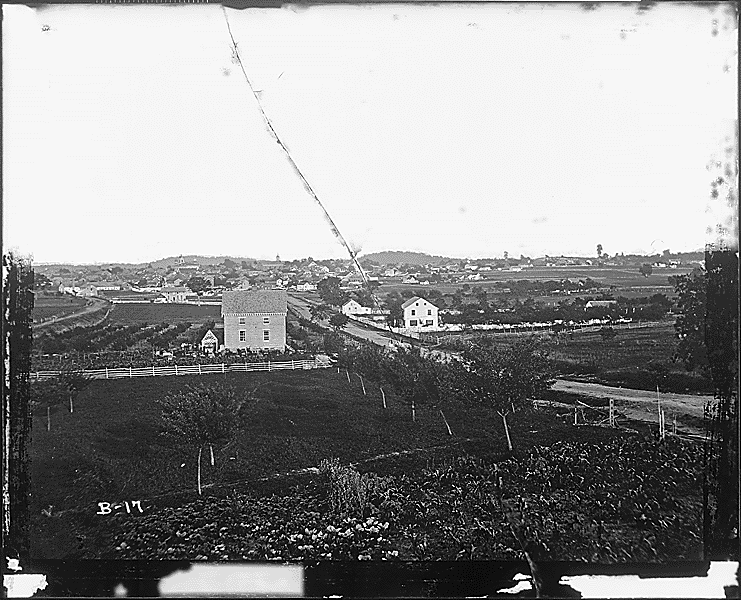
[Again, I visited this site before I got a digital camera. Everything’s from the National Archives. I know this post isn’t what some of you may have expected. Trust me, I love Civil War history. Check out my Antietam and Chickamauga posts.]

===================================================

Links:

No Casino Gettysburg

National Trust for Historic Preservation

Historic Preservation: Gentrification or Economic Development

National Archives Maps of Gettysburg

Appalachian Brewing Company

Read Full Post »

Older Posts »