Feeds:
Posts
Comments

Posts Tagged ‘slavery’

Freedom and Repatriation

The Lincoln Memorial might be our greatest national symbol. It’s everywhere: our currency, our iconography, our culture. Presidents have spoken in front of it. Martin Luther King gave one of his most moving speeches from its stairs. Numerous musical artists including, famously, opera singer Marian Anderson, performed to massive crowds gathered there. It’s appeared in everything from Mr Smith Goes to Washington to Forrest Gump to Planet of the Apes. There’s not much I can add to the lore of it, other than to say every American should make the pilgrimage at least once.

Instead of posting some weak trivia list about the Lincoln Memorial, I’m going to write about The 1619 Project.

Marian Anderson, 1939 (Library of Congress)

————————

The 1619 Project was a collection of essays published by the New York Times in 2019, and again in book form in 2021. I’ll let historian and journalist Lerone Bennett, Jr. explain:

A year before the arrival of the celebrated Mayflower, 113 years before the birth of George Washington, 244 years before the signing of the Emancipation Proclamation, [a] ship sailed into the harbor at Jamestown, Virginia, and dropped anchor into the muddy waters of history. It was clear to the men who received this “Dutch man of War” that she was no ordinary vessel. What seems unusual today is that no one sensed how extraordinary she really was. For few ships, before or since, have unloaded a more momentous cargo.

Bennett, Lerone Jr, Before the Mayflower, 1962

That ship was the White Lion, the year was 1619, and its cargo was “twenty and odd” captives from west Africa.

The central premise of The 1619 Project is this: the collective history Americans hold dear grossly underrepresents the impact and long-lasting effect of slavery on this country. In a series of long-form essays, a variety of authors, journalists, and historians lay out the case that slavery affected America’s viewpoint on everything from property rights to citizenship to economics to the very definition of democracy. These essays are hard-hitting, blunt, and brutal, and together assemble a very sobering read. Of course, they cover the obvious, like the 3/5th clause of Constitution and the collaboration between the KKK and law enforcement in the Jim Crowe South. But they also make links that might not be so obvious, including throwing some shade on our best president, Abraham Lincoln.

Before I go on, let me state up front that this is not intended to demean or degrade the Great Emancipator. Frederick Douglas called him “Tender of heart, strong of nerve, of boundless patience and broadest sympathies, with no motive apart from his country. […] Take him for all, in all Abraham Lincoln was one of the noblest, wisest and best men I ever knew.” Booker T Washington said “[M]ay I say, you do well to keep the name of Abraham Lincoln permanently linked with the highest interests of the Negro race. He was the hand, the brain, and the conscience that gave us the first opportunity to make the attempt to be men instead of property.“ But W.E.B. Dubois was probably more accurate in his own assessment: “Abraham Lincoln was perhaps the greatest figure of the 19th century. Certainly of the five masters – Napoleon, Bismarck, Victoria, Browning and Lincoln, Lincoln is to me the most human and lovable. And I love him not because he was perfect but because he was not and yet triumphed.”

Laborer with Lincoln Memorial (Library of Congress)

Lincoln, as great as he may have been, had one small problem, a bit of a character flaw, or at least a lapse in judgement. That problem was the American Colonization Society. Founded in 1816, the ACS was an unlikely group of early abolitionists, Southern slaveholders, and politicians of all persuasions. These men felt the chief concern of the time had a solution, and that solution was the repatriation of freed Blacks to Africa.

The abolitionists were afraid freed Blacks would simply never fit in, becoming a permanent underclass throughout the North. Slaveowners felt these freedmen would work tirelessly to free their brethren, perhaps engaging in violence or insurrection or even murder. Politicians were afraid they would taint voter rolls, influence elections, and threaten established power. Honestly, it’s hard to say their fears were unjustified, and Lincoln himself seemed to share those fears. Although he was not a member of the ACS, Lincoln espoused the idea of Black relocation as early as 1851. By 1862, he created the position of Commissioner of Emigration, and convinced Congress to appropriate $600,000 to ship freed Blacks to another country.

Black freedmen were appalled. They wanted to be free, yes, but not like that. By this time, some 240 years had passed since the White Lion docked. Generations of their forebears lived in houses, worked the soil, raised their children, all on these shores. They knew not of other lands, knew not of Africa, nor of any other land but America. Repatriation was a deplorable option. The United States, as flawed as it was, as dangerous and hostile as it was to slaves and freedmen alike, was still their home.

They would prove this in short time. After Lincoln’s official Emancipation Proclamation — which did not include any references to repatriation — some 200,000 Black men served in the Union army. That’s an astounding 78% of military-aged men! They took the Civil War personally, it was their fight, for their freedom, in their country.

Colored Troops, Port Hudson, LA, 1864 (National Archives)

———

Lincoln was an imperfect man. His emigration plan was a terrible idea. But he listened to the criticisms, dropped it, and changed the course of American history. Unfortunately, we still stumble across repatriation now and again. In this country, we debate the disposition of the Dreamers, young people smuggled into this country when they were very small, at no fault of their own, who are often threatened with deportation to countries they’ve never known. And right now, in the Middle East, ancient animosities are used as excuses to forcibly evict people off lands they’ve inhabited for decades if not centuries. In these cases, and many, many others, nobody cares. These “intolerables” would be better off gone, some would think.

But no one should be forced from the only home they’ve ever known. This has to be a fundamental precept of freedom.

———

I highly recommend The 1619 Project. I consider it vital reading for anyone wishing to understand this country, past and present.

———

Links:

Read Full Post »

Old John Brown: Martyr? Hero? Madman? Terrorist?

Harper’s Ferry NHP was one of the first historic sites I visited outside my home New England, and is still one of my favorites. It’s a sleepy little hamlet, nestled in a valley at the fork of the Shenandoah and Potomac rivers, with interesting Old Frontier architecture (like the church pictured below) and a calm, relaxed atmosphere.  Visit in the fall, when the air is crisp, the foliage is out, and the fog is on the river in the early morning.

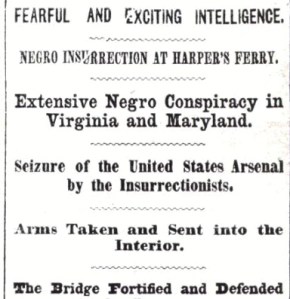
Harper’s Ferry, with two major rivers, a proximity to the Mason-Dixon, and one of the last stops between the colonies and the Frontier, was a true nexus point in early American history. Jefferson and Washington both surveyed the land, it served as a launching point for westward expansion, and was used by the military as a base and weapons depot. But the town is most famously known for the Raid that Started the Civil War.

—-

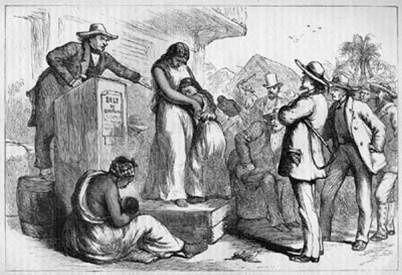
The time between the founding of the country and the fall of 1859 was most definitely the Dark Ages for America. People like to strut around today and say “our rights are threatened”, and that may well be, but this is nothing like it was back in the early 19th century. According to census figures, over 3.2 million free-thinking people were held as slaves in 1850. It was pervasive everywhere in the South, slaves accounted for one out of three souls living south of the Mason-Dixon line. It was no “curious institution”, it was a massive abomination. The work was hard, the treatment harsh. Families were routinely broken up as they were sold to different bidders at auction. In some cases, treatment even got worse in the 19th century. Constant fear of slave rebellion sparked states and counties to restrict slave movements. States passed laws forbidding teaching slaves to read or write, or form groups in the evening, or celebrating weddings, or traveling without a master (even to walk to a creek for water).

But it wasn’t just slaves whose liberties were restricted: the slave laws foisted upon the Union by southern aristocrats (and unopposed by cowardly Northern presidents), challenged the liberties of free men as well. It was illegal to aid in the escape of slaves, which basically forced every citizen (even those in the so-called “free states”) to participate in the captivity of a fellow human being. The states had no say: the Wisconsin supreme court declared the Fugitive Slave Act unconstitutional and would not uphold it, only to be told by the U.S. Supreme Court that they must uphold it whether they liked it or not. Nullification, indeed! Looking back, the honorable free states should have been the ones to secede from a corrupt, anti-liberty federal government right then and there!

Even the very notion of “one man one vote” was bastardized into the 3/5th rule, which gave the Southern gentry undeserved power in the Congress and the Electoral College. The notion that slaves could be counted in apportionment for a democratic society was disgusting, and is wholly responsible for the decades of tyranny foisted upon the nation. That horrible rule  gave the slave states nearly 20 more seats in the 1850 House of Representatives and votes in the 1848 Electoral College than they justly deserved, creating a Congress that passed the dastardly Compromise of 1850 and gave us one of the worst presidents in U.S. history, Millard Fillmore. The North should have been able to railroad the South into giving up that horrendous institution, but instead the Founding Fathers’ greatest mistake led to a wholly unjust government, the enslavement of an entire race of men, and a society teetering on the boundaries of pure evil.

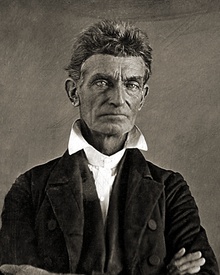
It was into this world that John Brown was born.

A heavily devout Christian, John Brown saw the entire institution of slavery, and the flaws in our political process that enabled it, as a crime against man and a sin against God. He took it so far as to say there was no way the United States could possibly have been founded as a Christian nation, because no true Christian would ever start a country with slavery as part of its core values. He was even more infuriated by individuals like John C. Calhoun, who said slavery was good and rooted in the Bible. To John Brown, that was apostasy, nearly as great a crime as slavery itself. John Brown was more than  prepped for the forthcoming battle, at least on a spiritual level. Then came Kansas.

For over sixty years, the balance between slave state vs. free state was kept through a series of compromises. In 1812, the tally was even: 9 slave states and 9 free states. There was parity in the Senate, and the coveted Electoral College, and close tallies in the House (thanks to the 3/5ths rule). In order to keep the peace, states would be admitted in pairs: one free, one slave. Indiana & Mississippi, Illinois & Alabama, Maine & Missouri. However, in 1854, the anti-slavery faction in Congress won a minor victory: the residents of a territory, upon application for statehood, could vote themselves as to whether or not they would be free or slave. This put the pro-slavery faction in a terrible position: popular opinion in the new territories beyond Missouri was decidedly anti-slavery.  The slave states would soon be outnumbered in the Senate and  would surely lose their political clout and, therefore, their economic foundation. Drastic action was necessary, and drastic action was undertaken.

A cabal of slave-owners and -supporters organized dozens of bands of men called the Border Ruffians to rush to Kansas, create fake homesteads, and engage, not in farming, but in massive voter intimidation and fraud. They managed to elect a pro-slavery legislature for the territory. To counter the threat, abolitionists joined forces to form the Topeka Convention and create a state constitution marking Kansas as a free state. Presidential coward Franklin Pierce decreed the pro-slavery forces were legitimate, and that’s when all hell broke loose. The Ruffians burned and ransacked Lawrence, and John Brown headed to Pottawatomie, and eventually to Harper’s Ferry, leaving a trail of bodies (both friends and foes) in his wake.

What happens next are the opening salvos of the greatest war ever fought on North American soil, a terrible stream of carnage that resulted in the emancipation of not only slaves but also of the American soul. Slavery, regardless of the opinions of the slaveowning aristocracy, was the albatross around the neck of the United States. It was preventing our rise to greatness, and even now, 150 years later, we’re still battling with the demons of our past. But at least they are now in our past, thanks to John Brown. He was like the interventionist to a drug addict: that person who holds up the mirror and says, in a very blunt manner, “look what you’re doing to yourself!!”

The full story of John Brown is a fascinating one, full of character and drive and madness. But it’s also admittedly troubling. Was John Brown a terrorist? He led his devout followers to their near-certain deaths. He committed acts of violence on American soil that took the lives of civilians. He instilled great fear amongst the citizenry, especially amongst the border counties of Virginia. His actions led the United States, especially the southern states, to crack down on civil liberties even harder. His actions ended up instigating a war.

So was he a terrorist? Or should we take into consideration what he was fighting for? He wasn’t grandstanding for an upcoming book tour, there is no doubt he was ardently opposed to slavery and wanted the institution destroyed. He knew the institution was destroying America, and he knew that nothing short of bold action would change the nation’s course. And that course had to be changed: over 3 million lives, and the lives of all their future generations, depended on it.

Before you read on, here are some things to ponder. Do people have the right, or even perhaps the duty, to take bold and deadly action in the face of true evil? It’s a tough question. Is terrorism ever justified? Did John Brown act appropriately? Should he be regarded as a hero or as a demon, especially in light of what he was fighting for?

Made up your mind?

Now think about this: in preparation for his attack on Harper’s Ferry, John Brown worked on a document, to be released to the public if and when he managed to instigate the change he desired. A new Constitution for the United States, with guaranteed rights for all men of any race, a reworking of the system of representation, and a modification of the roles & responsibilities of the three branches of government: Congress, the Presidency and the courts.

All with him as the Commander in Chief in charge of the whole thing.

Now re-ask yourself those questions. You can probably even think up some better ones.

============================================================================

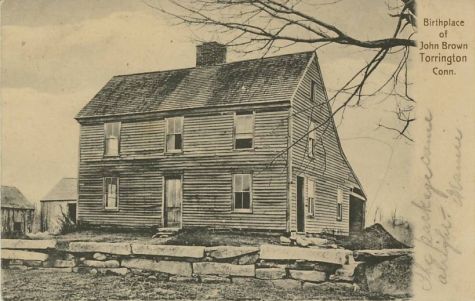
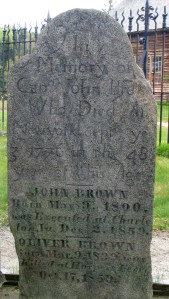
[Sadly, I didn’t own a digital camera when I visited Harper’s Ferry. Photo of St. Peter’s Church is used with permission of Patty Hankins. Check out her website, she specializes in close-up floral photos (something I enjoy doing on my own National Park trips). John Brown Birthplace postcard is available at www.vintagepostcards.org. Photo of John Brown’s tombstone is from the Wikipedia Commons (original). All other works are in the public domain.]

Links:

Harper’s Ferry National Historical Park

Modernizing a Slave Economy

Republicanism and the Compromise of 1850

Google map to Harpers Ferry

Read Full Post »

One Problem, Many Solutions, Few Successes

If there is one difficult part of American history & society, it is that transition from slavery to freedom in the post-Civil War period (which, in actuality, is still going on today). I’m not talking about the actual sequence of events from the Emancipation Proclamation to Kanye West’s recent Grammy speech, I’m talking about the larger social, political, and even philosophical problem: how does an entire population, almost 4 million strong, make the transition from slavery to freedom, without crushing the economic and social status of the formerly enslaving nation? Oof, that’s a toughie, a heady question with so many facets, from the technical to the ethical to the theological.

I can say this with absolute certainty: it’s a question that America failed to answer satisfactorily. Yes, I said it: America failed one of the greatest challenges a nation ever faced.

Vegetable Garden — © 2008 America In Context

It’s obvious that America failed in this regard: Jim Crow, the Klan, Plessy v. Ferguson, police dogs in Birmingham, the assassination of Martin Luther King Jr., the Watts riots, the continued concentration of poor blacks in America’s inner cities. These are not good results. The only part we really got right was freeing them in the first place (although even that was almost a hundred years too late — surely the Great Teacher in the Sky took points off for lateness on that one).

Sure, things have gotten better for African-Americans since 1865. But is it really better because America made it better, or is it better in spite of America’s efforts? As time has gone on, we have become more integrated. Black culture and music has woven itself into our society, creating art forms (like the Blues, rap music, urban wall art, and others) that could only incubate in a cauldron of pain, suffering, and intolerance that post-slavery America provided. But I don’t call that a “success”, we’ve simply accepted the failure and tried to move on with our lives.

Sheep In Pen — © 2008 America In ContextOh, to be able to take a time machine back to the late 19th Century and advise our leaders — both white and black — on how to do it right. Wouldn’t that be wonderful? It would be like telling the diners in Pompeii to leave the city; telling the Middle Age clerics to let the cats kill the plague-infested rats; warning post WWI Germany to leave Adolph in Austria. We could go back and fix everything, and none of those traumas I mentioned earlier would happen!

Unfortunately, even today, 145 years after Lincoln’s Emancipation Proclamation, we still have no idea how we could have done it any better. So we would hop out of our little time machine, look President Andrew Johnson and the U.S. Congress square in the eye, and go: “duhhhhh……”

The problem back then (with certain similarities today) is how to take an entire population, uneducated and entirely dependent upon a ruling class, and transform it into an independent, productive, successful body, without correspondingly bringing ruin upon that ruling class. Do you give them their own territory so they can develop their own society? Do you work to integrate them into your own society, so your success is their success and vice versa? Or do you simply transform from slavery to something almost as bad, keeping them a chronic underclass forever?

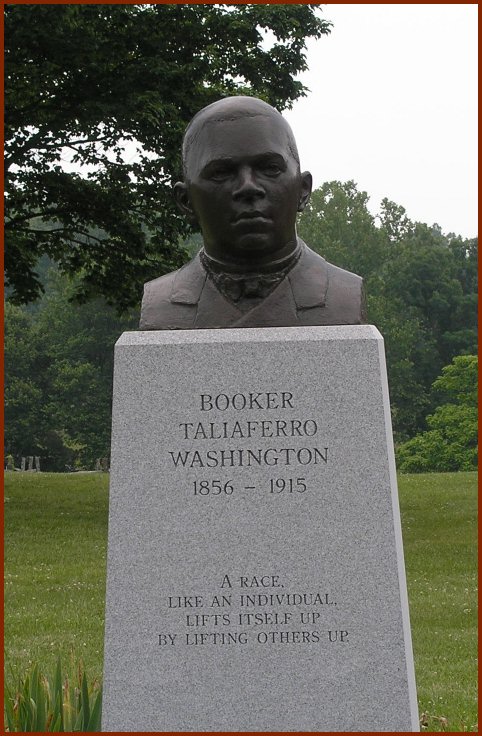
In the post-Civil War days, many African-American leaders came forward with their own ideas. Booker T. Washington was one such leader.

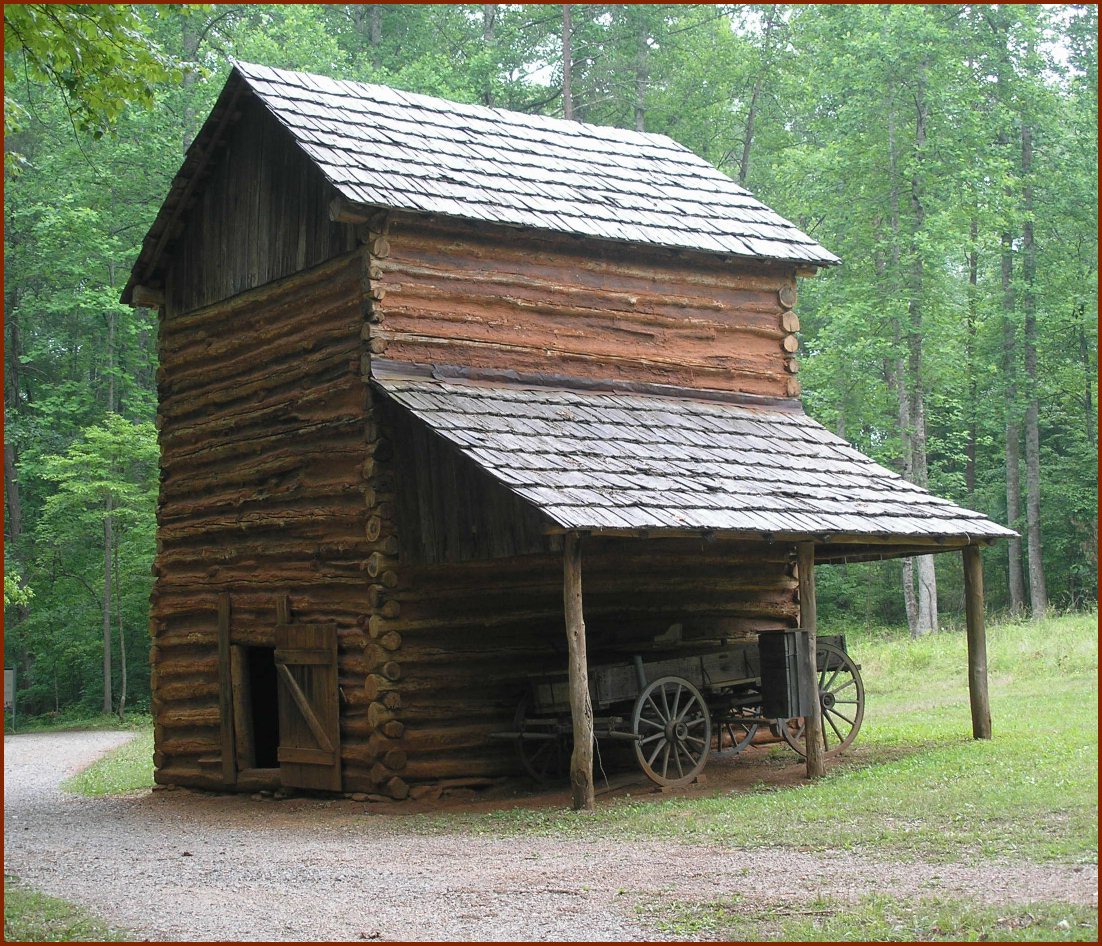
Tobacco Shed — © 2008 America In ContextWashington was a man after my own heart. He strongly believed in teaching freed slaves and their children about the real world: science, technology, engineering, agriculture. I’m a big fan of science and engineering and their real-world applications. In my view, as was Washington’s, if you can teach a person a real trade, you can set that person up for life. If you’re skilled, it doesn’t matter who you are, it matters what you do. Yes, it’s a pie-in-the-sky ideal, for you always have that personal element in everything, but your odds are much better if you have something real and tangible to offer society. And if society doesn’t want it, at least you can use those skills and have some semblence of autonomy. That was Booker T. Washington’s modus operandi: teaching blacks how to do. It was also the genesis of Washington’s great achievement: the Tuskeegee University (also part of the National Park Service, a topic for a later post).

The reality of the times would sadly tarnish Booker T.’s reputation. In order to create such a university, Washington needed funding. Funding he received … from wealthy white elitists, some of whom were former slaveholders themselves. Labelled an “accommodationist”, Washington was far too mum on the subject of segragation for many other African-American leaders. He would eventually speak out more and more against segregation, but for many of his contemporaries, it was too little, too late.

Munch Munch Munch — © 2008 America In Context

As I stated earlier, I’m not very good with African-American history. But I do know that no one in that era, including black leaders like Booker T. Washington, had all the answers for the freed slaves and their descendents. Those (black and white) who had the best of intentions did the best they could, based on their knowledge of humanity and the condition of the times. Their efforts may or may not have been successful, they may or may not have been right, but it has to be acknowledged that the simultaneous release of millions of men, women, and children from bondage created a problem vaster than mankind’s ability to solve. These people did the best they could, and at least they acted, and didn’t wait the required couple hundred years for the problem to solve itself.

Booker T. Washington National Monument restores the boyhood home of a man who did what he thought was right. It has been restored to resemble what it might have looked like during that time. The place itself is unremarkable, but the place in context with the most difficult part of American history truly makes one think.

Booker T. Washington Memorial — © 2008 America In Context

[All photos on this post are my originals. See my other Booker T. Washington National Monument photos here.]

Freed Fowl — © 2008 America In ContextLinks:

Booker T. Washington National Monument

The Negro Problem (essays from Booker T. Washington & others)

Google map to the monument

Some damned fool let the chickens out!

Read Full Post »

My Kind of Guy

Forget Ben Franklin. Forget Thomas Jefferson. Forget George Washington. John Adams is my favorite patriot.

I guess it goes back to my youth. I was in elementary school during the American Bicentennial in 1976. That was a huge time for patriotism and flag-waving, and interest in our Founding Fathers was at an all-time high.

One of our field trips actually took us to the movies – for a showing of the film version of the musical 1776. It’s an odd sort of thing, but seeing that film sparked, in me, an interest in American history that would smolder, unnoticed, until college fed it enough oxygen. Anyway, I digress…

There’s one terrific line in 1776 that I’ll never forget. Jefferson, Franklin, and others are trying to convince Adams to pen the Declaration of Independence. His retort? “Mr. Jefferson, I think that you should write it. I am obnoxious and ignored, you know it’s true!”

Even at 11 years old, I knew that described me as well: obnoxious and ignored. A kinship was forged.

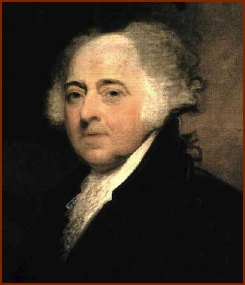
John Adams — public domain photo courtesy of WikipediaAdams was not only obnoxious and ignored, he was also a rarity: a brilliant ideologue. I’m not overly fond of ideologues. Generally, I find them horribly lacking in any real insight or knowledge, they hide behind their ideology like a shield, avoiding true understanding (because that’s too hard). I prefer pragmatism and practicality. How do we solve problems? That question sparks brilliance, not some high-minded ideal of how the world should work.

But, certainly, there are issues that require staunch and unwavering ideology, dogmatic certainty, and tremendous zeal. At that time, American independence was one of those issues. The abolishment of slavery would be another, I’ll get to that later. As far as John Adams is concerned, he was the right zealot at absolutely the right time, and was the single patriot who pushed for independence more than any other. He absolutely aggravated and aggrieved his contemporaries, but still his point was made, and the Continental Congress moved in his direction.

The great thing about Adams the Zealot was he was also a man of tremendous personal integrity and wisdom. A great husband, a great writer, a great lawyer, a great patriot, unfortunately he was an ineffectual President. But he held fast to his convictions throughout all his life. Some of his quotes still resonate strongly today, and a few are still ominous in their warnings. I think that, after 200 years, and with our current political climate, we can still learn a lot from John Adams:

“There are two educations. One should teach us how to make a living and the other how to live.”

“Liberty cannot be preserved without general knowledge among the people.”

“Facts are stubborn things; and whatever may be our wishes, our inclinations, or the dictates of our passions, they cannot alter the state of facts and evidence.”

“I must study politics and war that my sons may have liberty to study mathematics and philosophy.”

“Because power corrupts, society’s demands for moral authority and character increase as the importance of the position increases.”

“Remember, democracy never lasts long. It soon wastes, exhausts, and murders itself. There never was a democracy yet that did not commit suicide.”

That last one sends a chill down my spine, not only for its morose tone, but for the sneaky suspicion it’s accurate.

The First Emancipator

John Quincy Adams was, up until recently, a rarity: a son who followed his father into the Presidency. He was a rarity, up until recently, in another way: he did not win by popular vote, but won through that great Constitutional technicality, the Electoral College. He was a decent enough President but, like his father, he only served one term. And also like his father, it was his actions outside the Presidency that made him so invaluable to America.

John Q. Adams — public domain photo courtesy of WikipediaAs a diplomat, he oversaw the acquisition of Florida (so we’d have a place to dump our elderly), and fabricated the Monroe Doctrine, which drew a line in the sand to European colonization in the Americas. To Adams, this was a moral obligation of the United States. Europe must not further muck around in the affairs of the Americas. He didn’t advocate imperialism of our own, his idea was to allow the Americas to evolve into nations of their own, without outside interference. He was right, absolutely right. To this day, we are still dealing with the problems of long-terminated European colonization in Africa, the Middle East, and the Indian subcontinent. The problems of America are our problems, fomented internally, which is much better than problems foisted upon you by outsiders. Sadly, the Monroe Doctrine would later be used to justify invasions and actions on our own (like the Spanish-American War, a topic for a later time).
More importantly, John Q. Adams inherited his father’s zealous ideology in opposition to great injustice. In this case, I am referring to slavery. He not only famously argued the case of the schooner Amistad before the Supreme Court, he was a staunch and vocal opponent of slavery in the halls of Congress, battling that institution at every opportunity. In the decades before the Civil War, Congress managed to pass the Gag Order, prohibiting any discussion of slavery before Congress. This infuriated Adams, who set about trying to fight it at every turn. “I hold the resolution to be a direct violation of the Constitution of the United States, the rules of this House, and the rights of my constituents,” he bellowed across the House chamber.

Eventually, he would even make a grandiose declaration:

“From the instant that your slave-holding states become the theatre of war — civil, servile, or foreign — from that instant the war powers of the Constitution extend to interference with the institution of slavery in every way in which it can be interfered with.”

That’s right: John Quincy Adams set forth the principle that Abraham Lincoln would later use to write his famous Emancipation Proclamation. This is one of those brilliant chains in history: events lead to ideas which lead to ideas which lead to events. Uncovering these chains has been one of the great joys of my tours through the National Park System and American history.

Ideology – Well Preserved

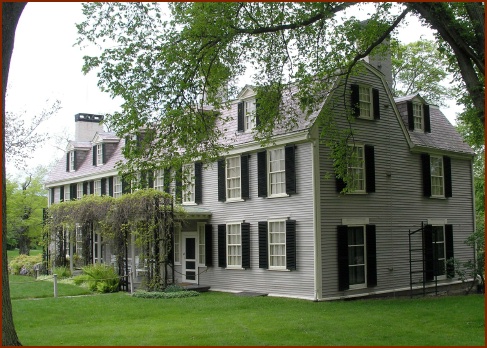
The Adams family houses preserved by the National Park Service are wonderful. They have the two houses where the Adams’ were raised (an amazing feat considering decades of development in greater Boston), as well as the Adams manse “Peacefield”. This expanse is an absolute rarity among historic sites in America: all of the furnishings and contents of these houses is original to the original owners, including the vast collection of John Q. Adams’ books in a beautiful stone library (to protect Adams’ greatest possessions from fire – who says ideologues can’t also be practical?).

Normally (and recently, it would seem) ideologues ruin more than they create. The simplicity of their arguments usually belies the underlying realities of the times and does their constituency a great disservice. However, in at least two cases, this nation had serious issues requiring the intervention by serious ideologues. In both cases, we’re lucky we had the Adamses.

Peacefield — © 2008 America In Context

[Pictures of the Presidents are in the public domain, courtesy of Wikipedia. All other photos in this entry are originals by the blog owner.]

See all America In Context original photos of Adams NHP

Links:

Adams National Historical Park

Exploring Amistad
Amistad America
Google map to Adams’ NHP

Read Full Post »

Older Posts »